
Article Summary
- This guide provides a comprehensive overview of the Bitunix P2P (Peer-to-Peer) trading platform.
- It explains what P2P trading is and how it differs from traditional spot trading, emphasizing that you are transacting directly with another person, not the exchange.
- The article details the crucial role of Bitunix’s escrow service, which holds the crypto in a secure deposit until the fiat payment is confirmed, ensuring safety for both buyer and seller.
- It provides two complete, step-by-step walkthroughs: one for buying crypto and one for selling crypto on the P2P platform.
- The guide includes a dedicated section on safety tips, teaching users how to choose reputable merchants and avoid common scams.
Sometimes you want crypto, but your bank card, local rails, or region makes the usual “buy” button feel like a dead end. That’s where P2P trading helps. On a crypto exchange, P2P is the route where you pay another user directly using a local payment method, while the platform helps keep things safe.
This is especially useful if you prefer direct deals, need more payment flexibility, or are in a market with fewer fiat on-ramps. In this guide, you’ll learn how the platform works, how to buy and sell step by step, and the safety rules that prevent most headaches.
What is P2P Trading on The Platform?
A P2P crypto exchange connects buyers and sellers so they can trade directly with each other. You choose the offer, the price, and the payment method. The platform provides tools, rules, and an escrow flow so the trade can be completed without either side playing games.
You also need to complete identity verification and add payment methods before you start.
P2P vs spot trading
- Spot trading uses an order book. You place orders and trade against market liquidity.
- P2P trading matches you with another person. You agree to the terms and pay them directly using a payment channel.
Escrow service
Escrow is the safety net. Here’s the core rule from the official FAQ:
“Yes. Bitunix provides escrow protection, holding the seller’s assets securely until payment is confirmed.”
So, the flow is simple:
- The seller’s crypto gets locked
- The buyer sends fiat payment to the seller
- The seller confirms receipt
- The crypto releases to the buyer
This is why people use Bitunix P2P when they want flexible payments without giving up basic protections.
How to Buy Crypto P2P Step by Step
Below is the official flow, expanded with practical checks.
Step 1. Open the P2P page
Log in, then click P2P Trading in the top navigation.
Step 2. Choose Buy and pick the coin
Select Buy, then choose the crypto (often USDT).
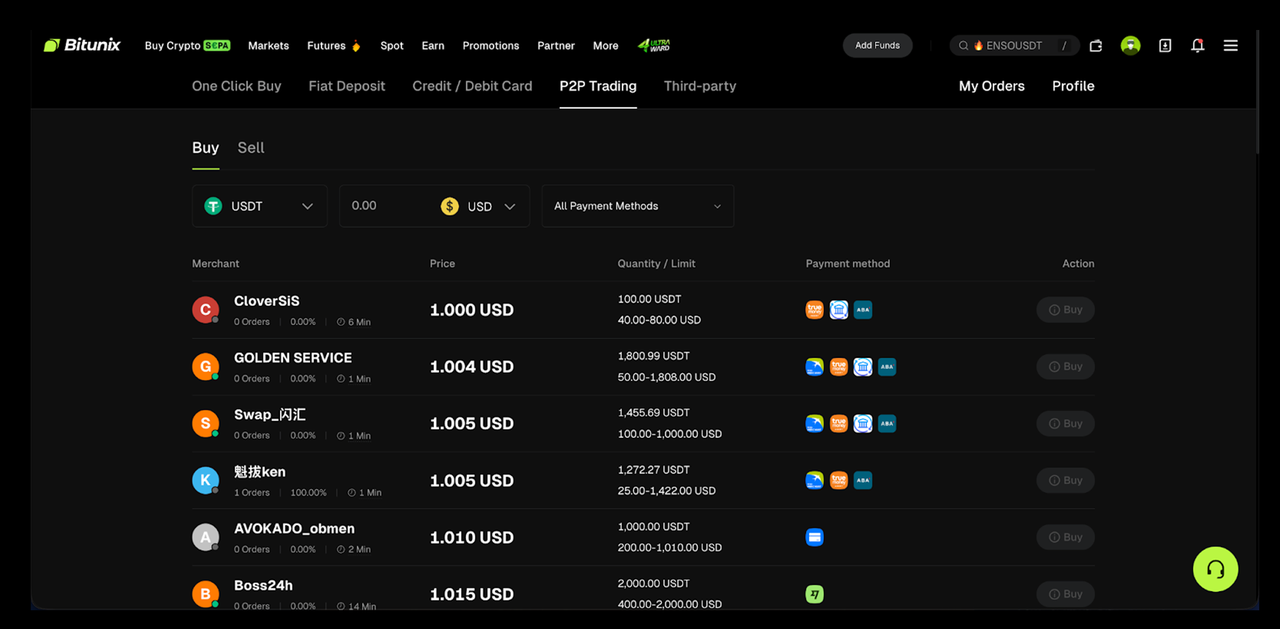
Step 3. Filter by fiat and payment method
Set your fiat currency and choose a payment method. Multiple methods can be selected.
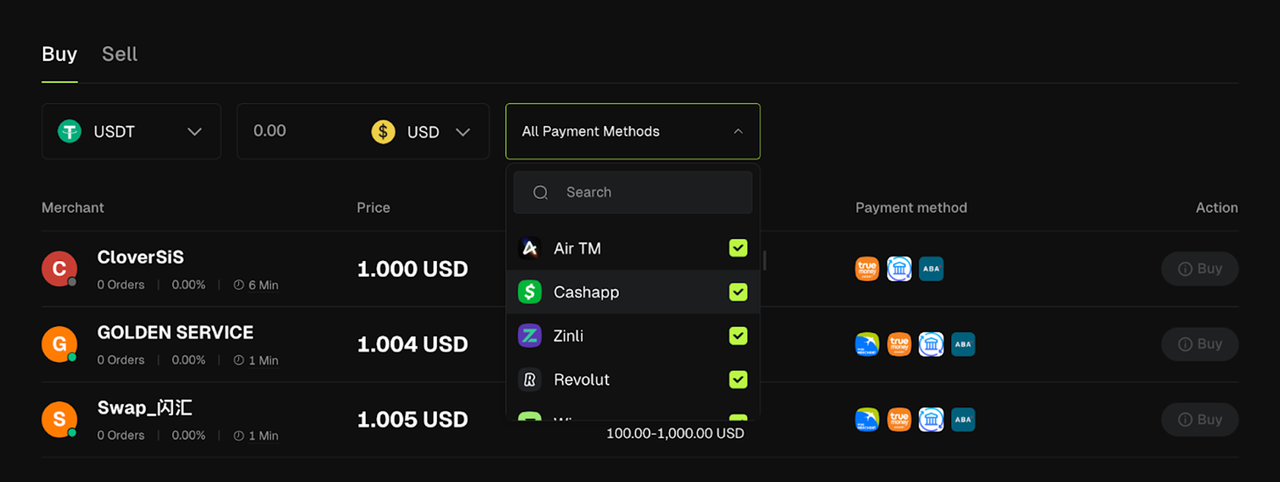
Step 4. Choose a merchant
Pick someone with a strong completion rate, lots of trades, and solid feedback. If a profile looks brand new and overconfident, treat it like a too-good-to-be-true listing.
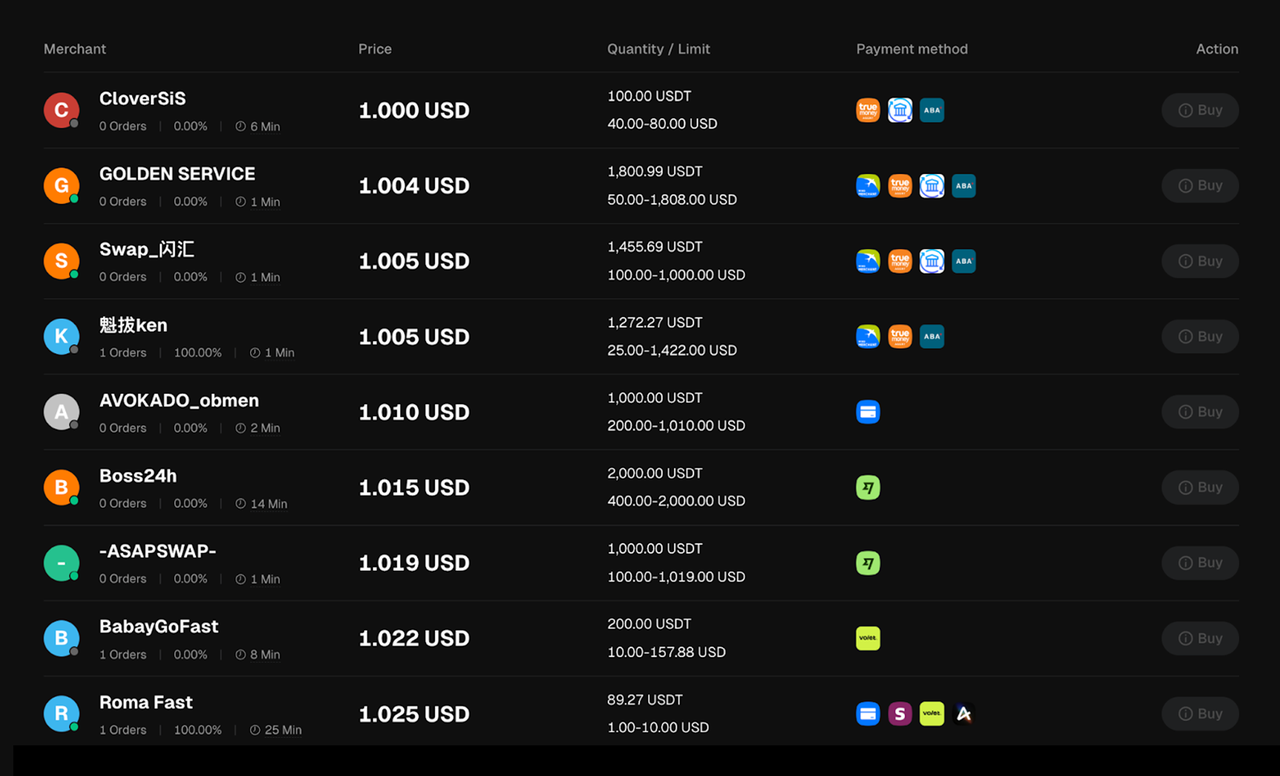
Step 5. Enter your amount
Enter the fiat amount or crypto quantity, then click Buy.
Step 6. Confirm the order
Review details and accept the platform disclaimer, then confirm.
Step 7. Get payment details
You’ll land on the order details page. Use the built-in chat if you need to clarify timing or reference numbers. Keep everything inside the platform so there’s a clear record.
Step 8. Send the fiat payment
Pay only to the payment details shown in the order. Don’t accept “use this other account.” Also, make sure the payment account name matches your verified name, or the seller can refuse to release assets.
Step 9. Mark as Paid
After you actually pay, mark the order as paid. Don’t click confirm if you didn’t transfer funds. That can trigger account restrictions.
Step 10. Receive your crypto
Once the seller confirms payment, escrow releases the crypto to your wallet, and you can see the record in your spot account history.
One more thing. P2P purchases follow a T+1 settlement rule, meaning the assets can be frozen for 24 hours before withdrawals or transfers. Plan ahead.
How to Sell Crypto Step by Step
Selling is where people get sloppy, so keep your checklist tight.
Step 1. Open the P2P page
Log in and click P2P Trading.
Step 2. Choose Sell and pick the coin
Select Sell and choose the asset you want to sell.
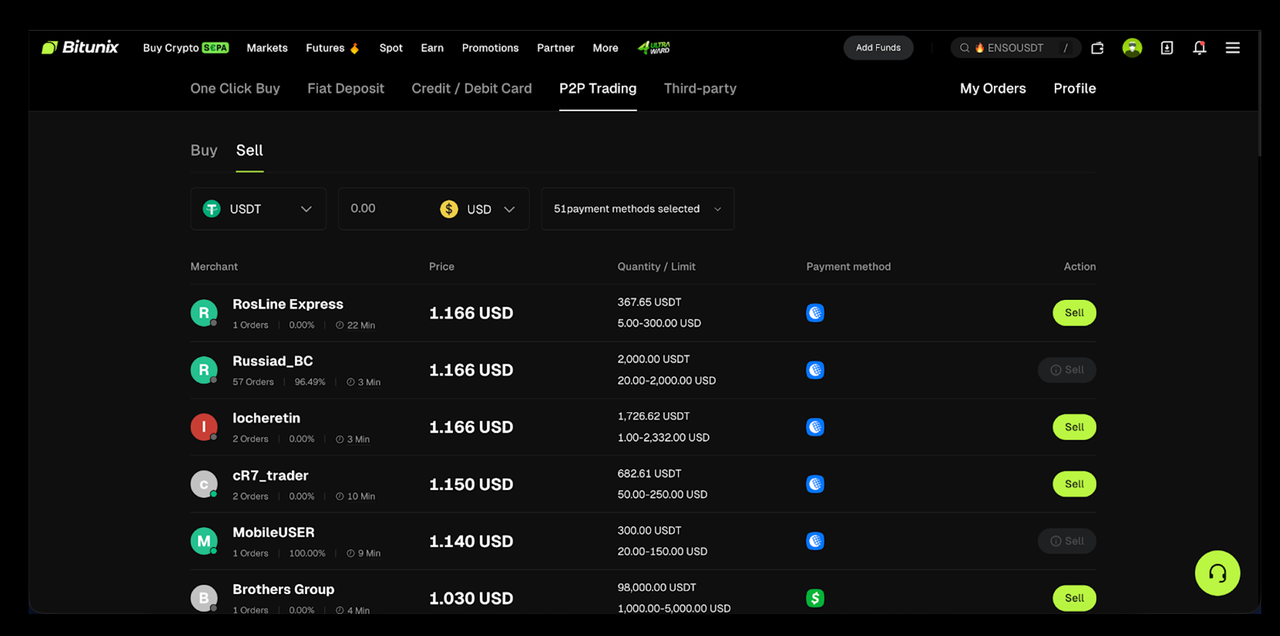
Step 3. Choose a buyer
Review their stats and past activity. Prefer users with strong completion and lots of successful orders.
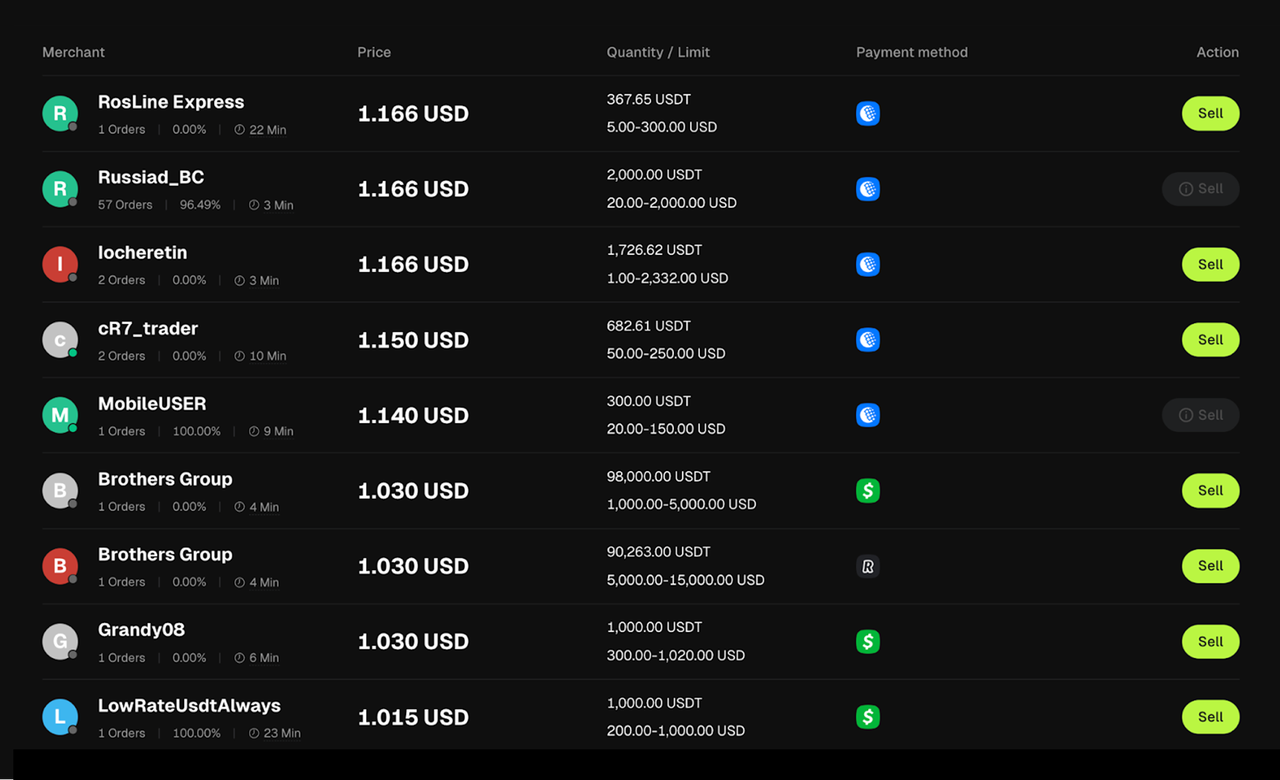
Step 4. Enter the amount
Enter the amount or quantity, select your payment method, and then click Sell.
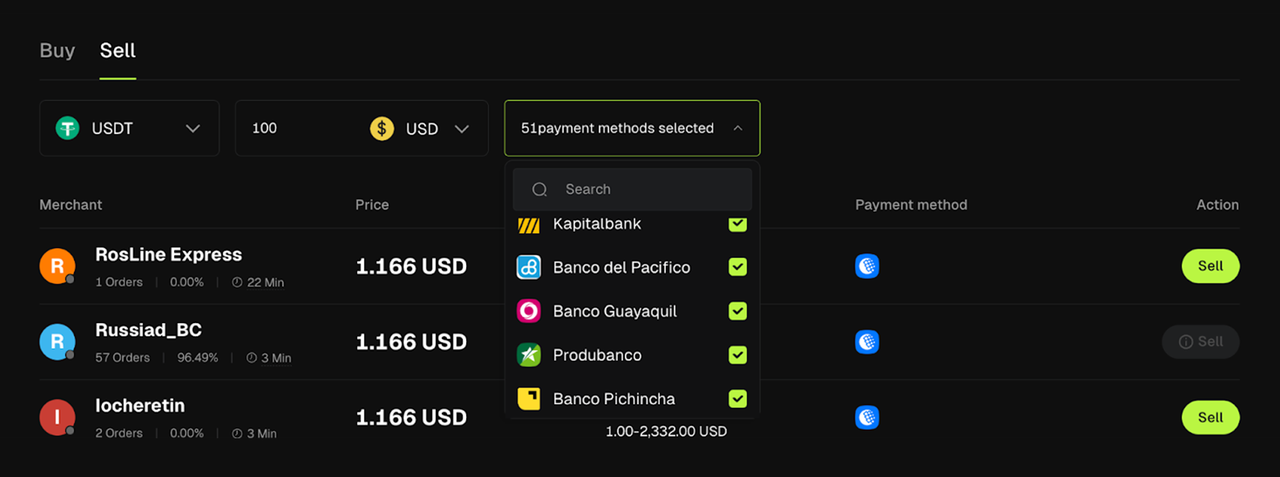
Step 5. Wait for payment
Once the order is created, your crypto is locked in escrow. The buyer has a time limit shown on the order page. If they don’t pay, you can appeal.
Step 6. Verify payment yourself
Log in to your bank or payment app and confirm the money arrived. Do not trust a screenshot from the buyer.
Step 7. Release crypto
Only after payment is confirmed, click to confirm payment and release the crypto.
Safety Tips for Secure Peer-To-Peer Crypto Trading
Here are the main tips to keep you safe while conducting trades on P2P modality:
- Trade with reputable users: high completion rate and lots of trades wins.
- Never release before confirmed funds: this is the golden rule.
- Use in-platform chat: it helps if you need to file an appeal.
- Don’t use third-party payment details: pay only to the account listed in the order.
- Remember the platform role: payment channels are external, and the platform is not a party to those payment relationships.
Conclusion
P2P is a practical bridge between fiat and crypto when standard ramps don’t fit your situation. If you understand escrow, verify payments properly, and keep communication on-platform, most trades stay boring in the best way. And boring is good when money is involved.
When you want more flexibility in how you pay or cash out, check the offers inside Bitunix P2P and use the filters to match your currency and payment method.
Looking for more payment options or want to sell your crypto for your local currency? Download the app, sign up, and explore the Bitunix P2P market today.
FAQ
Is P2P trading safe?
It’s designed to be safer through escrow and an appeal process, but you still need to follow the rules, especially payment verification.
What fees are charged for P2P trading?
The official FAQ says there are no platform fees for buyers or sellers, but your bank or payment provider can still charge fees.
What if a buyer marks paid, but I didn’t receive money?
Do not release crypto. Recheck your bank or wallet app, then use the appeal flow if needed.
How long do I have to pay as a buyer?
Each order shows a time limit on the order page. If the buyer fails to pay, the seller can appeal.
Can I cancel a P2P trade?
If payment hasn’t been made yet, cancellation is usually possible. Once payment is sent, follow the dispute or appeal path instead of canceling.
What’s the difference between an advertisement and an order?
An advertisement is an offer posted in the marketplace. An order is the specific trade created after you accept an offer and enter an amount.
How do I become a merchant?
After completing identity verification and meeting requirements, you can post buy or sell ads and set prices and payment methods.
Which payment methods are supported?
It depends on your region and fiat currency. The platform supports multiple local options such as bank transfers and e-wallets.
Why is my P2P function turned off?
Common reasons include missing verification, policy flags, or account restrictions after risky behavior. Check your verification status and platform notices.
How does dispute resolution work?
Use Appeal on the order page and submit evidence. Support can step in for arbitration.
If you also want to learn the order-book route, this spot trading walkthrough explains how spot trades work on web.
Glossary
- P2P (Peer-to-Peer): A trading method where you buy or sell directly with another user.
- Escrow: A temporary holding mechanism that locks the seller’s crypto until payment is confirmed.
- Fiat currency: Government-issued money like USD, EUR, or local bank balances.
- Stablecoin: A crypto asset designed to track a stable value, often pegged to USD.
- USDT: A widely used USD-pegged stablecoin commonly used in P2P markets.
- Advertisement (Ad): A posted offer to buy or sell crypto with a defined price and payment terms.
- Order: The specific trade created when you accept an ad and enter an amount.
- Payment method: The channel you use to send fiat, such as a bank transfer or e-wallet.
- KYC (Know Your Customer): Identity verification required to access features and reduce fraud.
- Completion rate: A reliability metric showing how often a user completes orders successfully.
- Counterparty: The other person in your trade, either the buyer or the seller.
- Appeal: A process to request support intervention when something goes wrong in an order.
- Arbitration: A support-led decision process that reviews evidence to resolve disputes.
- T+1 settlement: A rule that can freeze P2P-purchased assets for about 24 hours before withdrawals or transfers.
- Spot account: The wallet area where spot balances and transaction records are shown after completion.
About Bitunix
Bitunix is a global cryptocurrency derivatives exchange trusted by over 3 million users across more than 100 countries. The platform is committed to providing a transparent, compliant, and secure trading environment for every user. Bitunix offers a fast registration process and a user-friendly verification system supported by mandatory KYC to ensure safety and compliance. With global standards of protection through Proof of Reserves (POR) and the Bitunix Care Fund, Bitunix prioritizes user trust and fund security. The K-Line Ultra chart system delivers a seamless trading experience for both beginners and advanced traders, while leverage of up to 200x and deep liquidity make Bitunix one of the most dynamic platforms in the market.
Bitunix Global Accounts
X | Telegram Announcements | Telegram Global | CoinMarketCap | Instagram | Facebook | LinkedIn | Reddit | Medium
Disclaimer: Trading digital assets involves risk and may result in the loss of capital. Always do your own research. Terms, conditions, and regional restrictions may apply.