What Is Kaspa? Understanding the Proof-of-Work Cryptocurrency
Kaspa is an open-source, decentralized Layer 1 blockchain built around the Proof-of-Work consensus mechanism. Its native token, KAS, is used to pay transaction fees and reward miners who contribute computing power to secure the network. Unlike traditional blockchain networks that process blocks sequentially, Kaspa uses a BlockDAG structure to accommodate multiple blocks generated at approximately the same time.
Kaspa's mainnet officially launched in November 2021 through a fair launch, without an initial coin offering (ICO), premine, or preallocated tokens for insiders. All KAS enters circulation through mining rewards, allowing network participants to compete on an open basis. This distribution model reflects Kaspa's emphasis on decentralization and its commitment to the original principles of permissionless PoW networks.
The project's central innovation is its use of the GHOSTDAG protocol, which generalizes Nakamoto consensus to work with a directed acyclic graph (DAG) rather than a conventional linear blockchain. By allowing parallel blocks to coexist and establishing consistent ordering among them, Kaspa aims to increase network throughput without abandoning the security model of Proof of Work.
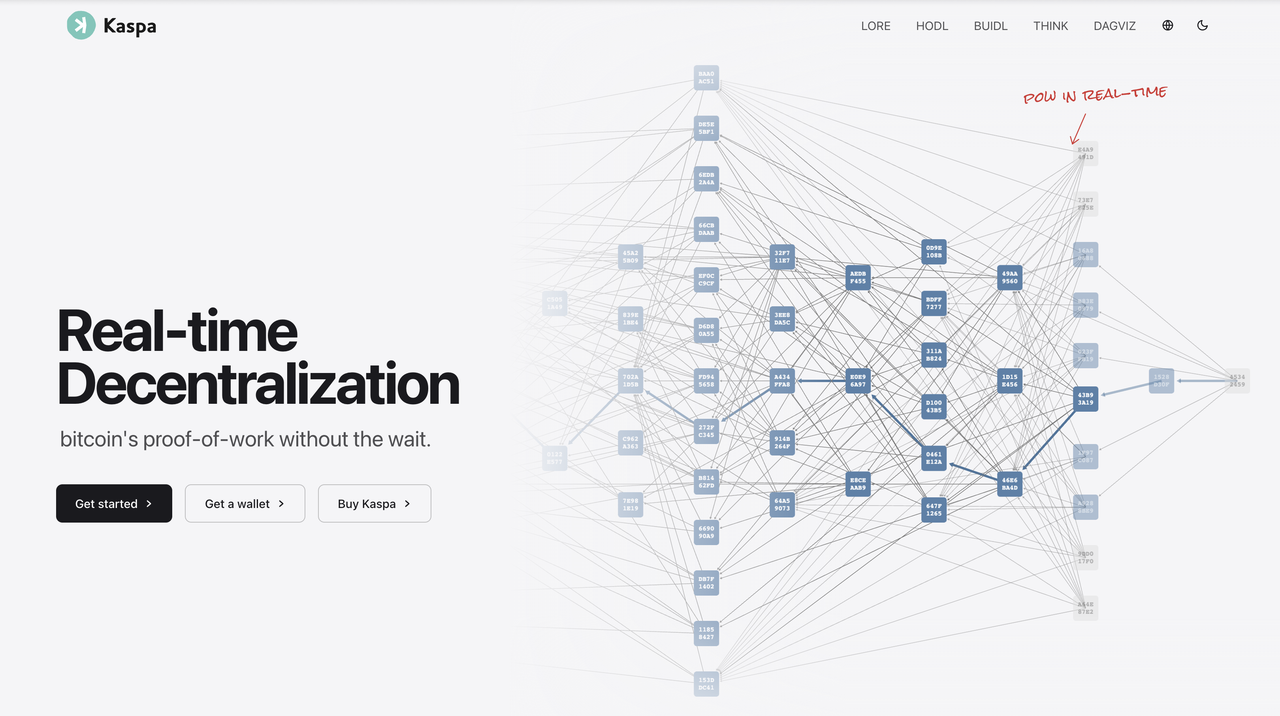
Data Source: Kaspa
Kaspa Technology: How Does the GHOSTDAG Protocol and BlockDAG Architecture Work?
Traditional blockchains organize transactions into blocks that are linked sequentially, with each new block extending a single accepted chain. When two miners discover blocks at nearly the same time, the network eventually selects one branch, while the competing block is generally treated as an orphan block. This approach creates a trade-off between block production frequency and network propagation time, as producing blocks too quickly can increase the likelihood of competing blocks.
Kaspa addresses this limitation through its BlockDAG architecture. Instead of discarding parallel blocks, the network allows multiple blocks to coexist within a directed acyclic graph, where each block can reference multiple parent blocks. The GHOSTDAG protocol then analyzes the relationships between these blocks and establishes a consistent ordering, allowing transactions contained in parallel blocks to become part of the accepted ledger.
GHOSTDAG builds on the research behind the PHANTOM protocol and extends the principles of Nakamoto consensus to a more flexible block structure. It uses a rule-based approach to distinguish well-connected blocks from conflicting blocks and determine their ordering within the DAG. This allows Kaspa to increase block production frequency while retaining PoW-based security and preventing the network from relying on a single linear chain.
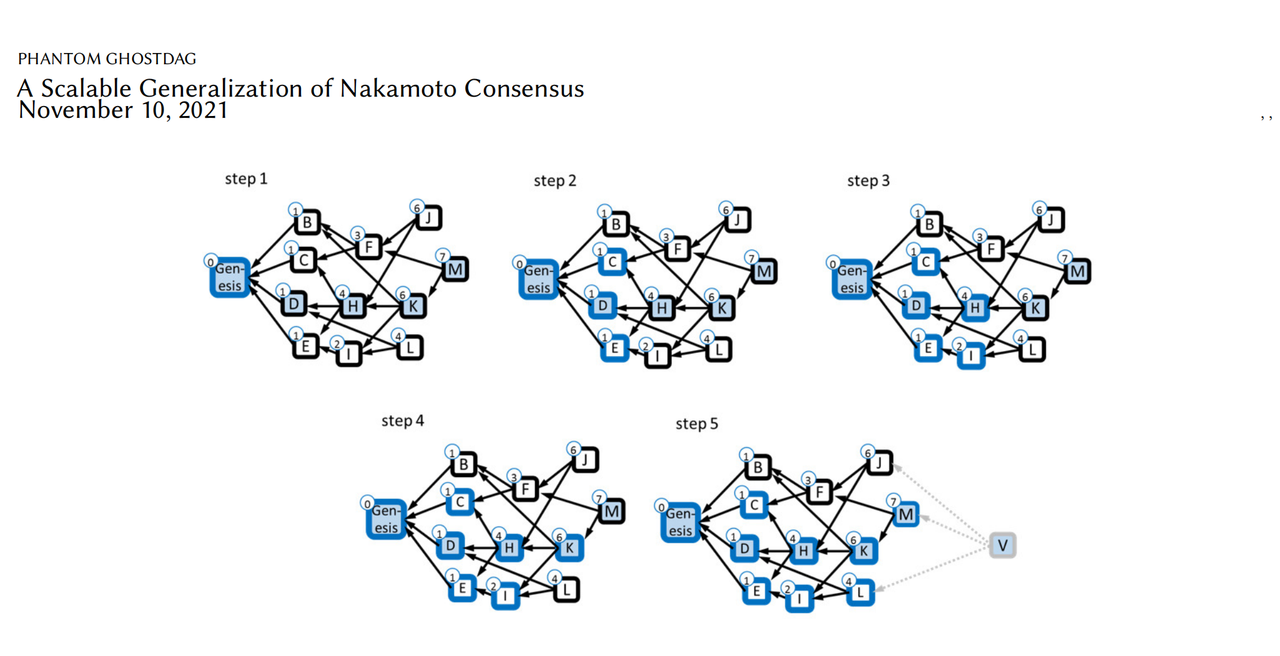
Data Source: Kaspa Whitepaper
kHeavyHash Algorithm and ASIC Mining
Kaspa uses kHeavyHash as its Proof-of-Work mining algorithm. Unlike Bitcoin's SHA-256 algorithm, kHeavyHash incorporates matrix-based computations and is designed to balance computational efficiency with resistance to certain specialized hardware advantages. Its architecture initially made Kaspa mining accessible through GPUs, allowing individual participants to contribute computing power during the network's early development.
However, the mining landscape has changed significantly as specialized ASIC hardware has entered the market. ASIC miners designed specifically for kHeavyHash now account for the overwhelming majority of Kaspa's mining hashrate, making GPU and CPU mining generally uncompetitive under typical electricity and hardware costs. Several mining hardware manufacturers offer dedicated Kaspa ASIC machines, turning the network into a specialized mining ecosystem similar to other established PoW cryptocurrencies.
The development of ASIC mining has increased the importance of mining efficiency, electricity costs, and hardware performance in determining profitability. Although specialized hardware can concentrate mining power among larger operators, Kaspa's open mining protocol still allows participants to join different mining pools or operate independently, subject to their available resources.
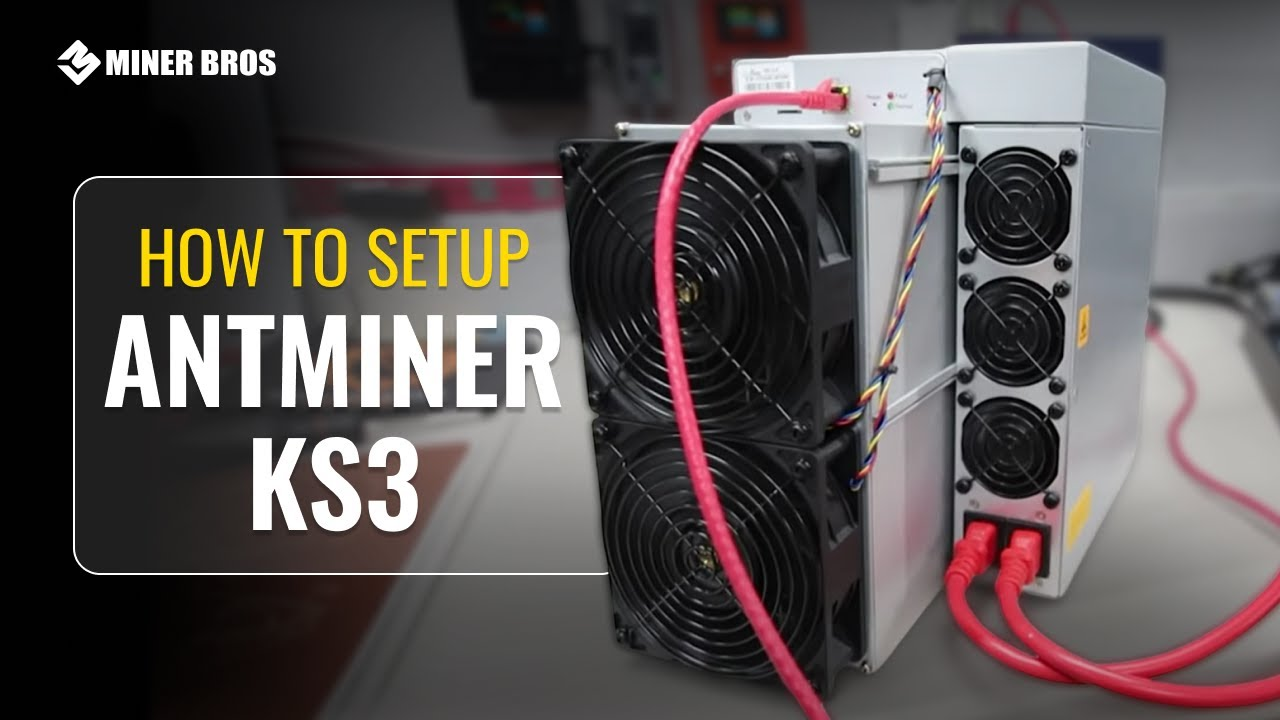
Data Source: Miner Bro
Kaspa Mining Rewards and Block Production
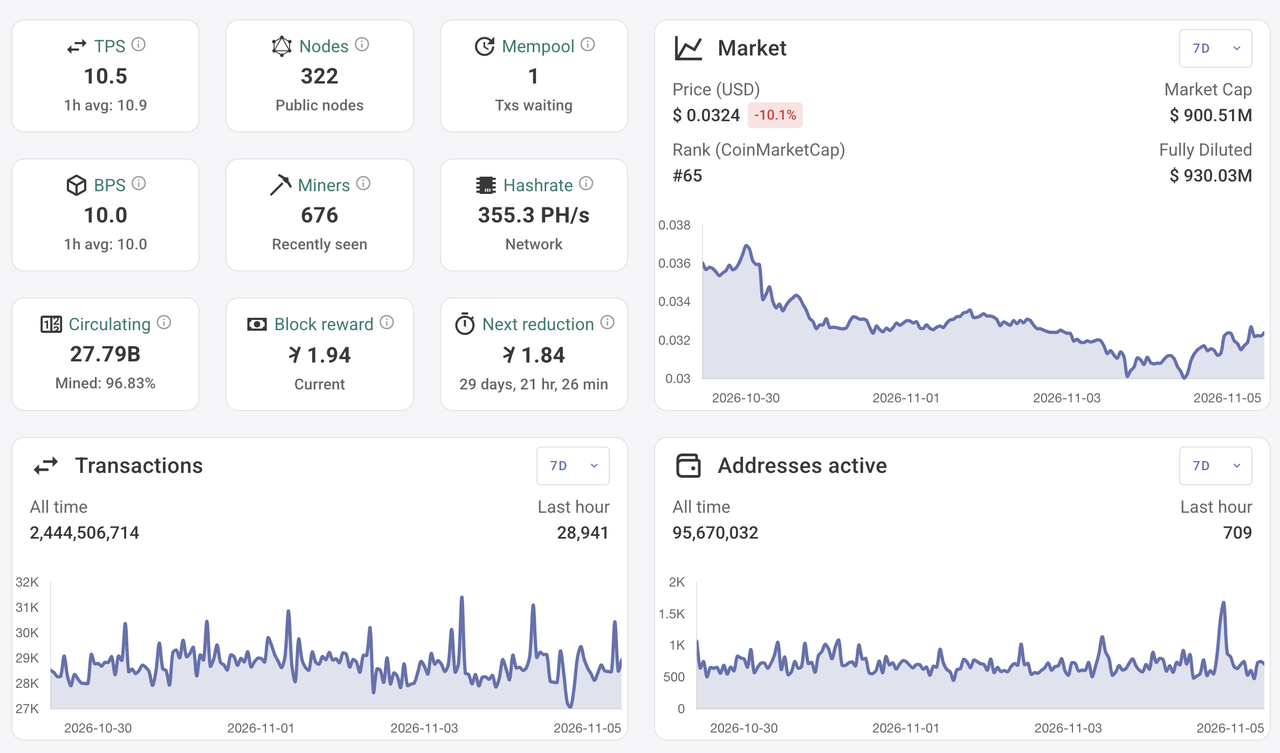
Kaspa miners contribute computing power to solve cryptographic puzzles and help secure the network. Unlike traditional blockchains that typically produce one accepted block at a time, Kaspa's BlockDAG architecture allows multiple blocks to be generated and incorporated into the consensus structure in parallel. Under its current mainnet configuration, the network targets approximately 10 blocks per second, significantly faster than Bitcoin's average block interval of around 10 minutes.
Mining rewards consist of newly issued KAS and applicable transaction fees. The protocol distributes block subsidies through its consensus rules, rewarding miners whose blocks are incorporated into the accepted BlockDAG. As the network's emission schedule progresses, the amount of newly issued KAS gradually decreases, making transaction fees an increasingly important component of long-term miner revenue.
The combination of frequent block production and a declining emission schedule is central to Kaspa's economic design. Rather than relying on occasional large block rewards, the network distributes issuance across a much higher number of blocks. This approach supports continuous miner participation while maintaining a predictable long-term reduction in new token supply.
Data Source: kaspa.stream
Mining Difficulty, Hashrate, and Network Security
Mining difficulty determines how challenging it is for miners to find valid blocks under the network's Proof-of-Work rules. Kaspa adjusts mining difficulty in response to changes in network activity and hashrate, helping maintain its target block production rate. When more computing power joins the network, mining competition increases, and the difficulty adjustment mechanism responds accordingly.
Hashrate represents the total computational power contributed by miners to secure the network. A higher hashrate generally increases the amount of computing resources an attacker would need to control to disrupt consensus or reorganize transaction history. However, hashrate alone does not provide a complete picture of network security, as mining concentration, hardware accessibility, and the distribution of mining power also matter.
Kaspa's GHOSTDAG protocol adds another layer to its security model by allowing parallel blocks to be incorporated into consensus rather than discarded as competing branches. This reduces the efficiency losses associated with frequent competing blocks and supports higher block production rates. Combined with PoW mining and difficulty adjustments, the architecture aims to preserve decentralized security while improving network performance.
Kaspa Network: Block Generation Speed, Scalability, and Transaction Throughput
One of Kaspa's most notable features is its high block generation frequency. Following the Crescendo network upgrade in May 2025, Kaspa increased its target block production rate from one block per second to approximately 10 blocks per second. This means new blocks can be generated roughly every 100 milliseconds, creating a much faster transaction sequencing environment than traditional PoW networks such as Bitcoin.
The improvement is made possible by BlockDAG architecture, which allows multiple blocks to be generated and accepted in parallel. In conventional blockchains, increasing block frequency can result in more competing blocks and wasted mining resources. Kaspa's GHOSTDAG protocol addresses this issue by incorporating parallel blocks into consensus ordering, helping the network maintain efficiency as block production increases.
However, block generation speed and transaction throughput are not the same measurement. Actual transaction capacity also depends on block size, network bandwidth, node performance, and transaction demand. Kaspa's architecture provides a foundation for further scalability improvements, with higher block rates such as 100 blocks per second representing a longer-term development objective rather than an already achieved mainnet capability.
KAS Tokenomics: Maximum Supply, Emission Schedule, and Monthly Reward Reductions
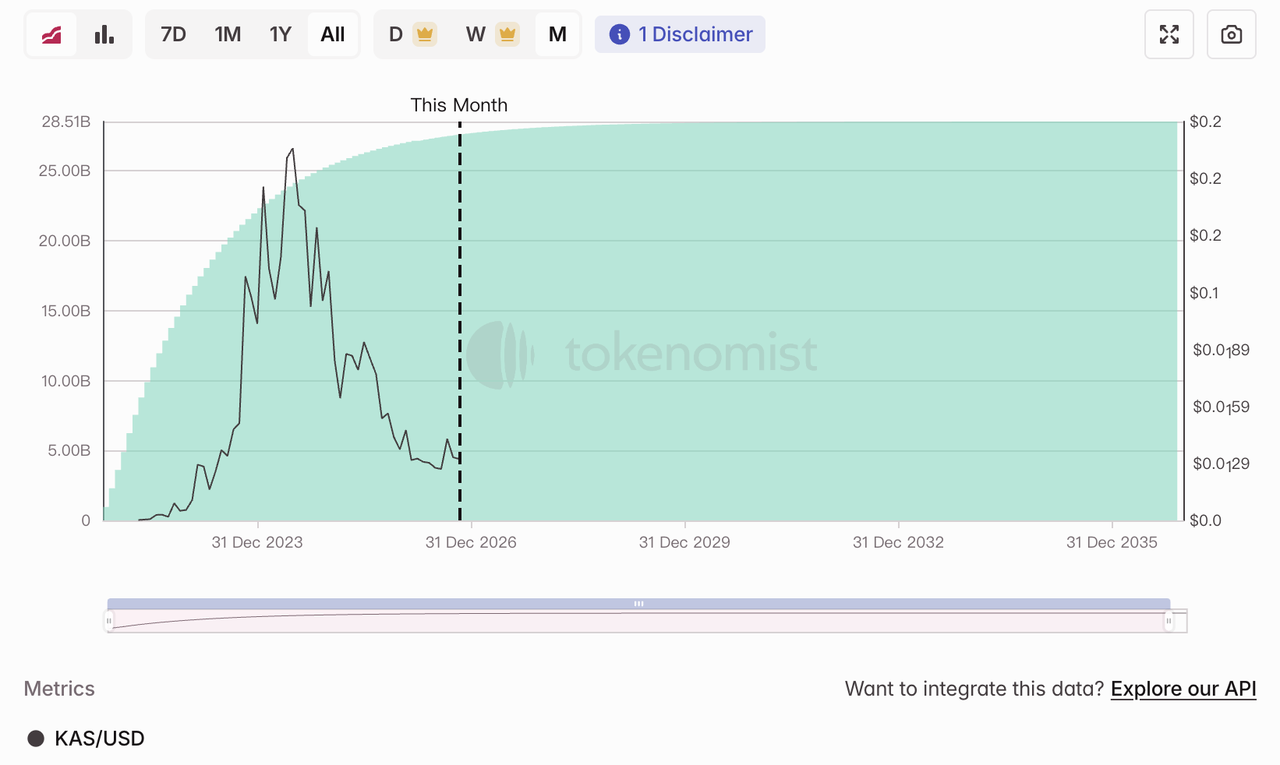
Kaspa has an estimated maximum supply of approximately 28.7 billion KAS, making its issuance model fundamentally different from cryptocurrencies with unlimited supply. All KAS enters circulation through mining rewards, as the project did not conduct an ICO or allocate tokens through a premine or private sale. This fair-launch distribution model allows miners to earn tokens through participation in the network rather than relying on an initial allocation to insiders.
One of Kaspa's distinctive economic features is its Chromatic Emission Schedule. Instead of reducing block rewards through a sudden 50% cut every four years, as Bitcoin does, Kaspa gradually reduces its issuance every month. Each monthly reduction multiplies the previous reward by approximately 0.9439, equivalent to a reduction of around 5.61%. Twelve consecutive monthly reductions result in the mining reward being cut in half over approximately one year.
The name Chromatic Emission comes from the relationship between musical semitones and octaves. On an equal-tempered musical scale, moving down 12 semitones reduces a note's frequency by half, mirroring Kaspa's annual reward reduction. This mechanism creates a smoother and more predictable decline in new KAS issuance, helping miners and market participants anticipate changes in the network's supply dynamics.
Unlike Monero, which uses permanent Tail Emission to maintain ongoing block rewards, Kaspa's current emission schedule is designed to approach zero issuance over time. Once the scheduled subsidy reaches zero, miners will rely primarily on transaction fees for revenue. This makes long-term network usage and fees demand important considerations for Kaspa's future mining economy.
Data Source: Tokenomist
How to Trade KAS?
There are two common ways to obtain Kaspa (KAS): mining and purchasing through cryptocurrency exchanges. As a Proof-of-Work cryptocurrency, Kaspa allows users to earn KAS by contributing computing power to the network through compatible mining hardware. However, as specialized kHeavyHash ASIC miners have become dominant in the mining ecosystem, participating in mining may require substantial upfront investment in hardware and electricity. For ordinary investors who do not intend to operate mining equipment, purchasing KAS through a cryptocurrency exchange is generally a more accessible option.
By purchasing KAS through centralized cryptocurrency exchanges such as Bitunix, users can use the platform as an intermediary to buy crypto assets directly with supported fiat currencies or stablecoins such as USDT. Some platforms also support instant credit card purchases, further lowering the entry barrier. Before using an exchange, users may need to register an account and complete identity verification (KYC) to comply with applicable Anti-Money Laundering (AML) and Counter-Terrorist Financing (CTF) regulations. Bitunix provides asset security measures including hot and cold wallet separation, multi-signature protection, and real-time monitoring mechanisms to help safeguard user assets.