You’ve probably noticed a pattern in crypto. When a chain gets popular, it gets crowded. Fees rise, apps slow down, and everyone starts arguing on social media.
Avalanche built its Layer-1 around a different idea, splitting the workload so the network can scale without turning into a traffic jam. On the official site, Avalanche describes itself like this: "Avalanche is an ultra-fast, low-latency blockchain platform designed for builders who need high performance at scale."
For you as a trader, that tech story matters because it shapes liquidity, narratives, and volatility. In this guide, you’ll learn how Avalanche works, what usually moves the Avalanche price, and how to approach trading AVAX/USDT on Bitunix.
What is Avalanche (AVAX)
Avalanche is not one chain. It’s a network with a built-in multi-chain structure called the Primary Network.
More than one chain
Avalanche’s Primary Network runs three specialized blockchains:
X-Chain (Exchange Chain): Used for creating and moving assets called Avalanche Native Tokens.
C-Chain (Contract Chain): Runs the Ethereum Virtual Machine, so you can deploy Solidity smart contracts and use EVM-style tooling.
P-Chain (Platform Chain): Coordinates validators and staking, and handles network-level operations like validator management.、
That split is why Avalanche often comes up in conversations about speed and customization.
The key innovation of Avalanche
Avalanche uses application-specific networks commonly referred to as Subnets, now often described as Avalanche L1s. In short, teams can run their own chain with their own rules, while staying connected to the broader ecosystem. The Builder Hub emphasizes that these networks are isolated, so heavy activity on one won’t slow down another.
Think of the main network as a city’s central highway. A Subnet is a dedicated express lane built for one big use case, like a game or an institution. You get separation and control, without forcing everyone to share the same road.
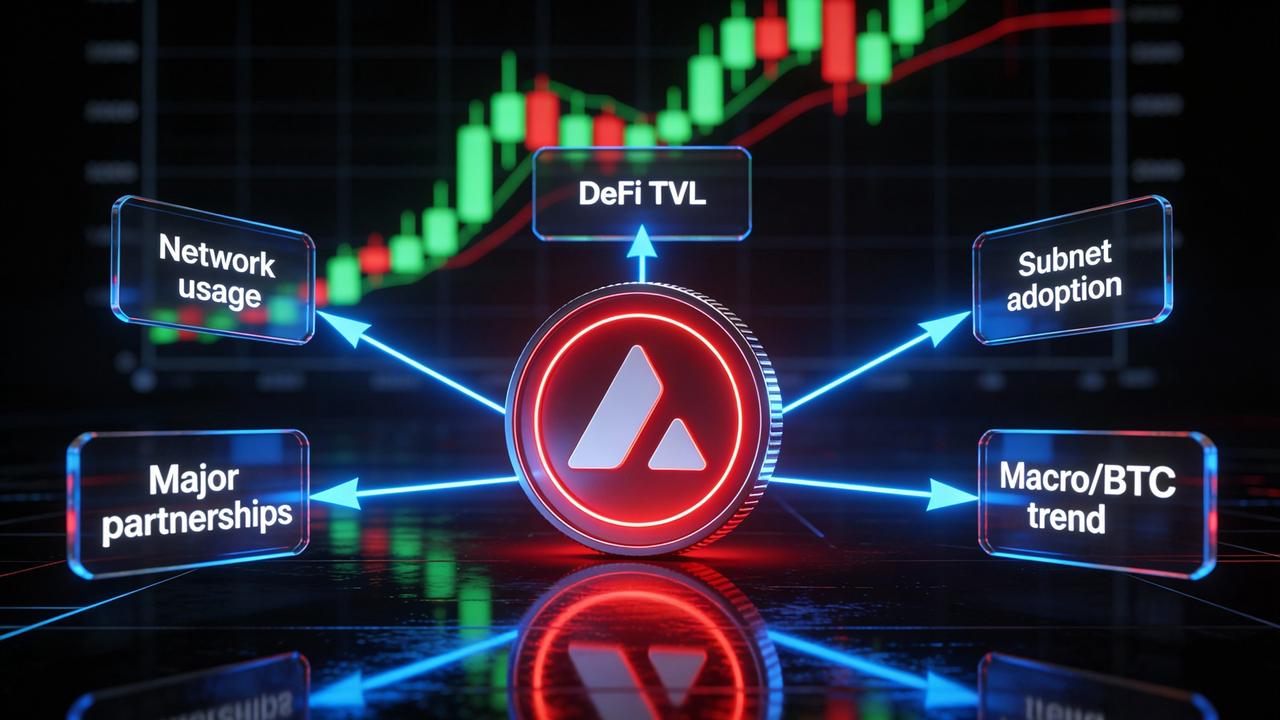
What Drives the AVAX/USDT Price
No single factor explains every move, but three themes show up again and again.
Subnet adoption: When well-known teams launch custom Avalanche L1s, the market often reads it as product-market fit for the tech. Also, validators on Avalanche stake AVAX on the Primary Network, which ties network security participation back to demand for the asset.
Real-world assets and institutional pilots: Avalanche has leaned hard into tokenization and institutional experiments. For example, Avalanche’s own blog notes that Citi and J.P. Morgan have participated in initiatives leveraging Avalanche L1s under Project Guardian.
Gaming launches: Games want throughput and predictable fees, and dedicated chains can help. Avalanche’s subnet explorer lists gaming-focused networks like Shrapnel, and ecosystem pages highlight games using custom networks. When a highly anticipated game ramps up users, the narrative can spill into price.
Three Strategies for Trading
These are not magic tricks. There are three common approaches that match different personalities and time horizons.
Strategy 1: Treat AVAX as a Long-term Position
If you believe Avalanche’s architecture will keep attracting RWAs and gaming, you can treat AVAX as a long-term position.
A practical way to do this is dollar-cost averaging, buying a fixed amount on a schedule instead of trying to time the perfect entry. This dollar-cost averaging guide explains the logic and how recurring buys reduce timing stress.
What to watch: Big adoption announcements, ecosystem growth, and whether builders keep shipping.
Strategy 2:
This approach is more active. You trade the story, not just the chart. If you see credible news about financial institutions testing tokenized settlement, or a major game rolling out on a dedicated Avalanche L1, you decide whether to trade the momentum. This is where AVAX trading can feel like reading the room. You’re watching narratives, but you still need rules for entries and exits.
What to watch: Official ecosystem updates, major partnership announcements, and whether activity actually follows the headline.
Strategy 3
Swing traders use technical analysis to capture multi-day moves. Pick a timeframe, mark support and resistance, and use momentum tools like RSI and MACD to avoid chasing late entries. Your goal is to act on a plan, not on adrenaline.
This strategy works well when the market chops around and gives repeated swings. It also helps when the pair trends and then pulls back, which happens often in altcoin cycles.
Why Trade AVAX on Bitunix
First, the pair AVAX/USDT is available on the spot market. Second, you can verify fees before you build a strategy around them. According to our official fee table, VIP 0 spot trading fees are 0.0800% maker and 0.1000% taker, and higher VIP tiers reduce that.
If you want a refresher on order types and the basics, use this spot trading guide. It’s written for beginners, but it’s still useful when you want to double-check the fundamentals.
Also, don’t ignore account security. Bitunix publishes a Proof of Reserve page explaining 1:1 reserves and Merkle-tree verification, and the help center walks you through enabling 2FA.
Conclusion
Avalanche’s multi-chain design and custom network model made it a serious Layer-1 alternative for teams that want speed, control, and room to grow. The tech does not guarantee that the price goes up, but it creates clear narratives that traders watch.
Before you place your next trade, zoom out and pick your approach. If you trade actively, treat risk like a seatbelt, boring until the moment it saves you. This risk management guide is a good starting point for thinking in rules instead of vibes.
Position yourself for the future. Download Bitunix app, log in to Bitunix, and start trading the AVAX/USDT pair today.