Cryptocurrencies are more than a one-size-fits-all asset class. At Bitunix, users will find a rich ecosystem of investment products that serve different goals. Bitunix's investment products are designed to help users achieve their financial goals by offering tailored solutions for various needs. With the wide range of products available, users can diversify their portfolios and manage risk more effectively. Whether you want to build long-term holdings, speculate using leverage, earn yield with structure, or automate contributions, Bitunix has an option that aligns with your plan.
Spot Trading: The Core of Crypto Investing
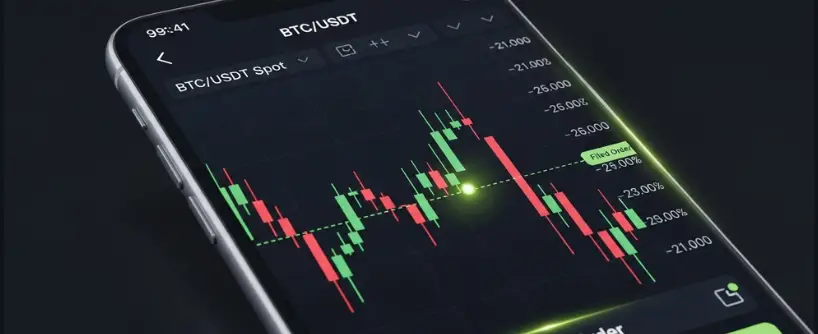
What is spot trading in crypto?
Spot trading is simply buying or selling a cryptocurrency and settling it immediately. Spot trading involves buying or selling crypto at the current market price, which reflects the real-time value of the asset. Assets are traded on crypto markets, which operate 24/7, allowing for continuous trading activity. If you use USDT to buy BTC on Bitunix, you receive the Bitcoin in your wallet instantly. Spot trading takes place on an exchange, where prices are determined by supply and demand. That makes spot trading very intuitive. You own the asset outright. You can move it, use it as collateral, transfer it, or hold it indefinitely. This is often the gateway for most crypto users. It is easy to understand and requires no special knowledge of derivatives or structures. Spot trading does not involve leverage or complex contracts, making it more transparent and straightforward compared to other products.
Why investors love spot trading
Ownership clarity: You own the coins.
Liquidity: On major pairs like BTC/USDT or ETH/USDT, you can trade large sums with minimal slippage.
Simplicity: No complexity or expiry date.
Foundational: You can build other strategies around spot holdings, such as reinvesting, staking, or using as collateral.
Spot trading is generally less risky than leveraged products, as you cannot lose more than your initial investment. However, price fluctuations in the crypto market can still result in significant losses if the market moves sharply, so it is important to manage your risk and be aware of the potential for losing value. Spot trading is the building block of many strategies. A common approach is to hold a long-term core in spot while exploring yield or trading with other products.
Crypto Futures Trading: Leverage for Opportunity (and Risk)

What is crypto futures trading?
In crypto futures trading, you enter a contract that pays out based on the future price of an asset. These contracts are traded on crypto markets, allowing traders to act on price movements and market expectations. If you go long, you profit when price rises. If you go short, you profit when price falls. You do not actually own the underlying coin; instead, your position reflects pure price exposure to the value of the asset. Futures trading enables efficient exposure to crypto assets without direct ownership. However, it is considered risky due to market volatility and leverage, which can lead to significant losses. Traders can adjust their positions to manage risk and better align with their trading strategy. Futures contracts are a popular tool for investments and speculation in the cryptocurrency market. Bitunix even offers crypto futures trading with up to 125x leverage, which means you can control a large position using minimal capital.
Why use futures?
Income in bear markets: You can short tokens and profit from downward moves.
Hedging: Spot holders can protect against downtrends by shorting futures. Futures trading can also be part of a broader trading strategy to hedge against price swings.
Capital efficiency: Leverage allows exposure without full capital outlay.
Various factors, such as interest rates and market conditions, influence futures prices and trading outcomes.
Risks come with power
Liquidation risk: High leverage means a small adverse move can liquidate your position.
Margin calls: You must understand funding rates and maintenance margin levels.
Not for novices: Futures require strong risk management and discipline.
By design, futures are for experienced users who need precise exposure control. Bitunix provides tools like stop losses and reduce-only toggles to help manage futures risk.
Dual Investment: Earn Yield with Price Targets

What is dual investment?
Dual investment is a structured product that allows you to earn yield based on price targets. It comes in two modes:
Buy low: You invest USDT with a BTC target. At maturity, if BTC price is at or below the target, your USDT converts to BTC plus interest. If price is above the target, you keep your USDT plus interest.
Sell high: You invest BTC with a USDT target. If price is at or above the target, your BTC converts to USDT plus interest. If price is below, you keep your BTC plus interest.
Why use dual investment?
High yield potential compared to savings products.
Choose your outcome: You define the price point and direction.
Short duration: Terms can be as short as hours to a few days.
With dual investment, users can achieve specific yield targets and work towards their financial goals based on their market outlook.
What to watch for
Not principal protected: Settlement may occur in an unintended asset.
Price risk: If the market moves against your target, you might end up holding the less desired asset.
No early exit: Most dual investment products lock funds until expiry.
Dual investment suits users who anticipate price movement and want yield based on market direction. It works best for those who can forecast outcomes or are willing to accept conditional returns.
Spot Auto-Invest: Grow Your Holdings Gradually

Spot Auto-Invest enables recurring purchases of selected cryptocurrencies using the dollar-cost averaging (DCA) method. You set:
The tokens to buy
Allocation ratio across chosen tokens
Schedule (daily, weekly, monthly)
Optional price range for each purchase
Auto-Invest helps users build diversified portfolios over time by allowing them to diversify their holdings across a wide range of available cryptocurrencies. Users can adjust their allocation ratios and schedules at any time to suit their investment preferences and risk tolerance. Once set, the system executes orders automatically according to your plan. You can view performance and schedule details in your Auto-Invest dashboard. No additional fees apply; purchases follow standard spot trading fees.
Why DCA works
Smooths volatility: Buying consistently over time removes timing risk.
Emotion-free: Automation reduces impulse decisions.
Simplicity: Set it and forget it.
Auto-Invest is ideal for investors who want disciplined accumulation without monitoring the markets.
Earn Products: Earn Yield While You Hold

Bitunix offers Earn products, allowing users to earn passive yield on crypto assets. After you complete the required holding period, you can access your funds or rewards. Rewards can be withdrawn once the term is complete. Two main options are:
Flexible Savings
Liquidity: You can withdraw at any time.
Yield: Modest APY, depending on the asset and market conditions.
Great for maintaining liquidity while earning something on idle assets.
Fixed Term Savings
Yield: Higher APYs than flexible options by locking assets for fixed periods (e.g., 7 to 60 days).
Redemption: Early redemption is supported, but all accumulated interest earned during the term will be forfeited.
Great for maximizing returns on committed funds with clear, predictable settlement terms.
Comparison Overview
Product Type | Purpose | Risk Level | Ideal For |
Spot Trading | Immediate ownership | Low | Long-term holders, beginners |
Crypto Futures Trading | Leveraged speculation | High | Experienced traders |
Dual Investment | Conditional yield | Medium to High | Target-based strategies |
Spot Auto-Invest | Automated accumulation | Low | Passive accumulators |
Flexible Savings | Liquid yield | Low | Holders seeking yield with flexibility |
Fixed Term Savings | Locked higher yield | Low to Medium | Yield seekers with time horizon |
The main difference between these products lies in their risk levels, trading mechanisms, and accessibility. For example, spot trading involves direct asset ownership, while futures trading uses leverage and carries higher risk. Returns and risk can also vary based on market conditions and the specific product chosen. Additionally, options trading is another approach for managing risk and volatility, offering traders a way to hedge against price swings that is distinct from the products listed above.
FAQ
What are the key investment products on Bitunix? Bitunix offers spot trading, crypto futures trading, dual investment, Spot Auto-Invest, flexible savings, and fixed-term savings. How do I log into my account and access investment products? To access Bitunix investment products, log into your account via the app or web dashboard. Once logged in, you can view your personalized dashboard and manage subscriptions. What is spot trading in crypto? Spot trading means buying crypto outright for immediate settlement. You own the asset upon purchase. What is crypto futures trading? Futures let you trade contracts that go long or short on price. You never own the underlying asset. What is dual investment? A structured product where you choose a price target and direction. Settlement pays in one of two assets based on price movement at maturity. Can you give an example of how a dual investment or futures contract works? For example, if you subscribe to a dual investment product with BTC as the underlying currency, and the contract size is 0.1 BTC at a target price of $30,000, the contract value is $3,000. If BTC settles above $30,000 at maturity, you receive USDT; if below, you receive BTC. How does Spot Auto-Invest work? Automated buys of chosen cryptocurrencies at scheduled intervals using dollar-cost averaging. What are flexible and fixed savings? Flexible savings let you earn yield while maintaining liquidity. Fixed savings lock assets for higher returns over set periods. How do I select or convert between different currencies for trading? You can choose your preferred currency, such as USDT or USDC, when trading or investing. Currency selection is important for managing risk and executing strategies. Which product is safest? Spot and savings products have lower risk. Futures and dual investment carry higher risk due to leverage and conditional outcomes. Can I lose money using these products? Yes. Futures can liquidate quickly. Dual investment can lead to settlement in undesirable assets. Always review the product terms and understand the mechanics before making an investment decision. Why is it important to review product terms before investing? Reviewing product terms helps you understand the risks, settlement conditions, and potential outcomes, supporting informed investment decisions. What should I know about confirming transactions in the app? When subscribing or confirming a transaction in the Bitunix app, you may need to tap to complete the process. What factors are crypto markets subject to compared to traditional markets? Crypto markets are subject to different factors than traditional markets, such as decentralized trading, 24/7 availability, and unique regulatory environments, unlike forex markets which are influenced by government regulations and set trading hours. Where can I find insights into market volatility and risk management? Bitunix provides insights to help you understand market volatility, risk management, and trading strategies, supporting better decision-making.
Conclusion
Bitunix offers a comprehensive array of investment products, each with unique benefits and risks. Beginners may gravitate to spot trading or Spot Auto-Invest. Yield seekers may prefer savings products. Experienced traders might leverage futures or dual investment for conditional yield. The right product depends entirely on your goals, experience level, and risk appetite. Start small, explore, and grow your usage as your understanding deepens. Disclaimer: Trading digital assets involves risk and may result in the loss of capital. Always do your own research. Terms, conditions, and regional restrictions may apply.