Altcoins with real utility do more than attract traders. They power blockchain transactions, provide infrastructure for decentralized applications, facilitate lending, or connect traditional assets to onchain markets. But a useful product does not automatically make its token valuable. The critical question is whether real demand for a project also creates a clear, sustainable role for its native token.
To evaluate an altcoin beyond its narrative, look at four factors: what the project does, whether people actually use it, whether that activity generates sustainable revenue, and how the token captures value from the network. Chainlink, Solana, Aave, Hyperliquid, Ondo, and Render illustrate different approaches to utility, from blockchain infrastructure and decentralized finance (DeFi) to real-world asset (RWA) tokenization and decentralized computing.
These projects are examples for research, not a ranking or a recommendation to buy. Their adoption, token economics, competitive positions, and risks differ considerably.
What Makes an Altcoin Have Real Utility?
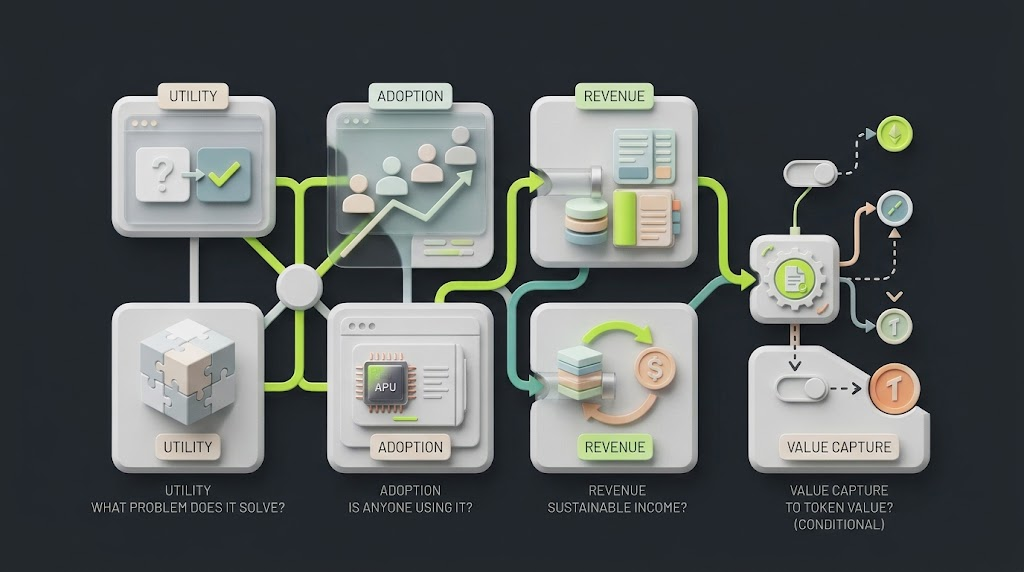
A useful product is only the starting point; adoption, revenue, and token economics also matter.
An altcoin has real utility when its token serves a meaningful function within a product, network, or economic system. That function might involve paying transaction fees, securing a blockchain, participating in governance, staking, accessing decentralized services, or settling payments for digital resources.
However, utility is not a simple yes-or-no test. A token may have a legitimate purpose but limited adoption. A protocol may attract substantial activity while its token captures little of the economic value created.
A Working Product Is Only the Starting Point
A project's whitepaper may describe an ambitious use case, but its actual product and usage data provide stronger evidence.
For example, a blockchain's native token may be required to pay transaction fees. A decentralized lending protocol may facilitate borrowing and lending against crypto collateral. A decentralized computing network may use its token to settle payments for GPU resources.
These are concrete functions. The next questions are whether users need the product, whether they continue using it without heavy incentives, and whether competing services can provide the same function more efficiently.
A useful project should have evidence beyond a roadmap, partnership announcement, social-media following, or exchange listing. Relevant indicators include recurring usage, active applications, fees paid by users, repeat customers, and demand that persists when token incentives decline.
Adoption, Fees, and Revenue: What the Data Shows
Several metrics can help assess a project's traction, but each measures something different.
Metric | What it can tell you | What it cannot prove by itself |
Active users or addresses | Whether the network is being used | That every address represents a unique person or a valuable user |
Transaction volume | The scale of activity being processed | That activity is organic, profitable, or sustainable |
Total value locked (TVL) | The assets deposited in a DeFi protocol | That the protocol generates strong revenue or that its token captures value |
Fees | What users pay to use a service | How much the protocol retains after rewards, rebates, and other costs |
Protocol revenue | The portion of economic activity retained under a particular methodology | That revenue belongs to token holders |
Token demand | Whether the token is needed or purchased for a function | That demand will exceed new supply or support a particular price |
Revenue comparisons require particular care. Analytics platforms may distinguish gross fees, protocol revenue, application revenue, and token-holder revenue differently. Stablecoin issuers, lending protocols, trading platforms, and infrastructure networks also have different business models.
Use a consistent methodology and reporting period when comparing projects. A single high-volume day or a temporary incentive campaign is not enough to establish durable demand.
Does the Token Capture Any of That Value?
This is the most important distinction between a useful project and a potentially compelling token thesis.
A token can support an excellent product without giving holders a direct economic claim on its success. Governance rights, transaction-fee requirements, staking functions, and revenue-linked buybacks are different mechanisms, each with its own limitations.
For instance, Aave describes AAVE as a governance token and explains its revenue-funded buyback program. Tokens acquired through that program go to the Aave DAO Ecosystem Reserve for governance-approved uses; they are not automatically burned. That distinction matters when assessing how protocol revenue affects token supply and holder economics.
By contrast, Ondo Foundation identifies ONDO as a governance token for the Ondo DAO and Flux Finance. It should not be treated as equivalent to owning the underlying securities offered through Ondo's tokenized-asset products.
Before drawing conclusions, ask three questions:
What must users or developers do with the token?
Does greater product usage increase demand for the token, reduce its supply, or provide another measurable benefit?
Can that mechanism be diluted, changed by governance, bypassed, or weakened by competitors?
If those links are unclear, the project's utility may be real while the token's investment case remains uncertain.
How to Evaluate Altcoins Beyond the Hype
A consistent evaluation process helps compare projects across different sectors without assuming that every token should work the same way.
Check Real Usage and Product Demand
Start with the product, not the token chart. Identify the problem it solves, its target users, and the alternatives available.
For blockchain infrastructure, look at developer activity, applications, transaction demand, and the role the network plays in settling activity. For DeFi, examine borrowing demand, lending utilization, fees, and the quality of collateral. For decentralized computing, investigate paid workloads, recurring customers, and the actual resources delivered.
Look for activity over multiple reporting periods. Growth that persists beyond promotional campaigns is generally more informative than a brief spike in addresses or transaction counts.
Partnerships can support a project's credibility, but an announcement is not the same as a live integration. Check whether the product has launched, who can access it, and whether the integration is generating measurable use.
Examine Protocol Revenue and Its Source
Revenue can help distinguish an operating protocol from one whose apparent growth depends mainly on token emissions. But the source and distribution of revenue matter as much as the headline figure.
In a February 2026 interview with Cointelegraph, Curve Finance founder Michael Egorov argued that DeFi protocols need sustainable revenue rather than relying on token incentives to attract liquidity. His principle was direct: "Your yield should come from revenues, not from tokens."
The implication for altcoin research is not that every incentive program is inherently bad. Incentives can help a network bootstrap liquidity or attract early users. The question is whether genuine demand eventually supports the business without requiring ever-larger rewards.
Review whether revenue comes from user fees, trading activity, borrowing demand, subscriptions, or other services. Then check how much is retained, how much is spent on incentives and operations, and whether any portion benefits the token through an explicit mechanism.
Review Token Supply, Unlocks, and Liquidity
A useful project can still have a weak token if supply expands faster than demand.
Review circulating supply, maximum supply where applicable, emissions, vesting schedules, upcoming unlocks, and the gap between market capitalization and FDV. FDV estimates the value of all tokens at the current price, including tokens that may not yet be circulating; it is a comparison tool, not a prediction of future market value.
Liquidity matters, too. A token with thin order books can experience sharp price movements even when its headline market capitalization appears substantial. Check trading depth across reputable venues and whether volume is concentrated in a small number of markets.
Finally, examine who controls the token supply and whether governance can materially change issuance, fee allocation, staking rewards, or buyback policies.
Look for Evidence That Supports Token Demand
The strongest token theses have a clear connection between economic activity and the token's function. That connection can take several forms:
Required usage: Users need the token to pay network or service fees.
Network security: Validators or other participants stake the token to help secure the system.
Fee-funded buybacks: A protocol uses retained revenue to purchase tokens, subject to its rules and governance.
Burn mechanisms: Tokens are permanently removed from circulation under specified conditions.
Collateral or liquidity functions: The token plays a defined role in applications, although this may also create liquidation or concentration risks.
None of these mechanisms guarantees price appreciation. Demand can fall, supply can rise, governance can change the rules, and the market may already price in optimistic assumptions.
Altcoins With Real Utility to Research in 2026
The following six projects represent different utility categories. They are selected to illustrate distinct models of product demand and token economics, not because they are guaranteed to outperform or have been ranked by expected returns.
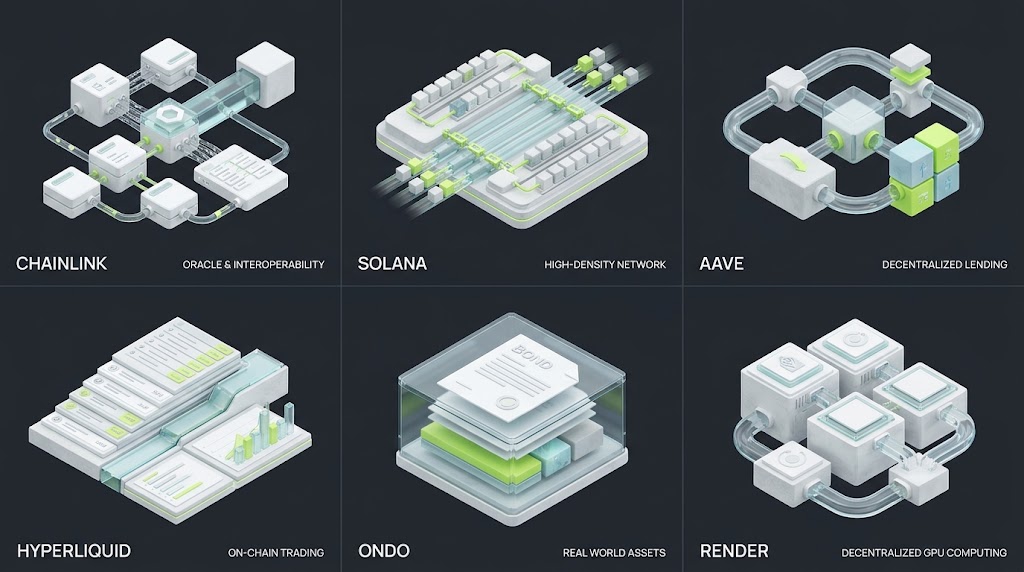
These projects serve different markets, so their utility and token value capture should be evaluated separately.
1. Chainlink (LINK): Oracle Infrastructure and Cross-Chain Services
Core utility: Providing blockchain applications with external data and infrastructure for communication between different networks.
Smart contracts cannot independently verify every real-world event or external data point. Oracle networks can supply information such as asset prices and other data required by decentralized applications. Chainlink also develops cross-chain infrastructure intended to support communication and transfers across blockchain environments.
The LINK token has a role in the network's economic and security mechanisms. Chainlink's documentation describes staking as a cryptoeconomic security mechanism, while its Chainlink Reserve announcement explains how revenue from onchain services and offchain enterprise integrations can be converted into LINK and accumulated in a reserve.
That creates a potential connection between demand for Chainlink services and the token. However, the extent and timing of that connection depend on actual service usage, payment flows, and the reserve mechanism.
What to verify: Look for measurable usage of Chainlink services, evidence of recurring customer demand, and updates to staking and payment mechanisms. Distinguish project-reported revenue from independently verified figures, and do not assume that every enterprise integration produces immediate open-market demand for LINK.
Key risks: Competition from other oracle and interoperability systems, changes in how services are paid for, technical vulnerabilities, and a gap between infrastructure adoption and token demand.
2. Solana (SOL): Blockchain Infrastructure and Onchain Activity
Core utility: Paying transaction fees and participating in network security through staking.
Solana supports decentralized applications, token transfers, trading, payments, and other onchain activities. SOL is required to pay network transaction fees, including transactions involving other tokens. Its native asset also plays a role in staking and validator economics.
According to Solana's official fee documentation, the base transaction fee is split between burning and validator compensation, while optional prioritization fees go to validators. These mechanisms establish a direct relationship between network transactions and SOL's function, although they do not make all network activity equally valuable.
The relevant question is whether Solana can sustain demand from applications and users beyond short-lived trading or speculative activity. Stablecoin transfers, decentralized exchange activity, consumer applications, and other recurring use cases can provide evidence, but each should be assessed separately.
What to verify: Examine network activity across multiple periods, fee generation, the mix of application types, staking participation, and whether usage remains strong when speculative trading cools.
Key risks: Competition from other layer-1 networks and layer-2 systems, network reliability concerns, concentration among infrastructure providers, and token-price exposure to broader market conditions.
3. Aave (AAVE): Decentralized Lending and Protocol Fees
Core utility: Governance and participation in Aave's broader protocol mechanisms.
Aave is a decentralized lending protocol where users can supply crypto assets to earn variable returns or borrow against collateral under the protocol's rules. Its activity is tied to borrowing demand, collateral values, utilization, liquidation mechanics, and the risks of supported markets.
AAVE gives holders governance rights. The protocol also operates a buyback program funded by protocol revenue. Its documentation states that the program was approved as part of the Aavenomics update, began execution in April 2025, and uses a budget that can be adjusted through governance. Acquired tokens are sent to the DAO Ecosystem Reserve rather than automatically burned. See the Aave token documentation for details.
Aave therefore provides a useful case study in the difference between a protocol earning fees and a token benefiting from a governance-approved revenue mechanism. The durability of that link depends on actual revenue, the buyback program's continuation, and decisions about how the reserve is used.
What to verify: Track borrowing demand, utilization, protocol fees and revenue, the status of buybacks, and changes to governance-approved token mechanisms. Check whether activity is driven by sustained demand or temporary incentives.
Key risks: Smart-contract exploits, bad debt, collateral volatility, governance concentration, regulatory uncertainty, and competition from other lending protocols.
4. Hyperliquid (HYPE): Onchain Trading and Fee-Based Token Mechanics
Core utility: Participation in the Hyperliquid ecosystem, with a token mechanism linked to trading fees.
Hyperliquid provides an onchain trading environment, including perpetual futures markets. Trading activity creates a measurable source of fees, making it possible to examine the relationship between product usage and token-related mechanisms.
In an August 2026 report updated in October, Bitwise Chief Investment Officer Matt Hougan argued that crypto assets beyond Bitcoin would increasingly be evaluated by revenue, as more protocols connect fees with token buybacks or burns. He pointed to Hyperliquid as an example of this trend.
Hyperliquid is relevant because its fee allocation has included purchases of HYPE through the Assistance Fund. But fee generation, fund purchases, token burns, and the value ultimately accruing to holders are not interchangeable concepts. The details of the mechanism and any governance or protocol changes need to be checked against current documentation.
What to verify: Review trading volume and fees over time, the proportion of fees allocated to token purchases, the treatment of those purchases, and the impact of incentives and market cycles. Check whether trading activity is diversified and sustainable rather than concentrated in a small number of highly active markets.
Key risks: Dependence on derivatives trading, intense competition, smart-contract and operational risks, regulatory exposure, and changes in trading activity that can sharply affect fees.
5. Ondo (ONDO): Tokenized Real-World Assets
Core utility: Governance within the Ondo ecosystem, while Ondo's products focus on bringing certain traditional financial assets onchain.
Real-world asset tokenization represents financial or other assets through blockchain-based tokens. Depending on the product and legal structure, tokenized assets may offer access to onchain transfers or markets, but their rights and restrictions differ from one product to another.
Ondo is relevant to the real-world asset theme because its ecosystem includes tokenized financial products. However, the utility of Ondo's products must not be confused with the rights of ONDO token holders. The Ondo Foundation's token documentation identifies ONDO as a governance token for the Ondo DAO and Flux Finance. It does not establish that holding ONDO gives an investor ownership of tokenized securities or a direct claim on their cash flows.
Robinhood CEO Vlad Tenev highlighted the broader tokenization trend in a July 2026 interview, saying that crypto's future lies in bringing real-world assets onchain. His comments reflect an industry view about the direction of financial infrastructure, not proof that any specific RWA token will benefit.
For ONDO, the key analytical task is to separate three layers: demand for tokenized financial products, the economics of the companies and products behind them, and the governance or other functions provided by the ONDO token.
What to verify: Check assets under management or outstanding product value where reliably reported, product availability by jurisdiction, legal rights attached to each asset token, and the specific powers and limitations of ONDO governance. Do not infer token-holder cash flows from growth in tokenized assets alone.
Key risks: Regulatory restrictions, issuer and custody risk, smart-contract vulnerabilities, liquidity constraints, legal differences between jurisdictions, and a weak or indirect link between product adoption and ONDO demand.
For a deeper explanation of the sector, see Bitunix's Real-World Asset (RWA) Tokenization Guide. Readers comparing blockchain-based representations with conventional investments can also consult Tokenization vs. Traditional Assets.
6. Render (RENDER): Decentralized GPU Computing
Core utility: Paying for rendering and other supported computing workloads through a decentralized network.
Render connects users who need GPU computing resources with network participants who provide them. Its model is different from a general-purpose blockchain or lending protocol: the underlying demand to examine is whether customers pay for useful computing work and whether providers can reliably deliver it.
The Render Network's Burn Mint Equilibrium documentation describes a model in which RENDER is used to pay for network jobs and burned in connection with completed work, while token emissions help incentivize network participants. The mechanism links token economics to service demand, but its overall effect depends on the balance between tokens burned and tokens emitted.
This makes Render a useful example of why a utility claim needs operational evidence. A decentralized computing network may have a clear use case, but its long-term position depends on workload demand, pricing, service quality, available capacity, and competition from centralized providers and other decentralized networks.
What to verify: Look for completed workloads, customer demand, network usage, the amount of RENDER burned through paid work, emissions, and the balance between demand and incentives. Distinguish actual paid workloads from announced integrations or theoretical computing capacity.
Key risks: Competition from centralized cloud providers, inconsistent demand, supply incentives exceeding paid usage, operational performance, and volatility in the token's market value.
How to Tell Real Utility From Speculation
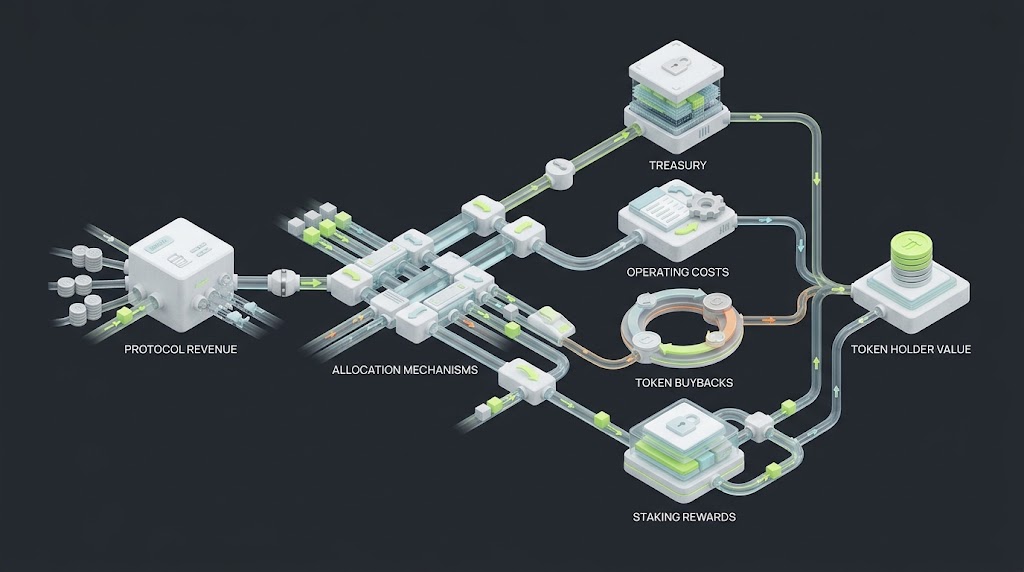
Sustained product usage provides stronger evidence of utility than price momentum or social attention alone.
The six projects show that utility can take very different forms. The same evaluation framework can help distinguish evidence of real demand from a story that is mainly supported by market attention.
Signs of Sustainable Demand
Look for several signals together rather than relying on one headline metric:
Recurring use: People return to the product because it solves a practical problem.
Meaningful economic activity: Users pay fees or purchase services, rather than activity depending entirely on subsidies.
Transparent token mechanics: Documentation explains how the token is used, how supply changes, and who controls key decisions.
Evidence over time: Adoption, fees, or paid workloads remain meaningful across different market conditions.
Clear value capture: There is a verifiable mechanism linking product usage to token demand or another defined token function.
Credible alternatives analysis: The project offers a defensible benefit compared with competing networks or services.
No single indicator guarantees that a token is undervalued or will rise in price. These signals help establish whether the project's claims have a factual foundation.
Warning Signs: Weak Value Capture, Dilution, and Narrative-Driven Activity
Be cautious when a project relies heavily on partnerships that have not gone live, user counts without evidence of repeat use, or transaction volume that does not translate into meaningful fees.
A token may also face a mismatch between product success and holder outcomes. For example, a company might earn revenue from a product while its token only provides limited governance rights. A network may require a token for fees, but the cost per transaction may be so small that demand remains modest. Buybacks may be discretionary, and token burns may be offset by emissions.
Supply matters as well. Large unlocks can increase the amount of tokens available for sale, while thin liquidity can amplify price moves. These factors should be assessed alongside adoption and revenue, not after them.
Why a Useful Crypto Project Can Still Have a Weak Token
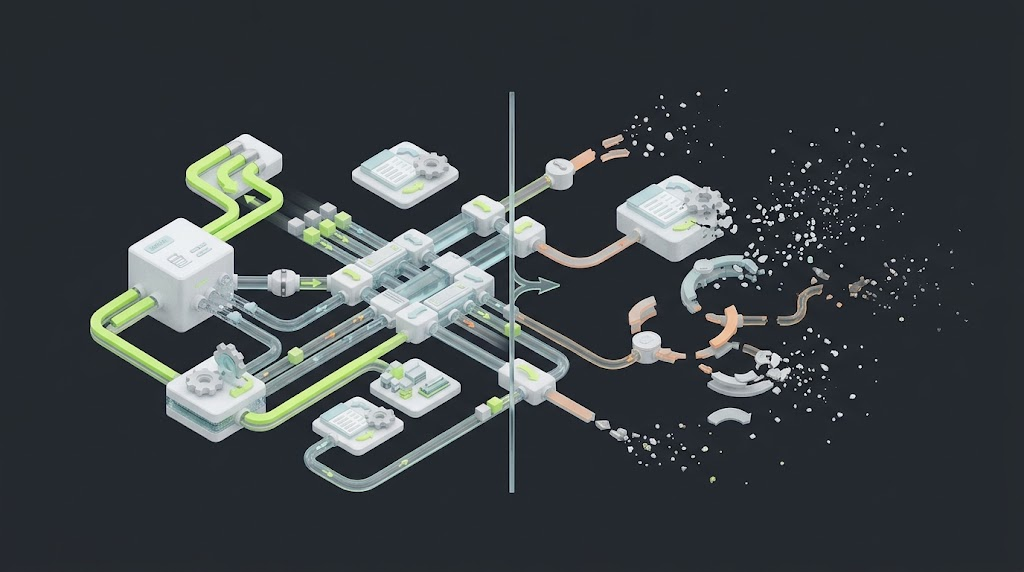
Revenue matters, but the distribution mechanism determines whether token holders benefit.
A project can provide a real service and still be a poor investment at a particular price. Utility is evidence about what a product does; valuation is a separate question about what the market is paying for the token and what future demand may justify that price.
Protocol Success Does Not Guarantee Token Returns
Matt Hougan's view that revenue will become a more important factor in crypto valuation captures a significant shift in how some investors assess digital assets. Yet revenue is not a universal valuation formula. A protocol's economics, growth prospects, risk, token supply, and rights attached to the token all matter.
Even when revenue is growing, the token may already reflect optimistic expectations. Alternatively, revenue may be directed toward operating expenses, contributors, liquidity providers, or a treasury rather than token holders. A buyback mechanism can create a link to token demand, but its scale, duration, and governance conditions still need to be considered.
The practical lesson is to evaluate both the product and the asset. Ask whether the protocol is useful, whether its economics are sustainable, and whether the token has a credible mechanism for capturing any of that value.
Competition, Regulation, and Supply Pressure
Real utility does not eliminate business risk. A network can lose users to a cheaper or faster competitor. A lending protocol can face a smart-contract exploit or a sudden decline in collateral values. An RWA product can be constrained by securities laws, investor eligibility rules, custody arrangements, or the legal structure of the underlying asset.
Token supply can also overwhelm improvements in usage. If new tokens enter circulation faster than demand grows, the price may struggle even while the project expands. Governance decisions may alter fee distribution or staking incentives, and technical upgrades may introduce new risks.
Before evaluating any altcoin, check the latest official documentation, token supply schedule, market liquidity, and relevant independent data. Revisit the thesis when the underlying facts change rather than relying on a fixed narrative.