
Reporting Period: October 1–31, 2026
Data as of: October 31, 2026
Key Highlights
North Korean hackers reportedly stole $6.3 billion from Binance, making it the largest security incident in the industry's history.
Strive significantly increased its BTC holdings, while the impact of potential Binance-related outflows has yet to become apparent.
Market sentiment toward other trading platforms improved following the suspected Binance hack.
Kalshi and Polymarket recorded more than 50% month-over-month growth in average daily trading volume in October.
The Pump.fun app integrated Hyperliquid perpetual futures trading.
Thailand's Supreme Court recognized Bitcoin as property under the law.
Bitcoin Price Review and Market Analysis: October 2026
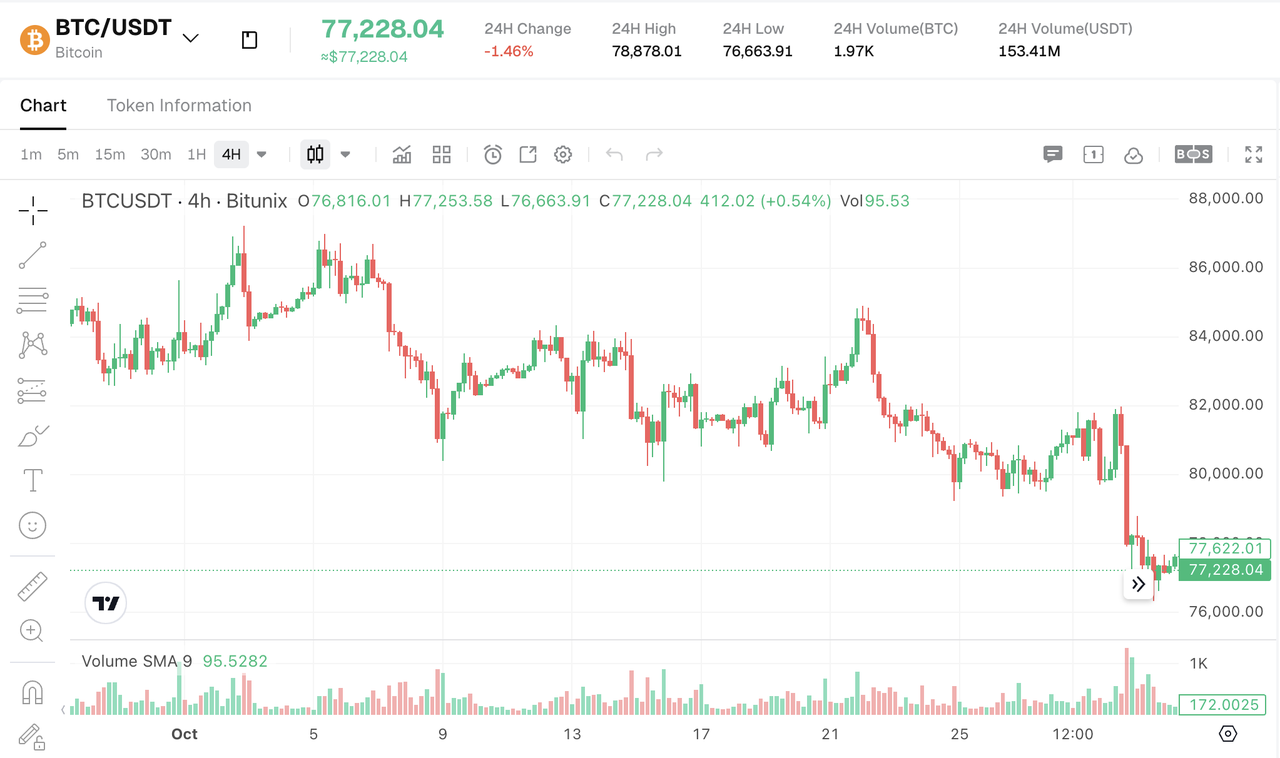
Bitcoin experienced a sharp pullback, followed by a prolonged decline and an accelerated sell-off in October 2026. At the beginning of the month, BTC extended its gains from August and September, briefly reaching a local high of $87,000. However, changing policy expectations surrounding the U.S. midterm elections, combined with weaker-than-expected economic data, put pressure on prices from mid-October onward. Bitcoin entered a choppy decline and repeatedly fell below $80,000. Toward the end of October, Binance, the world's largest cryptocurrency exchange, was suspected of suffering a major cyberattack involving approximately $6.3 billion in funds. The incident triggered investor concerns and potential capital outflows, pushing BTC below $77,000 by month-end. Bitcoin recorded a cumulative decline of 8% for October.
Source: Bitunix
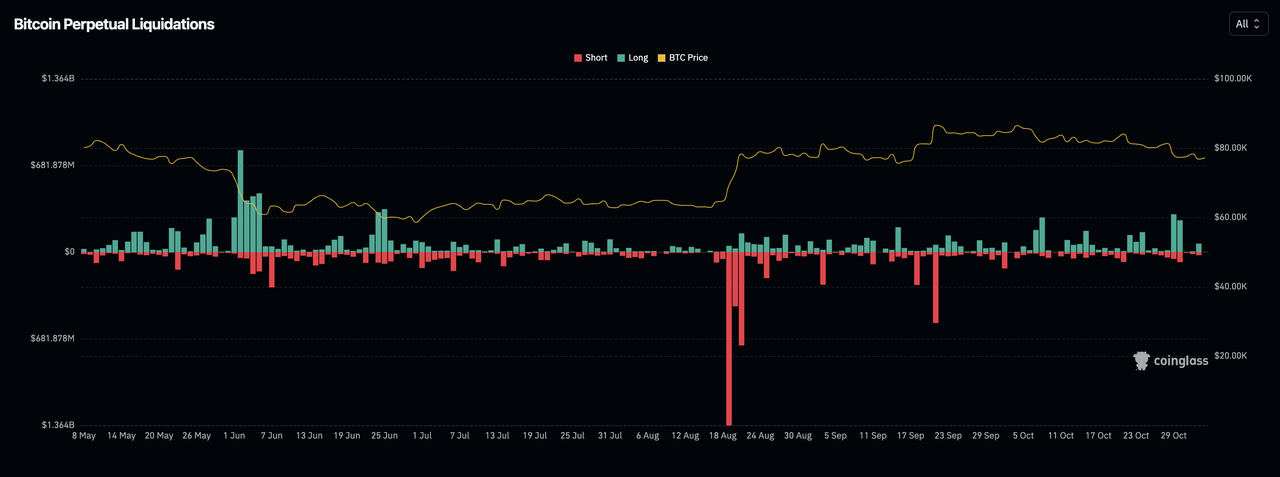
Bitcoin Futures Trading in October: BTC Long Liquidations Exceed $290 Million on October 29
As BTC prices continued to decline in October, long positions were liquidated on multiple occasions, with daily losses exceeding $100 million. On October 29, amid the suspected Binance hack and Bitcoin's fall below $77,000, BTC long liquidations exceeded $290 million, marking the largest daily liquidation event of the month.
Nevertheless, compared with the more severe liquidation events in May and August, the scale of liquidations at the end of October remained relatively contained. The market did not experience a broader wave of cascading liquidations.
Source: CoinGlass
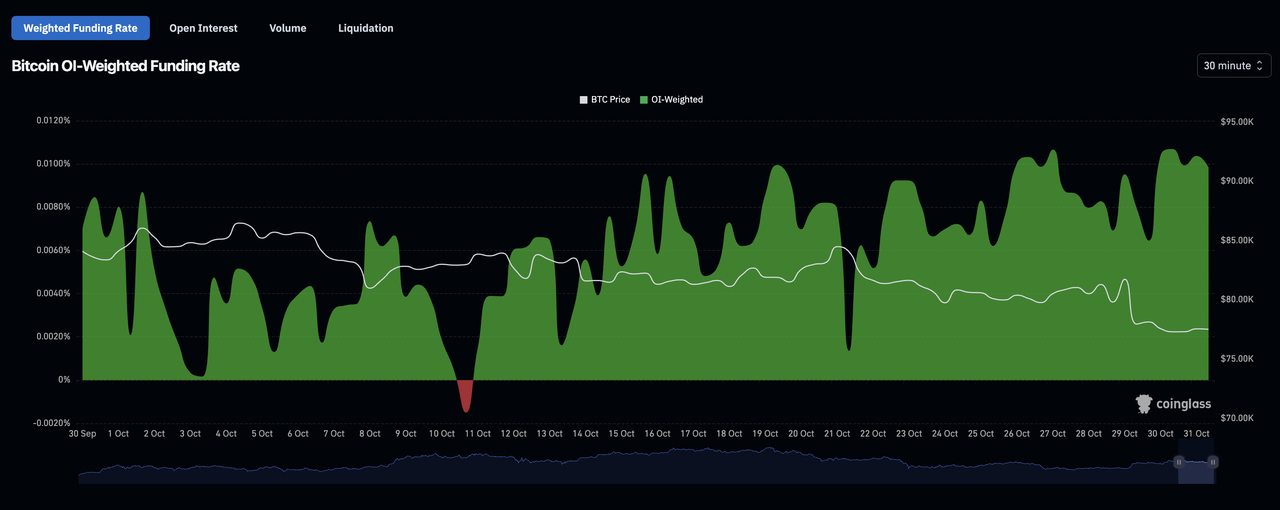
BTC perpetual futures funding rates remained positive for most of October, creating a clear divergence from Bitcoin's choppy downward price movement. This suggests that futures traders continued to maintain a degree of bullish sentiment, with demand for long positions remaining relatively strong.
Source: CoinGlass
Institutional Bitcoin Holdings: Strive Accumulates BTC Aggressively, While Binance-Related Outflows Have Yet to Materialize
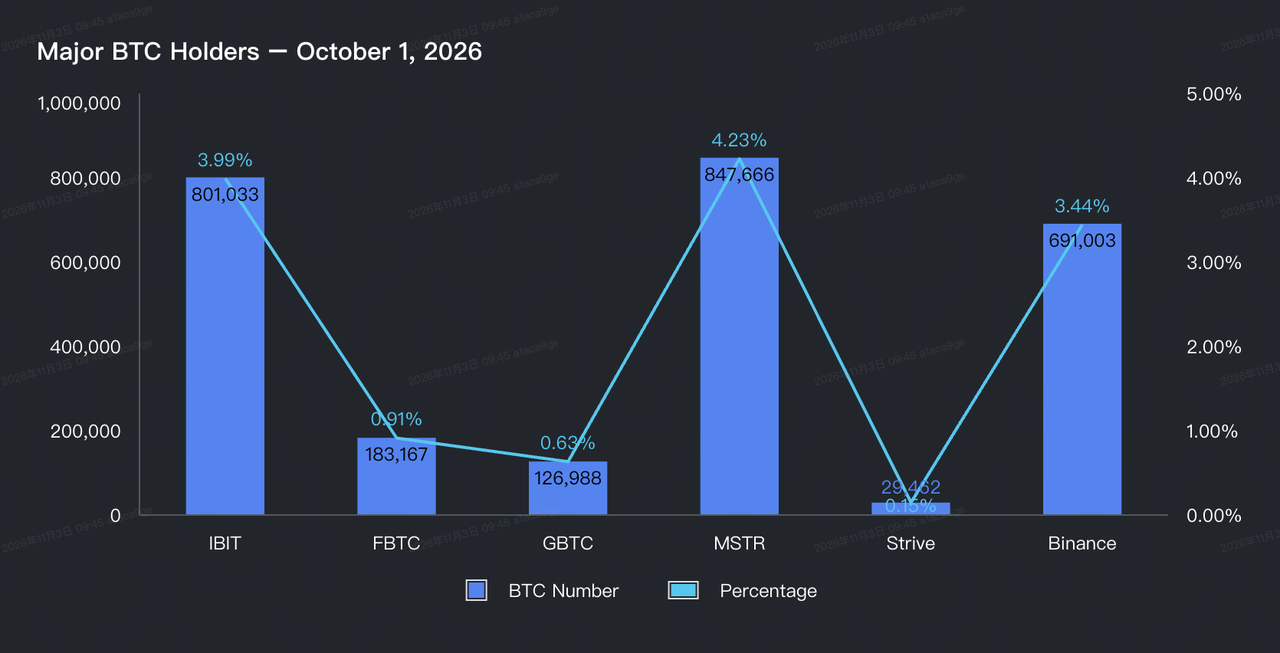
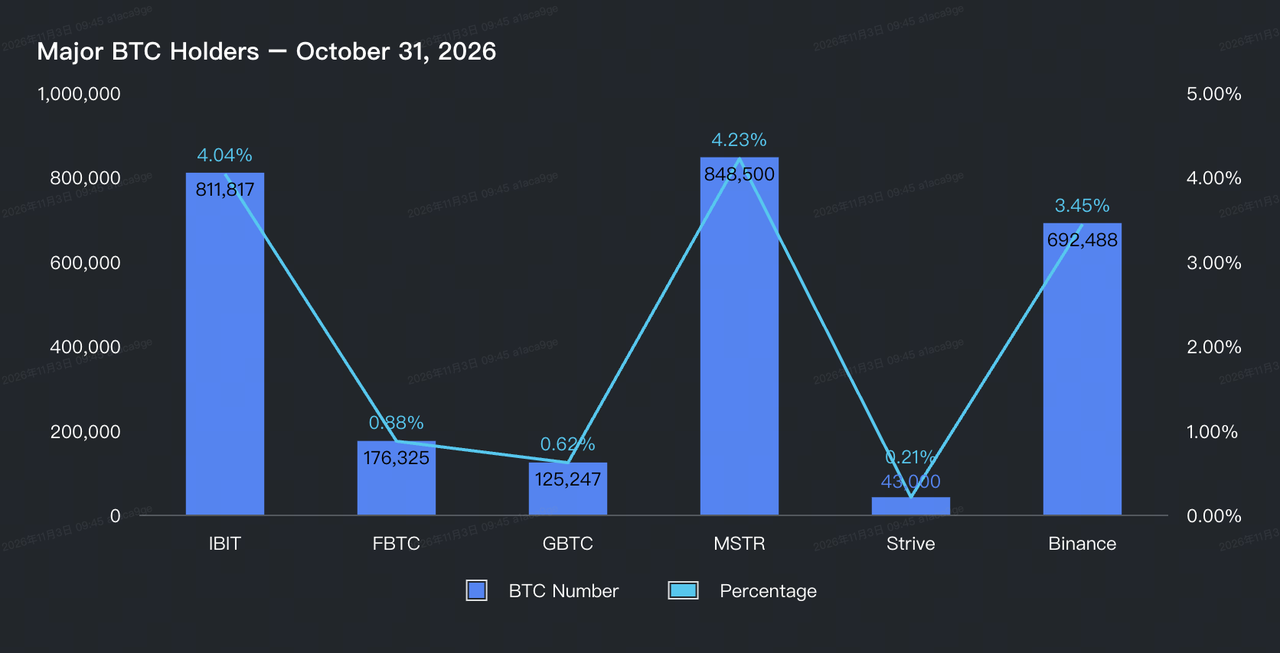
Strive was the largest BTC buyer in October, purchasing 13,538 BTC during the month. The Bitcoin treasury company recently completed a $630 million issuance of SATS perpetual preferred stock and established an additional at-the-market (ATM) offering program of up to $1 billion.
Among spot Bitcoin ETFs, IBIT, the largest BTC spot ETF by assets under management, added a total of 10,784 BTC in October. FBTC and GBTC, by contrast, reduced their holdings over the same period.
Despite the suspected cyberattack, Binance's BTC reserves increased by more than 1,000 BTC compared with September. However, this increase may have been related to the platform's temporary suspension of withdrawals and should not be interpreted as a direct indication of investors' willingness to hold assets on the exchange. Once withdrawal services resume, Binance's BTC reserves could decline further if some investors choose to transfer their holdings off the platform.
Source: Bitbo
ETH Price Review and Market Analysis: October 2026
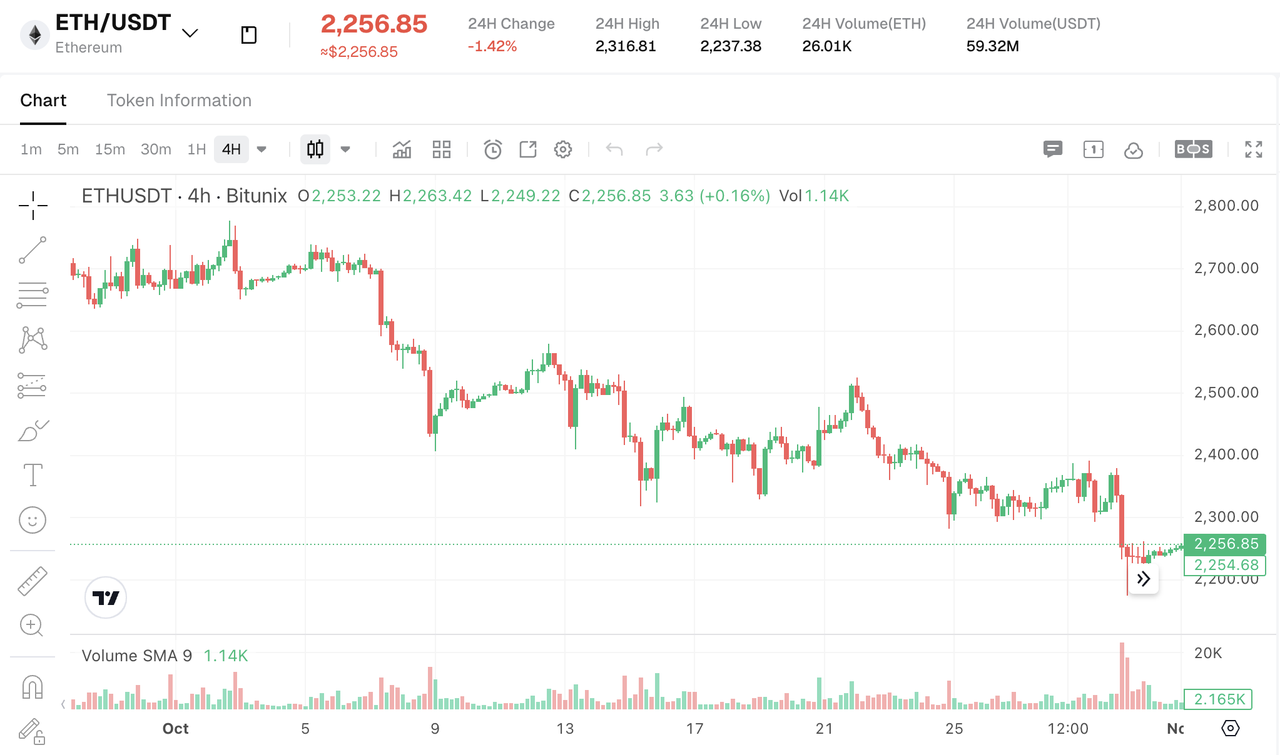
ETH underperformed BTC throughout October, failing to stage a meaningful rebound in the middle of the month and remaining under sustained selling pressure. Toward the end of October, the broader industry's major security incident added further pressure, briefly pushing ETH below $2,200. ETH fell approximately 16% over the month, significantly more than Bitcoin, highlighting its relative weakness during the market correction.
Source: Bitunix
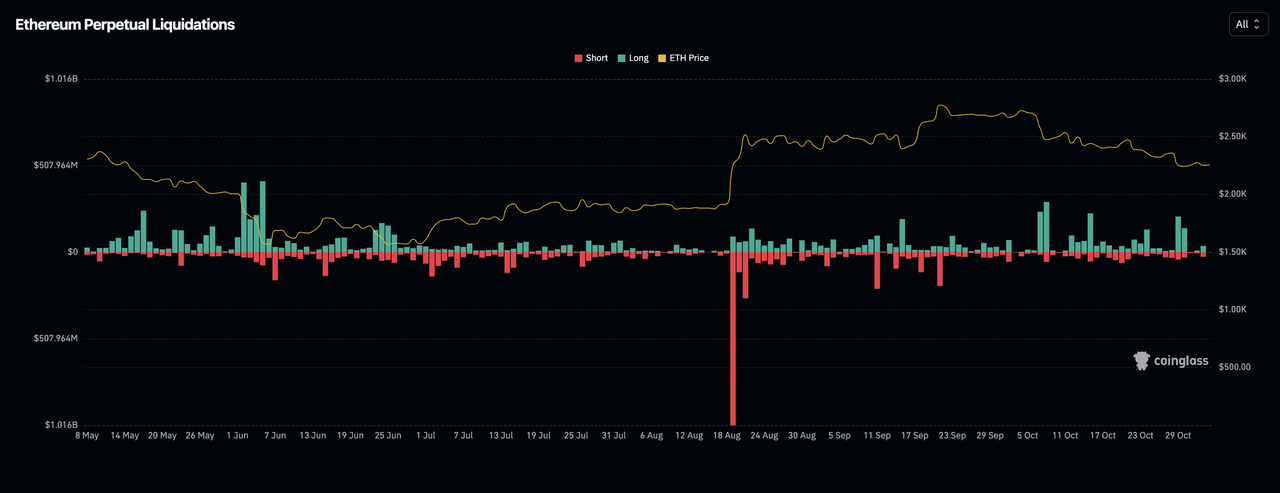
ETH Futures Trading in October: ETH Long Liquidations Reach $290 Million on October 8
ETH long positions also recorded a maximum single-day liquidation volume of approximately $290 million. Unlike BTC, however, ETH's largest liquidation event did not occur toward the end of October. Instead, it took place earlier, on October 8. This difference in timing may indicate that ETH was more sensitive to changing market conditions during that period. When U.S. economic data strengthened expectations that the Federal Reserve would maintain higher interest rates, risk assets faced increased selling pressure. This may also have affected spot ETH ETF flows and ETH's price performance.
Source: CoinGlass
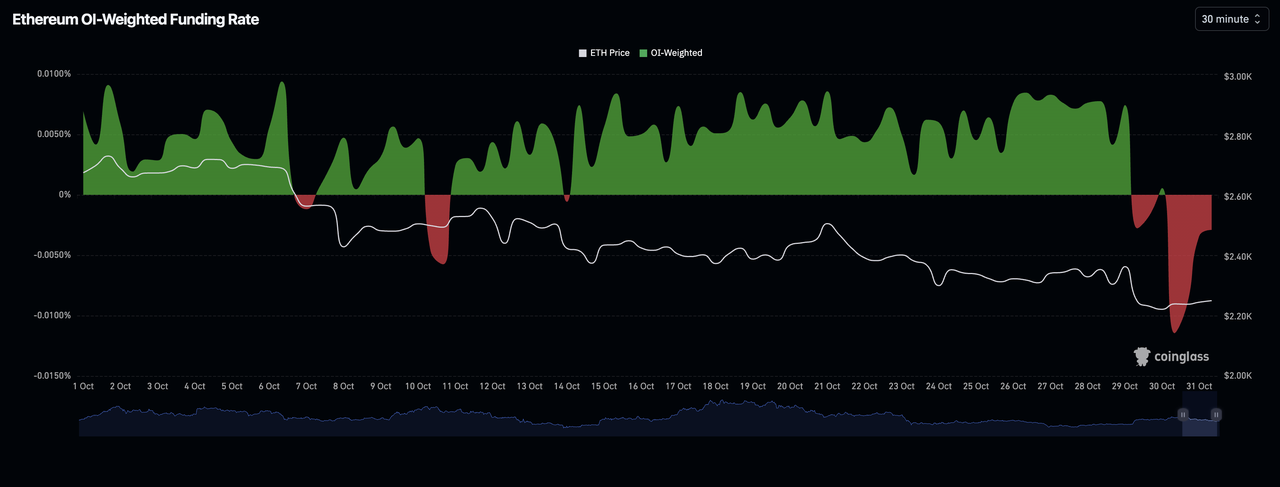
Funding rates also reflected a shift in market positioning. Toward the end of October, the suspected Binance hack further weakened confidence among ETH long traders. ETH funding rates fell from 0.0085% to -0.0115%, turning negative. A negative funding rate means that short traders pay funding fees to long traders, indicating relatively stronger demand for short positions.
Source: CoinGlass
Institutional Ethereum Holdings: ETHA Reduces Its Holdings by More Than 500,000 ETH in October as ETF Outflows Add to Price Pressure
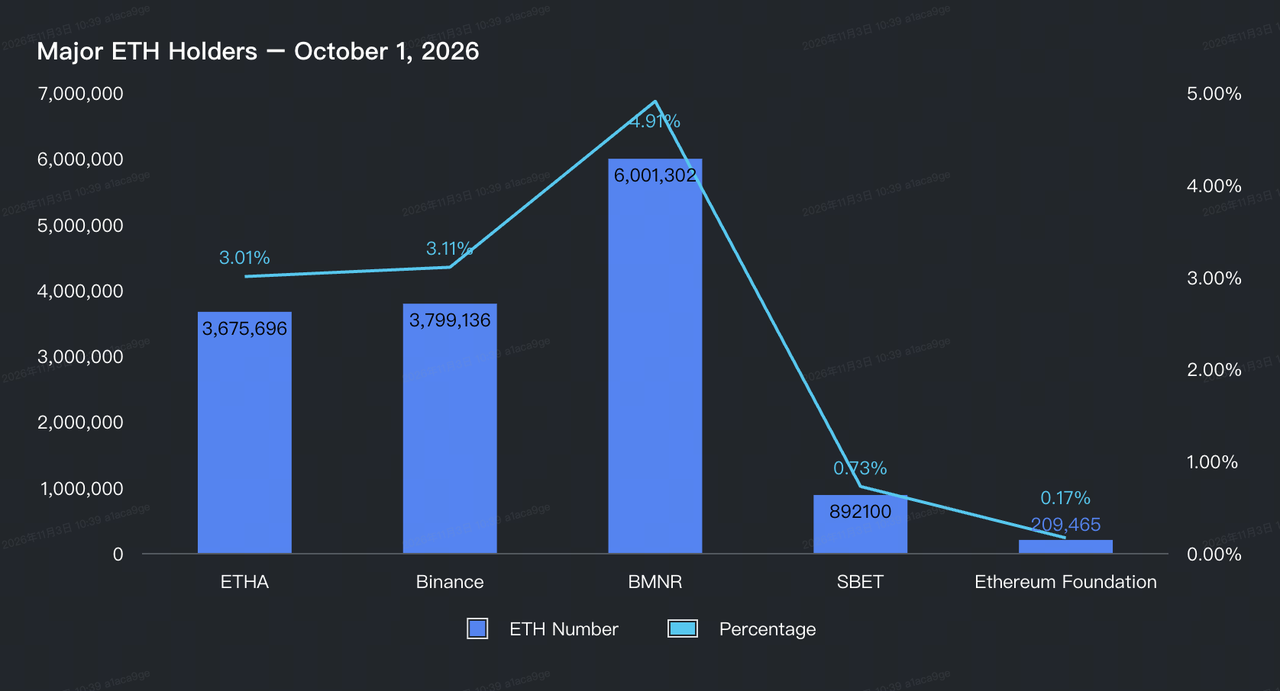
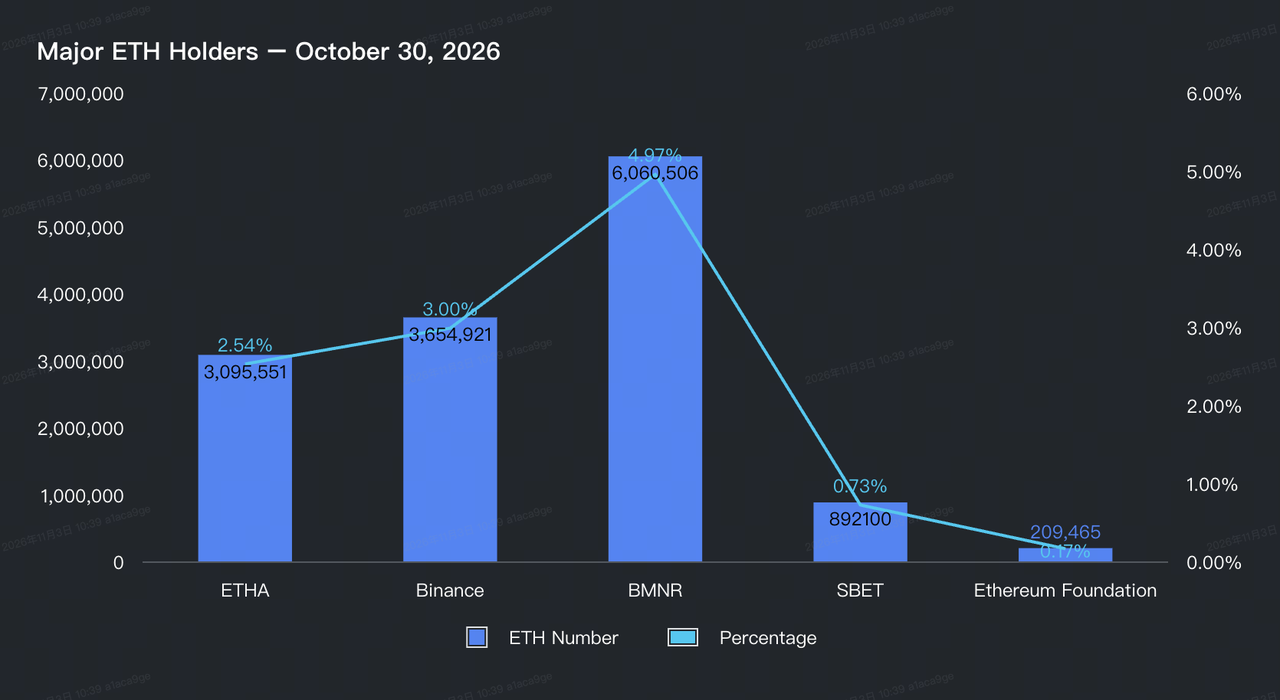
Spot Ethereum ETF flows reversed sharply in October. After recording consecutive net inflows in August and September, ETHA reduced its holdings by more than 500,000 ETH on a net basis during October. Its share of Ethereum's total supply also declined from 3.01% to 2.54%. Sustained net outflows from spot ETH ETFs became an important factor weighing on Ethereum prices throughout the month. In contrast, Bitmine (BMNR) continued accumulating ETH, purchasing more than 50,000 ETH in October and moving against the broader ETF selling trend.
Source: iShares
On-Chain Data Overview
Major Blockchains: Robinhood Chain Activity Retreats from September Highs, While Hyperliquid Generates $2.72 Million in Daily Gas Fees
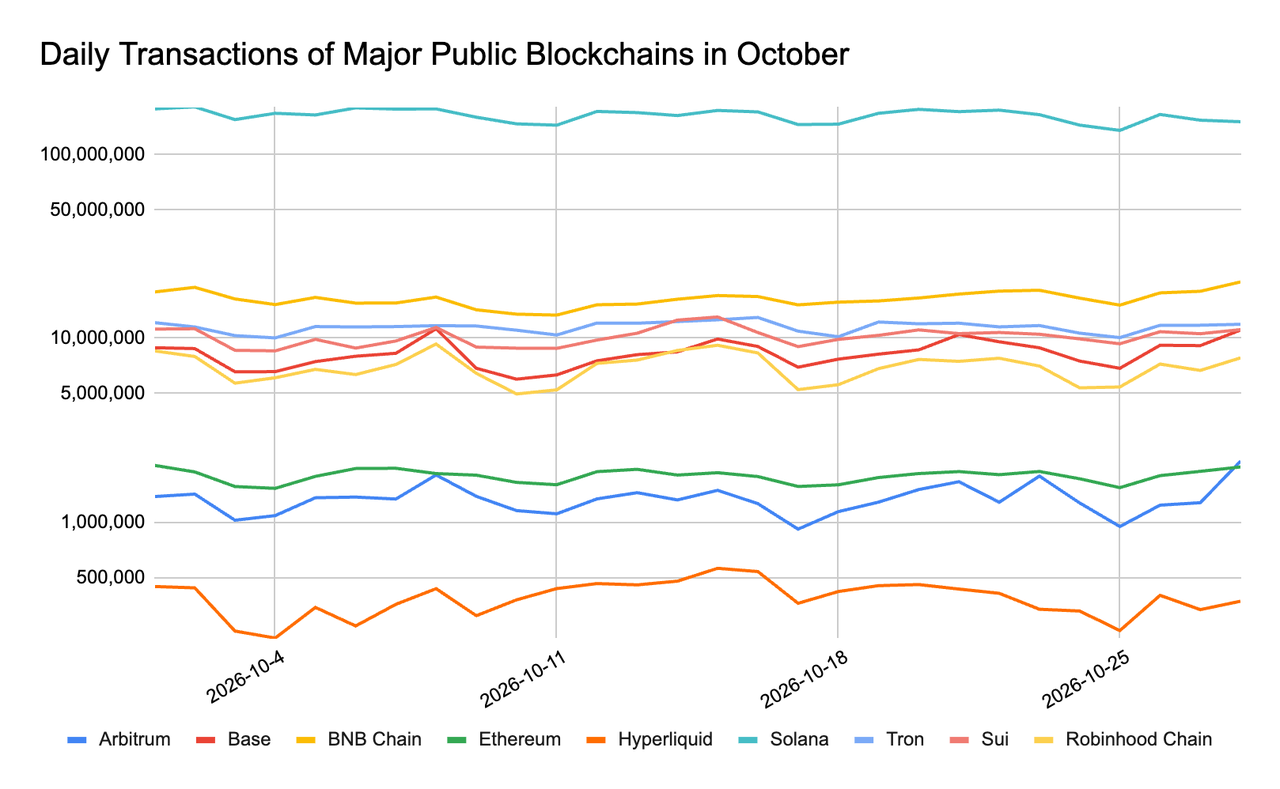
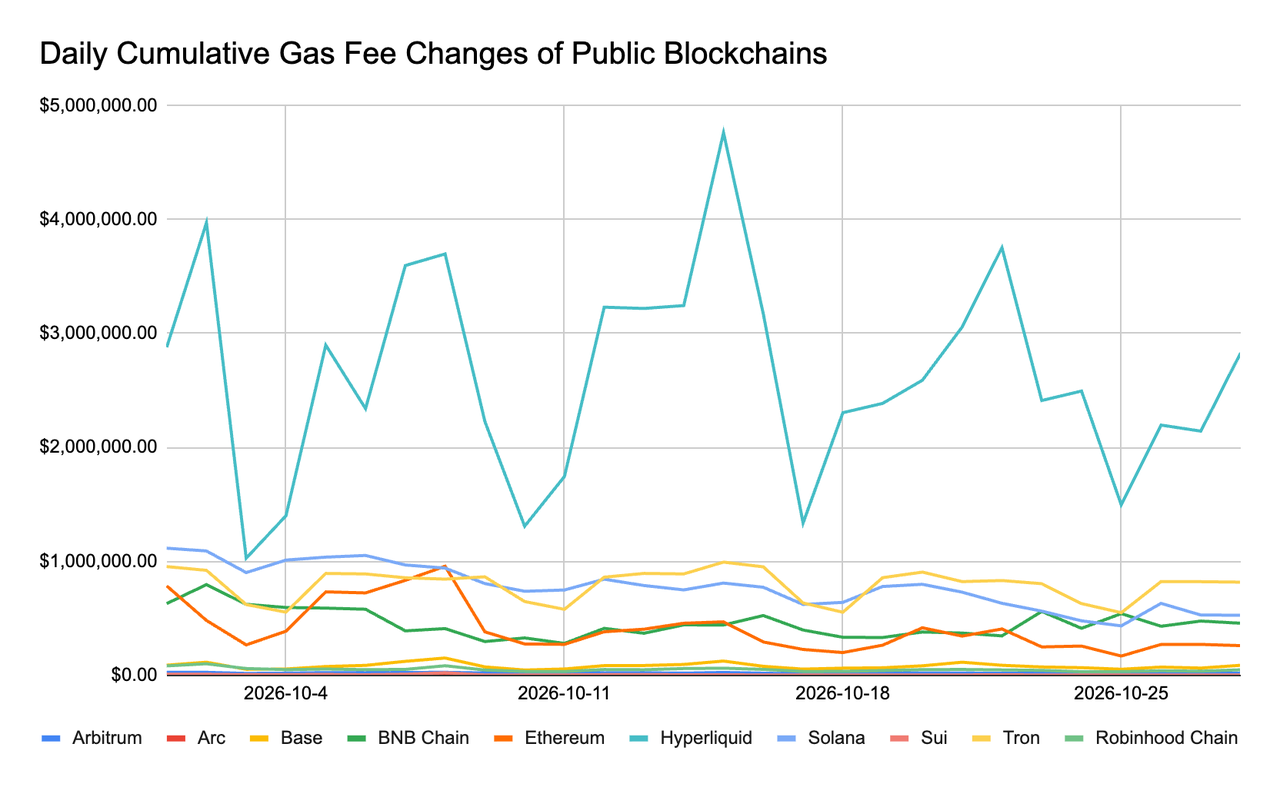
The competitive landscape among major blockchains remained largely unchanged in October. After Robinhood Chain reached record highs in transaction volume and gas fee revenue in September, both metrics declined during October. In terms of transaction count, Solana, BNB Chain, and Base ranked as the three most active networks in October. Hyperliquid continued to lead all networks in gas fee revenue, generating an average of $2.72 million per day during the month.
Source: Artemis
DEXs and Perp DEXs: Trading Landscape Remains Stable, While Binance Security Concerns Could Create Opportunities for DEXs
According to Artemis data, the overall market structure of decentralized exchanges (DEXs) and perpetual decentralized exchanges (Perp DEXs) remained largely unchanged in October. Among spot DEXs, multichain platform Uniswap remained the largest by trading volume, recording an average daily trading volume of $2.5 billion. In the Perp DEX sector, Hyperliquid, Aster, and Lighter continued to rank as the top three platforms by trading volume. However, the suspected North Korean cyberattack on Binance on October 29 could further undermine confidence in centralized exchanges and create new opportunities for DEXs. Some users may consider shifting to decentralized trading platforms to diversify their asset custody and trading risks.
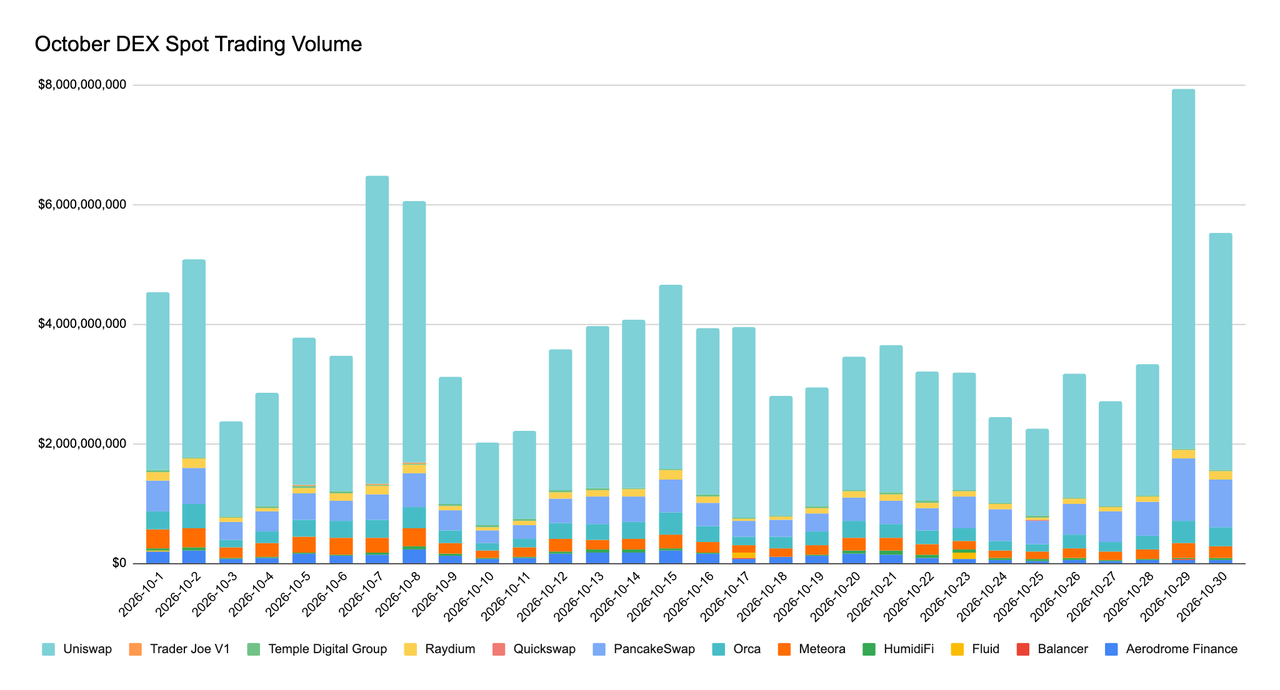
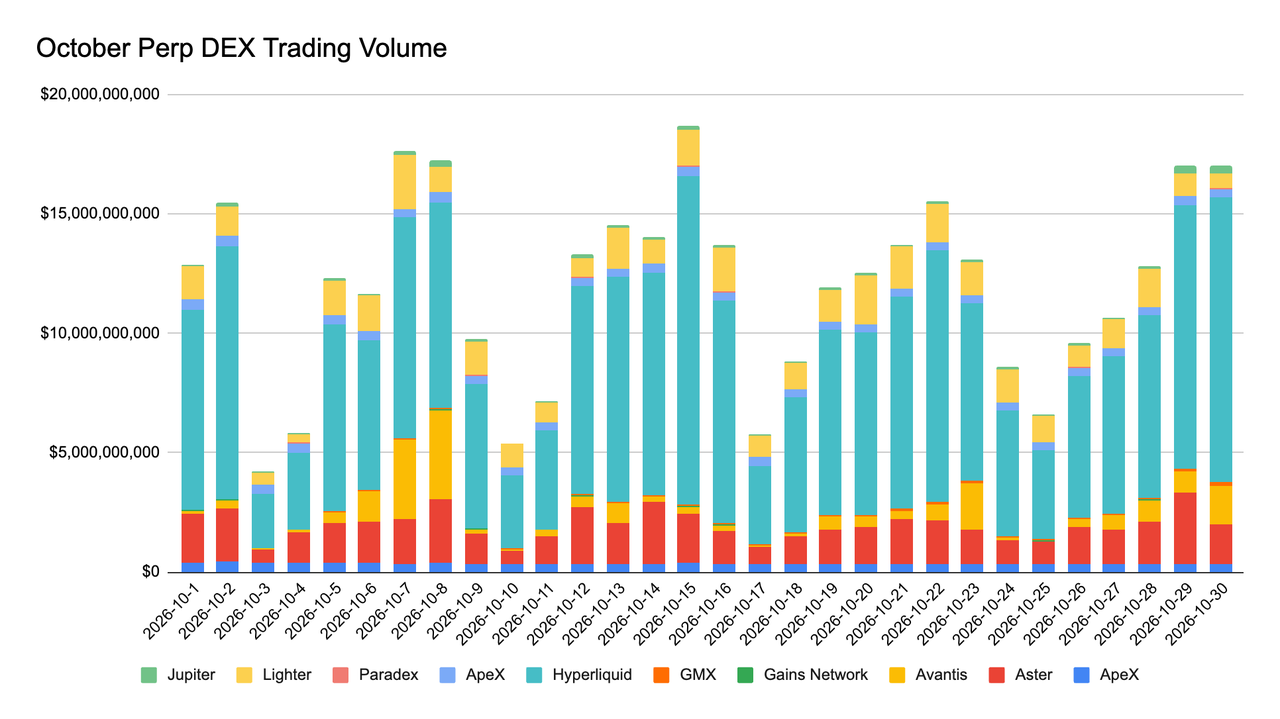
Source: Artemis
Prediction Markets: Kalshi and Polymarket Average Daily Trading Volumes Grow More Than 50% Month Over Month
Kalshi and Polymarket, the two leading prediction market platforms, continued to expand in October. Kalshi recorded an average daily trading volume of $3.1 billion, up 56% from September. Polymarket's average daily trading volume reached $650 million, representing month-over-month growth of 50%. By comparison, most smaller prediction market platforms failed to achieve similar growth. Several protocols, including ForecastEx, Limitless, and Opinion, recorded lower trading volumes than in September. This suggests that liquidity in the prediction market sector continues to concentrate among leading platforms.
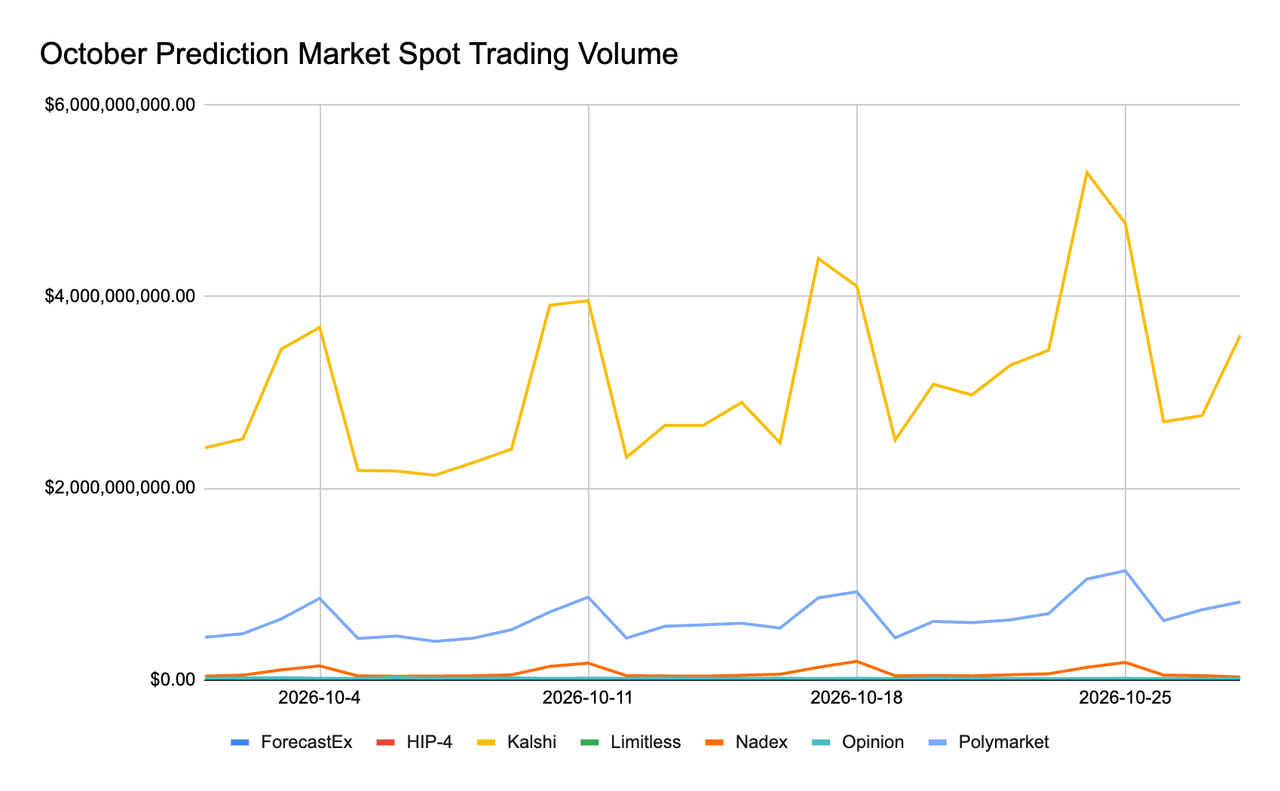
Source: Artemis
Social Sentiment Watch: Market Sentiment Toward Other Trading Platforms Rises Following Suspected Binance Hack
On October 30, Joe Vezz, CEO of social monitoring platform LunarCrush, posted on X that its monitoring data showed a 10-point increase in market sentiment toward Kraken following the suspected Binance hack. Sentiment toward Hyperliquid rose by 4 points, while OKX gained 3 points. Some traders holding assets on Binance may have rushed to transfer their funds to other platforms following the incident. During this period, social attention toward decentralized exchange Hyperliquid, brokerage platform Robinhood, and Bitcoin treasury company Strategy also increased significantly, accompanied by a rise in related search activity.
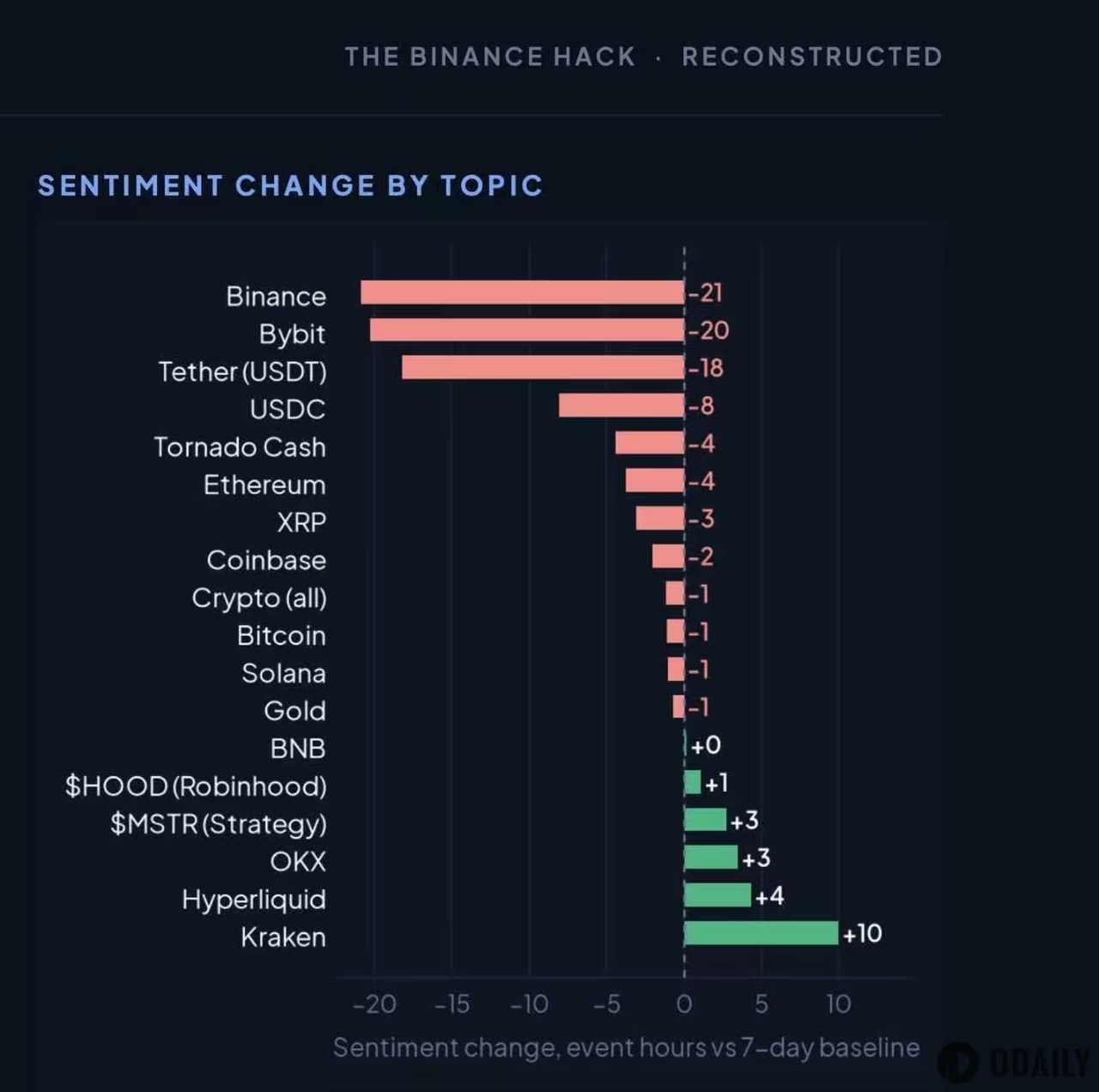
Source: X
Product Evolution: Trading Access, Stablecoin Payments, and Traditional Financial Infrastructure Continue to Converge
Pump.fun App Integrates Hyperliquid Perpetual Futures Trading
On October 29, the Pump.fun app launched support for Hyperliquid perpetual futures trading. Users can now trade more than 300 cryptocurrency, stock, and commodity markets listed on Hyperliquid directly with their in-app USDC or SOL balances, without needing to bridge assets across chains. The platform supports leverage of up to 40x for BTC, 25x for ETH, and 20x for stocks such as TSLA and NVIDIA. The S&P 500 market offers leverage of up to 50x. Users can also access isolated margin trading and configure take-profit and stop-loss orders. In addition, the app added support for the Arbitrum network, allowing users to trade any token on Arbitrum using their USDC balances.

Source: X
Ripple and Robinhood Announce Strategic Stablecoin Partnership
On October 27, Ripple and Robinhood announced a strategic partnership under which Robinhood's retail and institutional trading platforms will integrate Ripple's stablecoin, institutional market, and treasury management infrastructure. RLUSD is already available on Robinhood Chain and Bitstamp by Robinhood, with plans to bring the stablecoin to the Robinhood app later this year. Robinhood will also use RLUSD for institutional settlements on the XRP Ledger (XRPL).
Source: Unchained Crypto
Circle Explores Integrating USDC Settlement into Latin American Banking Payment Systems
On October 27, stablecoin issuer Circle announced a partnership with global payments technology company ACI Worldwide to explore integrating stablecoin settlement solutions, including USDC, into existing banking and payment infrastructure across Latin America, with Colombia as the initial focus. The two companies plan to combine ACI's cloud-native payment platform, ACI Connetic, with Circle's USDC infrastructure to demonstrate how stablecoin settlements can work alongside traditional payment processes. The initiative aims to help financial institutions evaluate stablecoin-based settlement models within their existing operating systems, without requiring them to build separate digital asset payment infrastructure.

Source: Techintel Pro
Market Sentiment and Trading Signals: Fear Deepens, but HYPE and Other Assets Show Signs of Structural Opportunities
Darkfost: Binance Security Incident Shakes Market Confidence, Fear and Greed Index Falls to Its Lowest Level Since August
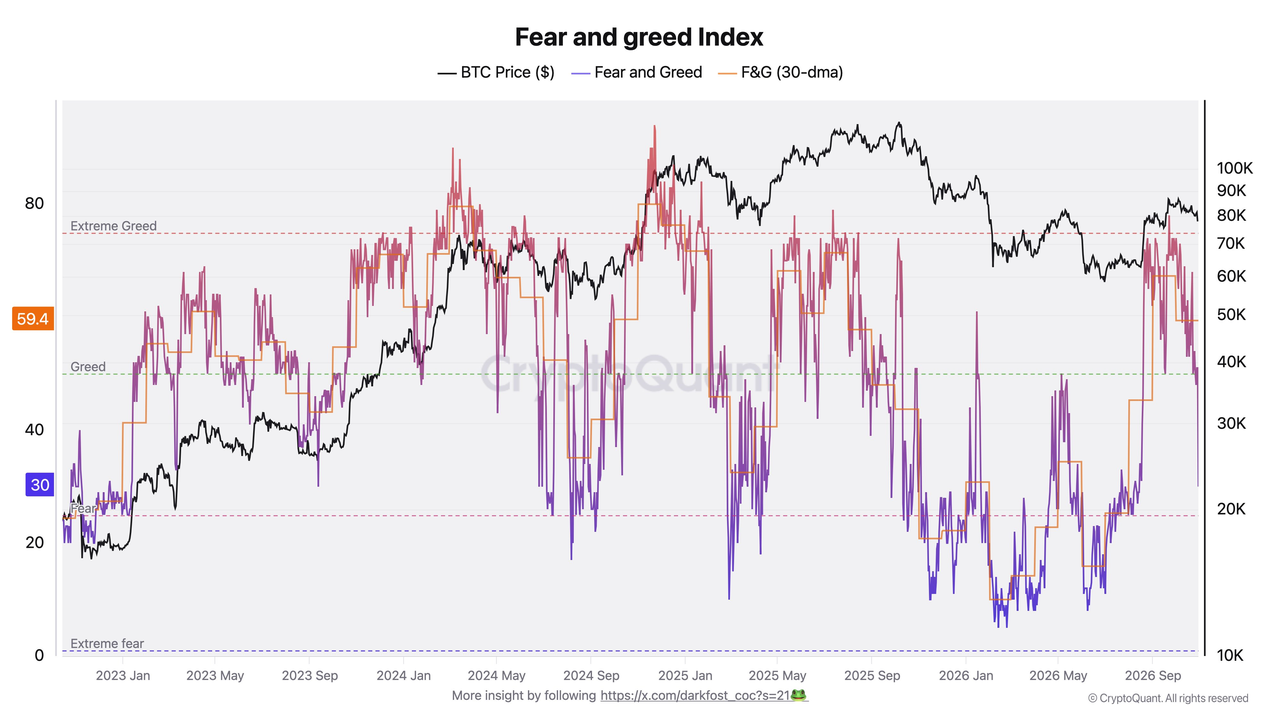
On October 30, crypto analyst Darkfost reported that market sentiment had deteriorated sharply within a single day. The Crypto Fear and Greed Index fell from 51, indicating a neutral market, to 30, indicating fear. This marked its lowest reading since mid-August. During the same period, Bitcoin dropped approximately 4% to 5% within 24 hours, briefly touching a six-week low near $76,500. Ethereum fell below $2,200, while total liquidations across the crypto market exceeded $1.6 billion over the same 24-hour period. Darkfost noted that periods of market pessimism have historically coincided with potential accumulation opportunities. However, with the index at 30, market sentiment had entered the fear zone but had not yet reached extreme fear, which is generally defined as a reading below 25. Market sentiment could therefore remain under pressure.
Source: X
Ignas: HYPE and ZEC Show Independent Price Action, Highlighting Structural Opportunities in the Crypto Market
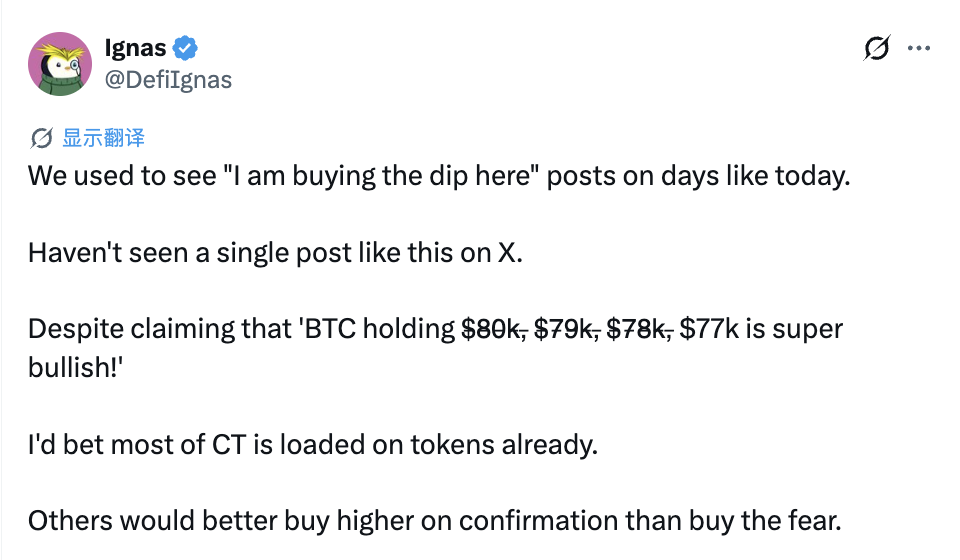
On October 30, DeFi researcher Ignas noted that calls to "buy the dip," once common on social media, had become increasingly rare during the latest market downturn. Although some market participants viewed Bitcoin's ability to hold the $77,000–$80,000 range as a bullish signal, many crypto traders may already have substantial token exposure. Some investors would rather wait for prices to confirm an upward trend before buying than attempt to catch a falling market during periods of panic. Ignas argued that assets showing greater independence from Bitcoin's price movements, such as HYPE, as well as "conviction-driven" tokens like ZEC and revenue-generating assets like HYPE, continued to offer potential opportunities. However, he also pointed to a lack of available buying demand. Retail investors who previously favored crypto assets are now being drawn toward volatility in AI stocks, gold, and quantum computing-related assets. Meanwhile, crypto ETF flows over the past 30 days have turned net negative.
Source: X
Bonk Guy: Altcoins Show Relative Strength Against Bitcoin, Suggesting Much of the Selling Pressure May Have Been Absorbed
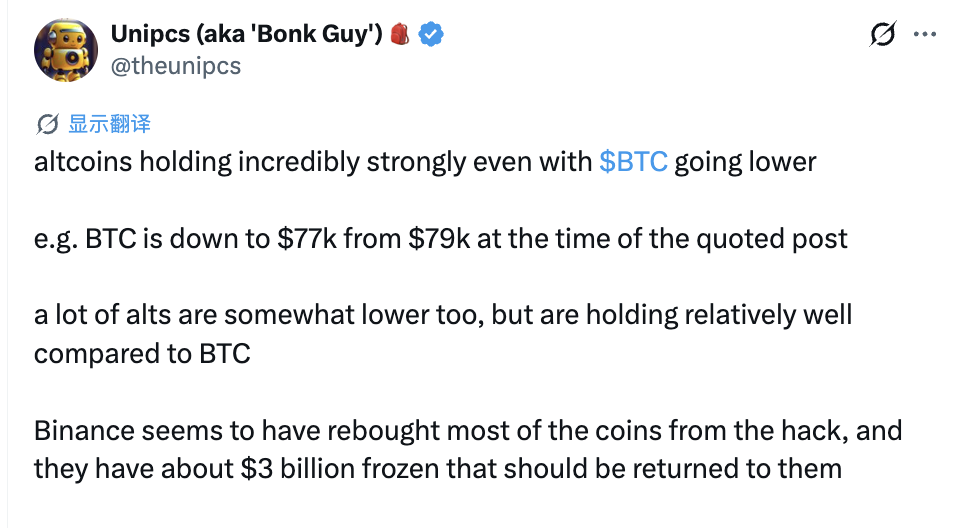
On October 30, Bonk Guy stated that despite Bitcoin falling from approximately $79,000 to around $77,000, most altcoins had demonstrated greater resilience relative to BTC. While some tokens also declined, their losses were comparatively limited. Bonk Guy noted that Binance appeared to have repurchased most of the tokens sold during the hacking incident, while approximately $3 billion in assets had reportedly been frozen and could potentially be returned. Of the $6.3 billion involved in the incident, roughly half had reportedly been frozen, while the remaining funds might also be recovered within a reasonable timeframe.
He expected Bitcoin could fall further before establishing a local bottom, but believed that much of the selling pressure on altcoins may already have been absorbed. As a result, market conditions could gradually improve over the coming weeks and months. He also suggested that the current environment could favor altcoin accumulation through staggered purchases during price pullbacks.
Source: X
Policy and Regulation: Global Crypto Rules Continue to Evolve, with Stablecoins and Prediction Markets in Focus
Four French Financial Authorities Call for Conditional Stablecoin Rewards, Oppose Extending Restrictions to Staking and Lending
On October 27, France's Ministry of Finance, the Financial Markets Authority (AMF), the Banque de France, and the Prudential Supervision and Resolution Authority jointly recommended that the European Commission allow third parties, including crypto platforms, to offer rewards to stablecoin holders under certain conditions.
The four institutions argued that such reward programs should be subject to regulatory oversight rather than prohibited outright. They proposed requiring platforms to disclose reward terms to users, prohibiting guaranteed-return promises, and preventing rewards from being marketed as savings products. Regulators should also monitor the potential impact of these programs on bank deposits.
France continues to support a ban on stablecoin issuers paying interest to holders but opposes extending the prohibition to staking and lending activities.
Thailand's Supreme Court Recognizes Bitcoin as Property Under the Law
On October 28, Thailand's Supreme Court reportedly ruled in criminal case No. 4929/2569 that Bitcoin qualifies as property under the law because it has market value, can be held and traded, and can be converted into cash when a buyer is available.
The case involved a victim who converted $50,000 into Bitcoin and transferred it to a criminal group. The court determined that the Bitcoin involved was not merely intangible data without value, but an asset that could constitute the subject of a property-related crime.
The ruling confirms that Bitcoin can be recognized as property protected by law and can also be the subject of criminal offenses. However, it does not establish Bitcoin as legal tender with the same status as the Thai baht.
Australian Regulators: No Prediction Market Operators Have Applied for Licenses, While Polymarket Has Been Blocked
On October 29, Australian Securities and Investments Commission (ASIC) Chair Sarah Court told a parliamentary hearing that the regulator had not received any license applications from prediction market operators.
She noted that such platforms could fall under Australia's gambling regulations rather than its financial market regulatory framework, and that any application to operate would face strict scrutiny.
Court argued that prediction market trading mechanisms resemble binary options, which are already prohibited in Australia, as they involve all-or-nothing outcomes and often cover events unrelated to investment or financial markets.
She also pointed out that although Australian users may still be able to access certain overseas platforms directly, they are not protected by Australia's local financial regulatory framework. As a result, they may have limited access to dispute resolution mechanisms and customer fund protection measures.
Security Watch: $6.3 Billion Binance Hack Attributed to North Korean Hackers Becomes the Industry's Largest Security Incident to Date
According to SlowMist, the crypto industry experienced 42 security incidents in October 2026, resulting in total losses of $6.356 billion. This was approximately nine times the losses recorded in September, highlighting a sharp increase in security risks across the industry.
The largest reported incident involved Binance. On October 29, assets were transferred out of multiple Binance hot wallets in a short period. Attackers reportedly exploited the EIP-7702 delegation mechanism to gain control of wallets and drain funds across multiple blockchain networks, making the incident one of the largest exchange security breaches in crypto history.
Binance suspended deposits and withdrawals, stated that user funds remained safe, and pledged to cover the losses in full.
Date | Project | Estimated Loss | Incident Overview |
October 29 | Binance | $6.3 billion | Large amounts of assets were transferred out of multiple Binance hot wallets within a short period. Attackers reportedly exploited the EIP-7702 delegation mechanism to take control of wallets and drain funds across multiple chains, making it one of the largest exchange security incidents in crypto history. |
October 29 | Polymarket | $6.57 million | Polymarket was affected by a breach involving a third-party service provider, DebugBear, a website performance monitoring tool. Malicious JavaScript was injected, causing some user account assets to be automatically sold and transferred. The estimated loss was approximately $2.7 million. |
October 27 | Predict.fun | $390,000 | Approximately 397,708 USDT was stolen from Predict.fun users' smart wallets, which were built on Kernel/ZeroDev. Attackers used stolen account owner private keys to sign transfers. The smart contracts themselves were not compromised. |
October 14 | Pirate Chain | $10.74 million | A transaction verification vulnerability was discovered in Pirate Chain's source code. Attackers exploited it to mint approximately 39.8 million ARRR without authorization, increasing the token's total supply by around 20%. The funds were subsequently transferred into the Sapling privacy pool. |
October 7 | 79th Vault | $12.5 million | The private key for 79th Vault's operational hot wallet was compromised. Attackers used the privileged OPERATOR_ROLE function to withdraw 2.01 million 79AU tokens from the PancakeSwap 79AU/USDT pool in seven transactions, then sold them back into the pool through approximately 95 transactions. |
November Outlook: U.S. Midterm Elections Could Shape Policy Expectations as Ethereum and Solana Ecosystems Prepare for Major Industry Events
Date | Event | Overview |
November 3 | 2026 U.S. Midterm Elections | The United States will hold congressional midterm elections, with all 435 seats in the House of Representatives and approximately one-third of Senate seats up for election. The results will determine party control of Congress for the next two years and could influence the direction of U.S. crypto regulation, stablecoin legislation, and broader digital asset policy. |
November 3 | Devcon 8 | Organized by the Ethereum Foundation, the annual developer conference will take place at the Jio World Centre in Mumbai, India. It will bring together Ethereum developers, researchers, and ecosystem builders, with a focus on protocol development, privacy technologies, infrastructure, and decentralized applications. |
November 6 | Bitcoin Amsterdam 2026 | Held at SugarFactory in Amsterdam, the Netherlands, the event is one of Europe's major Bitcoin industry conferences. Key topics include the Bitcoin ecosystem, institutional adoption, payment infrastructure, and Bitcoin's role in the global financial system. |
November 15 | Solana Breakpoint 2026 | Solana's annual flagship conference will take place at Olympia Convention Centre in London, UK. It is expected to bring together developers, investment institutions, and ecosystem projects from around the world. Key topics include stablecoins, tokenized assets, payment infrastructure, and AI-driven on-chain economic activity. |
November 25 | Federal Reserve Beige Book | The Federal Reserve will release its latest Beige Book, summarizing economic activity, employment conditions, and price developments across its regional districts. The report will help markets assess the resilience of the U.S. economy, inflationary pressures, and the Fed's policy outlook. |
November 28 | Binance Blockchain Week 2026 | This edition will be held as a special Asia event in Bangkok, Thailand. It will bring together global crypto industry builders, exchanges, investors, and community representatives to discuss blockchain technology, trading ecosystems, Web3 applications, and the development of digital asset markets. |
The crypto market will face a busy November, with a series of major industry events and important political developments on the calendar. On the technology and industry front, Devcon 8, Bitcoin Amsterdam, and Solana Breakpoint will spotlight developments and real-world applications across the Ethereum, Bitcoin, and Solana ecosystems. Digital Asset Summit London, Singapore FinTech Festival, and Binance Blockchain Week will also provide further insight into institutional participation, real-world asset (RWA) tokenization, and the growing convergence of traditional finance and crypto markets.
On the macroeconomic and policy front, the November 3 U.S. midterm elections will be a major political catalyst. Changes in congressional control could influence the future direction of crypto regulation and digital asset legislation. Meanwhile, the Federal Reserve's November 18 release of the FOMC meeting minutes and its November 25 Beige Book will provide additional insight into the state of the U.S. economy and the potential path of interest rates.
Conclusion
The crypto market remained under pressure in October 2026 amid shifting macroeconomic policy expectations and a major security incident. Bitcoin fell below $77,000 by month-end, while Ethereum recorded a monthly decline of nearly 16%. The suspected large-scale cyberattack on Binance, involving approximately $6.3 billion in funds, became the industry's most closely watched security incident of the month and renewed concerns over asset security on centralized exchanges.
Institutional flows presented a mixed picture: Strive significantly increased its BTC holdings, while outflows from spot ETH ETFs added to selling pressure on Ethereum. At the same time, trading volumes on Kalshi and Polymarket continued to grow, and Pump.fun integrated Hyperliquid perpetual futures trading. These developments highlight continued growth and innovation across prediction markets, decentralized trading platforms, and the infrastructure connecting digital assets with traditional finance.