Reporting Period: October 3–9, 2026
Data as of: October 9, 2026
Market Overview: BTC Falls Below $82,000 as Rising Treasury Yields Intensify Selling Pressure on Risk Assets
The crypto market remained under pressure this week, with Bitcoin (BTC) falling below $82,000. The rapid rise in U.S. Treasury yields has become a key macroeconomic factor weighing on both U.S. equities and crypto assets. The benchmark 10-year U.S. Treasury yield climbed above 5.35%, reaching its highest level in 24 years and adding further pressure to valuations across global risk assets. Since Bitcoin does not generate fixed interest income, rising Treasury yields increase the opportunity cost of holding BTC. Some traditional institutional investors and marginal capital may therefore reduce exposure to volatile risk assets in favor of U.S. Treasuries or U.S. dollar cash holdings, potentially creating additional outflow pressure on the crypto market.
Looking ahead, market direction is likely to remain sensitive to movements in Treasury yields and shifts in global risk appetite. If long-term yields remain elevated, risk assets could face further valuation pressure. Conversely, a pullback in yields could help ease pressure on market liquidity and investor risk appetite.
Bitunix Token Pulse will continue tracking the performance of the top 300 tokens by market capitalization listed on Bitunix, alongside key developments in popular U.S. stock perpetual contracts, to provide investors with market insights and trading perspectives.
Crypto Market Performance: Broad-Based Weakness Continues as ETH Falls More Than 8%
Crypto assets broadly declined this week. Only around 20% of the top 300 tokens by market capitalization on Bitunix posted gains, while the median seven-day return stood at -5.18%. Major cryptocurrencies, including BTC, ETH, and XRP, all recorded losses. BTC fell 3.80% over the week, ETH dropped 8.39%, and XRP declined 7.09%, highlighting the broad selling pressure across the market.
Top Gainers: SAND Leads With a Nearly 58% Weekly Rally as GameFi Tokens Rebound
Blockchain gaming (GameFi) tokens staged a rebound this week, led by The Sandbox's native token, SAND, which surged 57.71% to top the weekly gainers list. Other gaming-related tokens, including MANA and AXS, also moved higher despite broader market weakness. Decentralized physical infrastructure network (DePIN) tokens, which had also struggled in previous weeks, showed signs of strength, with FIL, AKT, and HNT among the projects posting gains.
Top Gainers | Latest Price | 7-Day Change |
SAND | $0.07 | 57.71% |
ORCA | $2.42 | 43.10% |
STRK | $0.06 | 36.67% |
RAY | $2.40 | 27.09% |
TIA | $0.51 | 18.62% |
Source: Bitunix. Prices and percentage changes recorded at 1:30 a.m. UTC on October 9, 2026.
Top Losers: CASHCAT Drops More Than 30% as UNI and CAKE Face Renewed Selling Pressure
Although this week's declines were not concentrated in a single major market-wide sell-off, CASHCAT fell more than 30%, making it the biggest loser among the tokens tracked. Notably, the native tokens of two major decentralized exchanges (DEXs), Uniswap and PancakeSwap, also came under significant selling pressure. UNI declined approximately 18% over the week, while CAKE lost more than 15%. The pullback highlights how even actively traded DeFi tokens can struggle to hold their value when broader market sentiment deteriorates.
Top Losers | Latest Price | 7-Day Change |
CASHCAT | $0.24 | -32.61% |
EDGE | $0.07 | -24.89% |
USELESS | $3.81 | -19.99% |
UNI | $0.54 | -18.37% |
CAKE | $0.42 | -15.92% |
Source: Bitunix. Prices and percentage changes recorded at 1:30 a.m. UTC on October 9, 2026.
Token Spotlight: SAND — A Blockchain-Powered Virtual World Built Around Metaverse Gaming
The Sandbox (SAND) is a blockchain-based virtual world and gaming ecosystem that combines gaming, digital asset ownership, and user-generated content. It allows players to explore and interact within a virtual environment, create gaming experiences, trade digital assets, and participate in the platform's economy.
The project initially developed as a traditional sandbox game before gradually transitioning toward blockchain technology and the metaverse. Its digital asset ecosystem is built on Ethereum and includes LAND virtual real estate, ASSETS in-game items, and creation tools that allow users to build interactive experiences. Unlike traditional games, where in-game items are generally controlled by the developer, The Sandbox uses blockchain-based assets, including NFTs, to enable users to own and trade certain digital items within its ecosystem.
SAND is the platform's native utility token. It is primarily used to purchase digital assets, facilitate transactions and activities within the ecosystem, and support certain governance mechanisms.
SAND Technical Analysis: Rapid Rally Gives Way to Consolidation
SAND's latest rally began on October 2, when the token surged from $0.044 to $0.072 in just five hours that afternoon. The price subsequently continued to trend higher with intermittent fluctuations, eventually approaching $0.09 as it neared the psychologically important $0.10 level. However, strong resistance emerged near $0.10, where profit-taking by earlier buyers intensified. SAND then retreated rapidly to the $0.06–$0.07 range, giving back part of its gains. The $0.10 level remains a key resistance zone, and traders will be watching closely to see whether the token can break above it and sustain the move.

Source: Bitunix
SAND Fundamentals: Fading Metaverse Momentum and Low Player Activity Raise Concerns
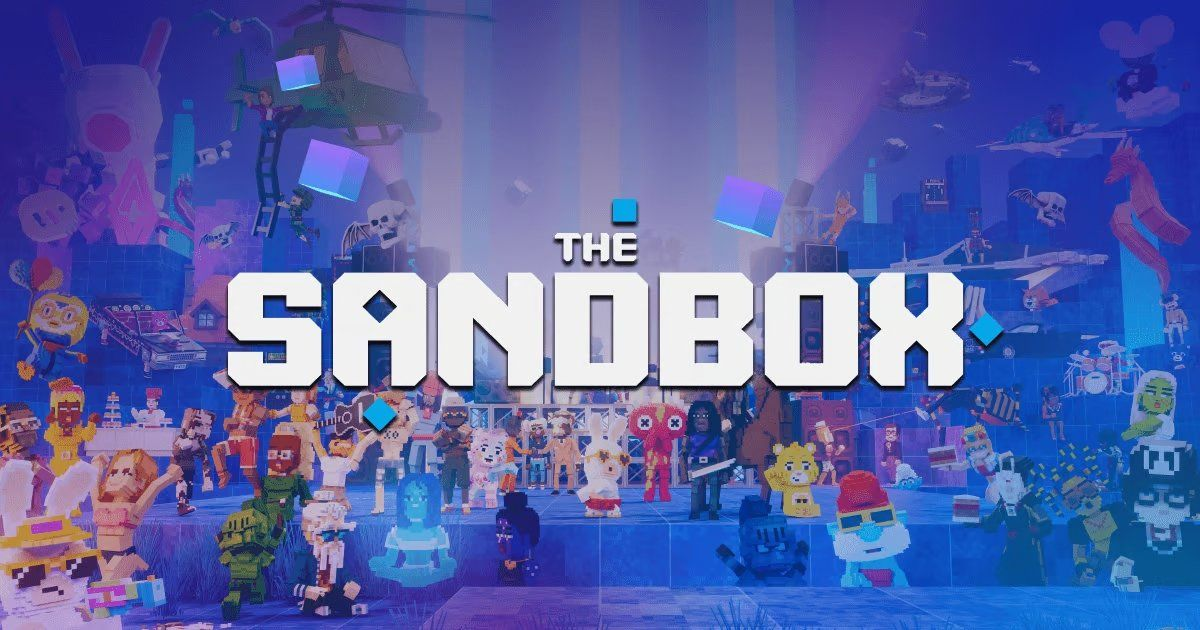
The Sandbox today looks markedly different from its position at the peak of the metaverse boom in 2021. The project has undergone substantial restructuring, including significant workforce reductions, while player activity has reportedly fallen sharply from its earlier growth phase.
According to Animoca Brands, The Sandbox reduced its workforce from 240 employees to 92 during fiscal year 2025, a decline of approximately 62%. Third-party activity trackers have also pointed to very low daily activity levels. However, on-chain wallet activity does not capture every user login or gameplay session, so these metrics should not be treated as a complete measure of player engagement.
The project's social media activity also offers little evidence of a major fundamental catalyst for the recent rally. In early October, The Sandbox had not announced any major brand partnerships likely to materially affect market sentiment, nor had it released a significant game update that could clearly improve the player experience. There were also no new proposals with a substantial impact on SAND's token economics, such as a buyback program.
Taken together, the latest price surge appears more likely to have been driven by capital flows and trading sentiment than by a meaningful improvement in the project's fundamentals. At this stage, there is insufficient evidence to conclude that The Sandbox's underlying business or ecosystem activity has materially strengthened.
Source: Games.gg
SAND Market Structure: Korean Exchanges Account for a Significant Share of Trading Activity
With no clear improvement in the project's fundamentals, SAND's latest rally may be driven primarily by capital flows and trading activity. Examining trading volume across major exchanges and tracking on-chain movements can therefore provide additional insight into the forces behind the price increase.
SAND has been listed on multiple centralized exchanges (CEXs) since 2020, while decentralized exchange (DEX) trading currently accounts for a relatively limited share of its overall activity. Over the latest 24-hour period covered by the data, South Korean exchange Upbit accounted for more than 19% of SAND trading volume, ranking first among exchanges. Another major South Korean platform, Bithumb, accounted for 4.99%, placing fifth.
SAND's rally began gaining momentum on October 2. According to Arkham data, both Upbit and Bithumb conducted multiple SAND token transfers on Ethereum during this period. These movements may have been related to internal asset transfers or liquidity management by the exchanges.
Considering the two platforms' trading-volume shares alongside the observed on-chain movements, South Korean exchanges may have been important venues for trading activity during this rally. However, trading-volume share and token transfers alone do not establish that these exchanges were the primary drivers of the price increase. Further analysis of net inflows, order-book changes, and actual buy-side versus sell-side trading activity would be needed to draw a firmer conclusion.

Source: Coinmarketcap

Source: Arkham
Is SAND Still Worth Buying?
As a long-established project that completed its token generation event (TGE) in 2020, SAND has entered its fully circulating supply phase. This means investors may not need to be overly concerned about additional selling pressure from large token unlocks in the near term. However, a fully circulating supply does not mean that SAND is free from other sources of selling pressure.
During the 2021 metaverse boom, SAND reached an all-time high of $8.40 before suffering a substantial decline. Investors who bought above $0.10 may still be sitting on unrealized losses, and their holdings could create selling pressure if the price rebounds. Looking ahead, $0.10 is an important level to watch. A decisive breakout above this level, supported by rising trading volume and sustained buying pressure, could help extend the recovery. Conversely, if SAND fails to hold above $0.10, the price may face renewed pressure from profit-taking and investors looking to exit underwater positions.
For investors considering an entry, it is important to monitor not only key price levels but also trading volume, capital flows, and changes in the project's fundamentals, rather than relying solely on its recent price gains to assess its future direction.
SAND Price Action: Key Takeaways
SAND rallied sharply beginning October 2, with its price climbing from around $0.04 to nearly $0.09 before profit-taking pushed it back into the $0.06–$0.07 range. The $0.10 level remains a key resistance to watch. From a fundamental perspective, The Sandbox faces several challenges, including waning interest in the metaverse narrative, a smaller team, and relatively low player activity. The project has also lacked major product updates or tokenomics proposals recently, suggesting that the latest rally may have been driven more by capital flows and market sentiment than by clear fundamental improvements. On the trading side, the share of trading volume handled by South Korean exchanges Upbit and Bithumb, along with their on-chain transfer activity, warrants continued monitoring. However, the available evidence is not sufficient to confirm that these exchanges were the primary drivers of the rally. Going forward, key factors to watch include whether SAND can break above $0.10 on stronger volume and whether capital flows and project fundamentals show further improvement.
Stock Perpetual Contracts: U.S. Equities Face Broad Pressure as Musk-Related Stocks Rally
U.S. equities came under broad pressure this week as Treasury yields climbed to their highest levels in nearly 24 years, triggering pullbacks across multiple sectors. In semiconductors, SanDisk (SNDK), Micron (MU), and Intel (INTC) all recorded notable losses. Crypto-related stocks also weakened, with Strategy (MSTR) and Circle (CRCL) moving lower. By contrast, stocks associated with Elon Musk outperformed: Tesla (TSLA) rose 5.93%, while SpaceX-linked contracts gained 8.10%, making them among the few bright spots in an otherwise challenging market.
Company | Ticker | Core Business | Stock Price | 7-Day Change |
SanDisk | SNDK | Memory | $1,609 | -9.96% |
Micron | MU | Memory | $1,035 | -5.56% |
Nvidia | NVDA | GPUs | $230 | 0.00% |
Intel | INTC | CPUs | $107 | -10.83% |
Strategy | MSTR | Cryptocurrency | $151 | -5.65% |
Circle | CRCL | Cryptocurrency | $80 | -2.43% |
Tesla | TSLA | Automotive | $375 | 5.93% |
Alphabet | GOOG | Internet | $344 | 2.99% |
SpaceX | SPCX | Aerospace | $160 | 8.10% |
Stock Contract Spotlight: SpaceX Gains on Launch Activity and Bullish Analyst Outlook, With Starship Test Flight in Focus
SpaceX (SPCX) has staged a strong rebound recently, supported by a busy launch schedule, bullish sentiment from Wall Street, and anticipation surrounding upcoming Starship testing. Operationally, SpaceX successfully carried out the Crew-13 crewed spaceflight mission and continued expanding its commercial operations through Falcon 9 launches and Starlink satellite deployments.
Meanwhile, Morgan Stanley analyst Adam Jonas reiterated an overweight rating on SpaceX and set a $300 price target, arguing that the market has yet to fully reflect the long-term potential of Starship and Starlink V3. Looking ahead, investors are also watching Starship Flight 15, which is expected to take place in late October or early November. Progress on key vehicle recovery tests could become an important catalyst for the stock's next move.

Source: Bitunix
Commodity Contracts: Commodity Prices Rebound as Gold Returns to $4,200
Bitunix offers a range of commodity contracts, including gold, silver, crude oil, and natural gas, giving users more opportunities to trade across different markets. Commodity prices broadly recovered this week, diverging from risk assets such as U.S. equities and avoiding a similar decline despite rising Treasury yields. Gold returned to the key $4,200 level, while Brent crude rose above $100 per barrel again. The moves highlight renewed strength across both precious metals and energy markets.

Source: Bitunix
Macro Catalysts: U.S. September CPI Inflation in Focus Next Week
Next week, market attention will center on the U.S. September year-over-year CPI reading, scheduled for release on October 14. The Consumer Price Index (CPI) is a key measure of inflation and an important indicator for assessing the direction of U.S. monetary policy. The previous reading was 3.40%, while the market forecast stands at 3.60%. If the actual figure meets or exceeds expectations, it could indicate that inflationary pressures remain persistent, reinforcing concerns that the Federal Reserve may maintain a restrictive monetary policy stance.
The gap between the actual CPI reading and market expectations will be an important factor influencing Treasury yields, the U.S. dollar, and risk assets. A higher-than-expected reading could strengthen expectations that interest rates will remain elevated, putting additional valuation pressure on BTC, other crypto assets, and technology stocks. Conversely, a lower-than-expected figure could ease concerns about prolonged monetary tightening, potentially pulling Treasury yields lower and providing some support for risk assets.
Conclusion
The crypto market remained under pressure this week, with BTC falling below $82,000 and the median return among Bitunix's top 300 tokens reaching -5.18%. SAND bucked the broader trend, rising 57.71% to lead the weekly gainers, driven largely by capital flows and market sentiment. U.S. equities also faced pressure as Treasury yields climbed to their highest levels in nearly 24 years, weighing on semiconductor and crypto-related stocks, while Tesla and SpaceX-linked contracts stood out with gains of 5.93% and 8.10%, respectively. Commodities followed a different trajectory, with gold returning to $4,200 and Brent crude moving back above $100 per barrel. Looking ahead, markets will focus on the U.S. September CPI report for clues about the inflation outlook and its implications for Federal Reserve policy and risk assets.