
Reporting Period: October 24–30, 2026
Data as of: October 30, 2026
Market Overview: Multiple Binance Hot Wallets Suspected of Being Hacked as Bitcoin Falls Below $77,000
On October 30, 2026, several Binance hot wallets recorded unusually large outflows, raising widespread concerns about exchange security. On-chain data and multiple analysts suggested that the incident may have involved a hack targeting Binance's hot wallets, with activity spanning several blockchains, including Ethereum, Bitcoin, and TRON. Preliminary estimates put the total amount of abnormal outflows at approximately $3.3 billion to more than $6.2 billion. However, as the movement of funds continues to be tracked on-chain, the final scale of the potential losses remains unclear. Following the incident, Binance temporarily suspended withdrawals across multiple networks and halted trading on Binance Alpha. The exchange repeatedly stated that user funds remained safe and reported that it had verified and frozen a total of $2.54 billion in funds.
The incident quickly intensified risk aversion across the market, bringing exchange security and asset liquidity back into focus. Concerns over a potential hack, combined with large-scale fund movements, added significant downward pressure to the crypto market, pushing Bitcoin (BTC) below $77,000. As investigations and fund-tracking efforts continue, further developments regarding frozen assets, the resumption of Binance withdrawal services, and whether other trading platforms have been affected could all influence market sentiment and short-term price movements.
The Bitunix Token Pulse Weekly Report tracks the performance of the top 300 cryptocurrencies by market capitalization listed on Bitunix, while also monitoring trends in popular U.S. stock perpetual contracts to provide investors with market insights and strategic perspectives.
Crypto Market Performance: Third Consecutive Weekly Decline as Selling Pressure Intensifies
The crypto market remained under broad pressure this week. Only around 5% of the tokens among the top 300 assets by market capitalization on Bitunix posted gains, while the median weekly return fell further to -11.25%. Bitcoin (BTC) declined 5.43% over the period, outperforming the broader market and showing relative resilience. Meanwhile, several popular tokens, including NEAR, LINK, and SUI, lost more than 10%, indicating that selling pressure had spread beyond major cryptocurrencies into multiple market segments.
Top Weekly Gainers: HYPE Rallies Nearly 15% as Selected Memecoins Outperform
The crypto market's decline accelerated this week, with no clear broad-based upward trend emerging. Only a small number of tokens managed to move higher against the market downturn. HYPE led the major gainers, rising 14.96% over the week, including a nearly 10% gain in the past 24 hours. It was one of the market's strongest-performing popular assets during the period. Meanwhile, selected memecoins posted gains of their own, with M rising more than 16% and PEPE gaining 1.47%, showing relative resilience despite widespread market weakness.
Top Gainers | Latest Price | 7-Day Change |
M | $1.01 | 16.72% |
HYPE | $89.01 | 14.96% |
TRX | $0.35 | 7.84% |
BEAM | $0.00 | 6.42% |
PEPE | $0.00 | 1.47% |
Source: Bitunix. Prices and percentage changes recorded at 00:30 UTC on October 30.
Top Weekly Losers: Independent Layer 1 Tokens Slide Sharply as Bearish Sentiment Spreads
The market downturn gained momentum this week, with tokens associated with independent blockchain networks among the hardest hit. Several assets, including WLD, ZK, STRK, and APT, recorded weekly losses of more than 20%. Concerns over the suspected hack involving Binance hot wallets further heightened worries about exchange asset security and liquidity risks. Against a backdrop of weak market sentiment and rising demand for safer assets, some investors reduced their exposure, adding to the downward pressure on token prices.
Top Losers | Latest Price | 7-Day Change |
WLD | $0.36 | -33.41% |
BAT | $0.12 | -28.35% |
ZK | $0.01 | -23.16% |
STRK | $0.04 | -22.96% |
APT | $0.60 | -20.66% |
Source: Bitunix. Prices and percentage changes recorded at 00:30 UTC on October 30.
Featured Token Analysis: HYPE — The Core Token of a Leading Decentralized Perpetuals Exchange
HYPE is the native token of Hyperliquid, a decentralized derivatives trading platform built on its own Layer 1 blockchain. The platform focuses on on-chain perpetual futures and spot trading, using a high-performance order book architecture to deliver low-latency execution and deep liquidity. As a leading Perp DEX, Hyperliquid has maintained a strong position in the sector, ranking among the top platforms by decentralized perpetual trading volume and market share. It has also become an important benchmark for tracking the development of on-chain derivatives markets. HYPE serves as the core token of the platform's ecosystem, with use cases that include governance, staking, and ecosystem incentives. As the on-chain derivatives market expands, Hyperliquid's perpetual trading volume, market share, user activity, and platform revenue remain important indicators for assessing HYPE's long-term value and market performance.
HYPE Technical Analysis: Short-Term Volatility Rises as Price Rebounds Sharply From Consolidation
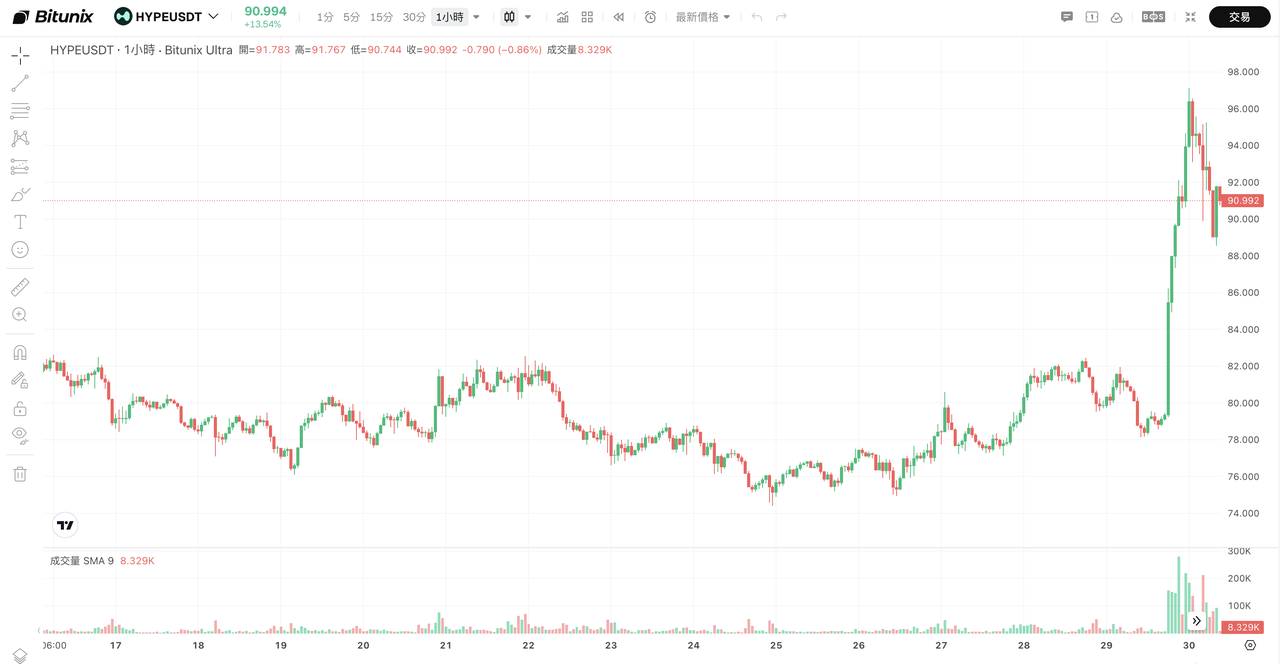
As one of the best-performing major crypto assets of 2026, HYPE followed a pattern of sideways consolidation followed by a sharp rally this week. From October 17 to October 29, its price traded within a relatively narrow range of $75 to $82, with no clear breakout direction. That changed in the early hours of October 30 (UTC+8), when HYPE posted a single hourly candlestick gain of more than 7%, breaking decisively above the upper boundary of its trading range and triggering a rapid move higher. The token subsequently reached $96, setting a new all-time high. However, profit-taking emerged at elevated levels, and HYPE has since fluctuated around $90.
Data Source: Bitunix
HYPE News Analysis: NYSE Parent ICE Plans Partnership With Trade.xyz to Expand On-Chain Perpetuals Into the U.S. Market
On the evening of October 29, Trade.xyz announced that, subject to approval from the U.S. Commodity Futures Trading Commission (CFTC), it plans to partner with Intercontinental Exchange (ICE), the parent company of the New York Stock Exchange (NYSE), to launch a new trading platform targeting the U.S. market. The platform is expected to use innovative trading and clearing infrastructure built on Hyperliquid. Planned contract products include equities, indices, commodities, foreign exchange, and cryptocurrencies, with access provided through participating brokers and trading platforms. ICE will also make an equity investment in Trade.xyz, although the investment amount has not yet been disclosed.
Under the proposed partnership, Trade.xyz will leverage Hyperliquid's HIP-3 framework to design and launch individual markets, including pre-IPO perpetual contracts, equities, indices, and commodities. If successfully implemented, the partnership could help Hyperliquid extend its on-chain derivatives infrastructure into a broader range of traditional financial markets, strengthening its presence in real-world assets (RWA) and on-chain finance. Following the announcement, HYPE gained nearly 15% over 24 hours, suggesting that the market may view the proposed partnership as a significant positive catalyst.
Data Source: TradingView
HYPE On-Chain Smart Money Analysis: Whale Wallet 0x7648 Accumulates More Than $100 Million in HYPE During October
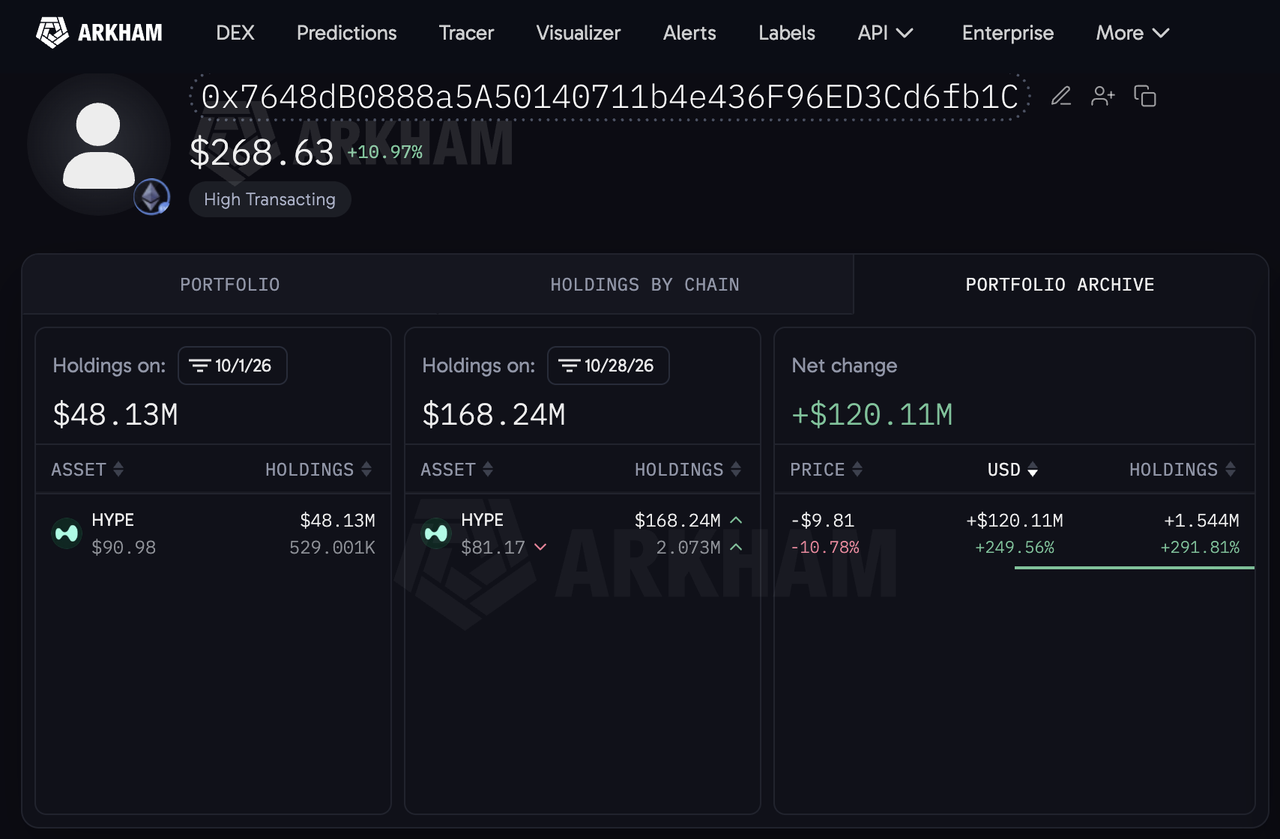
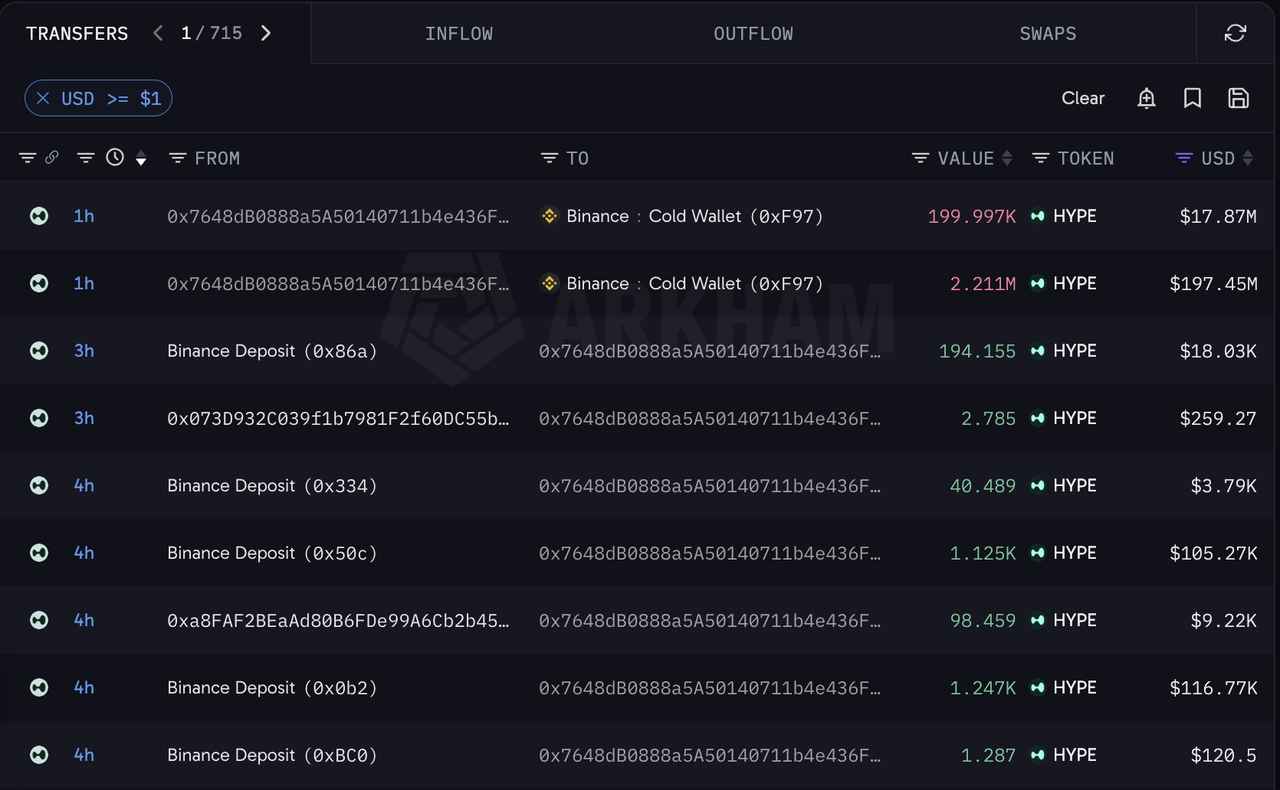
According to Arkham data, the on-chain address 0x7648 has steadily accumulated HYPE since the beginning of October, with total purchases exceeding $100 million. The address built a substantial position during this period and recorded significant unrealized gains. However, on the morning of October 30 (UTC+8), the wallet transferred its entire HYPE holdings to a Binance cold wallet address, suggesting that it may be moving assets or preparing to adjust its position. Since transfers to an exchange do not necessarily indicate an intention to sell, it remains unclear whether the wallet has realized its gains. Further monitoring of the address's on-chain activity and movements within the exchange will be needed to determine its next steps.
Data Source: Arkham
Data Source: Arkham
Is HYPE Still Worth Buying?
As one of the strongest-performing major crypto assets of 2026, HYPE's momentum is supported not only by Hyperliquid's leading position in the Perp DEX sector but also by its efforts to expand into traditional financial markets. The proposed partnership between Trade.xyz and ICE, the parent company of the NYSE, could bring additional trading demand from traditional financial markets and create opportunities for greater institutional participation if it receives regulatory approval and moves forward. HYPE has also attracted considerable attention from analysts. According to CryptoQuant's Analyst Consensus data, more than 90% of analysts hold a bullish outlook on the token. From a technical perspective, HYPE recently reached a new all-time high of $96, with no clearly established historical resistance zone above that level.
On the other hand, the token's supply structure remains an important factor when assessing its medium- to long-term price outlook. Approximately 54% of HYPE's total token supply remains locked, with the remaining tokens expected to be unlocked by 2027. As the circulating supply gradually increases, investors will need to monitor the unlock schedule, changes in circulating supply, and the potential impact of additional tokens entering the market. Therefore, while HYPE benefits from relatively strong fundamentals and ecosystem development, the risks of buying after a new all-time high and potential supply dilution remain important considerations.
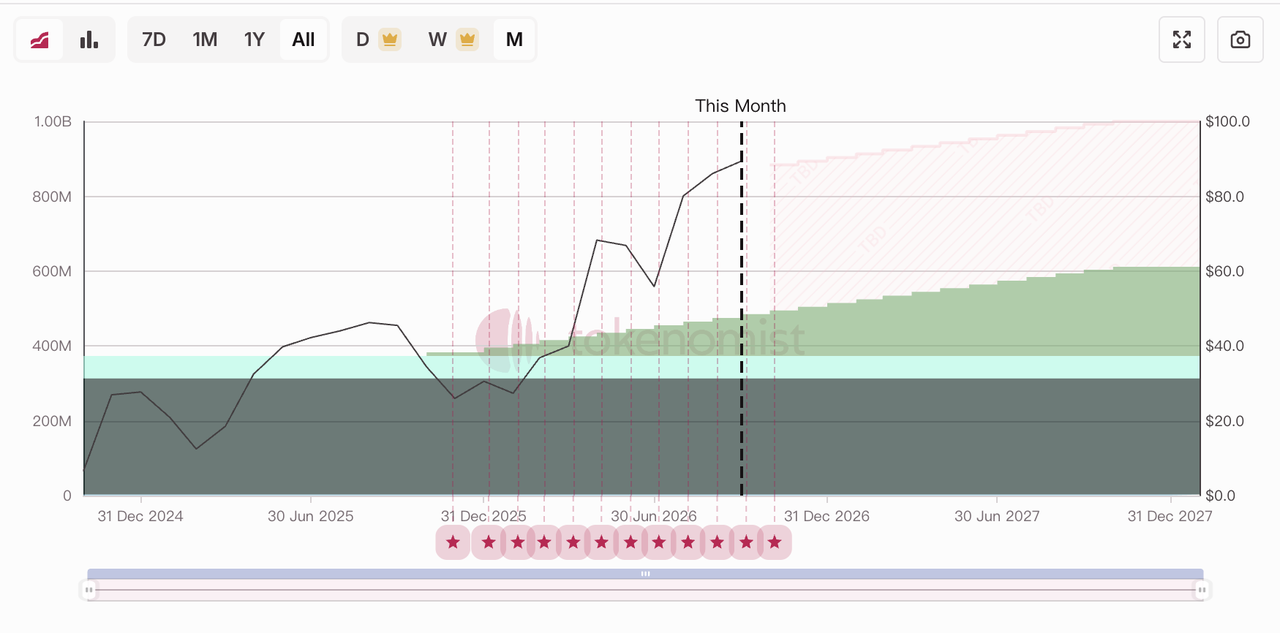
Data Source: Tokenomist
HYPE Price Outlook: Key Takeaways
HYPE initially traded sideways between $75 and $82 this week before breaking out of its consolidation range on October 30, reaching a new all-time high of $96. The rally came amid positive developments, including the proposed partnership between Trade.xyz and ICE, the parent company of the NYSE. On-chain data shows that whale address 0x7648 accumulated more than $100 million worth of HYPE during October, but transferred its entire position to a Binance cold wallet on October 30. Looking ahead, Hyperliquid's leading position in the Perp DEX sector and its efforts to build partnerships with traditional financial institutions could continue to support its fundamentals. However, short-term profit-taking and the approximately 54% of HYPE supply that remains locked could create additional price pressure as tokens are gradually unlocked.
Stock Perpetuals Weekly Performance: Semiconductor Stocks Rebound, While Google Falls 11.87%
The U.S. stock market showed a clear divergence in performance this week. Semiconductor stocks rebounded after their earlier pullback, with companies such as SanDisk (SNDK), Micron (MU), and Intel (INTC) posting relatively strong gains. Micron led the group, rising more than 9% over the week. In contrast, crypto-related stocks remained under pressure as weakness in the broader crypto market weighed on the sector. Circle (CRCL) fell approximately 7.5% during the period.
Among major technology companies, Alphabet, Google's parent company, released its third-quarter earnings on October 28. A sharp increase in capital expenditure, particularly on AI data centers, pushed free cash flow into negative territory for the second consecutive quarter, raising concerns about investment returns and cash flow pressure. Alphabet (GOOG) fell more than 12% on October 29, bringing its weekly loss to 11.87%.
Company | Contract Ticker | Core Business | Stock Price | 7-Day Change |
SanDisk | SNDK | Memory | $1,330 | 5.79% |
Micron | MU | Memory | $934 | 9.11% |
NVIDIA | NVDA | GPUs | $213 | 0.47% |
Intel | INTC | CPUs | $92 | 8.23% |
Strategy | MSTR | Cryptocurrency | $141 | -2.75% |
Circle | CRCL | Cryptocurrency | $80 | -7.50% |
Tesla | TSLA | Automotive | $403 | 7.73% |
Alphabet | GOOG | Internet | $282 | -11.87% |
SpaceX | SPCX | Aerospace | $143 | -0.69% |
Featured Stock Analysis: Alphabet's Heavy AI Capital Spending Pushes Free Cash Flow Further Into Negative Territory
Alphabet, Google's parent company, reported its third-quarter 2026 financial results, with free cash flow falling to negative $9.07 billion, marking its second consecutive quarter in negative territory. The main factor behind the pressure was a sharp increase in spending on AI infrastructure. Capital expenditure reached $51.36 billion in the third quarter, primarily directed toward AI data center construction, chip procurement, and supporting energy infrastructure. Meanwhile, growth in Google's core search advertising business slowed to 12%, while advertising monetization under AI-powered search features remained in the early stages of development. As a result, near-term revenue growth has yet to keep pace with the expansion in capital investment. Concerns over the returns on Alphabet's substantial AI investments and the resulting pressure on cash flow intensified, sending GOOG shares down more than 12% on October 29.
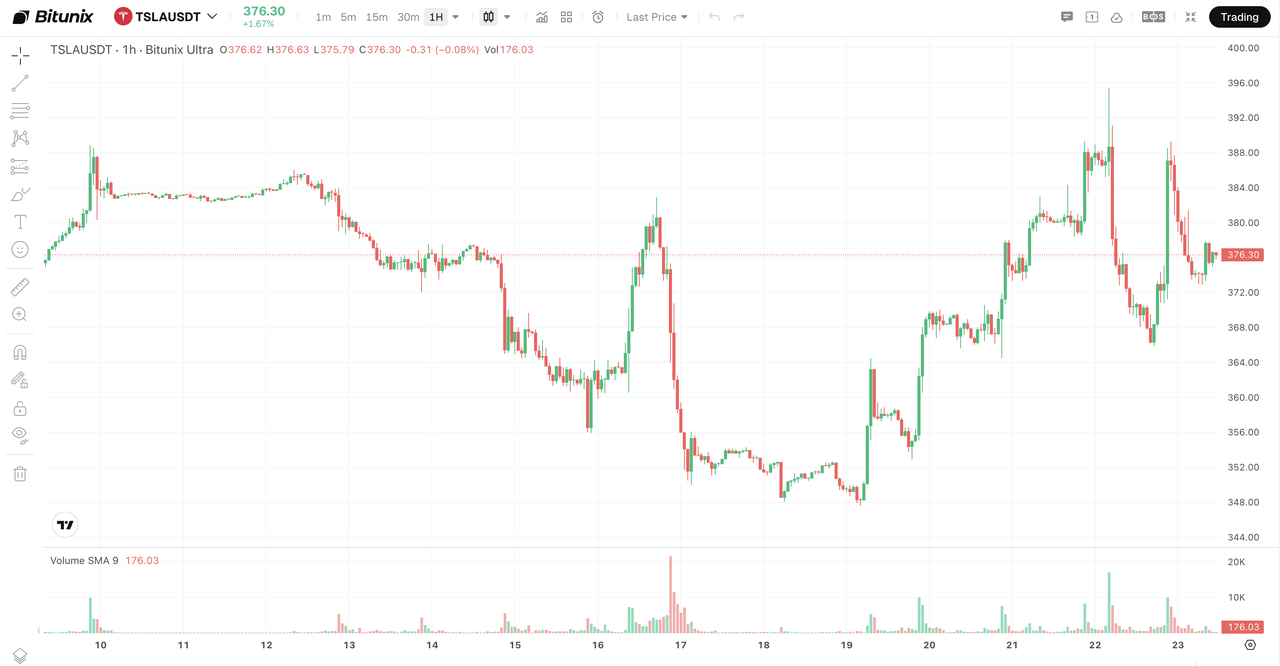
Data Source: Bitunix
Commodity Contracts: Natural Gas Drops More Than 7% as Precious Metals Trade Sideways
Bitunix offers a range of commodity contracts, including gold, silver, crude oil, and natural gas, giving users access to a broader selection of cross-market trading opportunities. In the commodity market this week, precious metals remained largely rangebound, with gold trading around the $4,000 level. Among energy commodities, natural gas fell by more than 7%. The decline was mainly driven by forecasts of unusually warm weather across large parts of the United States, which weighed on expectations for heating demand. The pressure was compounded by a significant recovery in domestic natural gas production and a larger-than-expected increase in inventories.
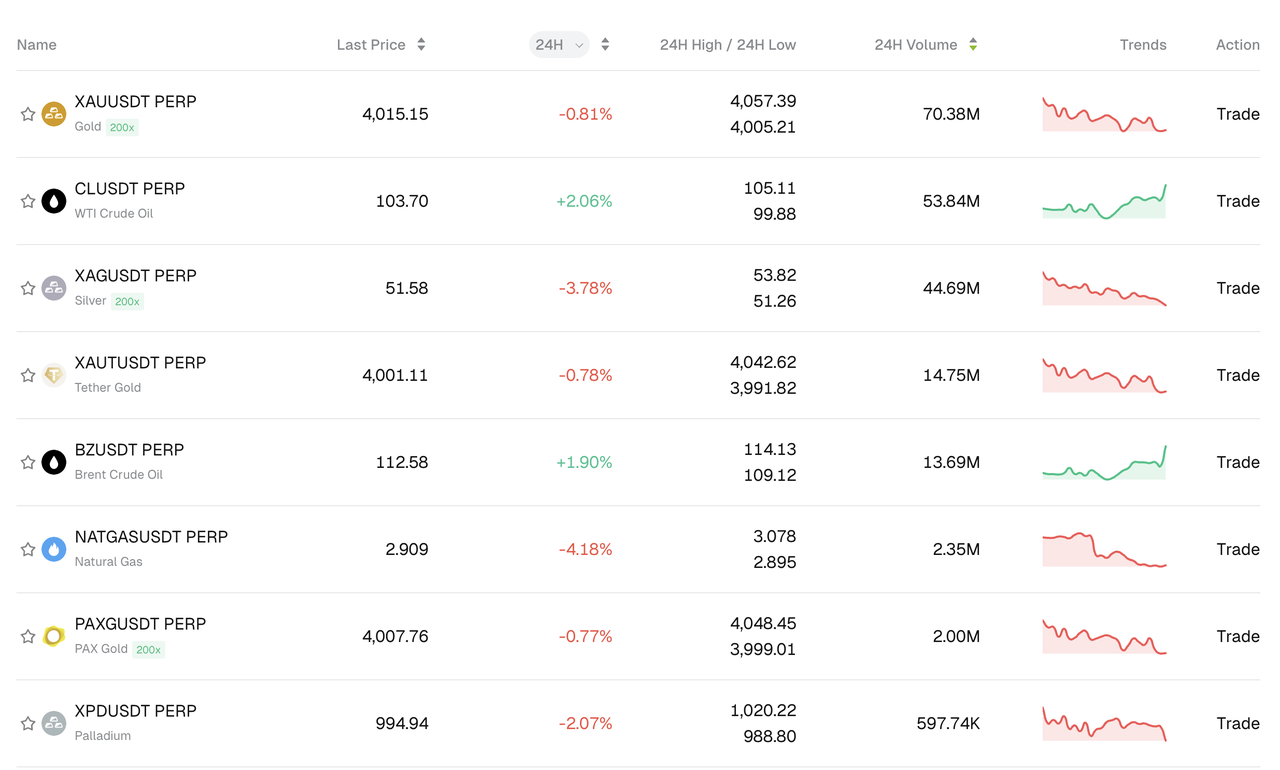
Data Source: Bitunix
Macro Catalysts: Key Event to Watch Next Week — U.S. October Unemployment Rate
Looking ahead, the market will focus on the U.S. October unemployment rate, scheduled for release by the Department of Labor on November 6. The unemployment rate is a key indicator of labor market conditions and one of the important economic data points considered by the Federal Reserve when setting monetary policy. Current market expectations put the October unemployment rate at 4.20%, unchanged from the previous reading of 4.20%. The data will help investors assess whether the U.S. labor market is continuing to cool and evaluate the potential implications for inflation and the Fed's interest rate policy.
The gap between the actual unemployment rate and market expectations could be an important driver of short-term financial market movements. If the unemployment rate comes in higher than expected, it could signal further weakness in the U.S. labor market and strengthen expectations for Fed rate cuts. However, if labor market conditions deteriorate more sharply than anticipated, concerns about a potential economic recession could weigh on U.S. equities and risk assets such as BTC. Conversely, a lower-than-expected unemployment rate could indicate continued labor market resilience, reduce expectations for near-term rate cuts, and push Treasury yields higher. Nevertheless, a single unemployment rate reading is not enough to determine the Fed's policy direction. Investors will also need to consider nonfarm payrolls, wage growth, and inflation data.
Conclusion
The crypto market recorded its third consecutive weekly decline, with selling pressure intensifying and the median return among Bitunix's top 300 tokens falling to -11.25%. Only around 5% of the tokens posted gains. The suspected hack involving multiple Binance hot wallets further heightened risk aversion, while Bitcoin fell below $77,000. HYPE was one of the few major crypto assets to move higher, gaining 14.96% over the week and briefly reaching a new all-time high of $96 amid developments surrounding the proposed partnership between Trade.xyz and ICE, the NYSE's parent company. U.S. Equities showed mixed performance: semiconductor stocks rebounded, with Micron gaining more than 9%, while Google fell 11.87% for the week as rising AI capital expenditure pushed free cash flow into negative territory for a second consecutive quarter. Looking ahead, the U.S. October unemployment rate will be an important indicator for assessing the Federal Reserve's monetary policy outlook.