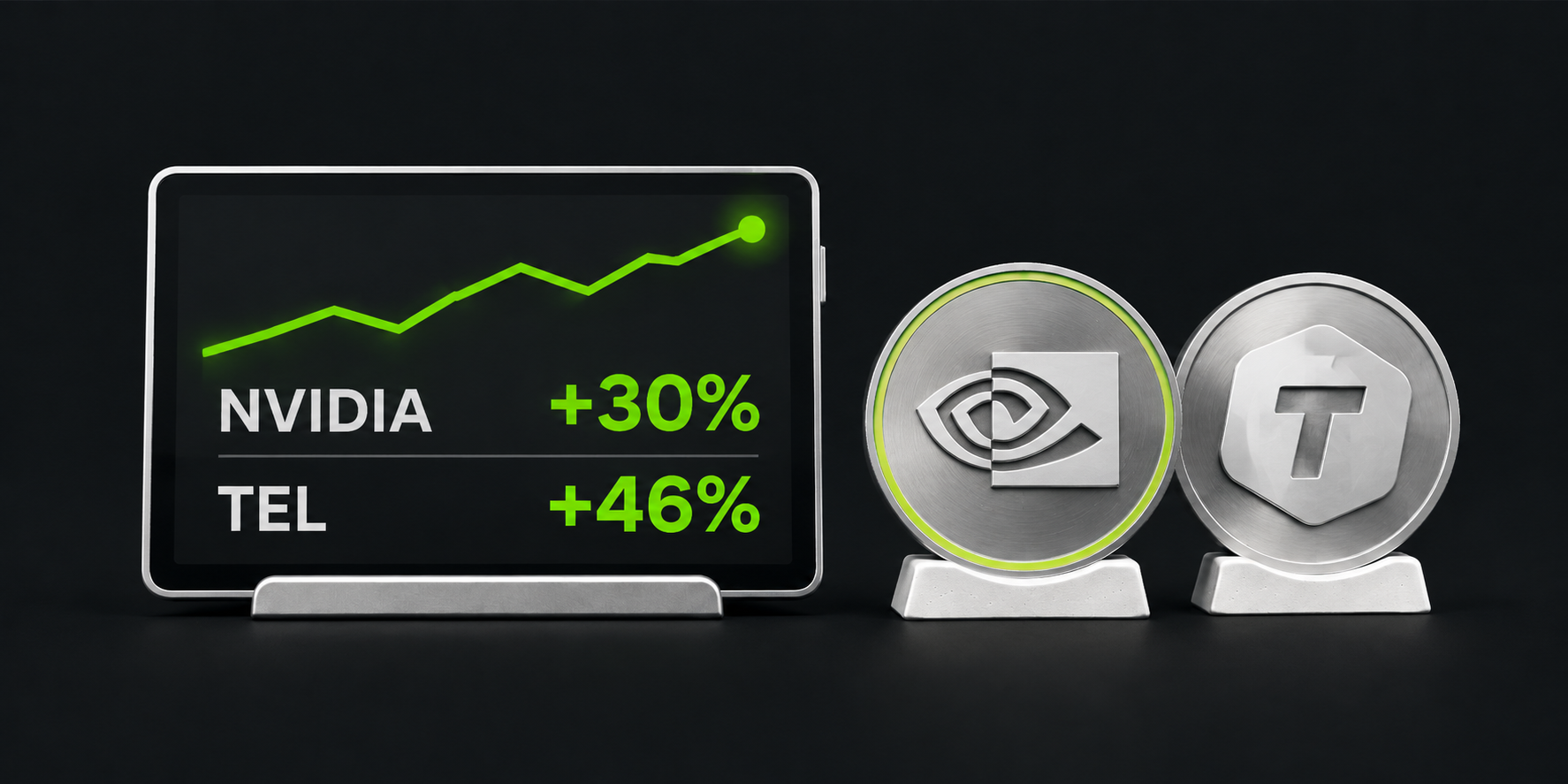
Reporting Period: November 21 – November 27, 2026 Data as of: November 27, 2026
Market Overview: U.S. Q3 GDP Growth Revised Up to 4.3% as Crypto Market Sell-Off Begins to Ease
This week, the U.S. released several key macroeconomic indicators, bringing inflation pressures and economic resilience back into focus. On November 25, data from the U.S. Bureau of Economic Analysis (BEA) showed that the annualized U.S. GDP growth rate for Q3 2026 was revised upward from an initial estimate of 3.4% to 4.3%, significantly higher than the 2.2% recorded in Q2. The upward revision was primarily driven by stronger business investment, consumer spending, and government expenditure. Meanwhile, the Personal Consumption Expenditures (PCE) Price Index rose 3.8% year over year in October, while core PCE inflation increased 3.3%. Both readings remained above the Federal Reserve's long-term inflation target of 2%, indicating that inflationary pressures in the U.S. economy remain persistent.
Macroeconomic data and interest rate expectations continue to shape risk appetite across the cryptocurrency market. This week, Bitcoin gradually found support around the $60,000 level following its previous sharp correction, while selling pressure eased compared with earlier sessions. Major crypto assets, including Ethereum, SOL, and XRP, remained under downward pressure, although their losses gradually narrowed, suggesting that short-term selling momentum was weakening. However, with inflation still above the Fed's target and economic growth remaining strong, the central bank has limited room to ease monetary policy in the near term. Dollar liquidity and broader market risk appetite therefore remain key factors influencing the outlook for digital assets.
The Bitunix Token Pulse Weekly Report tracks the performance of the top 300 cryptocurrencies by market capitalization listed on Bitunix, alongside major U.S. stock contract markets, providing investors with market insights and a reference for trading strategies.
Crypto Market Performance: Market Stabilizes, with Approximately 25% of Tokens Posting Weekly Gains
The cryptocurrency market showed signs of stabilization and recovery this week. Among the top 300 tokens by market capitalization on Bitunix, approximately 25% recorded gains, while the median weekly return stood at -2.63%. Bitcoin (BTC) fell 2.44%, Ethereum (ETH) declined 3.23%, and XRP lost 1.91%.
Top Gainers: PIEVERSE Extends Its Rally for a Fourth Week, While TEL Gains More Than 17% in 24 Hours
PIEVERSE continued its upward trend for a fourth consecutive week, gaining 274% over the past month and rising from $1.04 to $3.92. TEL was the best-performing token over the past seven days, climbing 46.46% and outperforming the broader crypto market. Several independent blockchain projects also staged recoveries, with STABLE gaining more than 10% and XTZ rising over 8% this week.
Top Gainers | Latest Price | 7-Day Change |
TEL | $0.0021 | 46.45% |
AIOT | $0.1107 | 36.58% |
PIEVERSE | $3.92 | 33.83% |
GMX | $8.05 | 16.27% |
STABLE | $0.0254 | 10.52% |
Source: Bitunix. Note: Price and percentage change data were recorded at 1:30 AM UK time (UTC+0).
Top Losers: Privacy Tokens Face Heavy Selling Pressure, with ZEC Down 46% Over the Past Month
Privacy-focused cryptocurrencies were among the worst-performing segments this week, with several tokens, including ZEC, ZK, and ZRO, posting losses of more than 10%. ZEC, one of the crypto market's strongest-performing major assets in September, fell from approximately $1,300 to $700 over the past month. The strong market consensus and capital concentration that previously supported privacy-focused tokens began to unravel in November, triggering a significant correction across the sector.
Top Losers | Latest Price | 7-Day Change |
ICNT | $0.269 | -37.38% |
USELESS | $0.073 | -25.73% |
ZEC | $705.26 | -20.65% |
ZK | $0.0064 | -14.45% |
FLUID | $1.52 | -13.67% |
Source: Bitunix. Note: Price and percentage change data were recorded at 1:30 AM UK time (UTC+0).
Featured Token Analysis: Telcoin (TEL) – Building Blockchain-Based Financial Infrastructure Through Telecom Networks
TEL is the native token of the Telcoin ecosystem. Telcoin is a Web3 project focused on connecting global telecommunications operators with blockchain-based financial services. By leveraging existing mobile network infrastructure, the project aims to provide cross-border remittances, digital payments, and decentralized finance (DeFi) services while reducing the costs and barriers associated with traditional financial systems.
Through Telcoin Network, the project is developing an EVM-compatible blockchain with telecommunications operators that are members of the GSMA participating as validators. Combined with its TELx liquidity network and Telcoin App, the ecosystem is designed to support payments, stablecoin transactions, and other on-chain financial services. TEL serves as the network's native token, primarily supporting transaction fees, validator staking, liquidity provision, and ecosystem incentives.
TEL Technical Analysis: Sharp Price Rally Followed by Weakening Momentum as 1-Hour MACD Shows Signs of a Bearish Divergence
Telcoin is a long-standing crypto project that has experienced multiple market cycles. TEL completed its Token Generation Event (TGE) on January 15, 2018, with an initial listing price of approximately $0.0047.
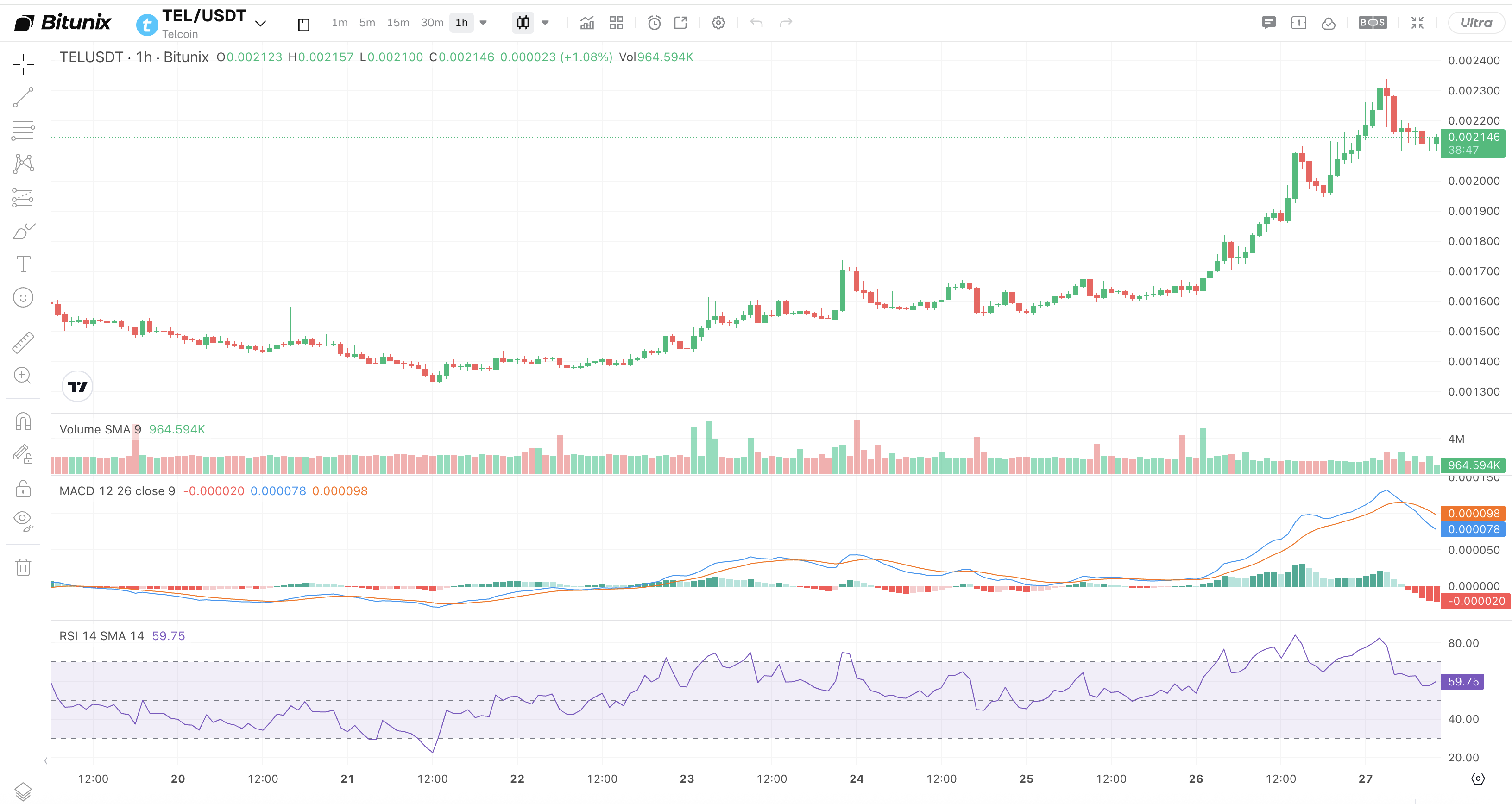
On November 25, positive developments triggered a sharp rally in TEL, pushing its price from approximately $0.0016 to $0.0023 within a short period. On the 1-hour chart, a bearish MACD crossover had emerged by the morning of November 27, while short-term moving averages continued to trend downward. A potential bullish divergence pattern was also beginning to take shape.
Source: Bitunix
Telcoin Fundamental Analysis: Mongolia's Largest Mobile Operator Joins the Network Ahead of December 2 Genesis Launch
Telcoin has recently announced several important ecosystem developments. On November 25, Mobicom, Mongolia's largest mobile telecommunications operator, officially joined Telcoin Network as a validator during the network's launch phase. Its validator infrastructure has already been deployed on the testnet and operates using Mobicom's own data center.
Beyond network validation, the two parties also plan to explore the development of eMNT, a stablecoin pegged to the Mongolian tögrög, as well as cross-border remittance channels connecting the United States and Mongolia. These initiatives could expand Telcoin's real-world payment applications, although they remain subject to local regulatory approval. Meanwhile, Telcoin Network is scheduled to launch its mainnet Genesis Block on December 2, 2026, with public access expected to open in mid-December.

Source: X
Is TEL Still Worth Buying?
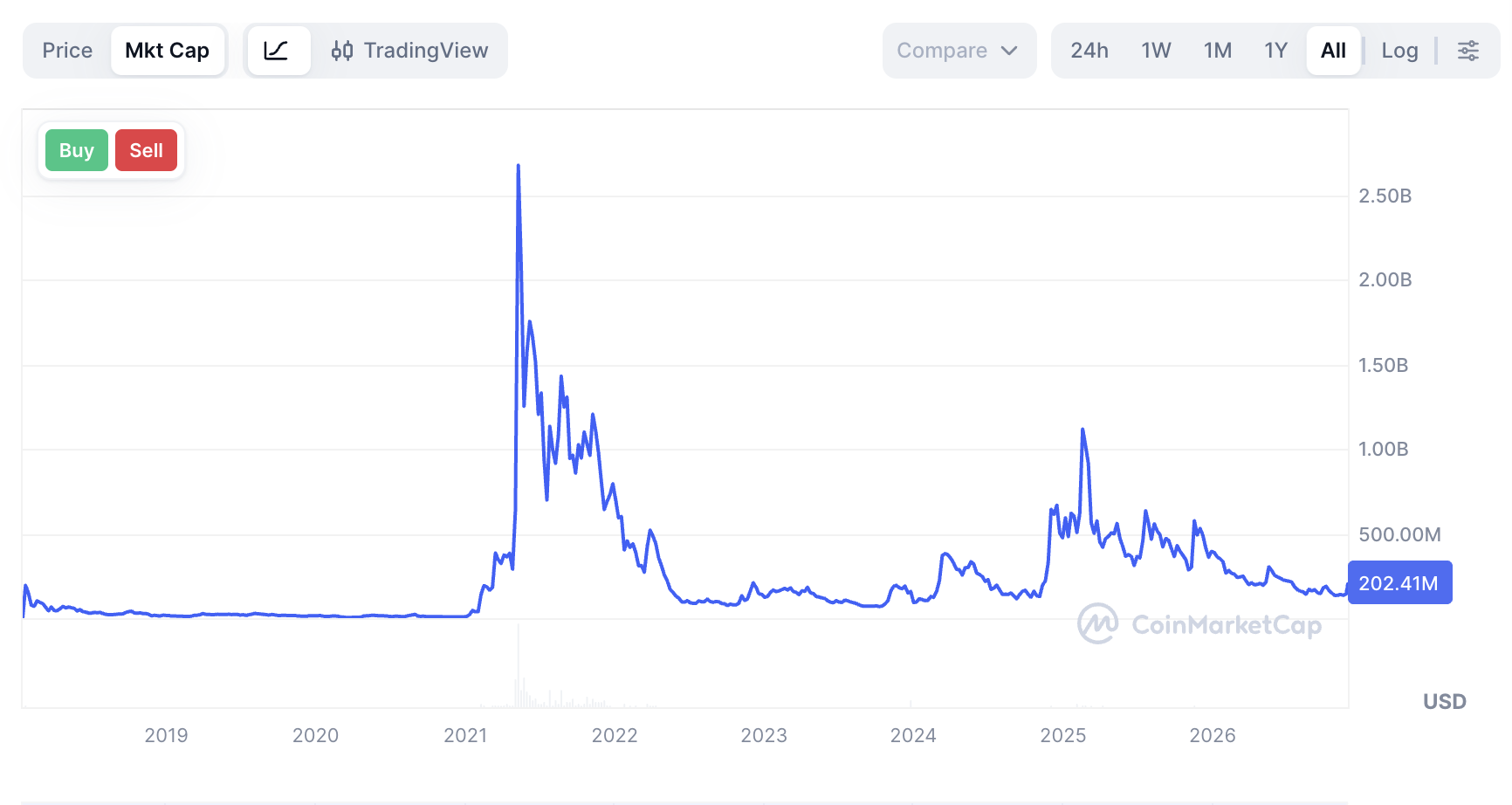
As an established project that completed its TGE in 2018, TEL reached its market capitalization peak in 2021, during a period of rapid ecosystem expansion. Its market cap exceeded $2 billion at its height. However, tightening liquidity across the cryptocurrency market and subsequent changes in the project's strategic direction contributed to a prolonged decline in TEL's price. The token has yet to return to its previous market capitalization peak.
From a technical perspective, TEL still faces considerable overhead selling pressure from investors who bought at higher price levels. The $0.003 level represents an important short-term resistance zone. A sustained breakout above this level could open the door to further upside, although continued buying pressure would be necessary to support such a move.
Source: CoinMarketCap
TEL Price Outlook: Key Levels and Catalysts to Watch
TEL rallied this week following Mobicom's addition to Telcoin Network and the announcement of the upcoming mainnet launch. On November 25, the token surged from approximately $0.0016 to $0.0023, delivering substantial short-term gains. However, following the rapid appreciation, TEL experienced a pullback. The 1-hour MACD has since formed a bearish crossover, while short-term moving averages continue to point downward, suggesting that upward momentum is weakening.
From a fundamental perspective, the December 2 mainnet Genesis launch and Mobicom's participation as a network validator remain the key catalysts to watch. Technically, $0.003 is an important overhead resistance level. A sustained breakout above this threshold could create room for further gains. Conversely, if buying demand fails to follow through, TEL may remain in a consolidation phase in the near term.
Weekly Stock Contract Performance: Nvidia Rebounds as U.S. Equities Experience a Roller-Coaster Week
U.S. equities experienced significant volatility this week. A dramatic announcement involving Jensen Huang's return to Nvidia as CEO boosted optimism across the technology sector. On November 23, Nvidia's share price surged by more than 30% in a single trading session, while several AI-related stocks, including SanDisk, Micron, and Intel, also posted substantial gains.
However, as the initial optimism faded, the Nasdaq Composite Index resumed its decline on November 24 and November 25, highlighting the fragile nature of the broader market recovery.
Company | Contract Ticker | Core Business | Stock Price | 7-Day Change |
SanDisk | SNDK | Memory | $76 | -4.09% |
Micron | MU | Memory | $601 | -12.90% |
Nvidia | NVDA | GPUs | $149 | 2.76% |
Intel | INTC | CPUs | $54 | -1.82% |
Strategy | MSTR | Cryptocurrency | $79 | -8.14% |
Circle | CRCL | Cryptocurrency | $48 | -5.88% |
Tesla | TSLA | Automotive | $380 | 1.60% |
Alphabet | GOOG | Internet | $270 | -0.37% |
SpaceX | SPCX | Aerospace | $127 | -7.97% |
Featured Stock Contract Analysis: Nvidia Surges More Than 30% in a Single Day Following Jensen Huang's Return
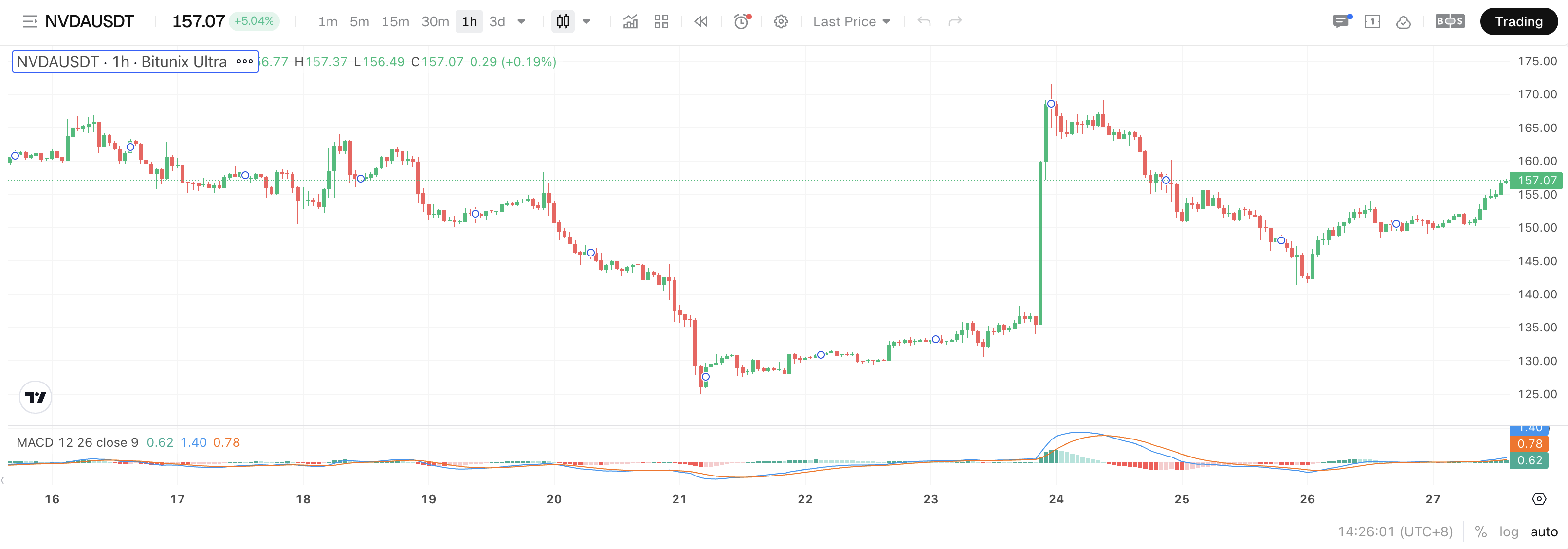
On November 23, Nvidia announced that Jensen Huang would return to the company as CEO. The news triggered a sharp rally in the stock, with shares briefly climbing above $170 during the trading session. However, as market optimism gradually cooled, Nvidia entered a period of consolidation following its dramatic rebound. By November 26, the stock had closed at $149, representing a 2.76% gain compared with the previous week.
Source: Bitunix
Commodity Contract Analysis: Commodity Markets Recover, with Gold Reclaiming the $3,600 Level
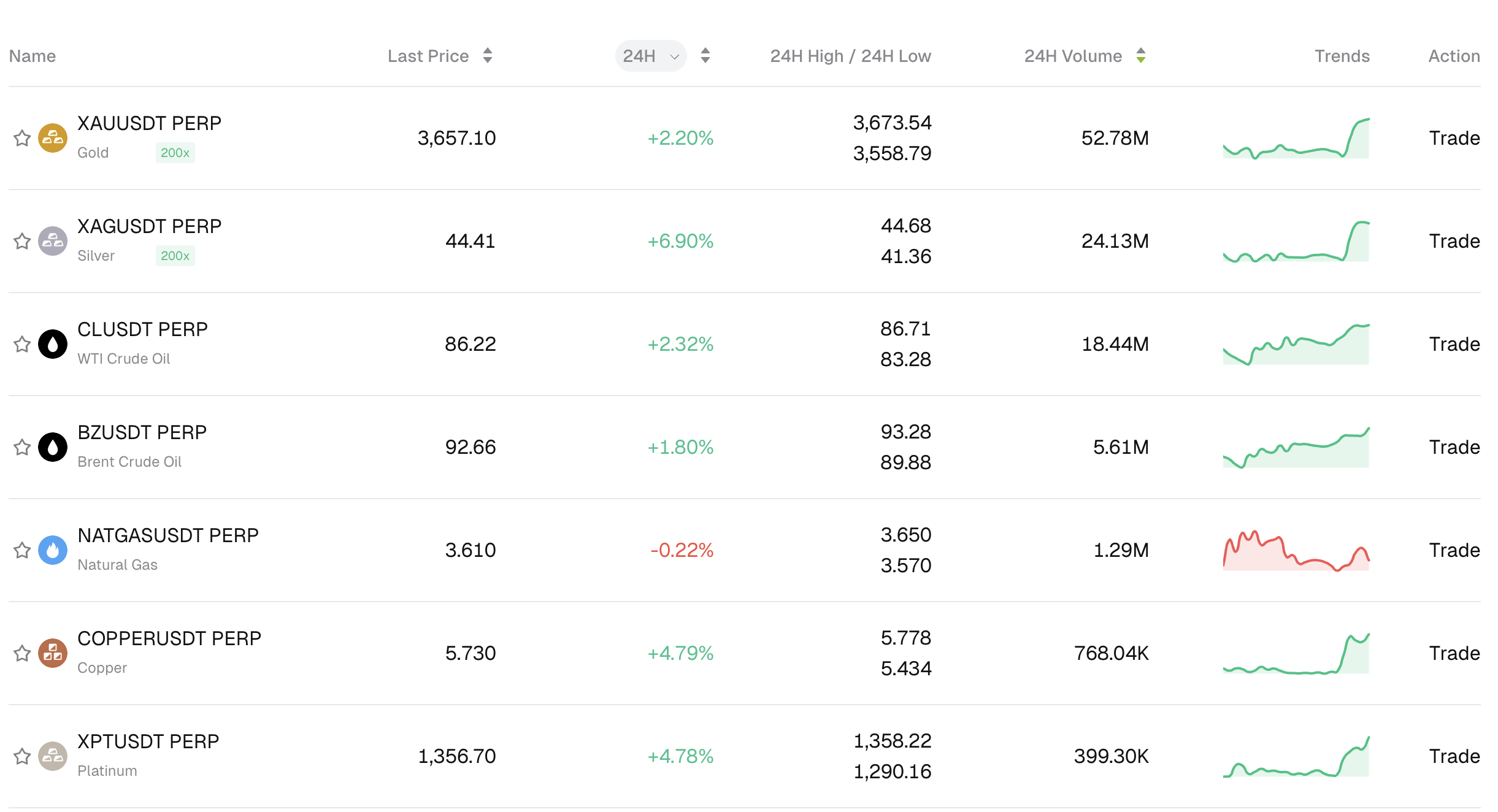
Bitunix offers a range of commodity contracts covering gold, silver, crude oil, and natural gas, giving users access to a broader selection of cross-market trading opportunities. Commodity markets staged a recovery this week, with gold climbing back above the $3,600 level. Silver also posted a strong rebound, gaining 6.90% within 24 hours. Crude oil futures moved higher as well, reflecting improving sentiment across the broader commodities market.
Source: Bitunix
Macro Catalysts: Key Event to Watch Next Week – U.S. November Unemployment Rate
Looking ahead, markets will focus on the U.S. November unemployment rate, scheduled for release by the Bureau of Labor Statistics (BLS) on December 4. As a key indicator of overall labor market conditions, the unemployment rate measures the percentage of the labor force that is actively seeking work but remains unemployed. It provides insight into labor supply and demand, corporate hiring intentions, and broader economic conditions.
Unlike weekly initial jobless claims, the unemployment rate is a monthly indicator that offers a broader assessment of labor market trends. It is also an important reference point for evaluating the resilience of the U.S. economy and anticipating the Federal Reserve's future monetary policy decisions. The U.S. unemployment rate stood at 4.1% in October, slightly below September's 4.2%. Markets will be watching closely to see whether the rate continues to decline in November or begins to move higher again.
The gap between the actual November unemployment rate and market expectations could influence short-term interest rate expectations and the performance of risk assets. If unemployment comes in below expectations, it would suggest that the U.S. labor market remains relatively resilient, potentially easing concerns about an economic slowdown. However, stronger employment conditions could also reduce expectations for further Fed rate cuts, supporting the U.S. dollar and Treasury yields while putting pressure on equities and risk assets such as BTC.
Conversely, a higher-than-expected unemployment rate could signal weakening labor market conditions and intensify concerns about slowing U.S. economic growth. At the same time, it could strengthen expectations for Fed rate cuts, potentially providing liquidity-driven support for risk assets.
Conclusion
U.S. Q3 GDP growth was revised upward to 4.3% this week, although inflationary pressures remained elevated. Against this macroeconomic backdrop, the cryptocurrency market's decline began to ease, with the median return among Bitunix's top 300 tokens standing at -2.63%. TEL surged 46.45% this week, supported by Mobicom's addition to Telcoin Network and plans for the upcoming mainnet launch, making it one of the market's strongest performers. Meanwhile, privacy-focused tokens faced significant downward pressure.
U.S. equities and commodity markets gradually stabilized following a volatile week, with Nvidia recording a single-day gain of more than 30%. Looking ahead, the U.S. November unemployment rate, scheduled for release on December 4, will be a key data point for assessing labor market conditions and the Federal Reserve's potential monetary policy direction.