

What Are Trading Fees?
Trading fees are charges applied when a trade is executed.
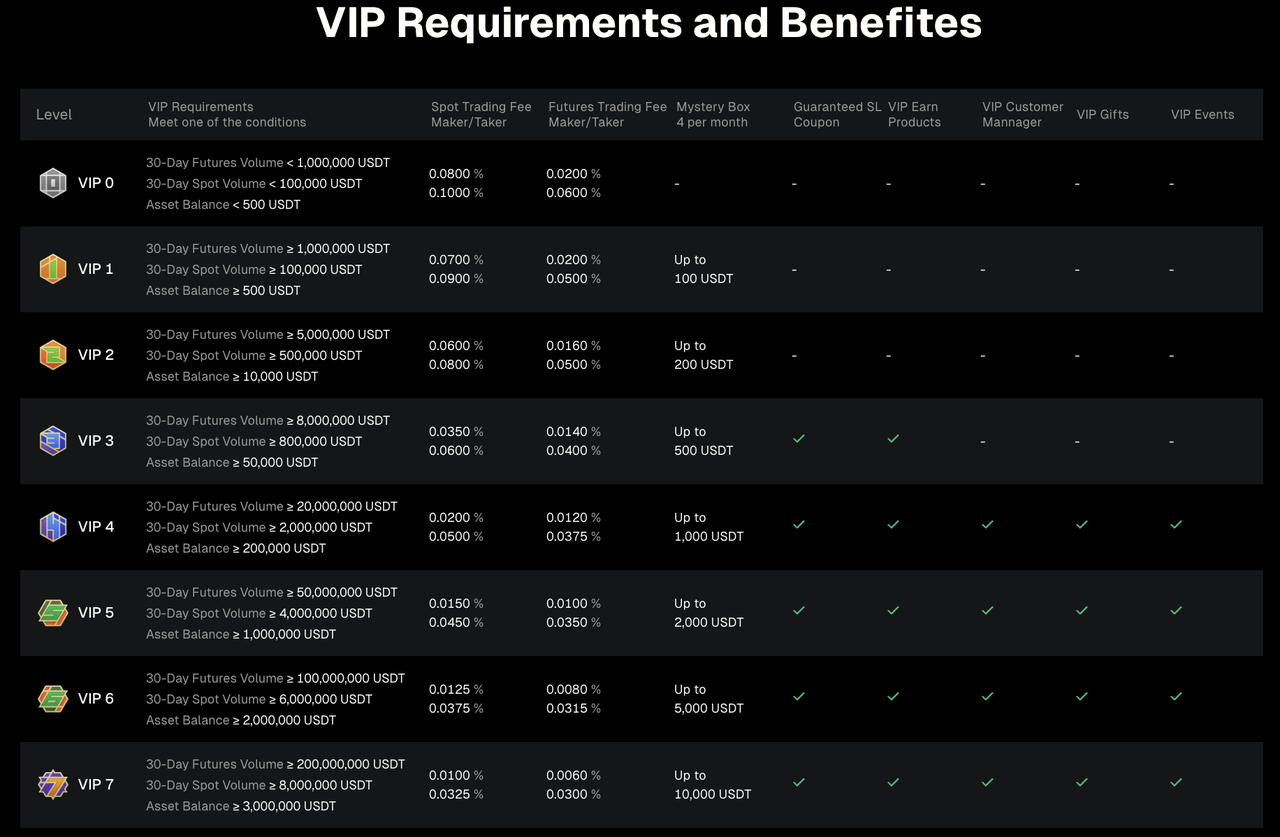
In futures trading, fees depend on your role in the order: Maker or Taker.
1. Maker vs. Taker
1.1 Taker
A Taker is a trader who executes trades by matching existing orders in the order book, effectively taking liquidity from the market.
Common scenarios:
- Placing a market order
- Placing a limit order that executes immediately
Characteristics:
- Fast execution
- Consumes market liquidity
- Higher trading fees
1.2 Maker
A Maker is a trader who provides liquidity by placing orders that do not execute immediately and remain in the order book.
Common scenarios:
- Placing a limit order away from the current market price
Characteristics:
- Provides liquidity
- Execution is not immediate
- Lower trading fees
2. Factors Affecting Trading Fees
Trading fees on Bitunix Futures are influenced by:
2.1 Order Role (Maker / Taker)
- Maker fees are lower
- Taker fees are higher
2.2 Position Size
- Larger positions result in higher fees
2.3 Leverage
- Higher leverage increases position size, which increases fees
Note: Fees are calculated based on position size, not margin.
3. Fee Calculation Formula
The total trading fee consists of opening fee + closing fee:
Total Fee = Opening Fee + Closing Fee
Calculation Details:
- Opening Fee: Opening Price × Position Size × Fee Rate (Maker / Taker)
- Closing Fee: Closing Price × Position Size × Fee Rate (Maker / Taker)
Example:
Assume:
- Opening Price: 20,000 USDT
- Closing Price: 21,000 USDT
- Position Size: 0.1 BTC
- Fee Rate: 0.05% (Taker)
Opening Fee:
20,000 × 0.1 × 0.05% = 1 USDT
Closing Fee:
21,000 × 0.1 × 0.05% = 1.05 USDT
Total Fee:
1 + 1.05 = 2.05 USDT
Summary
Trading fees on Bitunix Futures depend on your order type (Maker or Taker) and position size. Fees are charged when both opening and closing positions. By understanding how fees are calculated and applying proper strategies, traders can effectively reduce costs and improve overall performance.
Disclaimer
This article is not intended to provide:
(i) investment advice or investment recommendations;
(ii) an offer, invitation, or solicitation to buy, sell, or hold digital assets;
(iii) financial, accounting, legal, or tax advice.
Digital assets, including stablecoins and NFTs, carry significant risk and price volatility. Evaluate whether trading or holding digital assets is appropriate for your financial situation. Seek guidance from your legal, tax, or investment adviser regarding your specific circumstances.
Bitunix assumes no responsibility for any investment outcomes. You are solely responsible for understanding and complying with all applicable local laws and regulations.