
Article Summary
- This article provides a high-level, beginner-friendly explanation of Layer 2 (L2) scaling solutions in cryptocurrency, primarily in the context of Ethereum.
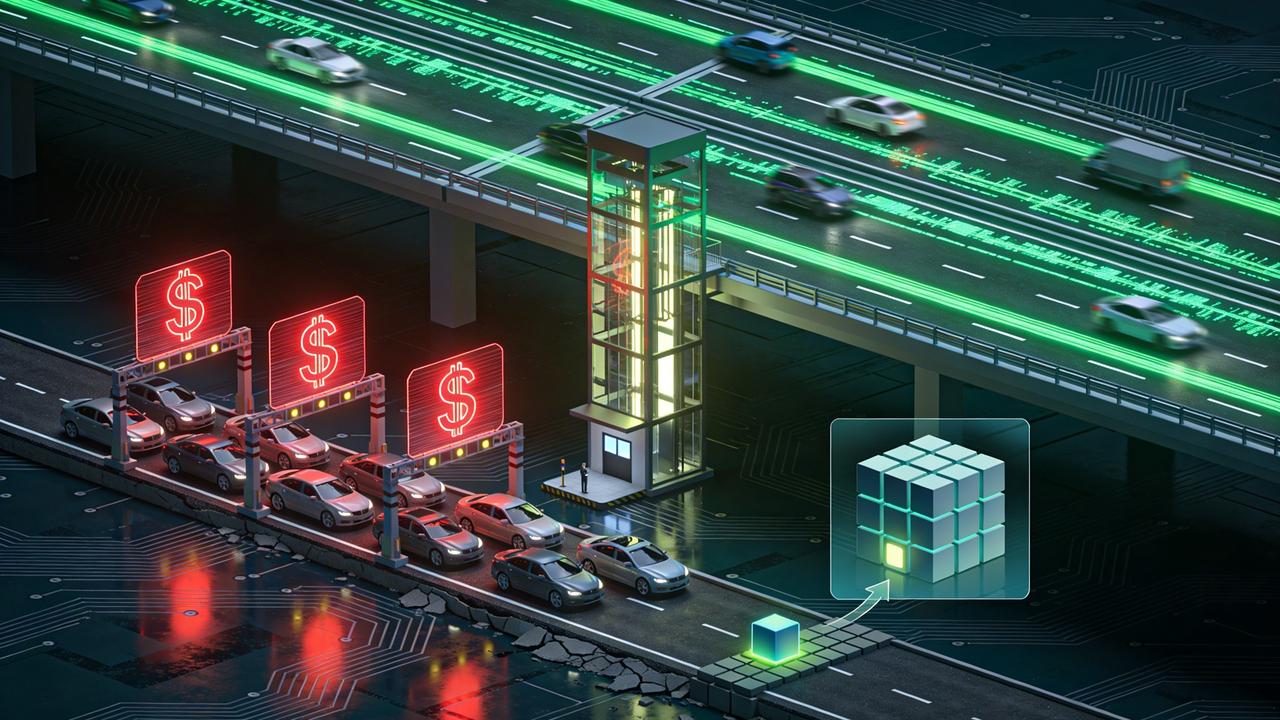
- It uses a simple analogy to explain the core problem: a Layer 1 blockchain like Ethereum is a congested main road, and a Layer 2 is a new, faster highway built on top of it.
- It defines a Layer 2 as a separate blockchain that processes transactions off the main chain but inherits the security and decentralization of the main chain (the Layer 1).
- The guide introduces the two primary types of L2s, Optimistic Rollups and Zero-Knowledge (ZK) Rollups, and explains their fundamental difference in a simple, non-technical way.
- It highlights the main benefit for users: L2s allow for much faster and cheaper transactions, making crypto applications accessible to everyone.
If you have ever tried to send a token on Ethereum and seen a $50 gas fee, you have met the scaling problem. Ethereum is popular, but popularity creates traffic. When too many people try to use the network at once, fees rise, and transactions slow down.
You see this in real life, too. Imagine Ethereum as a single, congested main road in a big city. It is secure, and everyone trusts it, but it gets expensive during rush hour. A Layer 2 works like a new multi-lane highway built on top of that road. The highway handles the fast traffic, and the main road still anchors security. If you buy crypto on a crypto exchange like Bitunix and later move funds on-chain, you run into these fees quickly.
This guide explains what a Layer 2 is, how it makes transactions faster and cheaper, and the main types of L2s you will hear about.
What is a Layer 1?
A Layer 1 (L1) is the base blockchain. It is the system that stores the core transaction history and enforces the network's rules. When people say Ethereum mainnet, they mean Ethereum as an L1.
L1 chains aim to be secure and decentralized, but they have limited throughput. Every node has to stay in sync, validate blocks, and store enough data to verify the chain. That design keeps the system honest, but it also caps how many transactions it can process.
Examples of Layer 1 blockchains include Bitcoin, Ethereum, and Solana. Each has different design choices, but they all serve as the foundational layer for their ecosystem.
Ethereum also upgrades Layer 1 to make Layer 2 cheaper and easier to use. The Pectra upgrade (May 7, 2025) increased Ethereum's blob capacity from a target of 3 blobs per block (max 6) to a target of 6 (max 9). Rollups use blobs to post their transaction data back to Layer 1, so more blob space usually means less congestion for rollup data and lower L2 fees.
Pectra also introduced EIP-7702, which lets a normal wallet temporarily act like a smart account for a transaction. That enables things like batching multiple steps (swap + approve) and gas sponsorship, which can make common Layer 2 actions like bridging and swapping feel smoother for beginners.
What is Layer 2 in Crypto?
A Layer 2 (L2) is a system built on top of a Layer 1 that processes transactions away from the main chain, then posts a compact record back to the L1. This is the core idea behind layer 2 scaling solutions. You move most activity to the faster layer, while the base layer remains the final source of truth.
Here is the mental model that makes it click:
- Execution happens on the L2. You swap tokens, mint NFTs, or interact with apps there.
- Security still comes from the L1. The L2 regularly writes back proof-like data or commitments so the L1 can enforce correctness.
That is the answer to how do layer 2s work in one sentence: they move computation off the base chain while anchoring verification to the base chain.
L2 usage has become big enough that it is measurable at the ecosystem level. L2BEAT tracks the rollup ecosystem and shows both activity and value secured across L2s. In early 2026, its Total Value Secured chart shows roughly $32B secured across tracked projects.
Bridging is the practical step most beginners hit first. To use an L2, you often move funds from Ethereum to the L2 using a blockchain bridge. That bridge locks assets on Ethereum and makes them available on the L2, usually via a canonical mechanism designed by the L2 team. L2BEAT's TVS breakdown even separates value by bridge type, including canonically bridged assets.
One more point helps prevent confusion. Your tokens do not teleport. A bridge changes where you can use them. If you deposit ETH to an L2, you still own ETH, but you now hold it inside that L2 environment until you bridge back.
The Two Main Types of Layer 2s: Rollups
Most mainstream Ethereum L2s are rollups. If you hear people talk about L2s at all, you will hear rollups right after. The reason is that rollups batch many transactions together and post them to Ethereum in a compressed form. That spreads the cost of an L1 transaction across many L2 transactions.
If you are asking what is a rollup, L2BEAT's own definition is one of the clearest beginner-friendly summaries:
"Rollups are L2s that periodically post state commitments to Ethereum. These commitments are validated by either validity proofs or accepted optimistically and can be challenged via a fraud-proof mechanism within a fraud-proof window. Additionally, L2 data is also posted to Ethereum, hence there are no additional trust assumptions introduced."
That definition also explains why rollups sit at the center of Ethereum's scaling roadmap. They keep Ethereum as the settlement layer, and they move execution to a cheaper environment.
1. Optimistic Rollups: Innocent Until Proven Guilty
Optimistic rollups assume transactions are valid by default. They publish batches to Ethereum and give the network time to challenge anything wrong. If someone finds fraud, the system can prove it and correct it.
Think of it like a court process. The system accepts a batch quickly, and a challenge window exists for objections. In many optimistic systems, withdrawals to Ethereum can take about a week because the protocol wants to preserve that challenge period before finalizing the exit.
Two common examples are Arbitrum and Optimism. L2BEAT lists Arbitrum One as the largest rollup by total value secured at around $16.54B in its current table, which tells you how much capital and usage has concentrated there.
2. Zero-Knowledge Rollups: Validity Proven Up Front
ZK rollups take a different approach. Instead of waiting for a challenge, they generate a cryptographic proof that the batch is valid. Ethereum verifies the proof, and that verification acts like a mathematical guarantee that the state transition followed the rules.
A helpful analogy is a certificate. The L2 provides Ethereum with a compact proof that the work checks out, without forcing Ethereum to re-run every transaction step by step.
Examples include zkSync Era, Starknet, and Polygon zkEVM. L2BEAT’s rollup table is a useful dashboard, since it lists major ZK (validity-proof) rollups, shows how much value is secured on each network, and tags a stage that signals how mature its security setup is, like whether upgrades are still controlled by a small group or whether the system has stronger, more decentralized safeguards.
ZK systems are powerful, but they are also complex. Building provers, optimizing circuits, and keeping developer tooling smooth takes time. That is why you still see a mix of optimistic and ZK designs in production.
Optimistic vs. ZK-Rollups: A Simple Comparison
If you only remember one thing, remember that the trade-off is optimistic rollups rely on the ability to challenge fraud after the fact, while ZK rollups prove validity before Ethereum accepts the batch.
Ethereum's roadmap keeps moving in a direction that favors rollups, mainly by increasing data capacity for L2s. In late 2025, Optimism discussed Fusaka being in production and described how future forks planned for early 2026 would gradually raise Ethereum's data capacity, giving L2s more bandwidth to scale.
A separate institutional report by Nethermind, L2BEAT, and Etherealize in December 2025 framed rollups as the strongest security model among L2 architectures and highlighted that institutions use L2s to get higher throughput and lower fees while anchoring settlement to Ethereum.
Conclusion: The Future is Layered
Layer 2s reduce high gas fees by moving activity off the main chain onto a faster, cheaper layer, while still relying on Ethereum for security. Whether you use optimistic rollups or ZK rollups, the goal remains to make crypto apps usable without paying premium fees for every click.
L2BEAT tracks value secured and activity across rollups, and its dashboards show that a large share of user activity and capital has already moved to L2 environments.
You will also see experimentation beyond classic rollups. Some newer L2 designs prioritize real-time execution and parallelism, and MegaETH shows up in L2BEAT's activity rankings as an emerging network category.
Bitunix supports assets from a growing number of Layer 2 networks. If you want to trade L2 tokens, download the Bitunix app, register, and then explore markets tied to major L2 ecosystems.
FAQ Section
Is Polygon a Layer 2?
It depends on which Polygon network you mean. Polygon PoS (the original Matic chain) works like a sidechain, with its own validators and security, so it doesn't inherit Ethereum's security as rollups do. Polygon zkEVM and other Polygon rollups are true Ethereum Layer 2s.
What is the difference between a Layer 2 and a sidechain?
A Layer 2 posts state commitments and data back to Ethereum so Ethereum can enforce correctness. A sidechain runs its own consensus and security, then connects to Ethereum through bridges. Sidechains can be cheaper, but they add more independent trust assumptions than rollups.
Why do I have to wait about 7 days to withdraw from some optimistic rollups?
Optimistic rollups include a challenge window. The protocol gives the network time to dispute fraud before finalizing withdrawals to Ethereum. That delay protects users by allowing fraud-proof to work. Some bridges and liquidity services offer faster exits, usually with extra fees.
Are ZK-rollups better than optimistic rollups?
Neither is universally better. ZK rollups provide validity proofs, which can enable faster finality and withdrawals. Optimistic rollups rely on fraud proofs and tend to have simpler, more established tooling. What you should choose depends on costs, app support, and how you plan to move funds.
Will Layer 2s make Ethereum worthless?
No. Rollups depend on Ethereum for settlement and data availability, so Ethereum remains the anchor. As more activity moves to L2s, Ethereum's role shifts toward being a secure base layer that verifies rollup data and proofs. That can strengthen Ethereum's position rather than replace it.
How do I move my funds from Ethereum to a Layer 2?
You use the official bridge for that L2 or a trusted bridging app that routes through canonical bridges. You deposit assets on Ethereum, and the bridge makes them available on the L2. Always confirm the correct network and contract, and start with a small test transfer first.
Do Layer 2s have their own tokens?
Some do, some do not. Many rollups have governance tokens used for voting and incentives. Others focus on using ETH for gas and keep governance minimal; a token is not required for an L2 to function.
What is EVM equivalence?
EVM equivalence means an L2 behaves like Ethereum at the execution level, so smart contracts and tooling work with minimal changes. Some L2s aim for full equivalence, while others aim for compatibility with small differences. Higher equivalence usually makes it easier for developers to migrate apps.
What are state channels and plasma?
State channels move repeated interactions off-chain between participants and settle the final result on-chain. Plasma is an older family of designs that offloaded transactions into child chains with exit games. Both can reduce fees, but rollups became the dominant approach because they post more data to Ethereum.
Where can I see a list of all the Layer 2s?
L2BEAT is the most widely used public dashboard for Ethereum L2s. It tracks value secured, activity, risks, and maturity stages across rollups and related systems. Use it to compare projects and to understand the difference between rollups, validiums, and other scaling designs.
Glossary
- Layer 1 (L1) — The base blockchain that finalizes transactions and provides core security.
- Layer 2 (L2) — A system that executes transactions off L1 and anchors results back to L1.
- Gas fee — The fee you pay to include a transaction in a block.
- Throughput — How many transactions a network can process in a given time.
- Rollup — An L2 that batches transactions and posts commitments plus data to Ethereum.
- Batch — A compressed bundle of many L2 transactions submitted to Ethereum together.
- State commitment — A compact representation of the L2 state posted to L1.
- Fraud-proof — Evidence used to challenge an invalid optimistic rollup state transition.
- Challenge window — The time period when fraud proofs can be submitted on optimistic rollups.
- Validity proof — A cryptographic proof that a batch of transactions is correct.
- ZK rollup — A rollup that uses validity proofs so Ethereum can verify correctness directly.
- Sequencer — The component that orders L2 transactions and produces L2 blocks.
- Finality — The point when a transaction is considered settled and unlikely to be reversed.
- Canonical bridge — The official bridge mechanism tied to a specific L2 for deposits and withdrawals.
- Total Value Secured (TVS) — Value held on an L2, often broken down by bridge and asset type.
About Bitunix
Bitunix is a global cryptocurrency derivatives exchange trusted by over 5 million users across more than 100 countries. The platform is committed to providing a transparent, compliant, and secure trading environment for every user. Bitunix offers a fast registration process and a user-friendly verification system supported by mandatory KYC to ensure safety and compliance. With global standards of protection through Proof of Reserves (POR) and the Bitunix Care Fund, Bitunix prioritizes user trust and fund security. The K-Line Ultra chart system delivers a seamless trading experience for both beginners and advanced traders, while leverage of up to 200x and deep liquidity make Bitunix one of the most dynamic platforms in the market.
Bitunix Global Accounts
X | Telegram Announcements | Telegram Global | CoinMarketCap | Instagram | Facebook | LinkedIn | Reddit | Medium
Disclaimer: Trading digital assets involves risk and may result in the loss of capital. Always do your own research. Terms, conditions, and regional restrictions may apply.