What Is Zcash?
Zcash (ZEC) is a decentralized cryptocurrency designed to provide stronger financial privacy through advanced cryptography. Launched in October 2016, Zcash allows users to transfer digital assets while choosing whether transaction details are publicly visible or shielded from the blockchain's public record.
Unlike Bitcoin, where transaction amounts and wallet addresses are generally visible on the public ledger, Zcash supports shielded transactions that can conceal the sender, recipient, and transaction amount while still allowing the network to verify that each transaction is valid.
Zcash was developed from research into privacy-preserving digital currencies and became one of the earliest major blockchain projects to implement zero-knowledge proofs for private payments. Its development has been supported by organizations including the Electric Coin Company (ECC) and the Zcash Foundation.
Zcash Technology: How Do Shielded Transactions and Zero-Knowledge Proofs Work?
Zcash combines blockchain technology with zero-knowledge cryptography to protect transaction details while allowing the network to verify payments. Unlike Bitcoin, where transaction amounts and wallet addresses are generally visible on the public blockchain, Zcash supports both transparent and shielded transactions. Transparent addresses, known as t-addresses, work similarly to Bitcoin addresses, with transaction details publicly accessible. Shielded addresses, known as z-addresses, allow users to conceal the sender, recipient, and transaction amount when funds are transferred entirely through the shielded system.
Zcash achieves this privacy through zero-knowledge proofs, a cryptographic technique that allows one party to prove a statement is valid without revealing the underlying information. Specifically, Zcash uses zk-SNARKs (Zero-Knowledge Succinct Non-Interactive Arguments of Knowledge) to verify that shielded transactions follow network rules, that the sender is authorized to spend the funds, and that the same funds are not spent twice. The network can validate these transactions without publicly disclosing their sensitive details. Zcash's Orchard protocol uses the Halo 2 proving system, which enables zero-knowledge proofs without requiring the trusted setup ceremony used by some earlier proof systems.
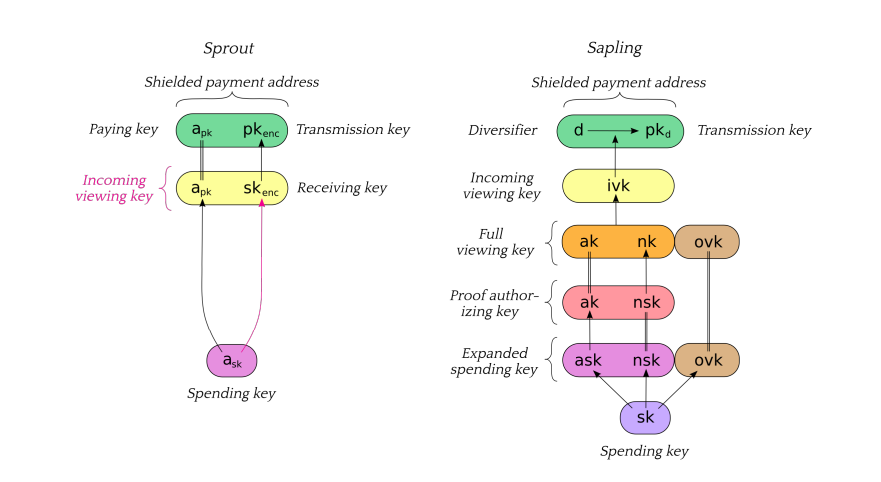
However, Zcash's privacy features do not guarantee complete anonymity. Transactions involving transparent addresses may expose information on-chain, while exchanges, network-level data, and user behavior can reveal additional details. Transfers between transparent and shielded addresses may also disclose information about the transparent portion of a transaction. To improve privacy, users can keep funds within the shielded system and use compatible wallets. Zcash also supports viewing keys that allow transaction information to be selectively disclosed for purposes such as auditing or compliance. This approach gives users greater control over their financial information while preserving the network's ability to verify transactions.
Data Source: Zcash Whitepaper
Zcash Network: Privacy Adoption, Shielded Pool, and Real-World Use Cases
Zcash supports shielded transactions through protocols such as Sapling and Orchard, allowing users to transfer funds without publicly revealing sensitive transaction details. In July 2026, the network activated the NU6.3 upgrade, also known as Ironwood, introducing a new shielded pool and changes to the existing Orchard pool. These developments highlight the importance of network security, protocol upgrades, and wallet compatibility for ZEC holders.
Shielded adoption is an important indicator of how actively users leverage Zcash's privacy features. Greater use of shielded transactions can make individual transfers harder to trace through public blockchain data, although the actual level of privacy depends on transaction patterns and user behavior. Wallet and exchange support also matters, as limited compatibility may restrict access to shielded deposits and withdrawals.
Zcash's main use cases include private peer-to-peer payments, business transfers, and protecting personal financial information from public exposure. ZEC can also be traded on cryptocurrency exchanges or held as a digital asset. However, broader adoption depends on usability, regulatory requirements, and competition from other privacy-focused technologies.
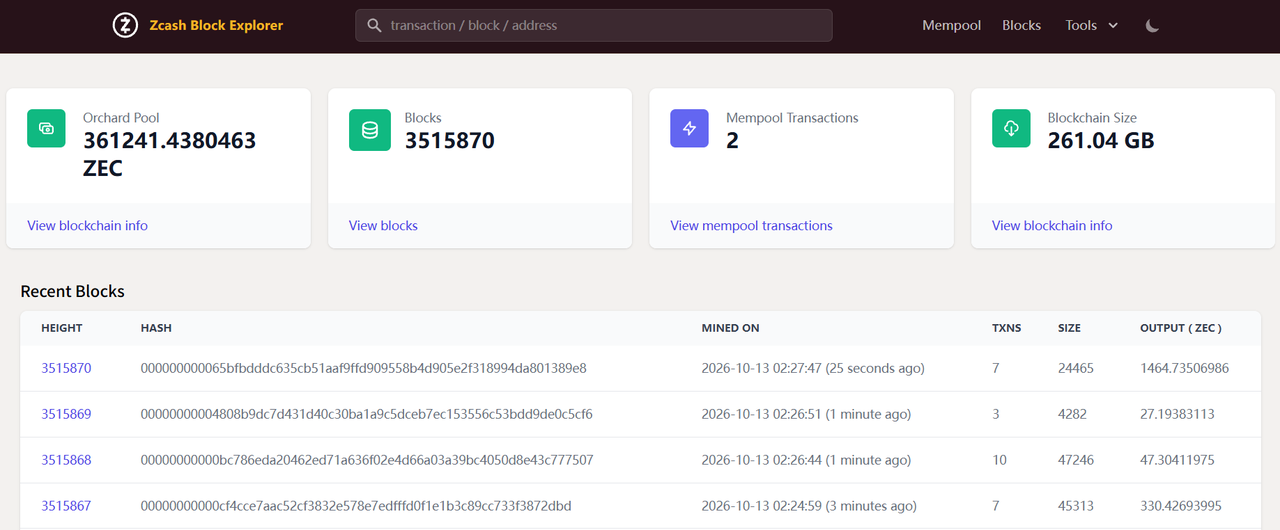
Data Source: Zcash Block Explorer
How Miners Earn ZEC
Equihash vs. SHA-256: How Does Zcash Mining Differ from Bitcoin Mining?
Zcash uses the Equihash proof-of-work algorithm, specifically Equihash 200,9 for ZEC mining, while Bitcoin relies on SHA-256. Both algorithms allow miners to compete to produce blocks and earn rewards, but they require different mining hardware. Bitcoin miners typically use SHA-256 ASICs, whereas ZEC miners use Equihash-compatible machines. As a result, Bitcoin mining equipment cannot directly mine ZEC, even though both cryptocurrencies share a proof-of-work consensus mechanism and a maximum supply of 21 million coins.
Zcash Miner Z15 Pro: A Leading ASIC for ZEC Mining
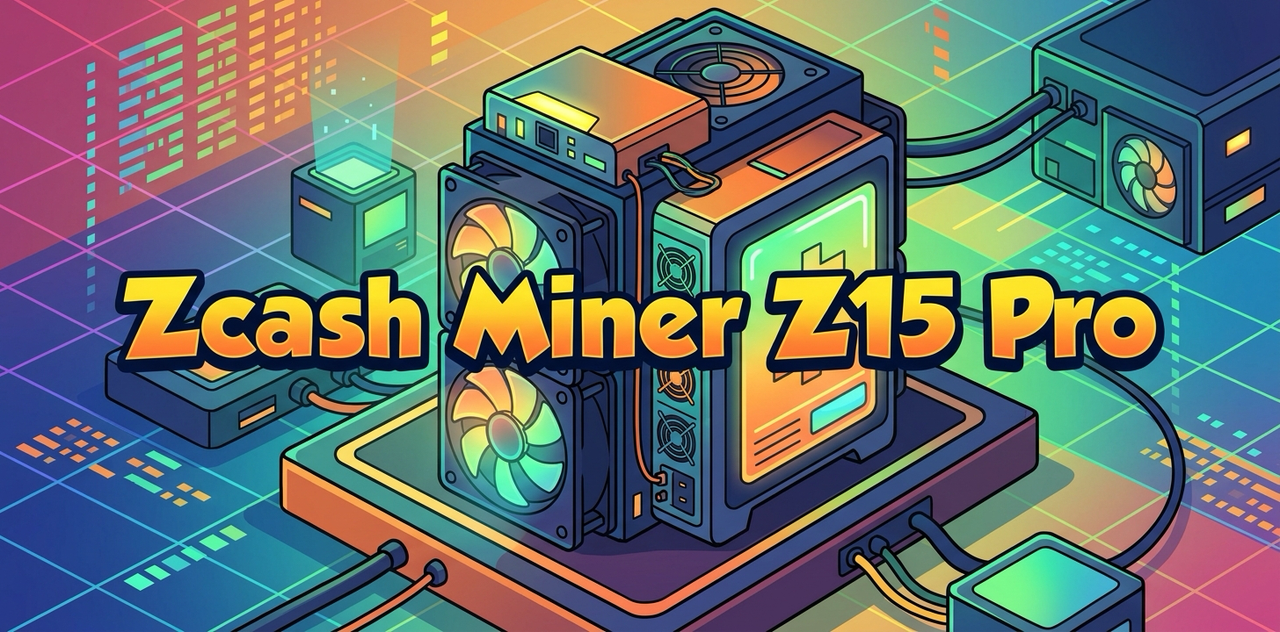
The Antminer Z15 Pro is one of the prominent ASIC models used for Zcash mining. Manufactured by Bitmain, it is designed specifically for Equihash-based mining and offers substantially greater computational efficiency than general-purpose hardware. ASIC miners are favored by professional mining operations because they deliver specialized computing performance, although profitability depends on electricity costs, hardware efficiency, network difficulty, and the market price of ZEC. Miners should also compare the specifications and operating costs of different Equihash-compatible models before investing in equipment.
Leading Zcash Mining Pools: ViaBTC, Foundry, and F2Pool
Zcash mining is supported by several established mining pools, including ViaBTC, Foundry, and F2Pool. These operators are also active in Bitcoin mining, reflecting a degree of overlap between the infrastructure serving the two networks. Current pool statistics place ViaBTC among the largest ZEC mining pools, followed by major participants such as Foundry and F2Pool, although their relative hashrate shares fluctuate over time. By joining a mining pool, individual miners combine their computing power with other participants and receive rewards according to the pool's payout rules. Before joining, miners should compare fees, payout methods, minimum withdrawal thresholds, and server locations to determine which pool best suits their needs.
ZEC Price Review: Could Bitcoin Mining Pool Capital Be Behind the Rally?
According to BlockBeats, ZEC's recent rally may reflect more than renewed interest in privacy-focused cryptocurrencies. The publication highlights a historical pattern in which major ZEC rallies have coincided with medium-term peaks in Bitcoin, including periods in late 2017 and 2020–2021. While these price movements do not establish a causal relationship, BlockBeats suggests that capital rotation between major cryptocurrencies may be worth examining as a potential factor behind ZEC's performance.
One clue may lie in the overlap between ZEC and BTC mining infrastructure. ViaBTC, Foundry, F2Pool, and AntPool are established Bitcoin mining pools that also participate in Zcash mining. BlockBeats argues that the entry of Foundry into ZEC mining in April 2026, alongside the presence of other major mining operators, highlights the growing role of established Bitcoin mining institutions in the Zcash ecosystem. However, shared mining infrastructure alone does not demonstrate coordinated trading or price manipulation.
BlockBeats also points to the potential influence of mining economics, institutional investment, and ZEC's shielded transaction features on market dynamics. Mining pools receive block rewards before distributing them to participating miners, giving them operational control over reward distribution, but this does not necessarily mean they retain ownership of the coins or coordinate their sales. Because shielded transactions can limit the visibility of on-chain fund flows, tracking ZEC movements may also be more difficult than tracking transparent Bitcoin transactions. These factors offer possible avenues for understanding ZEC's price behavior, although the theory that BTC mining interests are collectively driving its rally remains unproven.
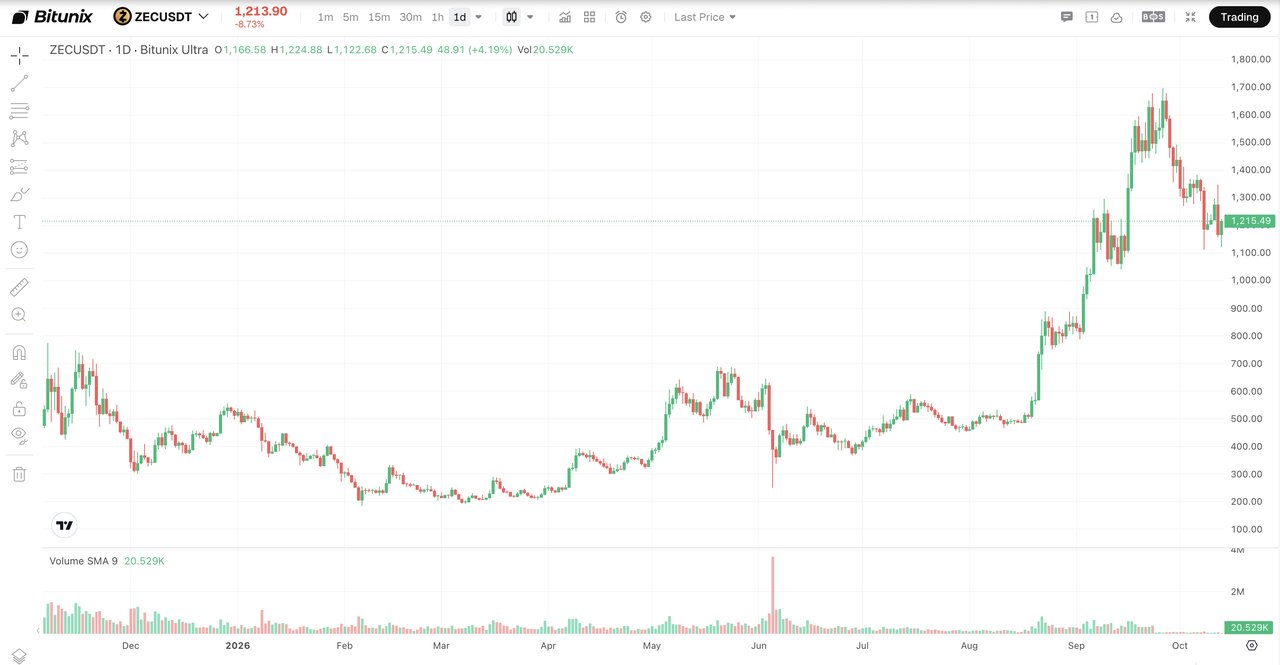
Data Source: Bitunix
How Investors Can Buy ZEC
Investors typically have two common ways to buy ZEC: purchasing through a cryptocurrency exchange or trading directly with other users through peer-to-peer (P2P) platforms. Each method has its own advantages and risks. For beginners, a centralized cryptocurrency exchange is often a more straightforward option, offering a structured trading process and account security features.
A common approach is to use a centralized exchange such as Bitunix, where users can buy ZEC with supported fiat currencies or stablecoins such as USDT. Depending on the platform's available payment methods, instant purchases using a credit or debit card may also be possible. Before trading, users generally need to register an account and complete identity verification (KYC). This process helps exchanges comply with Anti-Money Laundering (AML) and Counter-Terrorist Financing (CTF) requirements. Bitunix provides account security and risk management measures to help protect users' assets, including wallet security controls and transaction monitoring. Before purchasing ZEC, investors should also check the available trading pairs, fees, and withdrawal support, particularly if they intend to use Zcash's shielded transaction features.