As a US-based crypto trader, you have probably hit the same wall more than once. You find a platform with the features you want, then you see a country restriction list, and your heart sinks. So let’s answer the question you actually came here for: Is Bitunix available in the US?
This guide will provide a clear answer regarding Bitunix's crypto exchange availability in the US, explain the reasons behind the policy, and offer guidance on what this means for you as a US-based trader.
Is Bitunix Available in the US?
Based on Bitunix’s official restricted-regions policy, Bitunix does not provide futures trading services to users in the United States.
Here’s the platform’s wording (shortened to the relevant part): "Bitunix does not provide services to users in specific restricted regions… including… the United States (including all US territories)."
In practical terms, Bitunix USA access is not offered for normal sign-up, trading, and copy trading. If you are a US resident, you should assume you are not eligible to use Bitunix as a crypto exchange for US residents. And to make it extra clear for anyone scanning this page, the answer to is Bitunix available in the US is not under the current eligibility notice.
Why Are US Residents Restricted? Understanding the Regulatory Landscape
The United States has several regulators that touch crypto, and they do not all cover the same thing.
The SEC
The Securities and Exchange Commission focuses on markets and products that fall under securities laws. In crypto, the hard part is that whether something counts as a security often depends on facts and structure, not just what the token is called.
The CFTC
The Commodity Futures Trading Commission oversees derivatives markets for commodities. That matters because many crypto platforms offer derivatives like futures or perpetual contracts, which bring extra licensing and rules.
FinCEN
The Financial Crimes Enforcement Network focuses on anti-money laundering rules and customer identification standards. That affects how platforms handle verification, monitoring, and reporting.
The tough part is that US crypto regulation often feels like overlapping lanes with unclear road signs. Cointelegraph summed up the problem this way: "There is so much uncertainty about the definition of a security… the market is being chilled."
For global exchanges, the result is simple. If a platform cannot support the required licensing and operational structure for US rules, it often blocks access rather than take the risk.
What Happens if a US Resident Tries to Use Bitunix?
Bitunix’s own policy is direct about enforcement, and this part matters for your funds.
During sign-up and verification
Even if the site loads, identity checks and location signals can flag you as a US user, Bitunix’s user agreement also says feature availability depends on where you live, and that you are responsible for complying with local rules.
About VPN use
Suppose you are thinking, “What if I just use a VPN,” stop there. The eligibility notice explicitly warns against trying to bypass restrictions. It states that attempts to circumvent restrictions, including VPN use or false information, can lead to suspension or termination and other enforcement steps.
A short excerpt (again, only the relevant part): "Any attempt to circumvent these restrictions, such as using a VPN… may lead to immediate account suspension [or] termination."
That is why this is not a clever workaround situation. It is a "your account and funds can get stuck" situation. If you are researching Bitunix US customers' access, the safest conclusion is that trying to force access is a bad tradeoff.
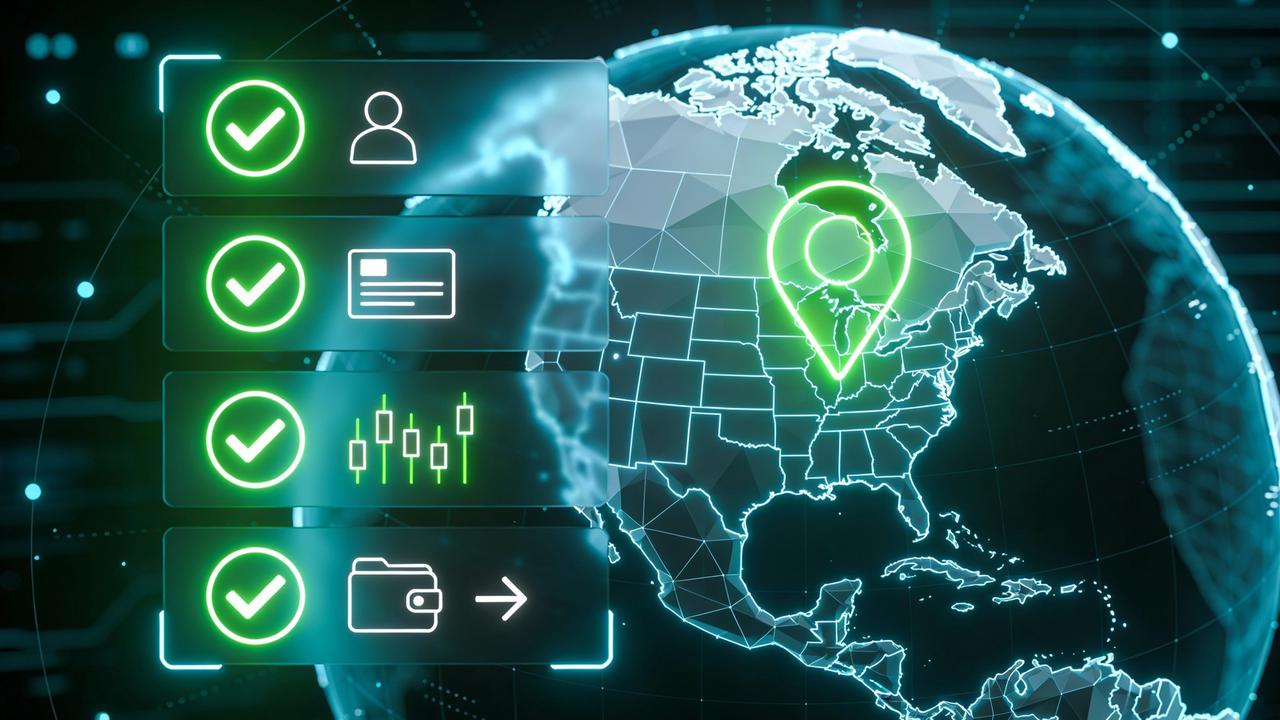
Limits and onboarding: a quick decision tree for US users
This is where the decision tree image fits best in your article.
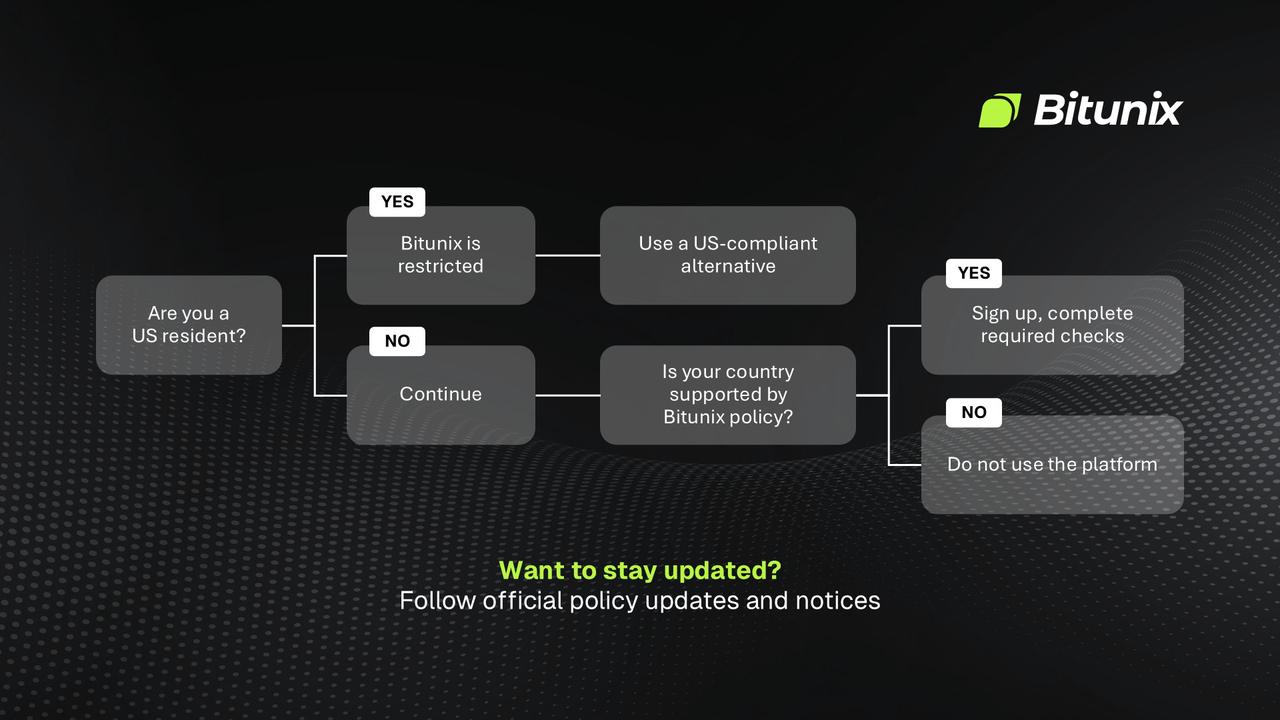
This keeps the message simple: your residency drives eligibility, not which page you can open.
Conclusion: A Transparent Stance For a Global Platform
If you wanted a yes, I get it. Fewer restrictions mean more options, and traders like options. But the current reality is straightforward. Bitunix is restricted to US residents under its published eligibility policy, and trying to bypass that puts your account at risk.
The regulatory environment in the US keeps changing, and big policy debates continue. If Bitunix ever updates its stance, the right place to trust is an official policy notice, not a random thread.
For now, if you are in the US, look for a platform that is explicitly licensed and operated for your jurisdiction. That is the boring answer. It is also the safest one.
To stay updated on our services and any future expansion, please follow our official announcements and social media channels.