International Business Machines Corporation (IBM), long dubbed "Big Tech’s original giant," has undergone one of the most significant corporate transformations in technology history. Once known primarily for mainframe hardware and legacy enterprise IT services, IBM has aggressively pivoted toward high-growth, high-margin sectors: Hybrid Cloud and Enterprise Artificial Intelligence (AI).
For income-oriented and value-focused investors, IBM represents an intriguing blend of enterprise stability, consistent dividend yields, and targeted exposure to next-generation technologies.

Introduction to IBM
Founded in 1911, IBM is an enterprise technology icon headquartered in Armonk, New York. Over more than a century, the company has navigated massive technological shifts—from punch-card accounting machines and mainframes to personal computers and cloud infrastructure.
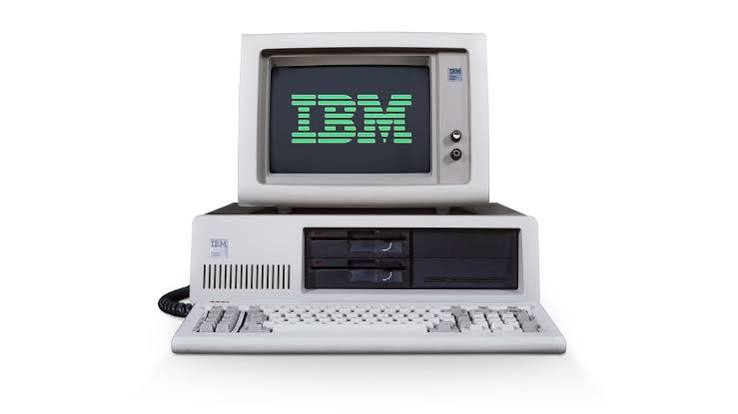
Part of IBM's longevity stems from its willingness to exit low-margin hardware markets to focus on high-value enterprise solutions. A defining moment in this transformation occurred in 2005, when IBM sold its Personal Computing division—including the legendary ThinkPad line—to Lenovo Group for $1.75 billion. This landmark deal marked IBM’s exit from the consumer PC market, shifting its focus toward enterprise software, IT services, and corporate consulting.
Continuing this strategy under CEO Arvind Krishna, who took the helm in 2020, IBM shed its managed infrastructure services by spinning off Kyndryl in late 2021. This move allowed IBM to narrow its vision around a core dual strategy: Red Hat hybrid cloud infrastructure and Watsonx AI software. Today, IBM operates as a streamlined software and consulting powerhouse, providing mission-critical technology services to Fortune 500 corporations, financial institutions, and government agencies worldwide.
How Does IBM Make Money?
IBM generates revenue across four primary operating segments, transitioning its portfolio toward predictable, high-margin recurring software revenues:
Software
Software is IBM’s largest and most profitable driver. It encompasses:
Hybrid Cloud Platform: Powered by Red Hat (acquired in 2019 for $34 billion), enabling enterprise clients to run applications seamlessly across public clouds (AWS, Azure, Google Cloud) and private on-premises infrastructure.
Artificial Intelligence (Watsonx): IBM’s enterprise-grade AI platform designed for businesses to train, tune, and deploy custom machine learning and generative AI models securely.
Data, Automation, and Security: Enterprise tools for cyber defense, data integration, and operational efficiency.
Consulting
IBM Consulting serves as the execution arm for its software technologies. Consultants help enterprise clients modernize applications, migrate workloads to hybrid cloud environments, and integrate generative AI workflows into daily business operations.
Infrastructure
This segment includes IBM’s hybrid cloud hardware and enterprise servers:
IBM Z Mainframes: Highly resilient servers that process a massive portion of global banking and credit card transactions.
Distributed Infrastructure: Storage solutions and custom hardware tailored for cloud data centers.
Financing
IBM Global Financing facilitates client purchases by offering structured financing solutions for hardware, software, and services.
What Drives IBM Stock Price?
AI and Software Growth
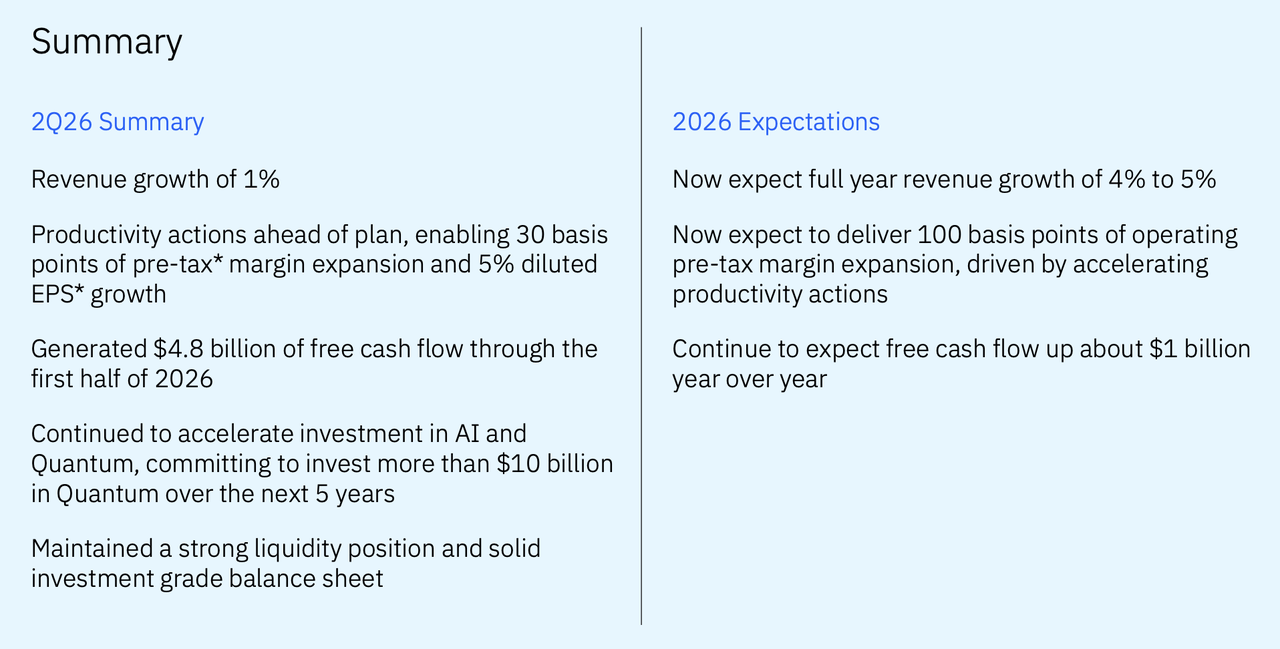
AI has become an increasingly important growth driver for IBM. The company's opportunity is not limited to selling AI models. IBM is positioning itself as an enterprise technology provider that helps businesses deploy AI within existing IT environments. Software products such as Red Hat, watsonx, automation tools, data platforms, HashiCorp, and Confluent are therefore important to IBM's AI strategy. In Q2 2026, IBM said these higher-growth areas continued to perform strongly as the company expanded its sales coverage and invested in AI commercialization.
Hybrid Cloud Demand
IBM's hybrid cloud strategy is another major factor. Many large enterprises cannot simply move all of their workloads to public clouds because of regulatory requirements, legacy applications, security concerns, or the economics of existing infrastructure. This creates a market for technologies that allow businesses to operate workloads across multiple environments. Red Hat gives IBM an important position in this market, while IBM's consulting business helps customers implement these technologies.
Consulting Growth
Consulting remains an important part of IBM's business model because it connects the company's software and infrastructure products with enterprise customers. However, investors also watch consulting growth closely because it has historically grown more slowly than IBM's Software segment. In the first half of 2026, Consulting revenue increased 2.1% year over year, compared with 7.9% growth for Software.
Infrastructure Demand
IBM's infrastructure business can be more cyclical than its software business. Mainframe refresh cycles, enterprise IT spending, and demand for servers and storage can therefore affect quarterly results. The first quarter of 2026 demonstrated this sensitivity, with Infrastructure revenue rising 15%. In Q2, however, infrastructure revenue fell 7%, largely because of a decline in IBM Z revenue, while distributed infrastructure continued to grow.
Free Cash Flow and Capital Allocation
IBM is also closely watched for its ability to generate free cash flow. The company expects 2026 free cash flow to increase by approximately $1 billion from the previous year, although it lowered its full-year constant-currency revenue growth expectation to 4%–5% after its second-quarter results. Because IBM pays a regular dividend and continues to invest in acquisitions and technology, free cash flow is an important measure of how much financial flexibility the company has.
IBM Stock Performance
For much of the decade from 2012 to 2022, IBM's stock price remained relatively range-bound around the $100 level. During this period, IBM was widely viewed as an income-oriented technology stock, with investors paying particular attention to its relatively high dividend yield rather than expecting significant capital appreciation. Historical data shows that IBM's annual average share price stayed close to $100 throughout much of this period, including approximately $112 in 2012, $108 in 2014, $95 in 2016, $103 in 2017, and $116 in 2022.
IBM's stock began to enter a different phase in 2023 as investors increasingly focused on the company's position in hybrid cloud and artificial intelligence. The stock traded near $110–$120 in the first half of 2023 before climbing to around $152 by the end of the year. The rally continued through 2024 and 2025 as expectations for AI-related demand and IBM's software and infrastructure businesses strengthened. IBM's share price eventually reached above $300, with the stock hitting an all-time closing high of $329.23 in June 2026. At the same time, IBM's market capitalization moved well above $200 billion, compared with approximately $126 billion at the end of 2022.
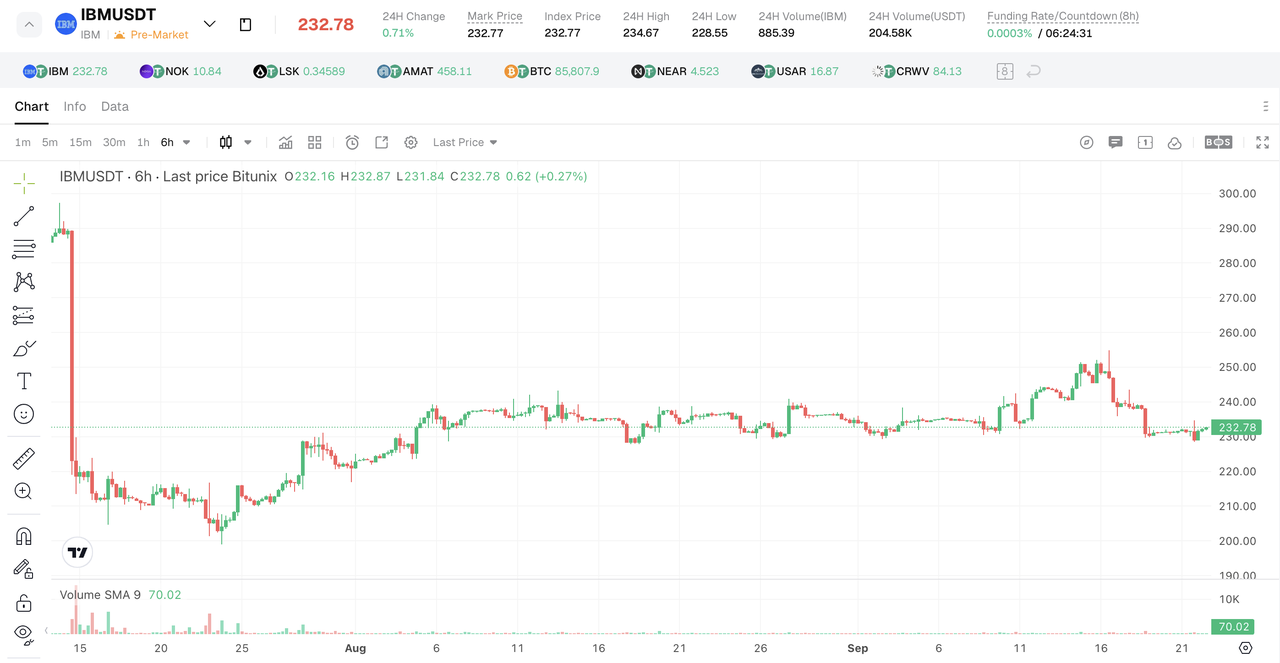
Data Source: Bitunix
How to Buy IBM Stock
For investors looking to gain exposure to IBM stock, the traditional approach is to purchase IBM shares through a U.S. stock brokerage account. Investors typically need to open a U.S. trading account, complete identity verification, and then place orders to buy IBM shares directly. That said, trading U.S. stocks may involve account opening procedures, cross-border fund transfers, and transaction fees. Some brokerage platforms may also have relatively higher trading costs. In addition, traditional stock trading generally allows investors to benefit only from upward price movements, limiting flexibility when responding to short-term market volatility.
Beyond traditional stock investing, investors can also trade IBM contracts through cryptocurrency trading platforms such as Bitunix. Compared with directly purchasing shares, contract trading offers more flexible market participation options, allowing traders to take long positions when expecting IBM's stock price to rise or open short positions to potentially benefit from downward price movements. Bitunix IBM contracts support a 0-fee trading model and offer up to 20x leverage, allowing users to access larger market positions with less capital and improve capital efficiency. Before initiating their first trade, users need to register a Bitunix account and complete identity verification (KYC). Through risk control systems, asset management measures, and transaction monitoring mechanisms, the platform provides users with a secure and efficient trading environment.