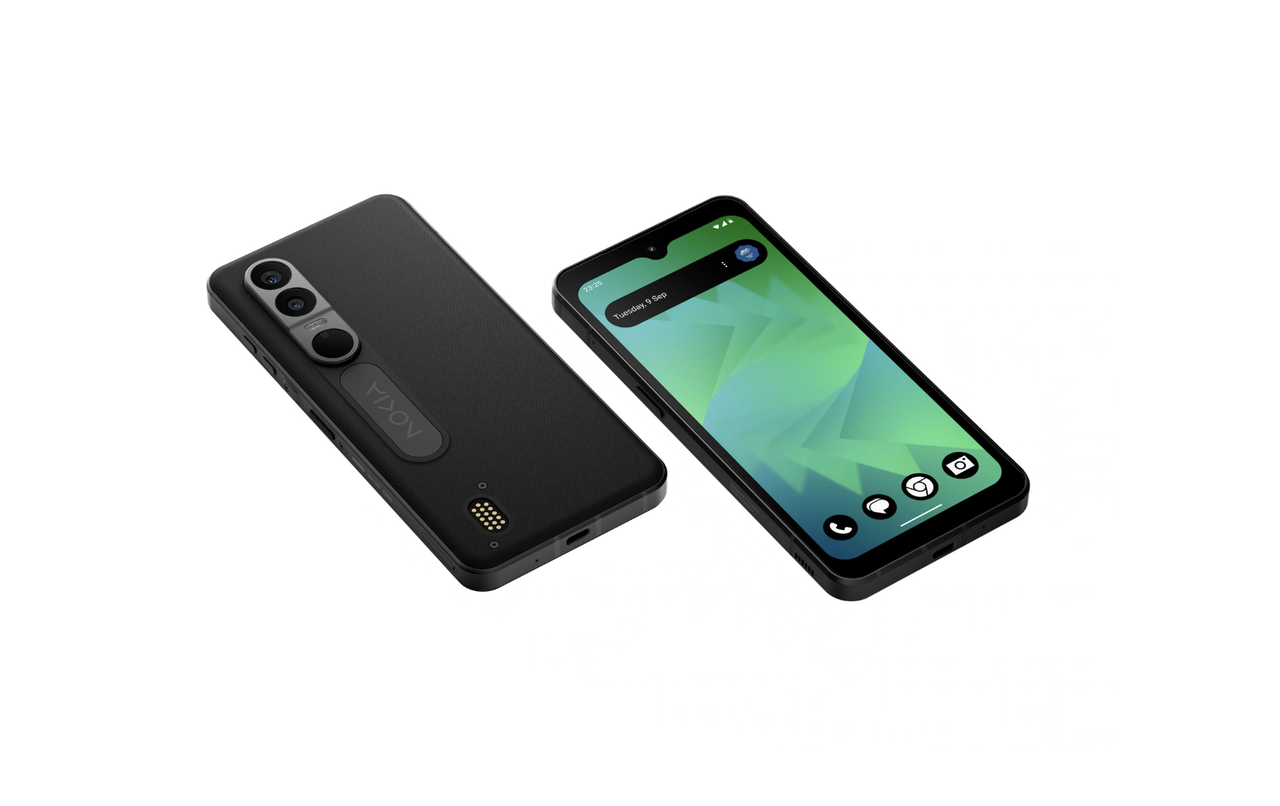
For many consumers, the name Nokia still immediately brings mobile phones to mind. The Finnish company was once one of the world's dominant handset makers, known for products such as the Nokia 3310 and its durable feature phones. However, that is no longer the core of Nokia's business.
Today, Nokia is primarily a telecommunications and network infrastructure company. Its products connect telecom networks, data centers, cloud infrastructure, enterprises, and other critical systems. More recently, Nokia has positioned itself to benefit from the rapid expansion of artificial intelligence by supplying the networking infrastructure required to connect AI data centers and move massive amounts of data between computing systems.
Nokia's transformation has accelerated in recent years. The company acquired optical networking specialist Infinera, expanded its data center networking portfolio, and announced a strategic partnership with NVIDIA. In 2026, Nokia reported particularly strong growth from AI and Cloud customers, with AI and Cloud sales increasing 105% year over year in the second quarter.
This transformation gives Nokia a very different investment profile from the consumer electronics company many people remember. Instead of competing in the smartphone market, Nokia is increasingly positioning itself as a provider of the connectivity and networking infrastructure needed for the AI economy.
Data Source: Nokia
What Is Nokia?
Nokia Corporation is a Finnish technology company focused primarily on telecommunications and network infrastructure. Headquartered in Espoo, Finland, the company has a long history dating back to 1865, but its modern business is centered on connectivity rather than consumer electronics.
Nokia's products and technologies are used across fixed networks, mobile networks, optical networks, IP networks, data centers, and other communications infrastructure. The company also operates Nokia Bell Labs, its research and development organization responsible for technologies spanning wireless communications, networking, and future connectivity.
In 2025, Nokia operated four reportable business segments: Network Infrastructure, Mobile Networks, Cloud and Network Services, and Nokia Technologies. From January 2026, Nokia simplified its operating structure into two primary segments: Network Infrastructure and Mobile Infrastructure.
The change reflects Nokia's attempt to simplify the company and focus capital on areas with greater long-term growth potential.
One of those areas is AI and Cloud infrastructure. Nokia views the rapid expansion of AI workloads as a structural opportunity because AI data centers require increasingly high-performance networks to connect servers, storage, computing clusters, and external cloud infrastructure.
Nokia's 2025 annual report identified AI and Cloud as a serviceable addressable market of approximately €17 billion, with the market growing 28% year over year at the time of the report.
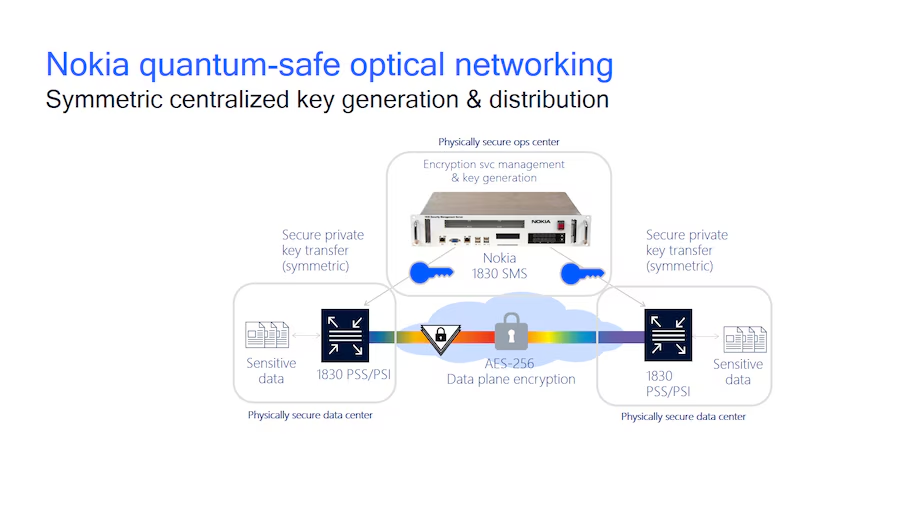
Data Source: Nokia
How Does Nokia Make Money?
Nokia generates revenue primarily by selling networking equipment, software, services, and intellectual property to telecommunications operators, cloud and AI companies, enterprises, governments, and other technology businesses.
Network Infrastructure
Network Infrastructure is one of Nokia's most important businesses and includes Optical Networks, IP Networks, and Fixed Networks. Optical networking is particularly relevant to the AI infrastructure opportunity. AI data centers require extremely high bandwidth to move data between computing systems, and optical technologies are an important part of this infrastructure.
Nokia's acquisition of Infinera strengthened its position in optical networking. In 2025, Nokia's Network Infrastructure segment generated €7.99 billion in net sales, up 23% from the previous year. Optical Networks revenue increased 85% to €3.02 billion, with Infinera acquisition accounting for a significant portion of that increase.
IP Networks provides routing and networking technologies that connect data centers, cloud infrastructure, telecommunications networks, and other systems. Nokia has also been working to expand its presence inside data centers as AI workloads increase the need for high-performance networking.
Mobile Infrastructure
Nokia's Mobile Infrastructure business includes technologies used to build and operate mobile networks. This includes radio access networks, core network software, and technologies supporting the transition toward AI-native networks and eventually 6G. Although traditional telecom infrastructure remains an important part of Nokia's business, the company increasingly views mobile networks as part of a broader connectivity ecosystem. AI-RAN, for example, is designed to bring AI computing capabilities closer to wireless networks and potentially create new applications for operators.
Technology Licensing
Nokia also generates revenue by licensing its intellectual property. The company owns a large portfolio of patents related to mobile communications and other technologies. Businesses that use Nokia's patented technologies in their products may pay licensing fees. In 2025, Nokia Technologies generated €1.5 billion in revenue, although that figure declined 22% year over year. This business is structurally different from Nokia's hardware operations because intellectual property licensing can generate relatively high-margin revenue without requiring the company to manufacture physical networking equipment for every licensee.
AI and Cloud Infrastructure
AI and Cloud have become an increasingly important growth area for Nokia. The company's networking products can be used to connect the massive computing clusters required for AI training and inference. This includes optical networking, data center switching, routing, and other connectivity technologies.
Nokia reported that AI and Cloud sales increased 49% year over year in the first quarter of 2026 and accounted for 8% of group sales. The company also booked €1 billion of AI and Cloud customer orders during the quarter. By the second quarter, Nokia reported that AI and Cloud customer sales had increased 105% year over year, highlighting how quickly this part of the business was expanding.
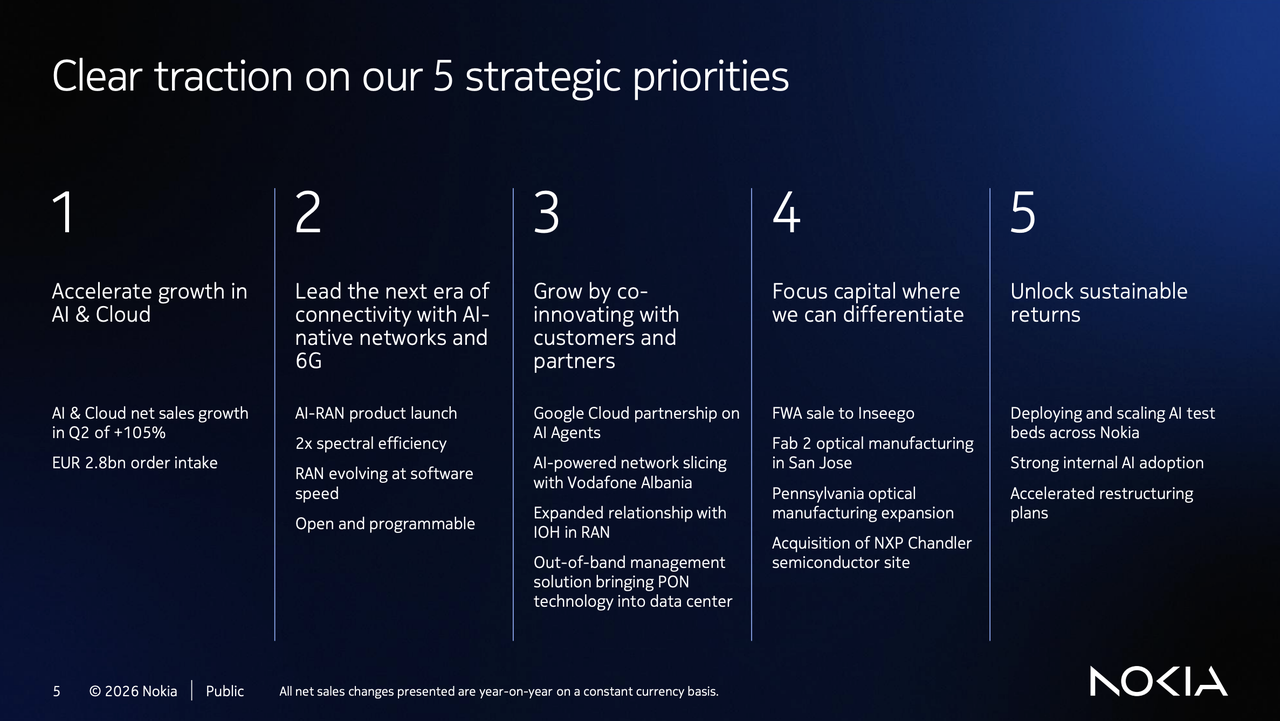
Data Source: Nokia
What Drives NOK Stock Price?
NOK stock price can be influenced by several factors, including telecom capital spending, AI data center investment, optical networking demand, margins, acquisitions, shareholder returns, and the broader technology market.
AI Data Center Spending
The expansion of AI infrastructure is becoming an increasingly important factor for Nokia. Companies building large AI data centers need more than GPUs. They also require optical connections, switches, routers, cables, and other networking infrastructure capable of handling enormous volumes of data. This creates an opportunity for Nokia to participate in the AI infrastructure cycle without directly competing with semiconductor companies such as NVIDIA. Nokia's management said in its first-quarter 2026 results that it expected the addressable AI and Cloud market to grow at a 27% compound annual growth rate from 2025 to 2028, up from its previous estimate of 16%. The company also raised its expectations for 2026 Network Infrastructure sales growth to 12%–14%.
Optical Networking Demand
Optical networking is another major factor to watch. As AI clusters become larger, data centers need faster connections between computing systems. Optical technologies can provide the bandwidth and transmission distances required for these networks. Nokia's acquisition of Infinera significantly expanded its optical networking capabilities. In 2025, Nokia's Optical Networks revenue increased 85%, and the company said demand increased from AI and Cloud customers as well as mission-critical enterprise and defense customers. The performance of this business can therefore provide an important indication of whether Nokia is successfully capturing the AI infrastructure opportunity.
Telecom Spending and 5G
Despite the AI opportunity, traditional telecom remains important to Nokia. Telecom operators determine how much they spend on radio networks, fixed broadband, core networks, and related infrastructure. When operators reduce capital expenditures, Nokia can face pressure on revenue. At the same time, the transition toward 5G Advanced, Open RAN, AI-RAN, and eventually 6G could create new investment cycles. Nokia's ability to balance the mature telecom market with faster-growing AI and Cloud opportunities is therefore an important factor for investors to monitor.
Profit Margins and Execution
Revenue growth alone does not determine Nokia's financial performance. Investors also need to watch gross margins, operating margins, restructuring costs, and the profitability of newer growth areas. In the second quarter of 2026, Nokia's comparable operating margin increased to 9.0%, while comparable gross margin reached 46.0%. However, reported operating profit was affected by a faster pace of restructuring. This means the market may pay close attention to whether Nokia can convert growing AI-related revenue into sustainable operating profit.
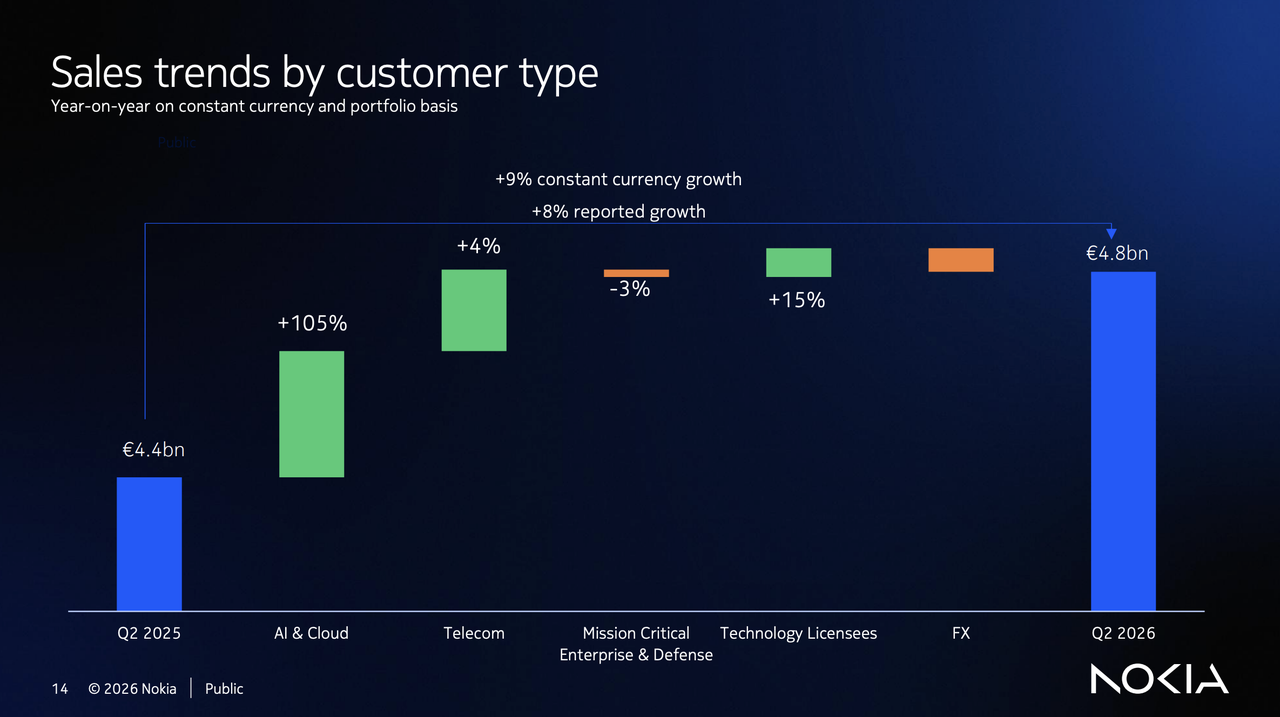
Data Source: Nokia
Nokia Stock Performance
Nokia’s stock market value reached its peak around 2000, when the company was valued at nearly $250 billion. At the time, Nokia’s market capitalization was approximately 24 times that of Apple. However, as the company’s share of the global mobile phone market continued to decline, its market value fell sharply. By 2012, Nokia’s market capitalization had dropped to just $6 billion, while its share price fell to around $1.12.
Nokia subsequently underwent a series of strategic adjustments and gradually shifted its focus away from mobile phones toward telecommunications and network infrastructure. Its stock price remained relatively stable in the $4–$6 range for several years. In December 2025, the rapid expansion of the AI data center sector created a new growth catalyst for Nokia as a network infrastructure-related stock. Over the following nine months, Nokia’s share price climbed from around $4 to $17, marking a significant revival in the company’s stock performance.
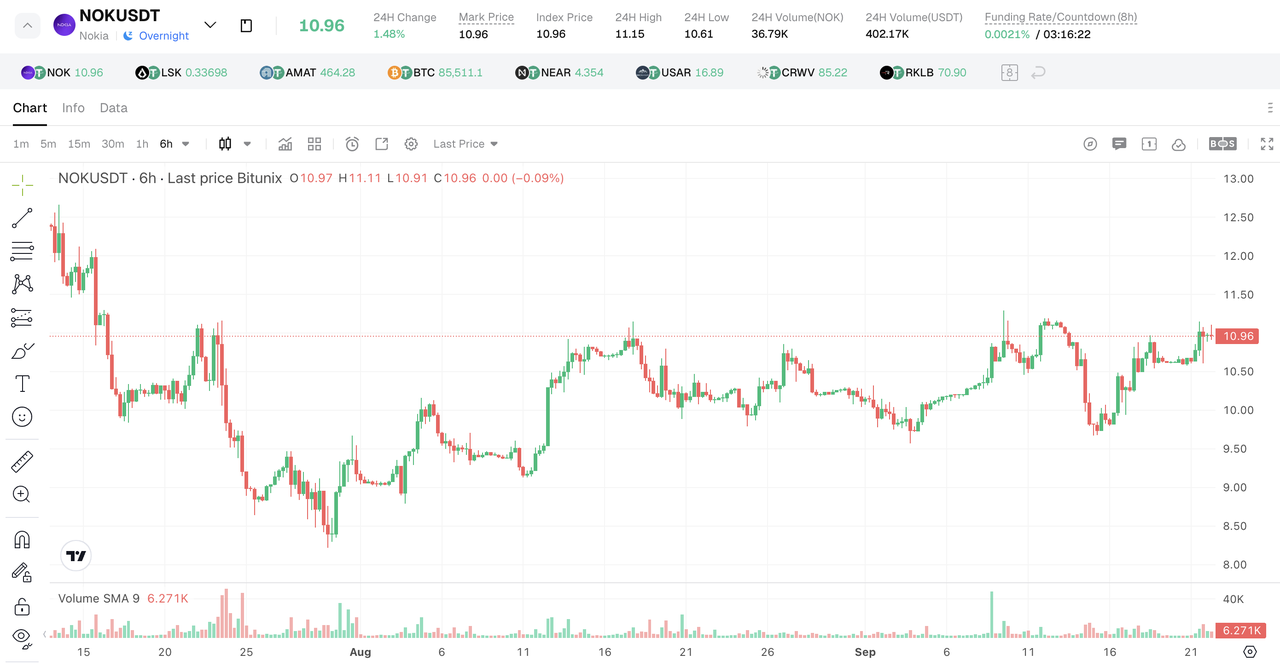
Data Source: Bitunix
How to Trade NOK Stock Quickly
For investors looking to gain exposure to Nokia stock, the traditional approach is to purchase NOK shares through a U.S. stock brokerage account. Investors typically need to open a U.S. trading account, complete identity verification, and then place orders to buy Nokia shares directly. That said, trading U.S. stocks may involve account opening procedures, cross-border fund transfers, and transaction fees. Some brokerage platforms may also have relatively higher trading costs. In addition, traditional stock trading generally allows investors to benefit only from upward price movements, limiting flexibility when responding to short-term market volatility.
Beyond traditional stock investing, investors can also trade Nokia contracts through cryptocurrency trading platforms such as Bitunix. Compared with directly purchasing shares, contract trading offers more flexible market participation options, allowing traders to take long positions when expecting Nokia's stock price to rise or open short positions to potentially benefit from downward price movements. Bitunix NOK contracts support a 0-fee trading model and offer up to 20x leverage, allowing users to access larger market positions with less capital and improve capital efficiency. Before initiating their first trade, users need to register a Bitunix account and complete identity verification (KYC). Through risk control systems, asset management measures, and transaction monitoring mechanisms, the platform provides users with a secure and efficient trading environment.