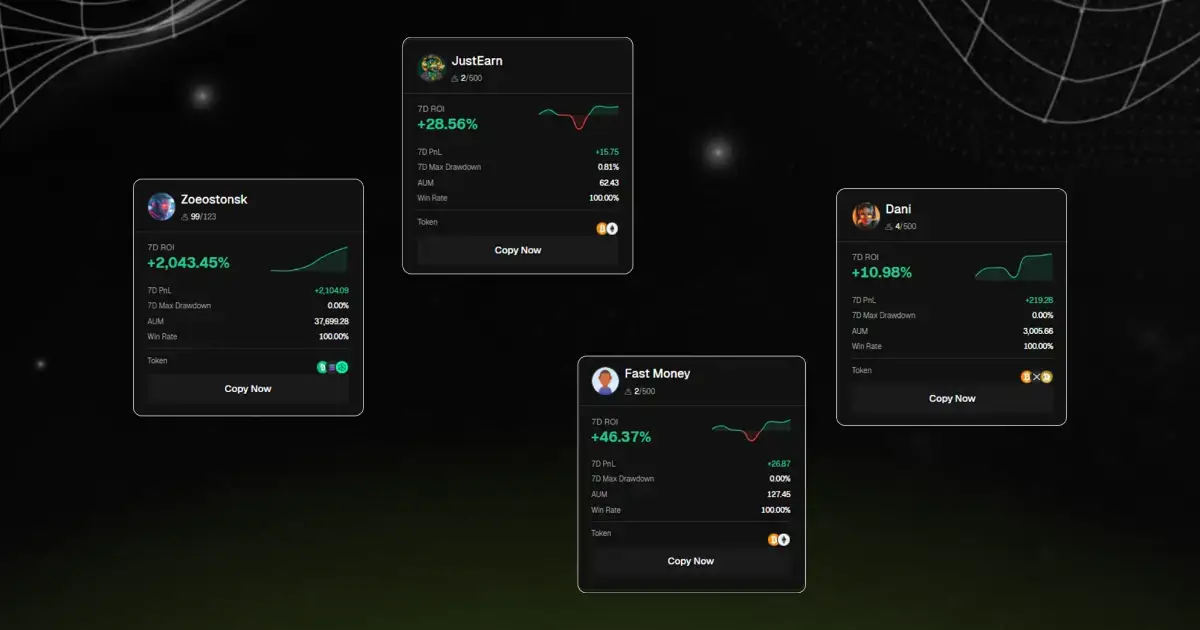
Copy trading allows users to follow experienced traders and automatically replicate their positions without managing every trade manually. But the most important decision is not choosing a copy trading platform — it is choosing the right trader to follow.
Platforms such as Bitunix Copy Trading provide access to trader profiles with performance data, risk indicators, and trading history. These metrics help users compare traders based on actual behavior instead of relying only on impressive return percentages.
A trader showing a 500% ROI may look attractive at first glance, but a closer look at their drawdown, leverage usage, and trading consistency may reveal a much higher risk profile. A disciplined trader with moderate returns and controlled losses can sometimes be a more suitable choice than someone chasing aggressive gains.
This guide explains how to evaluate copy traders step by step, including which metrics matter most, what warning signs to avoid, and how to build a balanced copy trading portfolio.
Who Is a Copy Trader?
A copy trader is an experienced trader whose positions can be automatically replicated by other users through a copy trading platform.
When the trader opens, modifies, or closes a position, the same action is reflected in the follower's account based on the allocated funds and selected copy settings.
Unlike traditional portfolio management services, copy trading usually allows users to maintain control over their own accounts. Followers can decide:
How much capital to allocate
Which trader to follow
How much of each position to copy
When to pause or stop copying
A copy trader acts as a strategy provider rather than a personal financial manager. Their historical performance can provide useful information, but it does not guarantee future results.
Before choosing a trader, users should understand how the trader makes decisions, how much risk they take, and whether their strategy matches their own risk tolerance.
Why Choosing the Right Copy Trader Matters
The trader you follow directly affects your account performance because every copied position inherits the original trader's decisions.
A trader with strong short-term returns may still carry significant risks if those results come from:
Excessive leverage
Large position concentration
Lack of stop-loss management
High-risk strategies during favorable market conditions
On the other hand, traders with consistent execution and controlled risk may provide a more stable copy trading experience.
The goal is not simply to find the trader with the highest return. It is to identify traders whose performance history, risk management approach, and trading style align with your expectations.
For a comparison between different automated trading methods, see our guide on copy trading vs trading bots vs manual trading.
Key Metrics to Evaluate a Copy Trader

Choosing a copy trader requires looking beyond headline returns. Professional traders usually evaluate multiple performance indicators together to understand both potential returns and possible risks.
1. Review Trading History and Performance Consistency
A trader's historical performance shows how they have handled different market conditions.
Instead of focusing only on total ROI, review:
Metric | What It Shows |
Trading duration | Whether the trader has a meaningful performance history |
Number of trades | Whether results come from repeated execution or a few lucky positions |
Monthly performance | Whether returns are consistent over time |
Performance during volatility | How the trader reacts during difficult market conditions |
A trader active for several months with dozens or hundreds of completed trades generally provides more information than a newly created profile with a short-term return spike.
On Bitunix, users can review trader performance across different time periods, including daily, weekly, and monthly results. Looking at longer periods can help identify whether performance comes from a repeatable strategy or temporary market conditions.
2. Analyze Drawdown Before Looking at Returns
Drawdown measures the decline from a trader's peak account value to its lowest point during a specific period.
It shows how much loss a trader experienced before recovering.
For example:
Scenario | ROI | Maximum Drawdown | Risk Interpretation |
Trader A | 150% | 15% | Higher return with controlled losses |
Trader B | 300% | 65% | Aggressive strategy with significant volatility |
A high ROI does not always indicate strong trading ability. Large drawdowns may suggest excessive leverage, poor position sizing, or weak risk controls.
When comparing traders, consider whether the potential return justifies the level of downside exposure.
Many experienced traders pay close attention to drawdown because controlling losses is a key part of long-term trading performance.
3. Evaluate Win Rate Together With Profit/Loss Ratio
Win rate shows how often a trader closes trades with a profit. It is useful, but it should never be viewed alone.
A trader with a 55% win rate may perform better than someone with an 80% win rate if their average winning trade is significantly larger than their average loss.
Consider these two examples:
Trader | Win Rate | Average Win | Average Loss |
Trader A | 80% | 0.01 | -5% |
Trader B | 55% | 0.04 | -2% |
Trader A wins more frequently, but one large losing trade could erase multiple profitable positions.
When reviewing a copy trader, check:
Win rate over a longer period
Average profit per winning trade
Average loss per losing trade
Loss frequency during volatile markets
A balanced relationship between winning trades and losing trades is usually more meaningful than a high win percentage alone.
4. Understand the Trader's Trading Style
A trader's past results only make sense when you understand how those results were achieved.
Different trading styles carry different risk profiles. A scalper opening dozens of positions daily will usually have a different return pattern from a swing trader holding positions for weeks.
Before copying a trader, review their strategy type and decide whether it matches your expectations.
Trading Style | Typical Characteristics | What to Check |
Scalping | Frequent trades with short holding periods | Trading frequency, fees, execution consistency |
Day Trading | Positions opened and closed within the same day | Intraday volatility management |
Swing Trading | Positions held for several days or weeks | Market analysis and patience during pullbacks |
A trader who performs well with high-frequency strategies may not be suitable for users who prefer slower, lower-maintenance approaches.
When reviewing a trader profile, check:
Strategy type
Average holding time
Trading frequency
Main trading pairs
Leverage usage
For example, a trader mainly trading BTC and ETH with moderate leverage may have a very different risk profile from one focusing on highly volatile altcoins with aggressive positions.
The right choice depends on whether the trader's approach matches your own risk preference and expectations.
5. Check Risk Score and Position Management
Risk metrics help reveal how a trader manages capital during different market conditions.
Many copy trading platforms provide risk indicators based on factors such as trading volatility, position size, and leverage usage. These indicators can help users compare traders beyond simple return rankings.
When evaluating a trader's risk profile, pay attention to:
Position size compared with account balance
Leverage frequency and average leverage level
Trade concentration in a single asset
Use of stop-loss or risk management methods
A trader consistently opening oversized positions may generate strong short-term results, but the same approach can create larger losses when market conditions change.
A balanced trader usually shows:
Limited dependence on one large position
Consistent position sizing
A clear approach to managing losses
Risk scores should not be treated as the only decision factor. They work best when combined with performance history, drawdown data, and trading behavior.
6. Evaluate Copy Ratio and Capital Allocation Settings
Copy ratio determines how much of a trader's position size is replicated in your account.
A flexible copy ratio allows users to adjust exposure based on their own capital size and risk tolerance.
For example, instead of copying every position at the same scale, users can reduce exposure when following a trader with a more aggressive strategy.
Before copying a trader, check:
Setting | Why It Matters |
Copy ratio adjustment | Allows control over copied position size |
Minimum copy amount | Determines required allocation |
Maximum investment limit | Helps control total exposure |
Pause or stop settings | Allows users to manage changing market conditions |
A common mistake among beginners is allocating too much capital to a single trader before understanding their strategy.
Starting with a smaller allocation and reviewing performance over time can help users better understand whether a trader matches their expectations.
7. Review Community Feedback and Trader Transparency
Performance data shows what a trader achieved. Community feedback can provide additional context about how the trader communicates and manages positions.
Some traders regularly share market views, explain their strategies, or provide updates during periods of volatility. This transparency can help followers better understand the decisions behind their trades.
When reviewing trader feedback, look for:
Consistent communication
Explanations behind trading decisions
Transparency during losing periods
Responses to follower questions
Avoid relying only on popularity rankings or follower numbers. A large follower base does not always mean a trader has a suitable strategy for your goals.
For more ideas on managing multiple traders, explore our guide on top crypto copy trading strategies.
Types of Copy Traders: Signal Providers vs Popular Traders
Copy trading platforms usually include different types of traders that users can follow.
Understanding the difference can help you choose traders based on your preferred approach.
Signal Providers
Signal providers usually focus on sharing trading strategies or market signals with followers.
Their profiles often highlight:
Trading history
Entry and exit decisions
Market analysis
Strategy performance
Signal providers may be suitable for users who want to understand the reasoning behind trades while following an experienced trader.
Popular Traders
Popular traders typically attract a large follower base because of their trading history, community presence, or visible performance results.
A high follower count can indicate strong platform engagement, but it should not replace performance analysis.
Before copying popular traders, review:
How long they have been active
Their maximum drawdown
Their average position size
Their trading consistency
A trader's popularity is only one factor. Risk management and strategy fit remain more important when selecting who to follow.
Red Flags to Avoid When Choosing a Copy Trader
Not every trader with impressive returns is suitable for copying.
Some performance patterns may indicate higher risk or unsustainable strategies.
Short Trading History
A trader with only a few weeks of strong returns may benefit from favorable market conditions rather than a proven strategy.
Look for traders with enough historical data to evaluate their performance across different situations.
Extremely High Returns With Large Drawdowns
Large gains combined with significant losses often indicate aggressive trading behavior.
For example, a trader generating high ROI after experiencing a major drawdown may rely heavily on leverage or concentrated positions.
Always review both sides of the performance picture.
No Evidence of Risk Management
Be cautious when a trader profile shows:
No visible loss control
Constant maximum leverage usage
Large position concentration
Frequent liquidation events
Strong returns without reasonable risk management can be difficult to maintain.
Only Performing Well During Bull Markets
A trader who performs well only when prices rise may not have a strategy designed for different market conditions.
Review how the trader handled:
Market corrections
Sideways conditions
High volatility periods
Performance across multiple market environments provides a clearer picture of trading ability.
How Bitunix Helps Users Evaluate Copy Traders

Bitunix provides trader profiles with performance information designed to help users compare different copy trading options.
Key features include:
Real-time trader performance dashboards
ROI and historical return data
Drawdown information
Win rate statistics
Risk indicators
Copy ratio customization
Spot and futures copy trading options
Users can also manage their exposure by adjusting allocation settings, changing copy parameters, or stopping a copy relationship when their strategy preference changes.
The goal is to give users more visibility into trader behavior instead of making decisions based only on rankings or short-term returns.
Build a Balanced Copy Trader Portfolio

How to Monitor and Adjust

Following multiple traders with different strategies can help reduce dependence on a single trading approach.
Instead of selecting one trader based only on the highest ROI, consider building a portfolio of traders with different risk profiles and trading styles.
A balanced approach may include:
Trader Type | Characteristics | Purpose |
Lower-risk trader | Controlled drawdown and conservative position sizing | Focus on stability and risk control |
Balanced trader | Moderate returns with consistent performance | Core allocation option |
Higher-risk trader | Aggressive strategy with larger volatility | Smaller allocation for strategy testing |
For example, a user may allocate more capital to traders with longer track records and controlled drawdowns while assigning smaller allocations to traders with higher volatility.
Portfolio allocation should always match individual risk tolerance and account conditions.
A common mistake is putting all available capital into one trader because of recent strong performance. Market conditions can change quickly, and even experienced traders can experience losing periods.
How to Monitor and Adjust Your Copy Traders
Copy trading does not mean selecting a trader once and ignoring future performance.
A trader's strategy, risk level, and market approach may change over time. Regular reviews help ensure that the traders you follow still match your expectations.
Important factors to monitor include:
Review Performance Changes
Track changes in:
Monthly ROI trends
Drawdown levels
Win rate changes
Trading frequency
A temporary losing period does not always mean a trader should be removed. The key question is whether the trader's strategy and risk management remain consistent.
Watch for Strategy Changes
A trader who previously used moderate leverage may later adopt a more aggressive approach.
Pay attention to:
A change in strategy does not automatically mean poor performance, but it may affect whether the trader remains suitable for your portfolio.
Rebalance When Necessary
Consider adjusting your allocation when:
The trader's risk profile changes
Performance no longer matches expectations
A new trader offers better diversification
Regular evaluation helps maintain a copy trading strategy that fits your current goals and risk preference.
Copy Trading Psychology: Avoid Common Mistakes

Choosing the right trader is only part of successful copy trading. Managing emotions is equally important.
Many beginners make decisions based on short-term performance instead of long-term data.
Common mistakes include:
Chasing Traders After Large Gains
A trader showing rapid returns may attract attention, but recent performance does not always represent future results.
Review the full trading history before deciding whether the strategy fits your needs.
Panic Stopping After One Losing Period
Even experienced traders can experience losses.
A single losing trade or short-term decline should be evaluated together with:
Overall trading history
Previous drawdowns
Risk management behavior
Frequently Switching Between Traders
Constantly changing traders based on short-term rankings can make it difficult to evaluate any strategy properly.
A structured review process is usually more useful than reacting to every market movement.
Copy trading requires patience, research, and continuous evaluation.
Conclusion: Choosing the Right Copy Trader Requires More Than High Returns
Selecting a copy trader is not about finding the profile with the highest ROI. A more reliable evaluation process looks at the full picture, including trading history, drawdown, win rate, risk management, and strategy consistency.
A trader with moderate returns and controlled losses may have a different risk profile from someone achieving higher returns through aggressive leverage. Understanding these differences helps users make more informed decisions when building their copy trading strategy.
Before following any trader, review their historical performance, understand how they trade, and regularly monitor whether their approach still matches your expectations.
If you want to learn more about how crypto copy trading works, explore our complete crypto copy trading guide to understand the process, features, and key considerations before getting started.