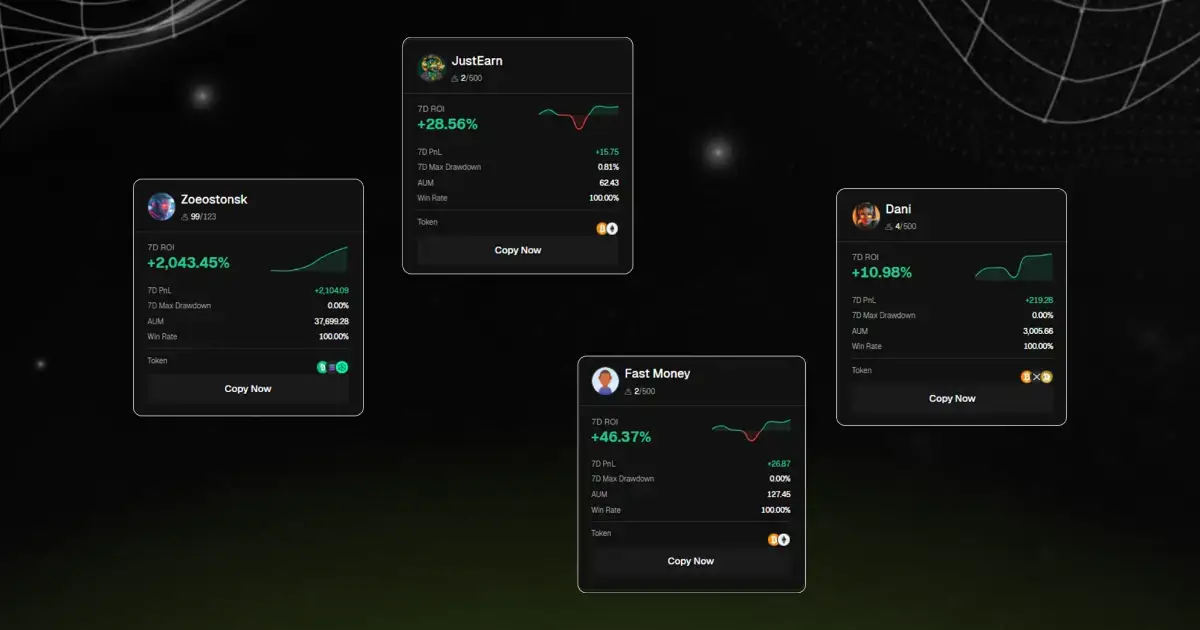
Choosing a crypto trading method can be challenging. Some traders prefer full control through manual trading, others follow experienced traders through copy trading, while some rely on automated bots to execute predefined strategies.
The right choice depends on more than convenience. Your available time, trading experience, risk management approach, and willingness to learn all influence which method fits your goals.

This guide compares copy trading vs manual trading vs crypto trading bots, explaining how each approach works, their advantages and limitations, and which type of trader each method may suit best.
If you want to understand how copy trading works in practice, you can also explore our complete guide on crypto copy trading on Bitunix.
What Is Copy Trading?
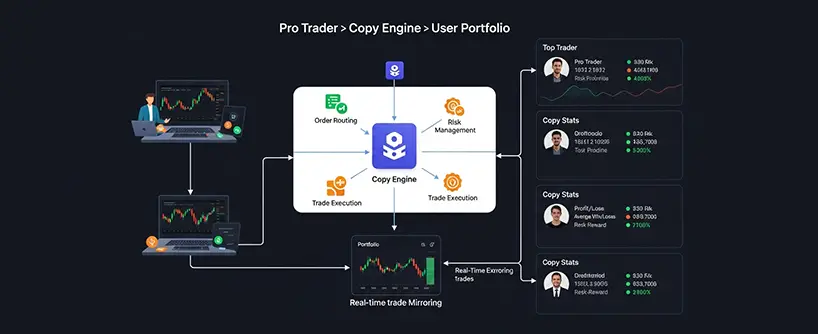
Copy trading is a method that allows users to automatically replicate the trades of another trader. Instead of analyzing every market movement themselves, users select a trader to follow and their account mirrors the selected trader's positions based on predefined settings.
The concept is built around sharing trading strategies. A user can review trader profiles, performance history, risk levels, and trading styles before deciding whether to follow a specific trader.
On platforms such as Bitunix, users can browse different traders, compare performance data, and set parameters such as investment amount and risk controls before starting copy trading.
Learn more about how to copy trade.
How Copy Trading Works
The process usually involves four steps:
Select a trader
Users review available traders based on factors such as historical performance, trading frequency, drawdown, and strategy style.
Set copy parameters
Users decide how much capital to allocate and configure settings such as copy ratio or stop-loss limits.
Automatically mirror trades
When the selected trader opens or closes positions, the same actions are replicated in the follower's account according to the chosen settings.
Monitor and adjust
Users can review results, change allocations, or stop copying when their trading preferences change.
Advantages of Copy Trading
Factor | Description |
Lower entry barrier | Beginners can participate without building complex trading strategies from scratch. |
Time efficiency | Users don't need to monitor charts constantly or manually execute every trade. |
Learning opportunity | Following experienced traders can help users understand different trading approaches. |
Flexible risk control | Users can adjust allocation size and choose traders based on their own risk preferences. |
Limitations of Copy Trading
Copy trading reduces the need for active decision-making, but it does not remove trading risks.
Common risks include:
Poor trader selection: A trader's previous performance does not guarantee future results.
Limited control: Followers depend on another trader's decisions and strategy.
Strategy mismatch: A trader's risk level may not match the follower's expectations.
Market volatility: Sudden market movements can affect copied positions.
For this reason, users should evaluate factors beyond short-term returns, including trading style, maximum drawdown, position size, and risk management habits.
Easy to start: No need for deep market knowledge.
Automated replication: Trades sync in real-time.
Controlled risk: Set limits, adjust exposure.
Learning opportunity: Observe strategies while earning.
What Is Manual Trading?
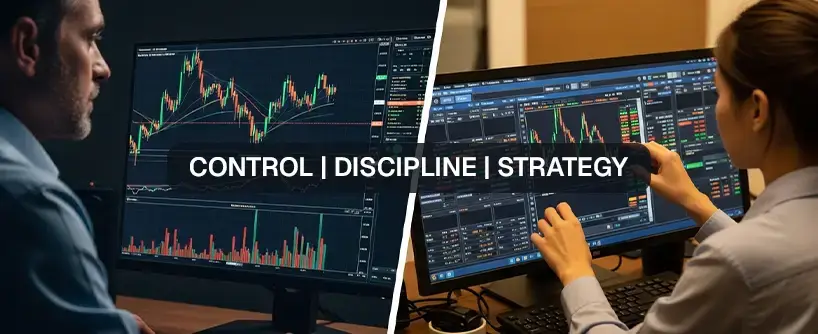
Manual trading is the traditional approach where traders analyze markets, decide when to enter or exit positions, and manage trades independently.
Unlike copy trading or automated systems, manual traders make every decision themselves. They may use technical analysis, fundamental research, market news, or a combination of different methods to develop their strategies.
Manual trading remains popular among experienced traders because it provides maximum flexibility and direct control over every trade.
How Manual Trading Works
A typical manual trading process includes:
Market analysis
Traders study price movements, indicators, market trends, and relevant information.
Strategy development
They create rules for entries, exits, position sizing, and risk management.
Trade execution
Traders manually place orders and adjust positions based on changing conditions.
Performance review
After trades are completed, traders analyze results and refine their strategies.
Advantages of Manual Trading
Factor | Description |
Full control | Traders decide every entry, exit, and position adjustment. |
Strategy flexibility | Manual traders can react to news, market sentiment, and unexpected events. |
Skill development | The process helps traders build market knowledge and decision-making skills. |
No dependency on others | Traders are responsible only for their own strategy and execution. |
Limitations of Manual Trading
Manual trading requires significant time, experience, and emotional discipline.
Common challenges include:
Time commitment: Active traders often need to monitor markets regularly.
Emotional decisions: Fear, greed, and impatience can affect judgment.
Learning curve: Developing consistent strategies takes practice and experience.
Execution pressure: Fast-moving markets require quick decisions.
Manual trading can offer greater control, but the responsibility for every decision also falls entirely on the trader.
What Are Crypto Trading Bots?

Crypto trading bots are automated programs that execute trades based on predefined rules, indicators, or algorithms. They allow traders to automate parts of their strategy without manually placing every order.
Bots can range from simple rule-based systems to more advanced algorithmic models. Common strategies include grid trading, arbitrage, trend following, and dollar-cost averaging (DCA).
Unlike copy trading, where decisions come from another trader, bots follow the logic programmed into their system.
How Trading Bots Work
A trading bot typically follows this process:
Define trading rules
The trader sets conditions such as entry price, exit targets, indicators, or risk parameters.
Monitor market data
The bot continuously tracks price movements and market conditions.
Execute trades automatically
When predefined conditions are met, the bot places orders according to the strategy.
Review and optimize
Traders adjust parameters based on performance and changing market conditions.
Advantages of Trading Bots
Factor | Description |
Automation | Bots can execute strategies without constant manual monitoring. |
Speed | Automated systems can respond faster than human traders in certain situations. |
Consistency | Bots follow predefined rules without emotional reactions. |
Scalability | A single system can monitor multiple markets or trading pairs. |
Limitations of Trading Bots
Trading bots are not guaranteed profit tools. Their performance depends heavily on strategy design, market conditions, and parameter settings.
Key limitations include:
Strategy dependency: A poorly designed strategy can produce poor results.
Limited adaptability: Some bots may struggle during unexpected market events.
Technical requirements: Advanced strategies may require programming or optimization skills.
Monitoring requirements: Automated systems still need regular review.
A bot can execute a strategy efficiently, but it cannot replace proper risk management.
Copy Trading vs Manual Trading vs Trading Bots: Key Differences

The main difference between copy trading, manual trading, and bots is who makes the trading decisions. Copy trading follows another trader's decisions, manual trading relies on your own analysis, while bots execute predefined rules created by the user.
Each method has different requirements for time, knowledge, and risk management.
Factor | Copy Trading | Manual Trading | Trading Bots |
Decision maker | Another trader | You | Algorithm or predefined rules |
Skill requirement | Low to moderate | High | Moderate to high |
Time commitment | Low | High | Low after setup |
Strategy control | Limited | Full control | Depends on bot settings |
Emotional influence | Lower | Higher | Minimal during execution |
Flexibility | Depends on copied trader | Very high | Depends on programming |
Main challenge | Choosing suitable traders | Maintaining discipline | Creating and maintaining effective strategies |
Best suited for | Beginners and time-limited traders | Experienced traders | Systematic and technical traders |
The choice is not about finding a universally superior method. It depends on whether you value convenience, control, or automation.
Copy Trading vs Manual Trading: Control vs Convenience
Copy trading prioritizes simplicity and time efficiency, while manual trading gives traders complete control over every decision.
Copy trading can be useful for users who want market exposure but don't have enough time to analyze charts every day. Instead of creating a strategy from zero, they can study experienced traders and observe how different approaches work.
Manual trading is better suited for traders who enjoy market analysis and want direct responsibility for their positions.
Factor | Copy Trading | Manual Trading |
Learning curve | Lower at the beginning | Higher due to strategy development |
Decision-making | Based on selected trader | Fully independent |
Daily involvement | Limited monitoring required | Usually requires active participation |
Skill development | Learn by observing others | Learn through direct practice |
Risk source | Trader selection and market conditions | Personal decisions and emotional control |
A beginner may start with copy trading while learning market concepts, then gradually develop manual trading skills over time.
Copy Trading vs Trading Bots: Human Decisions vs Automated Rules
The key difference between copy trading and trading bots is the source of the strategy. Copy trading follows human judgment, while bots follow programmed rules.
Copy trading depends on the experience, market view, and risk management of another trader. A skilled trader may adjust positions based on changing conditions, news, or market sentiment.
Trading bots operate differently. They execute according to predefined conditions and can provide consistent execution, but their results depend on how well the strategy matches current market conditions.
Factor | Copy Trading | Trading Bots |
Strategy source | Human trader | Algorithm or rules |
Setup difficulty | Usually simple | Can require technical knowledge |
Market adaptation | Depends on trader decisions | Depends on programming logic |
Execution speed | Depends on platform and trader activity | Usually faster for automated execution |
Common use case | Following experienced traders | Running systematic strategies |
Some traders combine both approaches by using copy trading for human-driven strategies and bots for rule-based systems.
Algorithmic Trading vs Copy Trading
Algorithmic trading and copy trading are both forms of automated execution, but they automate different parts of the trading process.
Algorithmic trading focuses on automation through code. Traders create systems that identify opportunities and execute orders according to specific rules.
Copy trading automates the execution of another trader's decisions.
Factor | Algorithmic Trading | Copy Trading |
Strategy creator | Trader or developer | Lead trader |
Main requirement | Technical knowledge and strategy design | Ability to evaluate traders |
Execution method | Computer-generated rules | Replicated human trades |
Customization | High | Limited to available settings |
Maintenance | Regular optimization may be required | Requires trader performance monitoring |
Algorithmic trading may appeal to users who enjoy programming, quantitative analysis, or strategy testing.
Copy trading may be more suitable for users who prefer learning from experienced traders without building automated systems themselves.
Choosing the Right Trading Method: Real-World Examples

The best trading approach depends on your lifestyle, experience level, and how involved you want to be.
The following examples show how different traders may approach the decision.
Example 1: Busy Professional With Limited Time
Profile: A professional has an interest in crypto markets but cannot monitor price movements throughout the day.
Possible fit: Copy Trading
Copy trading allows this user to follow experienced traders while spending less time on market analysis. They can review trader profiles, adjust allocation, and monitor performance periodically.
Key considerations:
Review trader risk levels before copying.
Avoid allocating more than you can comfortably manage.
Understand that copied strategies can still experience losses.
Example 2: Data-Focused Trader Who Likes Automation
Profile: A trader understands technical indicators and enjoys testing strategies with data.
Possible fit: Trading Bots
Trading bots allow this user to automate rules-based strategies, such as grid trading or indicator-based systems.
Key considerations:
Backtest strategies when possible.
Monitor whether market conditions still match the strategy.
Adjust parameters when volatility changes.
A bot can improve execution efficiency, but the strategy behind it remains the most important factor.
Example 3: Experienced Trader Who Enjoys Market Analysis
Profile: A trader spends time studying charts, news events, and market trends.
Possible fit: Manual Trading
Manual trading gives this user maximum flexibility to adjust decisions based on their own analysis.
Key considerations:
Maintain consistent risk management.
Avoid emotional decisions during market volatility.
Review trading performance regularly.
Can Traders Combine Copy Trading, Manual Trading, and Bots?
Many traders do not choose only one method. A combination of different approaches can help them match different goals and market situations.
Examples include:
Using copy trading to observe experienced traders while learning.
Running automated strategies for specific market conditions.
Using manual analysis to decide overall risk exposure.
A hybrid approach allows traders to benefit from automation while still maintaining personal control over important decisions.
The key is understanding how each tool works and using it according to your own experience level and risk tolerance.
How Bitunix Supports Different Trading Approaches

Bitunix provides tools designed for different types of traders, from users exploring copy trading to experienced traders managing their own strategies.
For copy trading users, Bitunix provides access to trader profiles, performance statistics, and configurable copy settings. Users can review information such as trading history and risk indicators before selecting traders to follow.
For active traders, Bitunix offers features including:
Trader performance data: Review key metrics before following a strategy.
Flexible copy settings: Adjust allocation and risk preferences.
Advanced trading tools: Support manual traders who prefer direct market control.
Automated trading features: Help users execute predefined strategies.
The goal is to provide different trading options based on how much control, automation, and involvement each trader prefers.
Final Verdict: Which Trading Method Should You Choose?
There is no single trading method that works for everyone. The right choice depends on your experience, available time, and preferred level of control.
Use this framework to compare:
Trader Type | Suitable Method | Reason |
New to crypto trading | Copy Trading | Lower learning barrier and opportunity to observe experienced traders |
Limited time but interested in markets | Copy Trading | Requires less daily involvement |
Experienced trader | Manual Trading | Provides maximum control over strategy decisions |
Technical and data-driven user | Trading Bots | Allows automation based on predefined rules |
Trader who wants flexibility | Combination approach | Can use different tools for different situations |
Before choosing a method, consider:
How much time can you spend monitoring markets?
Do you prefer making decisions yourself or following a strategy?
How comfortable are you with technical tools?
How much control do you want over each trade?
Understanding these differences can help you choose a trading approach that matches your own situation. Explore top-performing copy trading strategies on Bitunix to find what fits your trading style best.