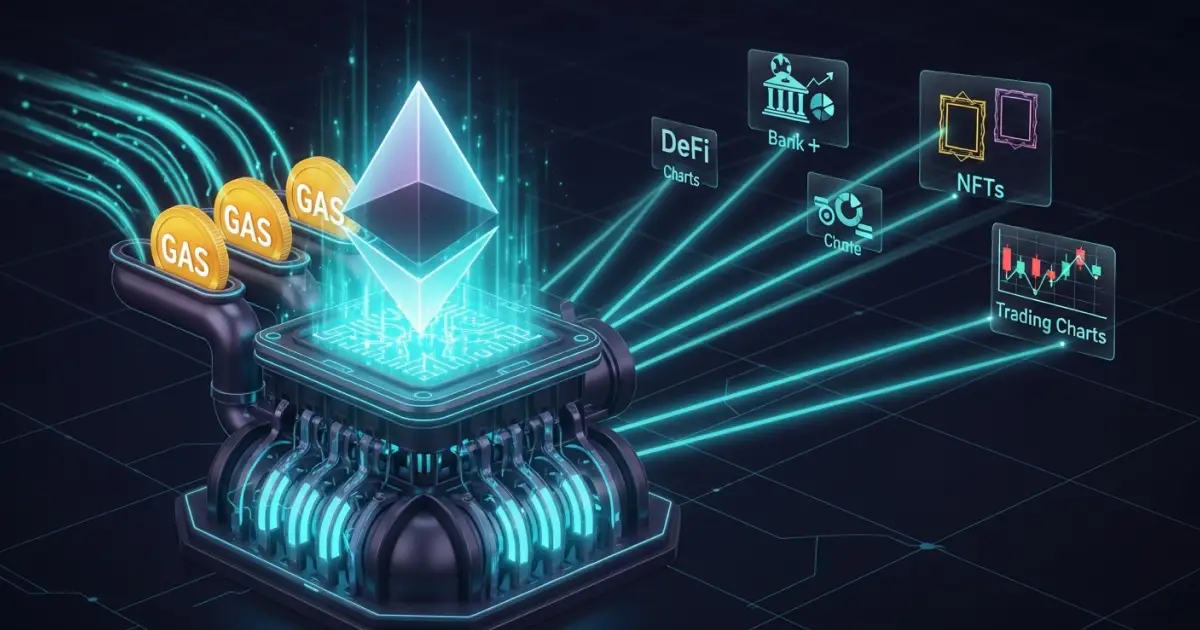
If Bitcoin is often called digital gold, Ethereum is better described as the engine of programmable money. Yet, this powerful engine has a unique fuel that makes it run: gas fees. For anyone who has ever interacted with Ethereum, from minting NFTs to using DeFi protocols, gas fees are an unavoidable part of the experience.
As Ethereum continues to dominate the decentralized application space, understanding ETH gas fees and their role in Ethereum economics is crucial for both developers and traders. This article explains how Ethereum gas works, why fees fluctuate, and how users can track and manage costs efficiently.
What Are Ethereum Gas Fees?

Ethereum gas fees are the transaction costs required to use the Ethereum blockchain. Every action on Ethereum—whether sending ETH, swapping tokens, or deploying a smart contract—consumes computing resources. Gas fees compensate validators who process these actions and secure the network.
Gas: A unit that measures the amount of computational effort required for an operation.
Gas price: How much a user is willing to pay per unit of gas, typically measured in gwei (a fraction of ETH).
Gas fee: Total transaction cost, calculated as gas units * gas price.
For example:
Sending ETH may cost 21,000 gas units.
If the gas price is 50 gwei, the fee is:
21,000 * 50 gwei = 0.00105 ETH
The Historical Evolution of Ethereum Gas Mechanics
Ethereum's fee marketplace has gone through three distinct evolutionary eras to solve the trilemma of security, predictability, and scalability:
The First-Price Auction Era (Pre-2021): In Ethereum's early days, users entered a blind bidding war. To get a transaction processed, you guessed a gas price. If network demand spiked, prices skyrocketed unpredictably, and overpaid fees went entirely to miners as tips, causing massive capital inefficiency.
The EIP-1559 Burning Era (2021–2024): Launched in the London Hard Fork, EIP-1559 split fees into a mandatory Base Fee and an optional Priority Fee (Tip). The base fee automatically adjusts by up to 12.5% per block depending on block congestion and is completely burned. This introduced predictable pricing and a deflationary mechanism for $ETH supply during high network usage.
The Modular Blob Space Era (2024–Present): The March 2024 Dencun upgrade introduced EIP-4844 (Proto-Danksharding), which created a secondary, isolated lane for Layer 2 rollup data known as "Blobs." By removing massive L2 batch data from the main Ethereum Virtual Machine (EVM) execution layer, the network effectively split into two fee markets, permanently lowering mainnet transaction baselines.
ETH Gas Fees in Ethereum Economics

Gas fees are not just costs—they are central to Ethereum's economic model.
Network Security: Validators are incentivized to process transactions with fees and staking rewards.
Spam Protection: Fees prevent malicious actors from overloading the blockchain with useless transactions.
Market Efficiency: Users bid for block space, and fees reflect demand and supply dynamics.
Deflationary and Inflationary Dynamics: While EIP-1559 burns native ETH during high congestion, the massive drop in gas fees over recent years has slowed down the burn rate, making ETH supply slightly inflationary in short-term low-fee environments despite record-high total network usage.
Why Are Gas Fees So High?

Gas fees fluctuate based on network activity. During periods of high demand—such as NFT launches, DeFi farming, or meme coin surges—competition for block space increases fees. Key factors affecting gas fees Ethereum users pay:
Transaction complexity: Simple ETH transfers are cheaper than DeFi swaps or NFT mints.
Network congestion: More transactions in the mempool mean higher bidding wars.
Smart contract execution: Deploying or interacting with contracts requires more computational steps.
Comparative Transaction Fee & Execution Matrix
Transaction Type | Typical Gas Units consumed | Baseline Cost Complexity | Primary Underlying Network Catalyst |
Standard ETH Transfer | 21,000 | Low | Single peer-to-peer signature verification |
ERC-20 Token Transfer | 45,000 - 65,000 | Medium | Updating balance state registers inside token contracts |
DEX Token Swap | 120,000 - 180,000 | High | Multi-pool routing, price oracle checks, slip parameters |
NFT Mint / Secondary Purchase | 150,000 - 250,000 | High | Complex cryptographic proof generation and ERC-721 storage |
Cross-Chain Bridge Interaction | 250,000 - 500,000+ | Critical | Multi-sig lockboxes, lock-and-mint logic, oracle confirmations |
ETH Gas Tracker Tools

Because fees change constantly, users rely on ETH gas trackers to optimize their costs. Popular Ethereum gas trackers include:
Etherscan Gas Tracker: Displays live average, low, and high gas prices.
GasNow and Blocknative: Offer predictive models of gas price movements.
Bitunix: Provides users with integrated fee insights when placing trades, helping them anticipate transaction costs.
By using an eth gas tracker, traders can save significantly by executing transactions during off-peak hours.
Gas Fees in Crypto Beyond Ethereum
Ethereum pioneered gas economics, but gas fees in crypto exist on multiple blockchains. Each network handles fees differently:
Ethereum: Uses gas measured in gwei.
Solana: Charges minimal fees in SOL, but congestion may slow transactions.
Polygon: Offers cheaper gas as a Layer 2 scaling solution for Ethereum.
Bitcoin: Uses satoshis per byte, though fees are generally lower unless blocks are full.
Ethereum remains the benchmark because of its complexity and ecosystem scale.
How Gas Fee Evolution Reshaped the Broader Crypto Industry
The multi-year battle over Ethereum's gas limits and transaction fees did not just change how users interact with Ethereum—it dictated the structural development, capital flows, and competitive landscape of the entire blockchain ecosystem:
The Rise of Alternative Monolithic Blockchains: Long periods of high mainnet gas fees between 2021 and 2023 acted as a catalyst for competing Layer-1 networks. Alternative blockchains prioritizing parallel execution and hyper-low fees—such as Solana and Avalanche—absorbed massive retail volume and capital that was effectively priced out of Ethereum's expensive DeFi and NFT sectors.
The Paradigm Shift in Decentralized Application (dApp) Architecture: High gas friction forced developers to abandon full on-chain dependency. Modern dApps utilize hybrid execution architectures, relying on off-chain computation engines, zero-knowledge (ZK) provers, or localized oracles, using the Ethereum L1 strictly as an immutable consensus and final settlement layer.
Liquidity Fragmentation and the Chain Abstraction Movement: As gas costs dropped on Layer-2 rollups, capital fragmented across dozens of independent execution silos (Arbitrum, Base, Optimism). This structural drift created the industry's current push toward "Chain Abstraction"—developing backend protocol layers that eliminate the user need to manually switch networks, bridge funds, or maintain distinct gas tokens to interact with different dApps.
The Future of Ethereum Gas: Scaling Solutions

Ethereum developers are continuously working to reduce fees while maintaining decentralization and security. The Ethereum roadmap includes:
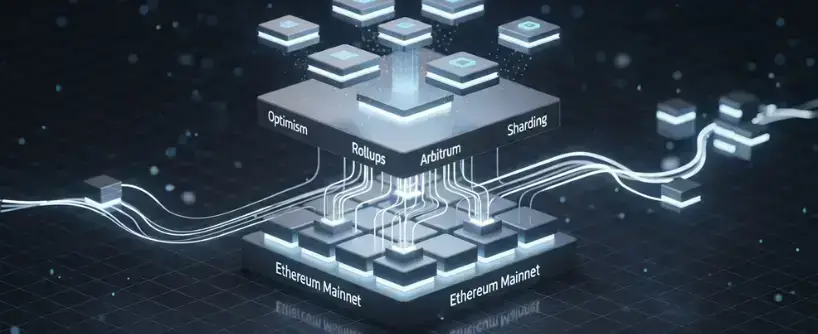
Layer 2 Rollups: Offload transactions to secondary layers like Optimism, Arbitrum, and Base, reducing mainnet congestion.
Danksharding: Expected in future upgrades, allowing Ethereum to process far more data per block.
EIP Upgrades: Continuous fee model improvements, including ways to make transaction fees more predictable.
These scaling methods make Ethereum more accessible, lowering the cost barrier for DeFi and NFTs.
2026 Protocol Milestones and the Ethereum Roadmap
The current 2026 Ethereum landscape is defined by the programmatic success of back-to-back network upgrades that have brought L1 base fees to historically stable lows (frequently averaging between 0.1 to 0.5 gwei):
The Pectra Upgrade (May 2025): Activated EIP-7691 to expand blob throughput limits (increasing targets from 3 to 6 blobs per block). Crucially, Pectra integrated EIP-7702, a landmark upgrade enabling traditional Externally Owned Accounts (EOAs/regular wallets) to temporarily adopt smart contract behavior. This unlocks native account abstraction features like batch transactions, gasless dApp routing, and sponsored gas fees directly within existing addresses.
The Fusaka Upgrade (Late 2025): Deployed PeerDAS (Peer Data Availability Sampling), allowing validators to sample parts of blob data across the network rather than downloading every blob in full. This infrastructure safety net allowed core developers to successfully scale the L1 block gas limit default to 60 Million, doubling underlying transaction capacity.
The 2026 Scale Track (Glamsterdam & Hegota): Moving through the first half of 2026, the Ethereum Foundation has unified L1 execution and blob scaling under a single "Scale" track. Current developments focus on pushing the L1 gas limit toward 100 Million through ePBS (Enshrined Proposer-Builder Separation via EIP-7732) and advancing zkEVM attester clients to fully transform Ethereum into a hyper-efficient global settlement layer.
Gas Fees Example in Ethereum Trading
Let's look at a practical crypto gas fee example:
You buy an NFT on Ethereum for 0.5 ETH.
The contract interaction requires 150,000 gas units.
Gas price is 40 gwei.
Total fee = 150,000 * 40 gwei = 0.006 ETH
If ETH trades at $3,000, the fee is about $18. This shows how high-demand activity like NFT trading can carry noticeable transaction costs.
Gas Fees and DeFi
In decentralized finance (DeFi), gas fees play a crucial role in user behavior.
Yield farming: Users may only stake large amounts when fees are low enough to make returns worthwhile.
Token swaps: Platforms like Uniswap depend heavily on Ethereum gas, meaning traders often wait for cheaper fee windows.
Stablecoins and payments: Frequent transfers may be shifted to Layer 2 or other chains to avoid high Ethereum gas costs.
Gas Fee Strategies for Ethereum Users
Ethereum traders and developers often adopt strategies to minimize fees:
Timing: Use gas trackers to transact during low-traffic periods (early mornings or weekends).
Layer 2 adoption: Move activity to Optimism, Arbitrum, or Polygon for cheaper execution.
Batch transactions: Combine multiple actions into one transaction where possible.
Fee customization: On wallets like MetaMask, manually adjust gas fees for priority or savings.
Glossary and Core Concepts
Gas Fee: The total cryptographic transaction cost required to execute an operation on a blockchain network, mathematically derived as the product of computational gas units used and the prevailing gas price.
Gwei: A nano-denomination of Ether (1 gwei = 10^-9 ETH) used as the baseline unit to quote and calculate gas costs without resorting to microscopic decimal values.
EIP-1559: A landmark Ethereum protocol upgrade that restructured the fee market by dividing transaction fees into a dynamically adjusting base fee (which is permanently burned) and an optional priority fee tip given to validators.
Blob Space (EIP-4844): A specialized data availability layer introduced via Proto-Danksharding that allows Layer 2 networks to attach temporary binary objects (blobs) to blocks without overloading the Ethereum virtual machine (EVM), dropping rollup costs by over 90 percent.
EIP-7702: A Pectra-era upgrade that allows standard cryptocurrency wallets to run smart contract features temporarily, enabling gas sponsorship, batching, and advanced account recovery models natively.
PeerDAS (Peer Data Availability Sampling): An architectural scaling mechanism deployed in the Fusaka upgrade that permits network nodes to verify data availability via micro-sampling, laying the groundwork for higher data capacity without increasing validator hardware overhead.
Conclusion
Ethereum gas fees are often criticized, but they are essential to the blockchain's design. They secure the network, allocate scarce block space, and fuel Ethereum's economic model. While fees can be high, solutions like rollups, sharding, and improved fee structures are reshaping Ethereum's future.
For traders and developers, mastering ETH gas fees and using tools like eth gas trackers is key to participating effectively in the Ethereum economy. As the blockchain continues to evolve, gas fees remain not just a cost but the very fuel that powers Ethereum's innovation.
About Bitunix
Bitunix is a global cryptocurrency derivatives exchange trusted by over 5 million users across more than 150 countries/districts. The platform is committed to providing a transparent, compliant, and secure trading environment for every user. Bitunix offers a fast registration process and a user-friendly verification system supported by mandatory KYC to ensure safety and compliance. With global standards of protection through Proof of Reserves (POR) and the Bitunix Care Fund, Bitunix prioritizes user trust and fund security. The K-Line Ultra chart system delivers a seamless trading experience for both beginners and advanced traders, while leverage of up to 200x and deep liquidity make Bitunix one of the most dynamic platforms in the market.
Bitunix Global Accounts
X | Telegram Announcements | Telegram Global | CoinMarketCap | Instagram | Facebook | LinkedIn | Reddit | Medium
Frequently Asked Questions
What are ETH gas fees?
ETH gas fees are payments made to Ethereum validators to process transactions and smart contracts.
Why are Ethereum gas fees so high?
Gas fees rise when network demand is high, especially during NFT drops, DeFi activity, or market volatility.
What is Ethereum gas?
Ethereum gas is a unit that measures computational effort needed for blockchain operations.
What is an ETH gas tracker?
An ETH gas tracker is a tool that monitors live gas prices, helping users choose the best time to transact.
Are gas fees only on Ethereum?
No. Other blockchains like Bitcoin, Solana, and Polygon also charge transaction fees, though Ethereum’s are among the most notable.
How do gas fees work on Bitunix?
When trading on Bitunix, users see estimated gas or transaction costs integrated in the platform interface, ensuring transparency before execution.