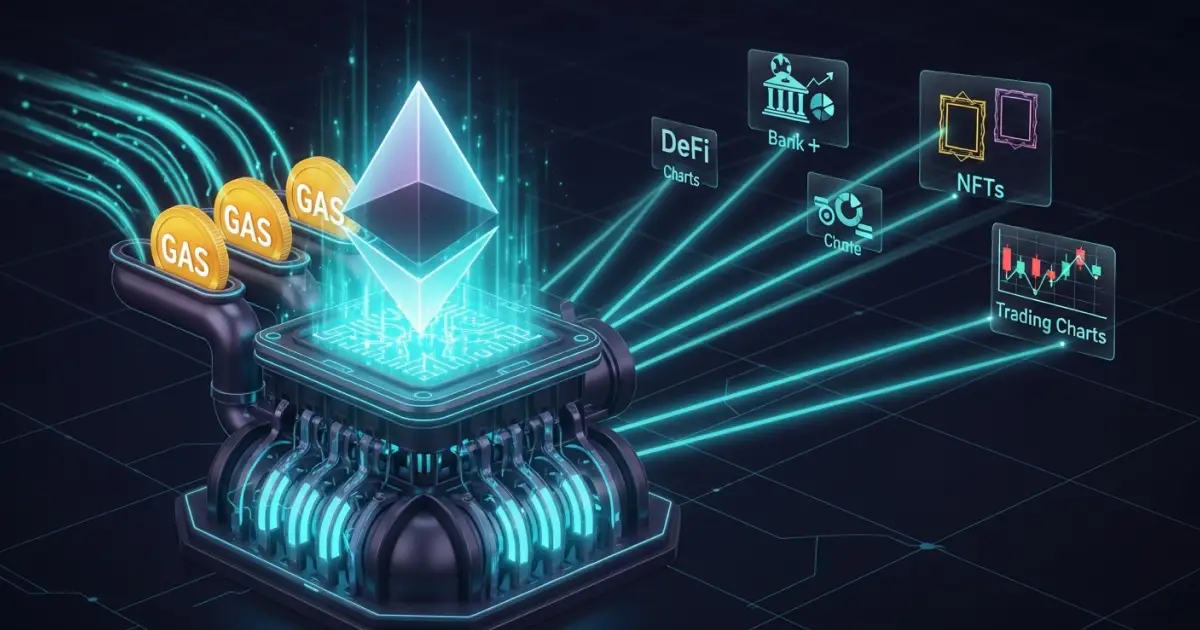
Ethereum is often called the world’s first programmable blockchain. Unlike Bitcoin, which was designed mainly for payments and a store of value, Ethereum introduced the idea of smart contracts. A smart contract is a self executing program that runs on a decentralized blockchain, automatically enforcing the terms of an agreement without intermediaries. These digital agreements laid the foundation for decentralized applications, financial services, gaming ecosystems, and more, all built on the Ethereum platform—a decentralized platform that empowers developers to create and operate innovative solutions. Today, smart contracts are central to how modern blockchain systems operate. Ethereum's innovations in programmable blockchain technology, such as scalability solutions and the pioneering of smart contracts, have positioned it as a leader in the blockchain industry.
[ez-toc]
What is a Smart Contract?
 A smart contract is a self-executing digital agreement written in code, with the terms of the contract directly embedded into the software. Instead of relying on a third party to enforce the agreement, the blockchain itself ensures that once conditions are met, the contract executes automatically. The contract is executed without the need for the involved parties to trust each other, as the blockchain guarantees the outcome.
For example:
A smart contract is a self-executing digital agreement written in code, with the terms of the contract directly embedded into the software. Instead of relying on a third party to enforce the agreement, the blockchain itself ensures that once conditions are met, the contract executes automatically. The contract is executed without the need for the involved parties to trust each other, as the blockchain guarantees the outcome.
For example:
- A smart contract can release payment when a product is delivered.
- It can manage lending and borrowing without banks.
- It can power NFTs by linking ownership records to blockchain addresses.
- Smart contracts can securely store and process data, ensuring that transaction data and other relevant information are handled transparently.
How Does Ethereum Work with Smart Contracts?
 Ethereum works as a decentralized network that validates transactions and runs programs called smart contracts. The Ethereum Virtual Machine (EVM) is responsible for executing smart contract code across the network. Here’s the process:
- Deployment: A developer writes code (usually in Solidity) and deploys it to the Ethereum blockchain.
- Execution: When users interact with the contract (e.g., buying tokens, joining a lending pool), the Ethereum network executes the code. The EVM manages the processes involved in running smart contracts.
- Validation: Network participants use a consensus mechanism to validate transactions. Other validators confirm the correctness of each block before it is added to the blockchain.
- Finality: Once confirmed, the action becomes irreversible on the blockchain.
What Does Ethereum Do with Smart Contracts?
 Ethereum enables much more than peer-to-peer payments. With smart contracts, developers can build:
- Decentralized Finance (DeFi): Protocols like Uniswap and Aave allow trading, lending, and borrowing without banks.
- NFTs: Ethereum popularized non fungible tokens (NFTs), which are unique digital assets representing ownership of digital art, collectibles, virtual real estate, in-game assets, and more. These digital assets can be securely transferred on the blockchain, providing proof of authenticity and ownership.
- Gaming ecosystems: Smart contracts power in-game economies, ensuring transparent and fair ownership. Ownership of virtual real estate and in-game digital assets can be transferred securely between players, leveraging blockchain technology.
- DAOs (Decentralized Autonomous Organizations): Communities that govern themselves through coded rules.
What is Ethereum Used For Today?
 Ethereum is widely used across industries:
- Finance: Decentralized exchanges, stablecoins, and staking platforms. Ether (ETH), the native cryptocurrency of Ethereum, is used for paying transaction fees and powering decentralized applications.
- Art and Media: NFT art marketplaces like OpenSea.
- Gaming and Metaverse: Virtual lands and items tied to Ethereum are digital assets on a public blockchain network.
- Identity and Security: On-chain identity verification and decentralized storage. Ethereum wallets are essential for managing digital assets securely.
Strengths and Limitations of Ethereum Smart Contracts
 Strengths:
- Transparent and secure.
- Removes intermediaries.
- Programmable and flexible.
- Wide developer adoption.
- Gas fees: Transactions can be expensive when the network is congested.
- Complexity: Code vulnerabilities may lead to exploits.
- Scalability: The Ethereum blockchain still faces limitations on transaction speed, though upgrades like Ethereum 2.0 aim to solve this. As part of ongoing development, Ethereum transitioned from proof of work to proof of stake during 'The Merge,' significantly reducing energy usage and enabling the creation of new ETH through staking ether holdings. This transition improved network capacity and congestion management.
- Protocol upgrades and hard forks are part of Ethereum's ongoing development to address security and scalability, with events like the emergence of Ethereum Classic resulting from such changes.
Ethereum Smart Contracts in Action
Some well-known use cases include:- Uniswap: Automated market maker protocol for token swaps.
- MakerDAO: Stablecoin ecosystem with smart contracts enforcing collateral rules, where funds are managed and distributed automatically by smart contracts.
- Decentraland: Virtual land ownership powered by NFTs, with ownership transfers executed on the blockchain.