
Search Result
Results for "All" (561)
Bitunix Analyst: U.S. Midterm Elections Could Delay Crypto Regulation as Congressional Priorities Shift | Bitunix Market Update
The U.S. midterm elections could reshape congressional oversight and delay progress on crypto market-structure legislation. As control of the House and Senate remains uncertain, investors are watching the future of the CLARITY Act, committee leadership changes, and the potential impact on Bitcoin and broader digital asset markets.

Proof of Work vs Proof of Stake: Costs, Transaction Fees, and Staking Rewards
Proof of Work and Proof of Stake use different economic models to secure blockchain networks. This guide compares mining and staking costs, explains how Bitcoin and Ethereum transaction fees work, and explores how validator rewards and staking yield are calculated.

Crypto Margin Interest Rates: How Borrowing Costs Are Calculated
Crypto margin interest is the cost of borrowing digital assets to increase trading exposure. This guide explains how borrowing costs are calculated, when interest accrues and is deducted, what affects interest rates, and how traders can manage borrowing expenses and leveraged trading risks.

8 Crypto Futures Trading Strategies for Different Market Conditions
This guide explains eight crypto Futures trading strategies for different market conditions, including trend following, breakout trading, range trading, scalping, hedging, spread trading, arbitrage, and position trading. It also covers how to match strategies with market environments, manage leverage and liquidation risk, calculate position size and funding fees, and practice trading strategies before entering live markets.

Bitcoin vs. Ethereum: Key Differences, Use Cases, and Long-Term Outlook
Bitcoin and Ethereum are two leading crypto assets with different purposes and investment drivers. Bitcoin focuses on decentralized money and a fixed supply, while Ethereum supports smart contracts, DeFi, stablecoins, and other on-chain applications. This guide compares their technology, supply models, use cases, scaling strategies, market performance, and long-term investment risks, with the latest 2026 developments in Bitcoin ETF demand, Ethereum staking, and the Glamsterdam upgrade.

Realized vs. Unrealized PnL: How to Calculate Profit and Loss in Crypto Trading
Understand the difference between realized and unrealized PnL in crypto Futures trading. This guide explains long and short PnL formulas, mark price, trading fees, funding payments, partial closures, and how leverage affects ROI, with practical USDT-M Futures examples.

Bitunix Analyst: U.S. Midterm Elections and Iran Talks Reshape Oil and Rate Expectations | Bitunix Market Update
U.S. midterm elections and renewed diplomatic contacts between Washington and Tehran are putting energy prices and global monetary policy expectations back in focus. While hopes for de-escalation have pushed Brent crude lower, unresolved disagreements over Iran's nuclear program and the Strait of Hormuz continue to pose supply risks. Meanwhile, Australia's rate hike and changing U.S. borrowing estimates add further uncertainty to the global financial outlook.
Bitunix Analyst: AI Capex Faces an ROI Test as Credit Risks Spread Across the Supply Chain | Bitunix Market Update
AI investment is entering a new phase as investors demand stronger returns from rising data center spending. Technology stock losses, OpenAI's reportedly reduced fundraising target, and Barclays' exploration of credit protection for AI infrastructure loans point to growing financing risks. The key question is whether AI-driven demand can generate enough cash flow to justify the capital being deployed.

Crypto Crash: Why Prices Are Falling and What History Says About Recovery
On October 30, a sudden security event collided with an off-hours liquidity vacuum, unleashing a $1.54B liquidation cascade that broke Bitcoin below $80,000 down to $76,400. Leverage flush or systemic reversal? Cut through the panic with an institutional breakdown of the order-book mechanics and balance-sheet realities.
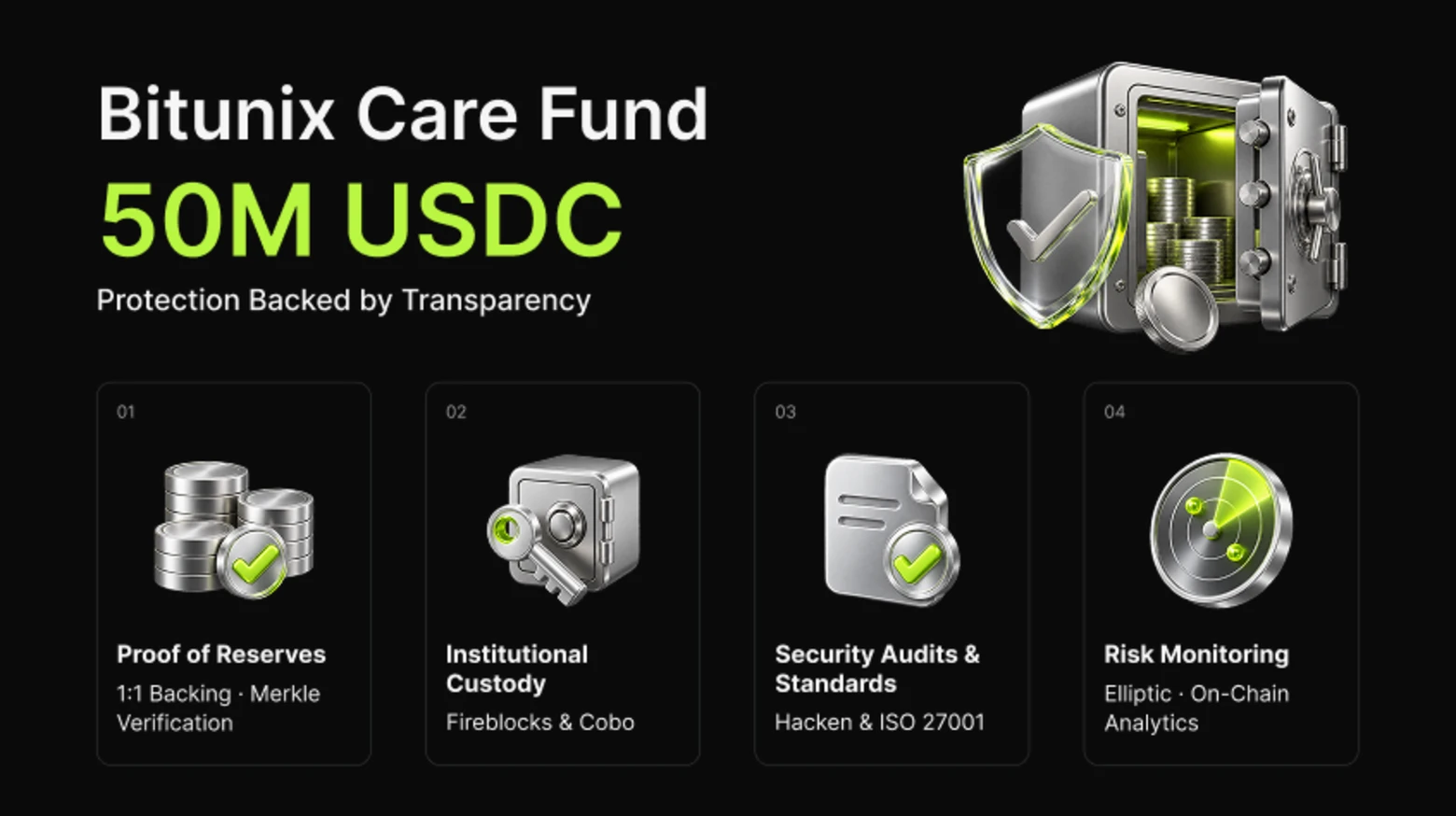
How Bitunix Protects User Assets: Our Commitment to Security and Trust
Bitunix prioritizes user asset protection through a comprehensive security framework designed to strengthen safety and transparency across its Bitunix Ultra trading experience. Key measures include a $50 million USDC Care Fund, institutional-grade custody through Fireblocks and Cobo, 1:1 Proof of Reserves, and real-time blockchain risk monitoring powered by Elliptic KYT.

Bitunix vs Bitget: Cutting Through the Noise on Real Fees, Safety, and Execution in 2026
An objective comparison of Bitunix and Bitget for active traders: base and VIP fee paths, reserve and protection funds after Bitget's September 2026 breach, 200x vs 125x leverage, copy trading settlement rules, KYC tiers and desktop terminals, and which exchange fits which trading style.
Bitget Review 2026: Fees, Features and Whether Bitget Is Safe and Legit
Bitget offers copy trading, a unified account and TradFi products, but its September 2026 hack matters. Here is how its fees, safety and alternatives compare.