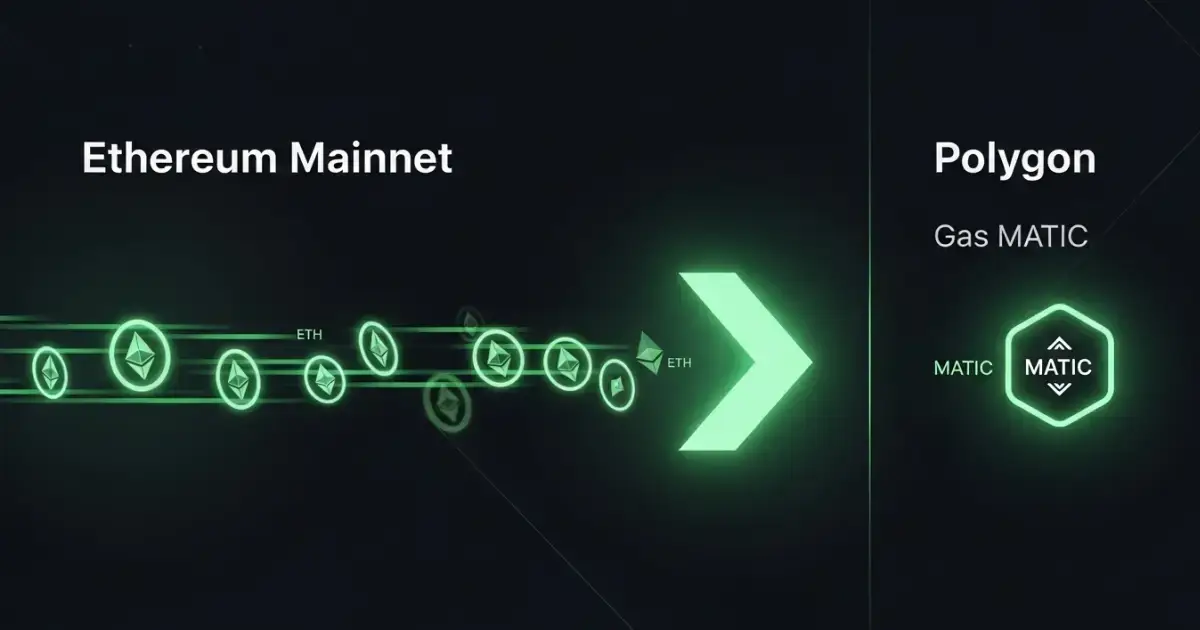
Moving assets across blockchains has become a fundamental part of the multi-chain ecosystem. Users may bridge assets to access lower transaction fees on networks such as Arbitrum, explore DeFi applications on Base, or interact with applications across different blockchain environments.
However, cross-chain transfers introduce additional security considerations. Unlike transactions within a single blockchain, bridging requires coordination between multiple systems, including smart contracts, validators, relayers, liquidity pools, or custodial mechanisms. Any weakness in these components can create risks ranging from delayed transactions to potential asset losses.
This guide provides a practical checklist for safer cross-chain bridge transactions. Whether you are new to blockchain bridges or an experienced crypto user, following a structured verification process can help reduce common risks.
By the end of this guide, you will understand:
How cross-chain bridges work
Why bridge security risks exist
How to verify a bridge before transferring assets
How to test transactions safely
How to avoid common mistakes during cross-chain transfers
How Cross-Chain Bridge Risks Differ From Regular Crypto Transactions
A regular crypto transaction usually involves transferring assets within the same blockchain network. For example, sending ETH from one Ethereum wallet to another only requires the Ethereum network to verify and process the transaction.
Cross-chain bridge transactions are different because they involve communication between multiple blockchain environments. Instead of relying on a single network, bridges must coordinate several components, including smart contracts, validators, relayers, liquidity pools, or custodial systems.
This creates additional risk layers that do not exist in standard blockchain transfers.
Transaction Type | Main Security Dependency | Common Risks |
|---|
Same-chain transfer | Single blockchain network | Wrong address, phishing, wallet compromise |
Cross-chain bridge transfer | Multiple networks + bridge infrastructure | Smart contract exploits, validator failures, liquidity issues, incorrect token versions |
For example, when sending tokens through a bridge, users are not only trusting the blockchain itself but also the bridge mechanism that verifies deposits, processes cross-chain messages, and releases assets on the destination network.
Common additional risks include:
Smart contract vulnerabilities: A bug in bridge contracts may affect locked assets or wrapped tokens.
Message verification risks: Bridges must confirm that events on one chain are valid before executing actions on another chain.
Liquidity dependency: Liquidity-based bridges require sufficient assets on both networks to complete transfers.
Token compatibility issues: Users may receive wrapped assets or different token standards instead of the expected native token.
Operational complexity: Multiple transaction steps create more opportunities for user mistakes.
This does not mean cross-chain bridges should be avoided. Instead, users should understand that bridging introduces an additional security layer compared with ordinary crypto transfers. A careful verification process can significantly reduce operational risks.
Introduction to Blockchain Technology and Cross Chain

Blockchain technology enables decentralized networks where transactions can be recorded, verified, and maintained without relying on a single central authority. Each blockchain operates with its own rules, consensus mechanism, token standards, and application ecosystem.
As the number of blockchain networks continues to grow, the industry has become increasingly multi-chain. Ethereum, Layer 2 networks, and alternative blockchains each provide different advantages, such as lower transaction costs, faster execution, or specialized applications. However, these independent networks cannot naturally communicate with one another.
This creates a challenge for users who want to move assets or access applications across different blockchain ecosystems. A token issued on one blockchain cannot directly interact with decentralized applications deployed on another network without additional infrastructure.
Cross-chain bridges were developed to address this interoperability challenge. They allow users to transfer assets, send messages, and interact with decentralized applications across multiple blockchain networks.
Depending on their design, cross-chain bridges may use different mechanisms:
Lock-and-mint mechanisms: Assets are locked on the original blockchain, while an equivalent representation is created on the destination chain.
Liquidity-based mechanisms: Users receive assets from liquidity pools maintained across multiple networks.
Proof-based mechanisms: Cryptographic proofs verify transactions between chains without relying heavily on centralized intermediaries.
Each bridge design has different trade-offs between speed, convenience, decentralization, and security. Understanding these differences is important because cross-chain transactions involve more components than standard blockchain transfers.
Before using a bridge, users should understand how the infrastructure works, what security assumptions it relies on, and what risks may occur during the transfer process.
Why Bridge Safety Matters
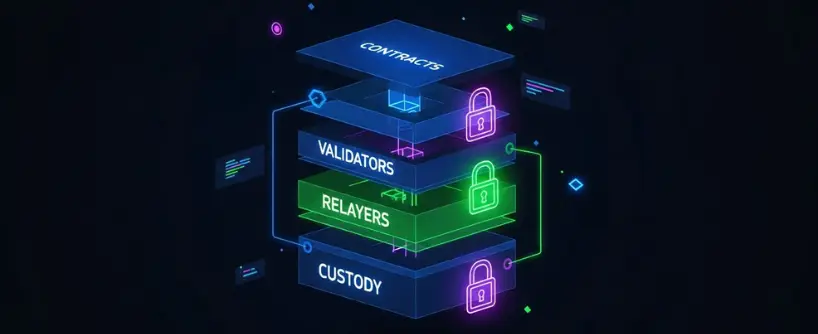
Cross-chain bridges connect blockchain networks that cannot communicate directly with each other. Unlike a standard transaction that takes place within a single blockchain, a bridge transfer requires multiple systems to work together, including smart contracts, verification mechanisms, liquidity providers, or message relayers.
This additional layer of infrastructure creates more potential points of failure.
A user sending assets through a bridge is not only relying on the security of the source and destination blockchains but also on the bridge’s own design, operational processes, and security controls.
Common bridge security risks include:
Smart contract vulnerabilities: Bugs in bridge contracts can affect how assets are locked, released, or represented on another blockchain.
Verification failures: If a bridge incorrectly verifies cross-chain messages, unauthorized transactions may be processed.
Liquidity problems: Liquidity-based bridges may experience delays if destination assets become unavailable.
User-side mistakes: Fake bridge websites, incorrect network selection, and unsafe token approvals can result in asset loss.
Because bridges often manage significant amounts of locked assets and connect multiple blockchain ecosystems, they have become attractive targets for attackers. However, many bridge-related losses are not caused by advanced exploits alone. Poor verification habits, phishing attacks, and operational mistakes also contribute significantly to security incidents.
For this reason, bridge safety is not only a protocol-level concern. Users can reduce their exposure by understanding how bridges work, verifying transaction details carefully, and following a consistent security checklist before transferring assets.
Why Cross-Chain Bridges Are Frequent Targets for Attackers
Cross-chain bridges often become high-value targets because they concentrate multiple security dependencies into one system.
A successful attack does not always require compromising an entire blockchain network. Instead, attackers may attempt to exploit weaknesses in:
Attack Surface | How It Works | Potential Impact |
|---|
Smart Contract Code | Exploiting bugs in bridge logic | Unauthorized asset withdrawals |
Validator Systems | Compromising message verification processes | False transaction approvals |
Private Key Management | Gaining access to administrative keys | Control over bridge operations |
Liquidity Pools | Manipulating available bridge liquidity | Delayed or failed transfers |
User Interfaces | Creating fake websites or malicious approvals | Wallet compromise |
Historical bridge incidents have shown that security failures can occur at different layers, from technical infrastructure to user interaction. This is why evaluating a bridge requires more than checking whether a transaction succeeds.
A safer approach is to consider the entire process:
Bridge design → Transaction verification → Token confirmation → Post-transfer monitoring
Understanding these risk layers helps users make better decisions before moving assets across chains.
Bridge Infrastructure and Designs

What Are Bridge Infrastructures?
Cross-chain bridge infrastructure refers to the technical components that allow different blockchain networks to exchange assets and messages.
Unlike a normal blockchain transaction that only depends on one network, bridge transactions require coordination between multiple systems. A typical bridge infrastructure may include:
Smart contracts: Programs that manage asset locking, minting, releasing, or transaction verification.
Validators or relayers: Entities responsible for observing activity on one blockchain and communicating verified information to another.
Oracles and verification systems: Mechanisms that confirm whether cross-chain events are valid.
Liquidity pools or custodial systems: Sources of destination assets used to complete transfers.
The security of a bridge depends on how these components are designed and managed. A weakness in any individual layer can affect the entire transfer process.
For example, a bridge may have secure smart contracts but still face risks if its validator system is overly centralized. Similarly, a technically advanced bridge may experience operational problems if liquidity management is insufficient.
Understanding bridge infrastructure helps users evaluate where trust is placed before transferring assets across networks.
Bridge Designs and Their Importance
Different bridge designs use different approaches to transfer assets between blockchains. Each model has trade-offs between speed, convenience, decentralization, and security.
Before using a cross-chain bridge, users should understand which security assumptions the bridge relies on.
Bridge Design | How It Works | Advantages | Potential Risks |
|---|
Canonical Bridge | The official bridge operated by a blockchain or Layer 2 ecosystem. Assets are locked on the source chain and represented on the destination chain. | Strong ecosystem alignment and clear security model | Withdrawals may be slower due to verification periods |
Liquidity-Based Bridge | Uses liquidity pools on different chains to provide users with destination assets. | Fast transfers and convenient user experience | Liquidity shortages and pool management risks |
Proof-Based Bridge | Uses cryptographic proofs or light clients to verify cross-chain messages. | Reduces reliance on centralized intermediaries | More complex infrastructure and higher technical requirements |
Wrapped Asset Bridge | Locks original assets and issues wrapped representations on another chain. | Supports broad interoperability | Custody risks and potential token depeg issues |
No bridge design is completely risk-free. The appropriate choice depends on factors such as transfer size, urgency, supported assets, and the level of trust users are comfortable with.
For smaller routine transfers, convenience may be an important factor. For larger transfers, users may prefer bridge designs with stronger verification mechanisms and clearer security assumptions.
How to Choose a Safer Cross-Chain Bridge
When evaluating a cross-chain bridge, users should consider more than transaction speed or fees.
Key factors include:
1. Security History
Check:
2. Transparency
A safer bridge should provide:
Clear documentation
Public contract addresses
Status updates during incidents
Explanation of security mechanisms
3. Bridge Design
Different designs introduce different risk profiles.
For example:
Proof-based bridges may provide stronger verification but require more technical complexity.
Liquidity-based bridges may offer faster transfers but depend on sufficient liquidity.
Wrapped asset bridges introduce additional custody and redemption considerations.
4. Transfer Size
Risk management should match the transaction amount.
For larger transfers:
Consider splitting transactions
Test smaller amounts first
Verify destination assets before continuing
Understanding these factors helps users select bridges based on security requirements rather than convenience alone.
The Top 5 Safety Checks Before Bridging

Before transferring assets through a cross-chain bridge, users should treat each transaction as a security process rather than a simple transfer. The following five checks cover the most common risks associated with bridge transactions, including malicious websites, incorrect token routes, insufficient liquidity, and operational mistakes.
1. Confirm the Security Model and Reputation
Before using a cross-chain bridge, understand how the bridge operates and what security assumptions it relies on.
Different bridge models introduce different levels of trust. A bridge that prioritizes speed and convenience may rely more heavily on liquidity providers or validators, while a bridge using cryptographic verification may reduce certain risks but introduce additional technical complexity.
Key factors to review include:
Bridge architecture and security model
Previous security incidents
Independent audit reports
Bug bounty programs
Community reputation and transparency
Bridge Reputation Checklist
Check | Why It Matters |
|---|
Review security audits | Helps identify whether contracts have undergone external review |
Check incident history | Shows how the team responded to previous problems |
Verify documentation | Transparent projects explain their architecture clearly |
Review bug bounty activity | Indicates whether security researchers are encouraged to find vulnerabilities |
Different bridge designs have different risk profiles:
Canonical bridges: Often benefit from direct ecosystem support but may have longer withdrawal times.
Liquidity-based bridges: Provide faster transfers but depend on sufficient liquidity and operational management.
Proof-based bridges: Reduce reliance on centralized verification but may require more complex infrastructure.
For larger transfers, users should prioritize bridges with stronger security assumptions rather than choosing only based on speed or lower fees.
2. Use Only Official URLs and Contract Addresses
One of the most common causes of bridge-related losses is not a protocol failure, but user interaction with fake websites or malicious contracts. Before connecting your wallet or approving a transaction, always verify that you are using the official bridge interface and correct contract addresses.
How to Verify a Bridge Website
Follow these steps:
Access the bridge through official documentation or verified project channels.
Bookmark the correct website after verification.
Check the domain spelling carefully.
Avoid clicking unknown advertisements or search results that may imitate official pages.
Confirm contract addresses through official documentation or trusted blockchain explorers.
Check Token Approval Requests
Before approving a transaction:
Confirm the contract address requesting approval.
Avoid unlimited approvals when unnecessary.
Stop immediately if the wallet requests interaction with an unknown contract.
A legitimate bridge transaction should clearly explain:
Which token is being approved
Which contract receives permission
How much token amount will be transferred
Why Bridge Phishing Attacks Are Common
Bridge users are often targeted by phishing because cross-chain transactions already require multiple steps, including:
Connecting wallets
Approving tokens
Selecting networks
Confirming transactions
Attackers take advantage of this complexity by creating fake interfaces that look similar to legitimate bridge websites. Verifying URLs and contract addresses before every transaction is one of the simplest ways to reduce phishing risk.
3. Quote, Test, Verify: The Three-Step Transaction Routine
A reliable cross-chain workflow should follow three steps:
Quote → Test → Verify
This process helps users identify unexpected fees, incorrect routes, and token compatibility issues before committing a larger transfer.
Step 1: Quote
Before confirming a bridge transaction, review:
If a bridge does not clearly display transaction details, consider using another route.
Step 2: Test
For unfamiliar bridges, new routes, or large transfers, send a small test transaction first.
Confirm:
Source transaction is completed
Destination wallet receives assets
Received token matches expectations
Final fees are close to the original quote
Step 3: Verify
After receiving assets:
Open the token contract on the destination chain explorer.
Confirm the contract address.
Check whether the asset is native or wrapped.
Verify that the token is supported by the application you plan to use.
Why Test Transactions Matter
A small test transfer acts as a practical security checkpoint.
It helps detect:
Wrong network selection
Incorrect wallet addresses
Unsupported token versions
Unexpected bridge behavior
Although test transactions add a small cost, they can significantly reduce the potential impact of a larger mistake.
4. Check Liquidity Depth, Route Health, and Finality
A successful cross-chain transaction depends not only on the bridge infrastructure but also on the current condition of the route.
Before transferring assets, check whether the bridge has sufficient liquidity, whether the network is operating normally, and how long finality is expected to take.
A transaction may fail or experience delays even when the bridge itself is functioning correctly if:
Destination liquidity is insufficient
Network congestion increases processing time
Additional confirmation steps are required
The bridge route is temporarily overloaded
What to Check Before Bridging
Check | What to Look For |
|---|
Liquidity availability | Whether the destination chain has enough assets to complete the transfer |
Bridge status | Current outages, maintenance, or operational issues |
Transaction finality | Expected confirmation time before funds become available |
Network conditions | Gas fees and congestion on source and destination chains |
Understand Transaction Finality
Finality refers to the point when a blockchain transaction is considered confirmed and unlikely to be reversed.
Different bridge designs handle finality differently:
Some liquidity-based bridges may complete transfers quickly by using available destination liquidity.
Some canonical bridges require additional confirmation periods before withdrawals are processed.
Some proof-based bridges wait for cryptographic verification before executing transactions.
Understanding finality expectations helps users avoid unnecessary concerns when transfers take longer than expected.
Keep Native Gas Available on Both Networks
Some cross-chain transactions require additional actions after the initial transfer.
For example:
Without sufficient native gas tokens on the destination network, users may receive assets but be unable to use them immediately.
How to Check Bridge Route Health Before Transferring
Before initiating a large transfer, review:
Bridge status pages: Check whether the service is operating normally.
Recent user reports: Look for unusual delays or failed transactions.
Liquidity conditions: Confirm that the destination route has enough available liquidity.
Network activity: Avoid transferring during severe congestion or known incidents.
A few minutes of preparation can prevent unnecessary delays and reduce operational risk.
5. Size, Split, and Save Records
Large cross-chain transfers should be managed like any other high-risk financial operation. Even when using a reputable bridge, transferring a large amount in a single transaction increases exposure to unexpected events, including incorrect settings, network issues, or temporary bridge problems.
A safer approach is to limit transfer size, split transactions when appropriate, and maintain clear records.
Best Practices for Large Cross-Chain Transfers
1) Set a Transfer Risk Limit
Before sending funds, consider:
Maximum amount you are comfortable transferring
Whether the bridge has sufficient liquidity
Whether the destination asset is confirmed
Whether the transaction can be recovered if something goes wrong
2) Split Large Transfers
For significant amounts, consider dividing transfers into smaller batches.
Benefits include:
Reducing potential loss from a single failed transaction
Confirming the route works correctly
Improving execution when liquidity is limited
Example:
Instead of transferring a large amount once:
Large Transfer
       ↓
Test Transfer
       ↓
Small Batch
       ↓
Remaining Amount
3) Keep Transaction Records
Maintain records of:
These records help with:
How to Manage Large Crypto Transfers Safely
For larger asset movements, a professional workflow usually includes:
Before Transfer
Confirm bridge reputation
Verify contract addresses
Check liquidity and network status
Prepare destination gas fees
During Transfer
Complete a small test transaction
Confirm received token type
Monitor transaction status
After Transfer
This process does not eliminate all risks, but it reduces the chance of avoidable mistakes during cross-chain transfers.
Chain Bridge and Communication Protocols

Cross-chain bridges rely on communication protocols to transfer information between independent blockchain networks.
Because different blockchains operate with their own consensus mechanisms and transaction rules, they cannot directly verify each other's activity. Bridges therefore require additional systems to observe events on one network, verify information, and execute actions on another.
Depending on the bridge design, communication may involve:
Relayers: Systems that transmit transaction messages between blockchains.
Validators: Participants responsible for confirming whether cross-chain events are valid.
Proof systems: Cryptographic mechanisms that verify blockchain activity without relying entirely on trusted intermediaries.
Smart contracts: Automated programs that execute transfers after verification requirements are met.
These components work together to complete a cross-chain transaction, but they also introduce additional security considerations.
Why Bridge Communication Creates Additional Risks
A normal blockchain transfer usually requires confirmation from a single network.
A cross-chain transfer requires multiple steps:
A transaction is submitted on the source blockchain.
The bridge detects and verifies the transaction.
A message is transmitted to the destination blockchain.
The destination chain executes the corresponding action.
Each step introduces potential risks.
For example:
A vulnerability in smart contract logic may affect asset transfers.
Weak validator security may allow incorrect messages to be approved.
Poor communication design may create delays or transaction failures.
This is why bridge security depends not only on the blockchains involved but also on the infrastructure connecting them.
Common Security Challenges in Cross-Chain Communication
Cross-chain communication systems must solve several security challenges:
Challenge | Why It Matters |
|---|
Message verification | Ensures only valid transactions are executed across chains |
Validator security | Prevents unauthorized approvals caused by compromised participants |
Smart contract reliability | Protects asset locking and releasing mechanisms |
Network compatibility | Ensures different blockchain systems can communicate correctly |
A bridge with strong communication design reduces some risks, but users should still verify transaction details before transferring assets.
Security at the protocol level and careful user behavior work together to create safer cross-chain transactions.
Cross-Chain Bridge Risks Explained in Plain Language

Cross-chain bridges make blockchain interoperability possible, but they also introduce additional risks compared with regular blockchain transactions.
A bridge transaction involves multiple systems working together, including smart contracts, verification mechanisms, liquidity providers, and user interactions. A problem in any of these areas may affect the safety or completion of a transfer.
Understanding the most common risks can help users make better decisions before moving assets across networks.
Smart Contract Vulnerabilities
Smart contracts are responsible for many important bridge operations, including locking assets on one chain, issuing representations on another chain, and processing withdrawals.
If a smart contract contains vulnerabilities, attackers may exploit weaknesses in the code to manipulate bridge operations or gain unauthorized access to funds.
Common causes include:
Users cannot directly inspect smart contract code in most cases, so practical precautions include choosing bridges with transparent documentation, security reviews, and a proven operational history.
Validator and Verification Risks
Many bridges rely on validators, relayers, or other verification mechanisms to confirm that events on one blockchain are legitimate before executing actions on another.
If the verification system is compromised or overly centralized, attackers may attempt to submit false messages or manipulate transaction approvals.
When evaluating a bridge, consider:
How cross-chain messages are verified
Whether control is distributed among multiple participants
Whether security mechanisms are publicly documented
A stronger verification model can reduce reliance on a single point of failure.
Liquidity and Execution Risks
Liquidity-based bridges depend on available assets across different blockchain networks.
Even when a bridge is functioning normally, users may experience delays or unexpected execution issues if:
Destination liquidity is insufficient
The transfer route is temporarily congested
Large transactions affect available liquidity
Before completing larger transfers, users should check route availability and consider splitting transactions when appropriate.
Wrapped Asset Risks
Some bridges create wrapped versions of assets when moving tokens between blockchains.
For example, a native asset on one chain may be represented by another token on a different network. The value and usability of these wrapped assets depend on the bridge’s ability to maintain proper backing and redemption mechanisms.
Before using bridged assets, users should verify:
Understanding what asset you are receiving is an important part of cross-chain security.
Phishing and User Interaction Risks
Not all bridge-related losses come from protocol vulnerabilities. Many incidents occur because users interact with malicious websites, incorrect contracts, or unsafe approval requests.
Common mistakes include:
Visiting fake bridge websites
Approving unknown smart contracts
Selecting the wrong network
Sending assets to unsupported addresses
A secure transfer process should always include:
Using official bridge links
Checking contract details
Reviewing wallet approval requests
Testing unfamiliar routes with a small amount first
How to Reduce Cross-Chain Bridge Risks
Although no blockchain transaction can be completely risk-free, users can significantly reduce avoidable mistakes by following a consistent process:
Choose bridges with transparent security practices and established usage history.
Verify websites, contract addresses, and transaction details before approval.
Test smaller transfers before moving larger amounts.
Keep records of transaction hashes and asset details.
Monitor network conditions and bridge status before important transfers.
Cross-chain security is a combination of protocol design and user behavior. Understanding where risks come from allows users to interact with bridges more confidently.
Step-by-Step Example: Bridging USDC from Ethereum to Arbitrum
A practical example can help illustrate how the safety principles discussed above apply to a real cross-chain transfer.
In this example, we will look at bridging USDC from Ethereum to Arbitrum. Although the networks and assets may differ, the same verification process can be applied to most cross-chain transactions.
Before starting, make sure you have:
A wallet that supports both Ethereum and Arbitrum
Enough ETH on Ethereum to cover transaction fees
A small amount of ETH on Arbitrum for future transactions if needed
The correct USDC contract information for both networks
1. Verify the Bridge and Network Details
Before connecting your wallet, confirm that you are using the official bridge interface and selecting the correct networks.
Check:
A common mistake in cross-chain transactions is assuming that the same token symbol always represents the same asset across networks. Always verify token contracts rather than relying only on the displayed name.
2. Review the Transfer Quote
After entering the transfer amount, carefully review the transaction details before approving.
Important information includes:
If the expected output differs significantly from your expectations, stop and review the transaction details before continuing.
3. Complete a Small Test Transaction First
For a new bridge route or a larger transfer, sending a small test amount first is a practical security measure.
A test transaction helps confirm:
The selected networks are correct
The wallet address can receive assets
The bridge route is functioning normally
The received token matches expectations
Although this adds a small additional cost, it can reduce the impact of a larger mistake.
4. Confirm the Received USDC on Arbitrum
After the transaction completes, verify the received asset before using it.
Check:
The Arbitrum wallet balance
The USDC contract address
Whether the token is the expected version
Whether the asset is supported by your intended application
Different networks may use different token contracts, even when the asset name appears identical.
5. Keep Transaction Records
After completing the transfer, save important transaction information.
Useful records include:
Keeping transaction records makes it easier to track assets, resolve potential issues, and review your cross-chain activity later.
Why This Cross-Chain Transfer Workflow Is Important
The Ethereum-to-Arbitrum example highlights a broader principle:
A successful bridge transaction is not only about whether assets arrive at the destination chain. It is also about confirming that every step of the process is correct.
Before any cross-chain transfer, users should verify:
The bridge source
The destination network
The token contract
The transaction details
The final received asset
This verification process applies across different networks, including Layer 2 solutions, alternative Layer 1 blockchains, and other cross-chain ecosystems.
Blockchain Bridge Safety Tips You Can Apply Today
Cross-chain bridges provide a convenient way to move assets between blockchain networks, but every transfer requires careful verification. The safest approach is not to rely on a single security measure. Instead, users should build a consistent process that reduces avoidable mistakes before, during, and after each transaction.
Before Bridging
Before initiating a transfer, check the following:
Verify the Bridge Source
Always access bridges through official websites, verified documentation, or trusted ecosystem resources.
Avoid using:
Unknown links shared through social media
Unverified search advertisements
Messages from unfamiliar accounts
Phishing websites often imitate legitimate bridge interfaces to trick users into approving malicious transactions.
Confirm Network and Token Details
Before approving any transaction, verify:
Source blockchain
Destination blockchain
Token contract address
Receiving wallet address
A token symbol alone is not enough. The same token name may exist across multiple networks with different contract addresses.
Review Security and Transaction Conditions
For important transfers, check:
A few minutes of verification can prevent costly mistakes.
During Bridging
While the transaction is being processed:
Review wallet approval requests carefully.
Confirm that the transaction details match your expectations.
Avoid approving unexpected permissions.
Monitor the transaction status through official explorers.
If anything looks unusual, stop and investigate before continuing.
After Bridging
After assets arrive on the destination chain:
Confirm the received token contract.
Verify your wallet balance.
Check whether the asset is native or wrapped.
Revoke unnecessary token approvals when appropriate.
Save transaction records.
Keeping a clear transaction history helps with future tracking and troubleshooting.
A Compact Checklist: Crypto Bridge Security Checks
Use this checklist before every cross-chain transfer:
Access the bridge through official documentation or verified sources, and save the correct URL for future use.
Review the bridge’s security model, available audits, and bug bounty programs.
Check the transfer quote, including fees, expected output, and estimated completion time.
Approve only the required amount whenever possible instead of granting unnecessary unlimited token approvals.
Send a small test transaction first, especially when using a new bridge route or transferring a large amount.
Verify the destination token contract using a trusted blockchain explorer.
Complete the main transfer and ensure sufficient gas is available on both networks.
Save transaction hashes and relevant records for future tracking or troubleshooting.
For larger transfers, consider splitting transactions or choosing a route with stronger liquidity and security assumptions.
Review and revoke unnecessary token approvals periodically, and remove outdated links from your saved resources.
Following this routine only takes a few minutes but can help reduce common cross-chain transfer mistakes and improve overall transaction security.
Conclusion
Cross-chain bridges play an important role in connecting different blockchain ecosystems, but they also introduce additional security considerations compared with standard blockchain transactions.
The safest approach is to treat every bridge transfer as a process that requires verification. Before sending assets across chains, remember to:
Understand how the bridge works
Verify official websites and contract addresses
Review transaction details carefully
Test unfamiliar routes with smaller amounts
Confirm received assets after completion
No bridge transaction is completely risk-free, but informed decisions and consistent security practices can significantly reduce avoidable mistakes.
By understanding bridge infrastructure, recognizing common risks, and following a structured verification process, users can interact with cross-chain ecosystems more confidently.