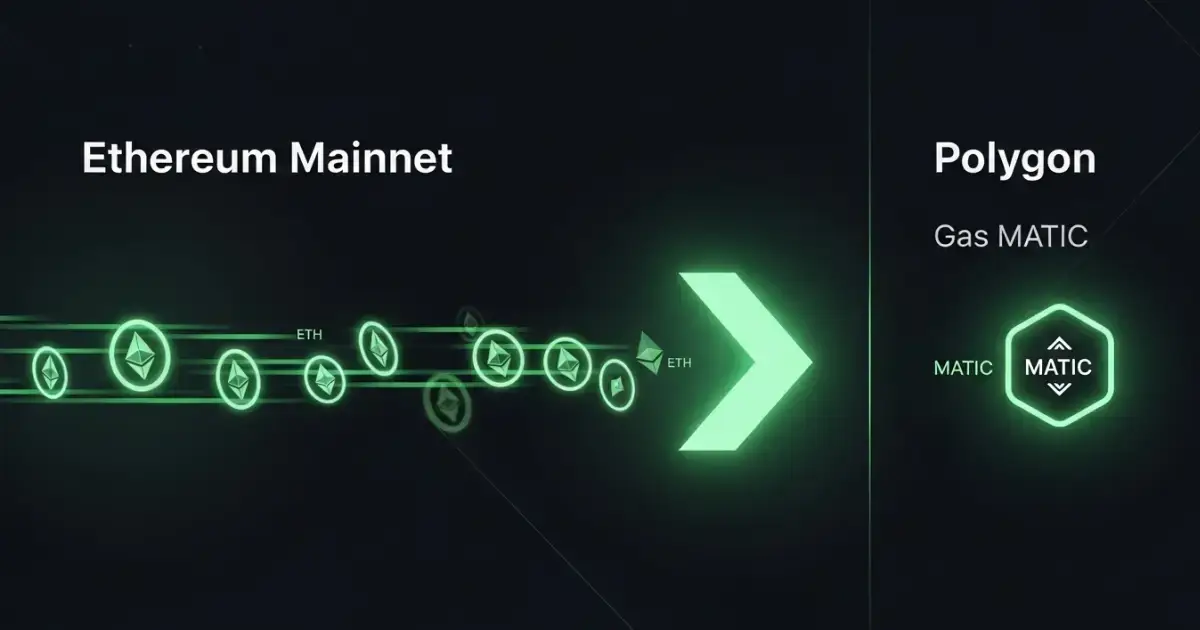
Decentralized finance no longer operates on a single network. Traders seek lower fees on BNB Smart Chain, NFT collectors mint on Ethereum, and yield farmers experiment across Arbitrum, Optimism, Base, and Solana. This is multi-chain crypto, an ecosystem where value and applications are distributed across multiple blockchains. To move assets between these networks, users need a cross-chain bridge.
For beginners, the concept can seem complex. This crypto bridge beginner guide explains what a cross-chain bridge is, how cross-chain bridges work, and how to complete a safer cross-chain asset transfer from one network to another. It covers major bridge designs, fees, finality times, security trade-offs, and practical steps to avoid common mistakes.
What Is a Cross-Chain Bridge?

A cross-chain bridge is a combination of smart contracts and off-chain services that enables cross-chain asset transfers. It connects two or more blockchains that cannot communicate directly with each other. Bridge contracts are the core smart contracts that facilitate cross-chain transfers, but they can also introduce security vulnerabilities.
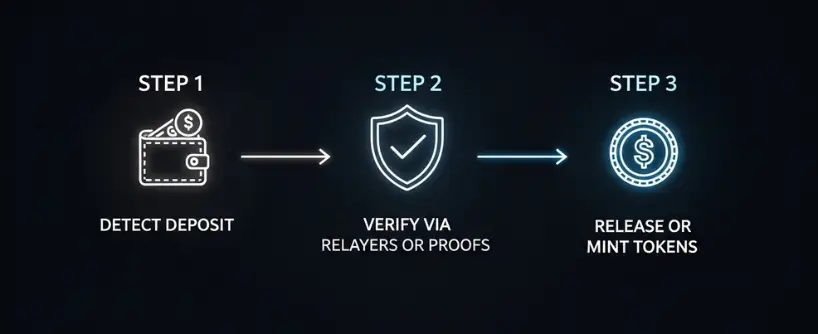
When using a bridge, users typically lock, burn, or swap an asset on the source chain and receive a corresponding asset on the destination blockchain. At a high level, a cross-chain bridge performs three main functions:
Detects a deposit or swap on the source chain.
Verifies that action through validators, relayers, or on-chain proofs.
Releases or mints the target asset on the destination chain and credits it to the user's address.
Bridge hacks have historically exploited vulnerabilities in bridge contracts, resulting in significant losses. A bridge operator may act as a third-party entity managing transfers between blockchains, which introduces trust risks. Some bridges rely on centralized entities, while others use decentralized mechanisms.
Certain bridge designs also contain a single point of failure, creating additional security concerns. Cross-chain bridges are essential infrastructure for accessing applications and liquidity across different networks. Trustless bridges use algorithms and smart contracts to reduce dependence on centralized entities.
External audits play an important role in evaluating the security of bridge contracts. Crypto bridging refers to the process of moving assets across different blockchain networks. Some bridges operate without centralized control and rely on decentralized protocols instead.
Different bridges use different security and validation mechanisms, meaning each bridge comes with its own risks and features. Without bridges, multi-chain crypto would function like a collection of isolated islands. Bridges create the infrastructure that connects these ecosystems. The bridging function is the core mechanism that enables asset and data transfers between different networks.
Cross-Chain Interoperability: Why It Matters

Cross-chain interoperability allows different blockchain networks to exchange assets and data, helping prevent liquidity and applications from becoming isolated within individual ecosystems.
Cross-chain interoperability is becoming an important part of the blockchain ecosystem. As more blockchain networks emerge, each with different features and communities, the ability to transfer assets and data between networks becomes increasingly necessary.
Cross-chain bridges, also known as blockchain bridges, provide the infrastructure that makes this possible. By connecting otherwise isolated chains, these bridges allow users to move assets such as tokens and NFTs from one blockchain to another, creating more use cases across the ecosystem.
This transfer capability is important for decentralized applications (dApps) that want to reach users across multiple chains. For example, a DeFi protocol operating on several blockchains can access broader liquidity and user bases when it supports cross-chain functionality.
Cross-chain bridges also help prevent liquidity from becoming trapped on a single chain. Instead, cross-chain liquidity can move across different blockchain ecosystems, giving users more flexibility and enabling developers to build applications that interact with multiple networks.
This interconnected structure benefits users by expanding available options while supporting innovation across blockchain platforms. Cross-chain interoperability powered by cross-chain bridges helps maintain an open and accessible blockchain ecosystem where users and developers can utilize the different capabilities offered by various networks.
How Cross-Chain Bridges Work
There is no single bridge architecture. To understand how cross-chain bridges work, it helps to group them into four common models. Each model solves the same problem with different trade-offs in security, speed, and cost.
Lock and Mint Bridges:
A common bridge model where assets are locked on the source chain and equivalent tokens are minted on the destination chain, allowing assets to move across different networks.
Liquidity Network Model:
In this model, bridge contracts manage the transfer process, while liquidity pools provide the assets required for fast settlement. Users transfer tokens between chains by interacting with these pools, which provide liquidity for quick swaps.
Canonical or Native Bridge:
These bridges are typically built by the protocol team and may include a bridge operator responsible for managing transfers. Locked assets are held in smart contracts on the source chain, and the bridge operator facilitates the transfer to the destination chain.
Proof-Based or Light-Client Bridges:
These bridges use cryptographic proofs for validation, enabling secure and trust-minimized transfers. The bridging function relies on mechanisms that verify transactions across chains without depending on a centralized party.
Wrapped or Synthetic Asset Bridge:
In this model, wrapped assets are created through a lock-and-mint process. When users deposit tokens on the source chain, equivalent tokens are minted on the destination chain to represent the original asset and enable cross-chain interoperability.
Each bridge model has its own trade-offs and operational costs, including gas fees, which can affect the efficiency and cost-effectiveness of cross-chain transfers.
Bridge Model | How It Works | Main Advantages | Main Risks |
|---|
Liquidity Network Model | Uses liquidity pools on multiple chains. Users receive assets from destination pools while the protocol later rebalances liquidity. | Fast settlement; supports native asset transfers; suitable for frequent transfers. | Relayer or validator risks; liquidity shortages during one-sided flows. |
Canonical or Native Bridge | Locks assets on the source chain and mints equivalent tokens on the destination chain, usually following the network’s official security model. | Strong alignment with the underlying chain or rollup security model. | Slower withdrawals; often limited to specific chain pairs. |
Proof-Based or Light-Client Bridge | Uses cryptographic proofs and on-chain verification to validate transactions across chains. | Strong trust model without relying heavily on external parties. | Higher engineering complexity; higher costs; limited compatibility. |
Wrapped or Synthetic Asset Bridge | Locks original assets and issues wrapped representations on another blockchain. | Works across different chains and supports DeFi integrations. | Custody risk; wrapped assets may lose their intended value during stress. |
Liquidity Network Model
A liquidity network deploys token pools across multiple chains. Liquidity providers deposit native assets on each side. When a user requests a cross-chain asset transfer, the bridge releases tokens from the destination pool and later rebalances inventory.
How liquidity network works:
You send USDC to the bridge contract on Ethereum, which manages your deposit and interacts with the liquidity pool.
A bridge operator (relayer) observes the deposit and instructs the destination liquidity pool on Arbitrum to release USDC to your Arbitrum address.
The protocol later restores inventory balance, often through market makers or incentive mechanisms.
What are the pros and cons of liquidity networks?
Pros: Fast settlement, often completed within a few minutes. Native assets can be delivered on both sides. Pricing can reflect pool depth and slippage.
Cons: Requires trust in relayers or validator sets that confirm messages. Pools may temporarily run out of inventory when flows move heavily in one direction.
The bridging function in this model relies on liquidity pools and bridge operators to support fast transfers between chains. Bridge contracts manage deposits, but poor design can introduce security risks.
Canonical or Native Bridge
Canonical bridges are a type of lock-and-mint bridge where assets are deposited into a vault and locked on the source chain, while equivalent tokens are minted on the destination chain. These locked assets remain in smart contracts during the bridging process, and a bridge operator may be responsible for managing transfers and overseeing the bridge.
When users return assets to the original chain, the equivalent tokens are burned, and the original assets are unlocked.
Pros: Aligned with the network’s core security model. Usually maintained by the team operating the chain or rollup.
Cons: Withdrawals can be slow because the system may require a challenge period or validity window. Support is often limited to specific chain pairs.
Best for: Large transfers where users prefer the network’s official route and are willing to wait for finality.
Proof-Based or Light-Client Bridges
A proof-based bridge verifies cryptographic proofs from another chain directly on the destination chain. These bridges use cryptographic proofs for validation, ensuring that only valid transactions are processed.
No special relayers or committees are required because a verification contract checks block headers and Merkle proofs. Transfer tokens are moved securely and programmatically across chains through this model, supporting cross-chain interoperability.
The bridging function in this model relies on on-chain verification, which improves the integrity and trustworthiness of token and data transfers.
Pros: Strong trust model. Security depends on cryptography and blockchain consensus rather than external signers.
Cons: Higher gas costs and greater engineering complexity. Support depends on chain compatibility.
Best for: High-value treasury transfers where trust minimization is prioritized over speed.
Wrapped or Synthetic Asset Bridge
In this model, wrapped assets are created through the lock-and-mint process. The bridge locks original tokens with a custodian and mints equivalent tokens, creating a wrapped representation on the destination chain.
The locked assets remain in custody during the transfer process, enabling cross-chain interoperability.
Pros: Works across different chains and virtual machines. Easy to integrate with DeFi applications on the target chain.
Cons: Introduces custody risk if private keys are compromised. Wrapped tokens may trade at a discount during periods of market stress.
Best for: Long-tail assets that do not have native liquidity on the target chain.
These four patterns cover most bridges users will encounter. When choosing a route, consider which model is being used and whether its trade-offs match your requirements.
Why Cross-Chain Bridges Matter in Multi-Chain Crypto

Cross-chain bridges allow users and applications to move assets between specialized blockchain networks, reducing fragmentation across the multi-chain ecosystem.
The shift toward multi-chain crypto is not a temporary trend. Different blockchains focus on different strengths: some provide lower fees, some prioritize security, and others attract specific applications.
Each blockchain has its own approach to scalability, security, and interoperability, which influences how it connects with the broader ecosystem. Cross-chain bridges connect multiple networks, creating an interconnected environment for asset transfers, communication, and access to new markets.
A trader might hold ETH on Ethereum mainnet for security, use USDC on Arbitrum for lower-fee DeFi activity, and mint NFTs on Polygon. Users may need to interact with specific chains to access certain applications or qualify for rewards.
Moving between these networks efficiently and safely can determine whether users can access opportunities across different ecosystems. Bridges enable:
Capital mobility: Move stablecoins and collateral across networks based on liquidity conditions, lending activity, or other ecosystem factors.
Application access: Interact with ecosystems that exist on other networks, including new DEXs, games, or staking services.
Treasury rebalancing: DAOs and funds can manage positions across multiple chains and shift assets with proper accounting records.
User onboarding: New users can move assets from lower-fee networks to the networks required by specific applications.
Without bridges, liquidity would remain fragmented and network effects would stay limited within individual chains. Bridges act as connecting infrastructure across Web3.
Fees, Slippage, and Finality

Before initiating a transfer, review the following costs and timing factors:
Gas fees on the source chain: Gas fees are a key operational cost because users need to approve and send the deposit transaction.
Gas fees on the destination chain: Some bridges require a claim transaction. Keep a small amount of the destination chain’s native token available when needed.
Bridge fee or relayer fee: Fees paid to validators or liquidity providers.
Trading fee: Liquidity networks may include swaps to rebalance pools.
Slippage: The difference between the quoted amount and the actual received amount when pool inventory or market conditions change.
Finality time: Liquidity networks may complete transfers within minutes, while canonical bridges can take hours. Proof-based bridge timing varies depending on the route.
The Ethereum network is known for relatively high gas fees, especially during periods of congestion, which can increase the cost of cross-chain transfers.
A reliable bridge interface should display the expected output, total fees, and estimated finality time. If any part of the process is unclear, consider another route.
Security Risks and How to Reduce Them

Cross-chain bridges concentrate valuable assets and complex transaction logic, making security a major consideration when choosing a bridge.
Bridges are frequent targets for exploits because they often manage large amounts of assets and rely on complex verification mechanisms. Bridge hacks have historically targeted vulnerabilities in bridge contracts, resulting in significant financial losses.
Understanding these risks is an important part of learning how cross-chain bridges work. Some bridge models introduce a single point of failure, making them vulnerable if that component is compromised. Centralized control over bridge contracts can also increase security risks because users must trust a central entity to manage assets securely.
External audits help identify and address vulnerabilities in bridge contracts, reducing the likelihood of exploits and improving user confidence. A risk management network can also monitor and secure cross-chain transactions by providing an additional decentralized security layer.
For wrapped asset bridges, custody risk remains a key concern. Locked assets held in smart contracts can become vulnerable if the keys controlling those contracts are compromised.
Main Risk Categories
1. Smart contract bugs.
Flaws in locking, minting, pricing, or accounting mechanisms can drain funds. Bridge contracts are common targets for attacks, and past exploits have resulted in significant financial losses.
2. Validator or relayer compromise.
A small group of validators or relayers may sign invalid messages and release funds to attackers. Some bridge models introduce a single point of failure, increasing risks if these participants are compromised.
3. Liquidity exhaustion.
If one-way traffic drains a destination pool, transfers may be delayed or completed at unfavorable prices.
4. Wrapped asset custody.
If keys controlling original tokens are lost or compromised, wrapped tokens may lose their backing or deviate from their intended value.
5. Phishing and fake interfaces.
Imitation websites can trick users into approving malicious transactions or sending funds to attacker-controlled contracts.
6. Centralized authority risks.
When a centralized entity controls bridge contracts, users must rely on that operator to manage assets securely, which may introduce additional security and decentralization concerns.
How To Protect Yourself
Use bridges with published audits and, importantly, those that have undergone external audits from reputable third parties. Look for active bug bounties and transparent governance.
Prefer proof-based or canonical bridges for high-value transfers.
When possible, use a single bridge for direct transfers. Combining this approach with a strong risk management network, which provides a decentralized security layer for monitoring cross-chain transactions, can improve security and reduce complexity.
Always complete a small test transaction first.
Verify the destination token. Confirm that it is the official native token or a supported wrapped version.
Bookmark official URLs and avoid links shared by unknown sources.
Monitor route health. Many bridges display pool inventory and current delays. Avoid routes with depleted liquidity.
Keep records. Save transaction hashes and screenshots for support requests or accounting purposes.
Security depends on consistent habits. Once these checks become routine, cross-chain transfers become easier to manage.
Step-by-Step: Your First Cross-Chain Asset Transfer

This practical walkthrough explains how to move USDC from Ethereum to Arbitrum using a typical liquidity network. The same checklist applies to most bridges.
Cross-chain bridges help users access new applications and liquidity across different blockchain ecosystems.
Prepare your wallet.
Make sure your wallet holds USDC on Ethereum and a small amount of ETH for gas fees. Add the Arbitrum network to your wallet if needed.
Choose a reputable bridge.
Select a recognized bridge provider that supports multiple blockchains, provides security information, and offers a clear fee breakdown.
Connect your wallet.
Confirm that the website only requests the necessary permissions.
Enter the route and amount.
Choose Ethereum as the source chain, Arbitrum as the destination blockchain, and select USDC. The transfer will move tokens to the destination network.
Check the quote.
Review the expected output, all fees, and the estimated completion time.
Send a test transaction.
Start with a small amount and confirm the deposit transaction on Ethereum.
Wait for delivery.
Monitor the bridge interface for status updates and confirm receipt on Arbitrum.
Complete the full transfer.
If the test transaction completes successfully, repeat the process with the intended amount.
Verify token type.
Make sure the USDC received is the official token supported by applications on Arbitrum.
Save records.
Store transaction hashes from both chains and keep a screenshot of the quote.
This process becomes a repeatable routine and helps reduce common user errors.
Cross-Chain Swaps vs Simple Transfers
A cross-chain swap goes beyond a simple transfer. Instead of only moving tokens from chain A to chain B, a cross-chain swap allows users to send one asset, such as ETH on Ethereum, and receive another asset, such as USDC on Arbitrum, on a different blockchain.
The bridge swaps ETH to USDC on the source chain, routes the transaction through cross-chain liquidity pools, and delivers USDC on the destination chain.
The bridging function in these swaps enables more complex operations, including asset conversion and transferring tokens across different blockchains while supporting cross-chain interoperability.
Pros: Complete multiple steps through a single transaction flow.
Cons: Additional trading fees and slippage may occur at each step. Compare this approach with completing part of the trade locally if liquidity conditions are better.
When you see the term “swap,” review the quote carefully and confirm that the minimum output meets your expectations.
How To Evaluate a Cross-Chain Bridge
Use this checklist before committing a larger transfer amount.
Security model: Identify whether the bridge uses a liquidity network, canonical model, proof-based system, or wrapped asset structure.
Audits and bounties: Check for recent external audits from reputable firms and an active bug bounty program.
Validator transparency: For committee-based models, understand who the validators are and how keys are managed.
Liquidity depth: Review the total value locked on the route and how frequently pools experience low liquidity.
Quote clarity: Confirm that fees are clearly displayed and that the minimum output is shown.
Past incidents: Review any previous outages, depegs, or service interruptions and how the team responded.
User operations: Check whether the destination chain requires a claim transaction and whether destination gas fees are provided.
Governance: Review whether upgrade parameters, DAO controls, and security delays are visible.
Documentation: Look for clear guides, FAQs, and active support channels.
Community reputation: Consider consistent feedback from real users over time.
Risk management network: Check whether the bridge uses a risk management network that provides a decentralized security layer to monitor and secure cross-chain transactions.
Own set of risks and features: Each bridge or blockchain network has its own risks, challenges, and characteristics. Understanding these differences is important when evaluating interoperability and security.
A route that appears inexpensive but fails several of these checks may not be suitable for a large transfer.
Real-World Examples and When To Use Them
Official L2 bridges such as Ethereum mainnet to Optimism or Arbitrum routes: These are suitable for moving ETH and canonical tokens when security alignment matters, although withdrawals to mainnet may take longer.
Stablecoin liquidity networks focused on USDC or USDT across Ethereum, Base, Arbitrum, BNB Smart Chain, and Binance Smart Chain: These are commonly used for faster routine transfers.
Ecosystem bridges such as Avalanche Bridge and Polygon Bridge: These connect different blockchain networks and support cross-chain transfers. Binance Bridge is an example of a centralized bridge that enables asset transfers between major ecosystems.
Proof-based research bridges between chains with compatible light clients: These routes are used by projects and treasuries that prioritize trust minimization.
Wrapped asset systems that bring BTC or long-tail tokens to EVM chains: These systems expand DeFi utility but require attention to custody and redemption mechanisms.
Some bridges also connect non-EVM chains, including Solana, Tron, and Sui, enabling asset transfers and communication across different blockchain ecosystems. Users may need to interact with specific chains to access certain applications or qualify for rewards.
The right bridge depends on the use case. There is no single bridge that fits every situation.
Best Practices for Safer Cross-Chain Activity
Start with a small test every time.
The habit requires little effort and can help identify mistakes before larger transfers.
Verify the token contract on the destination.
Use official documentation and blockchain explorers.
Keep native gas on all networks you use.
A small amount of ETH, MATIC, or BNB can prevent transactions from becoming stuck.
Avoid tight deadlines and urgent transfers.
Bridges may experience delays during periods of high activity.
Use a hardware wallet for approvals.
This can reduce the risk of signing malicious transactions.
Split large transfers.
Multiple smaller transfers can reduce the impact of a potential failure and may improve execution conditions.
Store backups of addresses and transaction hashes.
Accurate records make it easier for support teams to investigate issues.
Use official URLs.
Bookmark links from project documentation or trusted aggregators.
Monitor status pages.
If a chain or bridge is experiencing issues, consider waiting until normal operations resume.
Understand the reverse route.
Test the path in both directions if you expect to move assets back later.
Choose bridges that have undergone external audits.
Independent audits from reputable third parties can help identify vulnerabilities and improve security practices.
Use a single bridge whenever possible.
A single bridge can simplify the transfer process, reduce operational errors, and avoid unnecessary transaction steps.
The Future of Cross-Chain Technology
The future of cross-chain technology is expected to reshape how users and applications interact across blockchain ecosystems. As demand for cross-chain interoperability increases, developers continue improving the security and efficiency of cross-chain bridges.
New cross-chain messaging protocols are being developed to support more reliable communication between blockchain networks, reducing some of the risks and friction associated with transferring assets across chains.
One major development area is the integration of smart contracts and decentralized oracles into bridging systems. These technologies can enable more automated and transparent token transfers while reducing dependence on centralized intermediaries.
Standardized frameworks such as the Cross-Chain Interoperability Protocol (CCIP) may further improve cross-chain communication by providing more consistent infrastructure for users and developers.
As cross-chain bridges and interoperability solutions continue evolving, the ecosystem may see deeper liquidity pools, stronger risk management systems, and more applications such as cross-chain DeFi platforms and NFT marketplaces operating across multiple chains.
This development could improve user experience and support broader blockchain adoption by making different ecosystems more connected. Continued innovation in cross-chain technology is moving blockchain networks toward a more interconnected environment with broader digital asset and application support.
Glossary
Cross-Chain Bridge: A protocol or system that connects separate blockchain networks and enables the transfer of assets or data between them.
Mempool: A public pool of pending transactions waiting to be confirmed on a blockchain.
Relayer: An off-chain service or agent that observes events on one blockchain and submits messages or transaction information to another chain.
Validator Set: A group of validators or signers responsible for confirming cross-chain messages or events in certain bridge designs.
Light Client: A system or smart contract that verifies another blockchain’s state using cryptographic proofs without storing the entire blockchain.
Canonical Bridge: An official bridge supported by a blockchain network or rollup team, usually designed to follow the network’s security model.
Liquidity Network: A bridge architecture that uses liquidity pools on different chains to facilitate faster asset transfers.
Wrapped Token: A token that represents an asset from another blockchain and is backed by locked original assets.
Finality: The point at which a blockchain transaction is considered confirmed and effectively irreversible.
Slippage: The difference between the expected output and the actual received amount caused by price changes or liquidity conditions.
TVL (Total Value Locked): The total value of assets deposited in a protocol, commonly used to measure liquidity and adoption.
Multi-Chain Crypto: A blockchain ecosystem where applications and assets operate across multiple networks.
Cross-Chain Swap: A transaction that exchanges one asset for another across different blockchains through a routed process.
Bridge Contracts: Smart contracts that manage or verify cross-chain transfers. They may hold assets, process messages, or interact with other contracts during bridging operations.
Bridge Operator: A third-party entity or service responsible for managing bridge operations and facilitating transfers between blockchains.
Lock and Mint Bridges: A bridge model where assets are locked on the source chain and equivalent tokens are minted on the destination chain.
Liquidity Pool: A reserve of assets maintained by a bridge or protocol to provide liquidity for cross-chain transfers.
External Audits: Independent security reviews performed by third parties to identify vulnerabilities in smart contracts and blockchain protocols.
Wrapped Assets: Digital assets created by locking original tokens on one blockchain and issuing a corresponding representation on another blockchain.
Locked Assets: Assets held in smart contracts during the bridging process, often used in lock-and-mint bridge models.
Bridging Function: The core mechanism that enables the movement of tokens or data between different blockchain networks.
Equivalent Tokens: Tokens created on a destination chain to represent assets locked or burned on the source chain.
Risk Management Network: A security layer designed to monitor cross-chain transactions and off-chain messages.
Bridge Provider: A platform that connects multiple blockchain networks and provides services such as token transfers, liquidity access, or cross-chain swaps.
Single Point of Failure: A component, validator group, or centralized entity whose failure or compromise can affect the security or operation of a bridge.
Operational Costs: Expenses associated with using blockchain networks and bridges, including transaction fees and related service costs.