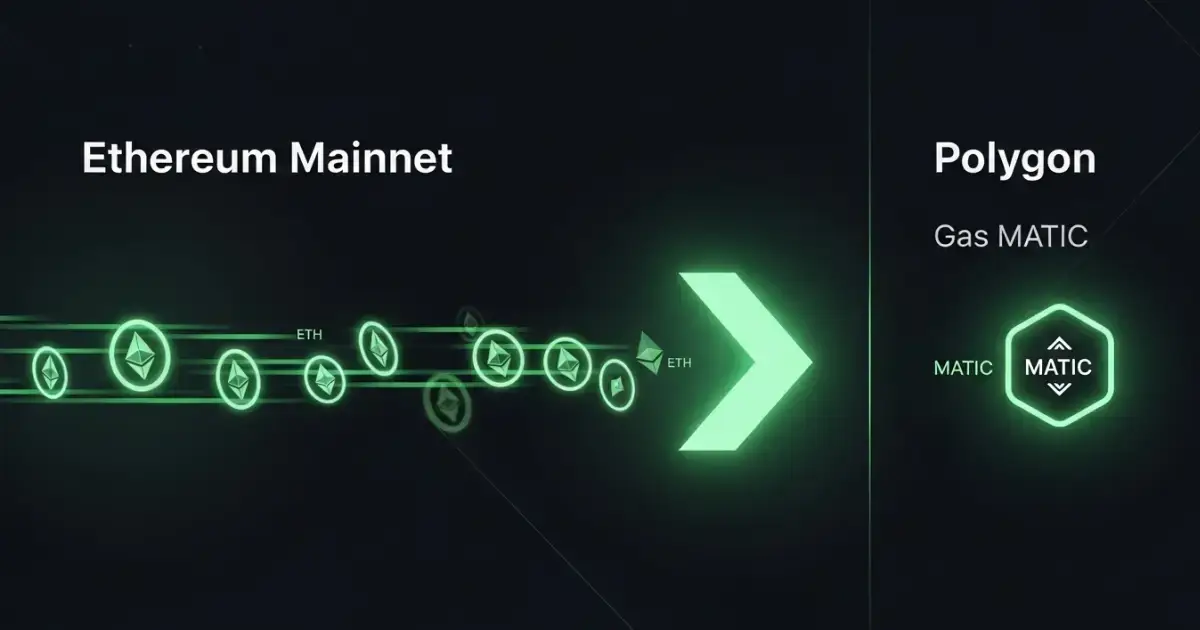
Cross-chain liquidity pools enable value movement between independent blockchain networks while maintaining decentralized access. As the crypto ecosystem expands across multiple chains, users increasingly need ways to swap assets between networks quickly, with transparent pricing and security models they can understand.
Traditional bridges focused mainly on transferring tokens between chains. Modern cross-chain liquidity protocols provide a broader DeFi liquidity infrastructure, allowing users to initiate a trade on one network and receive the target asset on another through a single workflow. Cross-chain technology provides the foundation for moving value and liquidity across blockchain networks.
This article explains how cross-chain liquidity pools work, the main architectures behind them, their security models, and common failure points. It also examines how protocols evaluate cross-chain asset transfer costs, speed, and risk. You will learn how cross-chain liquidity pools enable asset swaps across networks, compare the designs used by different protocols, and follow a practical checklist when evaluating a solution.
Introduction to Cross-Chain Liquidity

Cross-chain liquidity enables assets to move across different blockchain networks, allowing users to access DeFi applications and liquidity beyond a single chain.
Cross-chain liquidity is reshaping decentralized finance (DeFi) by allowing assets to flow between multiple blockchain networks. Instead of being restricted to one blockchain, users can access a broader range of DeFi protocols, services, and opportunities through cross-chain liquidity pools.
These pools aggregate liquidity from different networks, including BNB Chain, Ethereum, and others, allowing users to execute cross-chain transactions, swap tokens, and participate in yield farming without relying on traditional intermediaries.
By combining smart contracts, automated market makers, and cross-chain interoperability protocols, cross-chain liquidity solutions support asset swaps and liquidity provision across multiple blockchains. This reduces friction between networks and improves capital efficiency by allowing assets to be deployed where they are needed.
Deeper liquidity can improve market efficiency and pricing conditions, while liquidity providers can earn fees by supplying assets to pools operating across different blockchain networks. As a result, cross-chain liquidity has become an important component of DeFi infrastructure, expanding access to financial products and services across multiple ecosystems.
Why Cross-Chain Liquidity Matters

Cross-chain liquidity solves a key challenge in a multi-chain ecosystem: moving assets efficiently between networks with different capabilities and liquidity conditions.
The crypto ecosystem is multi-chain, consisting of networks such as Ethereum, BNB Smart Chain, Solana, Polygon, Avalanche, Optimism, Arbitrum, Base, and many application-specific chains. Each network has different characteristics, including fees, throughput, and available applications.
Traders and protocols often choose different chains depending on the specific use case. This creates ongoing demand for cross-chain swaps and capital movement between networks.
Liquidity fragmentation across these networks creates challenges because assets become distributed across separate ecosystems and can be harder to use efficiently. Historically, users relied on centralized exchanges by depositing assets on one chain, trading, and withdrawing on another. This approach works but introduces custody risks and additional delays.
Cross-chain liquidity pools provide a decentralized alternative. Liquidity providers supply assets across multiple chains, while smart contracts route transactions between pools so users can receive the destination asset on the target network.
The benefits include:
Faster settlement: Many cross-chain swaps can complete within minutes because the protocol does not need to wait for full light-client verification of the remote chain.
Improved user experience: A single transaction or simplified workflow replaces the traditional deposit, trade, and withdrawal process.
Capital efficiency for LPs: Liquidity providers can earn fees across multiple chains when the protocol design supports efficient liquidity utilization.
Open access: Users do not need account creation or centralized custody. They connect their wallets and interact directly with protocol liquidity pools.
Deeper market liquidity: Cross-chain liquidity pools aggregate assets from multiple sources, helping reduce slippage and improve trading efficiency.
These advantages involve trade-offs. Security models vary significantly between protocols. Some rely on external validators that confirm messages between chains, while others lock assets and issue synthetic or wrapped representations on the destination network.
Understanding these differences is essential before transferring larger amounts.
How Cross-Chain Liquidity Pools Work: Core Models

Cross-chain liquidity protocols use different architectures to move assets between blockchains, with each model balancing security, speed, and operational complexity differently.
There is no single standard design. Most protocols use one or a combination of the following models. Cross-chain liquidity relies on interoperability protocols and mechanisms that enable asset movement between different blockchain networks.
These models support cross-chain transfers by allowing assets and liquidity to move across multiple blockchains, improving efficiency for decentralized exchanges and swaps.
Model | How It Works | Main Advantages | Main Risks | Common Use Cases |
|---|
Liquidity Network Model | Uses liquidity pools on multiple chains. Users receive assets from the destination pool while protocols rebalance inventory later. | Fast settlement, native assets, flexible pricing | Inventory imbalance, relayer or validator dependency | Stablecoin transfers, fast cross-chain swaps |
Canonical Bridge Model | Locks assets on the source chain and mints canonical representations on the destination chain. | Security aligned with the network, clear redemption flow | Slow withdrawals, limited chain support | Ethereum to L2 transfers |
Light-Client / Proof-Based Bridge | Uses cryptographic proofs and verification contracts to validate cross-chain messages. | Strong trust model, fewer external dependencies | Higher cost, technical complexity | Trust-minimized interoperability |
Synthetic / Wrapped Asset Model | Locks original assets and issues synthetic representations on another chain. | Works across different chains and virtual machines | Custody risk, synthetic asset depeg risk | Long-tail assets and DeFi integrations |
Liquidity Network Model
A liquidity network deploys pools across multiple chains. Liquidity providers (LPs) deposit native assets on each network, such as USDC on Ethereum, USDC on Arbitrum, and USDC on Polygon.
Pooling liquidity from multiple blockchains improves capital efficiency and can reduce slippage by combining assets from different sources into shared liquidity pools.
When a user wants to move USDC from Ethereum to Arbitrum, the protocol matches the withdrawal on Arbitrum against its local pool and later restores the pool balance through inventory rebalancing.
Routing and accounting are managed by smart contracts and, in many systems, supported by off-chain relayers that monitor deposits and trigger corresponding releases. Fees compensate both LPs and relayers.
What are the strengths of the liquidity network model?
Fast settlement: Destination chains can release funds once the protocol confirms the source deposit.
Native assets on both sides: Users can receive native assets instead of wrapped versions.
Flexible pricing: Pool inventory can influence pricing dynamically.
What are the weaknesses of the liquidity network model?
Inventory risk: If users move funds heavily in one direction, a destination pool may run out of liquidity or require higher fees to attract rebalancing.
Reliance on external actors: Some systems depend on off-chain agents or validator sets to confirm messages, requiring users to evaluate the protocol’s security model.
Where you see it
Protocols that focus on fast cross-chain stablecoin swaps often use this model. It is also common among Layer 2 networks, where lower fees make liquidity rebalancing more practical. Some protocols integrate with multiple decentralized exchanges to improve routing and pricing.
Canonical Bridge or Native Bridge Model
Some networks operate canonical bridges that lock tokens on the source chain and mint a canonical representation on the destination chain.
For example, native ETH can be locked on Ethereum mainnet while a canonical representation is minted on an L2 network. When users move assets back, the token is burned on the L2 and the original asset is released on mainnet after the required challenge period.
Strengths
Security alignment: Canonical bridges usually follow the destination network’s own security model and receive support from core development teams.
Clear redemption process: The system burns the representation before releasing the original asset.
Weaknesses
Slower withdrawals: Fraud-proof or validity-proof windows can delay withdrawals. Some bridges also require additional confirmations before releasing assets.
Limited routing flexibility: Canonical bridges typically support only specific chain pairs.
Where you see it
Layer 2 networks such as Optimism and Arbitrum, as well as application-specific chains with official bridge infrastructure, commonly use this model. These networks may require multiple confirmations before finalizing cross-chain transfers.
Light-Client and Proof-Based Bridges
A proof-based bridge uses a light client or verification contract to validate block headers and Merkle proofs from another chain.
When a user deposits assets on chain A, the event can be verified by a contract on chain B without relying on external validators.
Strengths
Strong trust model: Verification occurs on-chain and relies on cryptographic proofs.
No external signers required: These bridges avoid dependence on off-chain validator committees or multi-signature systems.
Weaknesses
Higher maintenance costs: Verifying consensus or finality proofs on-chain can require significant gas.
Technical complexity: Supporting different blockchain architectures increases complexity, and some chain combinations remain unsupported.
Where you see it
These bridges are used between chains with compatible light-client verification systems and in research-focused projects exploring trust-minimized interoperability.
Synthetic or Wrapped Asset Model
In the wrapped model, a protocol locks the original token on chain A and mints a synthetic representation on chain B.
The synthetic asset can then be traded or used within DeFi applications. When users redeem the asset, the synthetic token is burned and the original token is released.
Strengths
Broad compatibility: Works across chains with different virtual machines or consensus models.
DeFi integration: Synthetic assets can be integrated with existing DEXs and lending protocols on the destination chain.
Weaknesses
Custody risk: If the entity holding the original assets is compromised, users may face losses.
Market risk: Synthetic assets may trade at a discount if confidence in the backing mechanism declines.
Where you see it
Wrapped Bitcoin on Ethereum is a well-known example. Many cross-chain systems continue to use wrapped assets for long-tail tokens.
Order Flow: What Happens During a Cross-Chain Swap

While implementation details vary between protocols, a typical cross-chain asset transfer through a liquidity network follows this process:
Quote: The user requests a quote showing the expected output amount, applicable fees, route information, and slippage limits.
Lock or deposit: The user signs a transaction on the source chain to lock or swap the input token into the protocol’s source liquidity pool.
Observation: A relayer or validator set detects the confirmed deposit and submits a message to the destination chain.
Release or mint: The destination pool releases the requested asset to the user’s address, or a synthetic asset is minted depending on the protocol model.
Rebalancing: The protocol later adjusts inventory between pools to restore balance. This process may involve on-chain trades or off-chain settlement.
In proof-based bridges, the third step is replaced by on-chain verification of a Merkle proof. In canonical bridges, the fourth step may be delayed by a challenge period.
Understanding these differences helps users estimate settlement times and evaluate security trade-offs before transferring assets.
Security Considerations and Failure Modes

Security evaluation is one of the most important factors when choosing a cross-chain liquidity protocol because different architectures introduce different risks.
The main risk categories include:
1. Validator or relayer compromise
If a validator committee signs an invalid message, funds could be released to an attacker-controlled address. Protocols may reduce this risk through larger validator sets, stake-slashing mechanisms, and monitoring systems.
2. Smart contract bugs
Logic errors in locking, minting, pricing, or accounting mechanisms can drain liquidity pools. Users should review audit reports, bug bounty programs, and whether deployed contracts match the audited code version.
3. Liquidity exhaustion
One-way transaction flows can drain destination pools, causing longer settlement times or higher fees until liquidity is restored.
4. Price oracle manipulation
Protocols that rely on external price oracles for cross-chain swaps may be vulnerable if oracle designs fail during low-liquidity conditions.
5. Wrapped asset depegging
If custodians lose access to original assets or their private keys are compromised, synthetic assets may lose their expected value relative to the underlying asset.
Security trade-offs are unavoidable. Proof-based bridges can reduce trust assumptions but may require more time and higher costs. Liquidity networks offer faster execution and improved capital efficiency but require strong operational controls.
Users should match the protocol’s security model with the amount being transferred and their acceptable level of delay.
Fees, Slippage, and Finality

Cross-chain swap costs include more than transaction fees. Users should consider protocol fees, liquidity conditions, and settlement time before transferring assets.
When swapping crypto assets across networks, the total cost may include:
Trading fee: Paid to liquidity providers on the source chain and, in some cases, the destination chain.
Bridge fee or protocol fee: Paid to relayers, validators, or the protocol treasury.
Gas on both chains: Required for transactions on the source chain and, depending on the design, destination claim transactions.
Slippage: The difference between the quoted price and the final execution price when pool inventory changes.
Network congestion: High activity can increase transaction costs and delay processing, especially during periods of heavy cross-chain demand.
Finality time depends on source-chain confirmations, protocol observation intervals, and any challenge windows required by the destination chain.
Many liquidity networks can complete delivery within minutes. Proof-based bridges generally prioritize stronger verification guarantees and may require additional time. Network congestion can also delay finality by slowing transaction confirmation.
How Liquidity Providers Earn and Manage Risk
LPs supply assets to liquidity pools across multiple chains. In return, they may receive:
A share of trading fees generated by user transactions.
Additional protocol incentives in some liquidity programs.
Rebalancing rewards when assets need to be moved to restore pool balance.
Key risks for LPs include:
Inventory imbalance: One-directional flows can leave LPs holding excess assets on one chain with limited opportunities to redeploy capital.
Smart contract risk: LP funds are managed through protocol contracts, making audits and contract history important evaluation factors.
Market risk: LPs holding volatile assets may face price changes during rebalancing periods.
LPs should monitor pool utilization, average holding periods, rebalancing incentives, and volume distribution across different routes.
Pools with balanced two-way activity generally maintain healthier liquidity conditions. Active buyers and sellers help reduce inventory pressure and minimize price impact.
Evaluating a Cross-Chain Liquidity Protocol: A Practical Checklist
Use the following questions before committing funds or completing larger transfers:
Security model: Is the protocol based on proof verification, validator committees, or liquidity networks? What assumptions does the system require users to trust?
Audits: Are there recent audits from reputable security firms? Were high-severity findings resolved?
Validator transparency: If a committee model is used, who operates the validators and how are keys managed? Are stake-slashing mechanisms or insurance options available?
Liquidity depth: How much liquidity is available on each route, and how much of the pool is typically used during peak activity?
Quote clarity: Does the interface clearly display fees, estimated completion time, and minimum output?
Rebalancing strategy: How does the protocol restore liquidity when assets flow heavily in one direction? Are there incentives for LPs to rebalance pools?
Incident history: Has the protocol experienced outages, depegs, or security incidents? How were these events handled?
Supported assets: Will you receive the native asset on the destination chain or a wrapped representation?
User operations: Is a manual claim required on the destination chain, or is delivery automatic?
Governance: Are protocol parameters managed transparently through a DAO or other governance system? Are upgrade delays implemented?
Document the answers before using a route. A route that appears cheap but fails multiple security checks may not be suitable for larger transfers.
Common Use Cases
Cross-chain liquidity enables different types of users to move assets between networks for trading, DeFi participation, and treasury management.
Arbitrage and market-making
Traders move stablecoins or wrapped assets between chains to capture price differences. Fast cross-chain DeFi liquidity can influence the efficiency of these strategies.
Yield optimization
Users move stablecoins and other assets to networks where lending opportunities or liquidity incentives may be more attractive. These strategies often involve transferring multiple assets across chains to manage positions and liquidity exposure.
User on-ramping
A user may hold USDC on a low-fee chain and want to purchase an NFT on Ethereum. A cross-chain swap can deliver ETH directly to the destination wallet.
DAO treasury management
DAOs maintain diversified treasuries across multiple networks and may need to rebalance assets where their products operate. Managing assets across different blockchains is an important part of treasury operations.
Liquidity networks allow controlled treasury movements while maintaining transparent on-chain records.
User Experience and Community Involvement
User experience and community participation play an important role in the adoption and long-term development of cross-chain liquidity solutions.
A clear user experience helps users understand transaction flows, fees, and potential risks when interacting with DeFi protocols. Intuitive interfaces and transparent information allow users to make better decisions when moving assets across multiple blockchain networks.
By simplifying transactions and improving communication between networks, cross-chain liquidity providers can support broader participation across the DeFi ecosystem.
Community involvement is also important. Active communities of users, developers, and liquidity providers contribute to protocol improvements, security reviews, and ongoing development.
Educational resources, including guides, tutorials, and FAQs, help users understand both the benefits and risks of cross-chain liquidity, including smart contract vulnerabilities, security concerns, and wrapped token mechanisms.
By focusing on usability and community engagement, cross-chain liquidity solutions can create a more accessible DeFi environment where users manage assets across different blockchain networks with greater confidence.
Best Practices for Users
Start with a small test: Before transferring a large amount, send a small test transaction using the same route and asset pair. Confirm the destination token and wallet address before continuing.
Verify destination token standard: Receive native tokens whenever possible. If a wrapped token is delivered, understand the custodian structure and redemption process.
Use official interfaces: Fake websites and phishing interfaces can intercept transactions. Always verify URLs through official documentation and trusted bookmarks.
Monitor gas and slippage settings: During periods of high network activity, adjust gas settings appropriately and review slippage limits before confirming transactions.
Track route health: Many protocols display pool inventory, estimated completion times, and route conditions. Avoid routes with insufficient destination liquidity.
Split large transfers: Breaking large transfers into smaller transactions can reduce the impact of a single failure and may improve execution conditions in shallow liquidity pools.
Keep records: Save transaction hashes, quotes, and timestamps for accounting purposes and for troubleshooting if issues occur.
Avoid unfamiliar routes during outages: If a major blockchain network experiences congestion or a protocol incident, wait until normal operations resume.
Prefer trust-minimized options for large treasuries: For high-value transfers, proof-based or canonical bridges may provide stronger security assumptions even if settlement takes longer.
Plan for the return trip: If assets may need to be moved back later, check reverse-route fees and estimated settlement times in advance.
Best Practices for Liquidity Providers
Understand inventory dynamics: Review historical flows between chain pairs and avoid pools that frequently experience severe imbalance.
Diversify across assets and chains: Spread exposure across different assets and networks to reduce the impact of a single-chain failure or depeg event.
Check reward sustainability: If incentives are paid in protocol tokens, review emission schedules and governance controls.
Use monitoring dashboards: Track pool utilization, net flows by route, earned fees, and pending rebalancing activity.
Review upgrade policies: Deposited liquidity should not be exposed to unexpected contract changes without appropriate governance controls or timelocks.
Secure LP keys: For meaningful liquidity positions, consider using hardware wallets or multi-signature wallets to improve key security.
Assess insurance options: Some protocols and third-party insurers provide coverage options for bridge failures or smart contract exploits. Review coverage terms and exclusions carefully.
Rebalance actively: Moving assets to pools that need additional inventory may generate additional incentives, but LPs should evaluate gas costs and execution risks before making adjustments.
Simulate worst-case exits: Consider the available exit routes during chain outages and estimate acceptable execution conditions before emergencies occur.
Stay engaged with governance: Participate in decisions related to fee structures, validator changes, and security improvements that affect both LPs and users.
Cross Chain Solutions and Innovations
Cross-chain solutions are addressing fragmented liquidity and interoperability challenges by connecting blockchain networks through bridges, liquidity pools, and communication protocols.
The rapid development of cross-chain solutions is helping solve major challenges in decentralized finance, including fragmented liquidity and limited communication between blockchain networks.
Cross-chain bridges, liquidity pools, and interoperability protocols support cross-chain transactions by enabling users to transfer assets and access liquidity across multiple chains. Bridges primarily facilitate asset transfers between networks, while liquidity pools aggregate assets to provide shared liquidity across different ecosystems.
Interoperability protocols further improve communication between blockchains, allowing users to interact with DeFi applications and execute cross-chain transactions more efficiently.
Technologies such as hash time-locked contracts, token swaps, and atomic swaps introduce additional mechanisms for improving security and efficiency. These solutions aim to improve capital efficiency, reduce transaction costs, and expand access to liquidity across blockchain networks.
By reducing the limitations caused by fragmented liquidity, cross-chain solutions allow users to access a wider range of assets and DeFi services while creating a more connected blockchain ecosystem.
Future of Cross-Chain Liquidity
Cross-chain liquidity is expected to remain an important part of DeFi infrastructure as blockchain ecosystems continue to expand.
The role of cross-chain liquidity in decentralized finance is likely to grow as more blockchain networks and applications emerge. As users seek access to more assets and services across different ecosystems, demand for reliable cross-chain liquidity solutions will continue to increase.
Developments in areas such as proof-of-stake consensus mechanisms, decentralized exchanges, and interoperability protocols are improving price discovery, reducing slippage, and creating more efficient cross-chain user experiences.
Cross-chain liquidity will continue supporting activities such as yield farming, liquidity mining, and other DeFi applications by allowing users to move capital across multiple networks.
As the technology develops, future improvements may include stronger security mechanisms, better interoperability between chains, and more user-friendly interfaces.
Cross-chain liquidity remains a core component of the multi-chain ecosystem, helping connect blockchain networks and expanding access to decentralized financial services.
Conclusion
Cross-chain liquidity pools provide the infrastructure needed for moving assets across a multi-chain ecosystem, but users must understand the trade-offs behind each design.
Cross-chain liquidity pools are an important building block of a multi-chain ecosystem. They enable cross-chain asset transfers while maintaining the open access and transparency that define decentralized finance.
To use them safely, users should match the protocol’s security model with the value being transferred, review audits and governance structures, monitor liquidity conditions, and understand whether the destination asset is native or wrapped.
For liquidity providers, opportunities exist in pools with balanced transaction flows and effective rebalancing mechanisms. Managing inventory risk, diversifying across chains, and monitoring pool activity remain essential parts of liquidity management.
By following the evaluation frameworks and operational practices covered in this guide, users can better understand cross-chain swaps, including costs, settlement times, and security considerations.
Cross-chain DeFi liquidity continues to evolve, but careful security evaluation, transparent pricing, and disciplined operations remain the foundation for participating in a multi-chain environment.