Axie Infinity is one of the most recognizable blockchain games and one of the projects that helped bring Web3 gaming into the mainstream crypto market. Developed by Sky Mavis, the Axie Infinity ecosystem combines NFT-based characters, competitive gameplay, digital ownership, and an in-game economy built around blockchain assets.
At the center of this ecosystem is AXS, or Axie Infinity Shards. AXS is the governance token of the Axie ecosystem and has historically been used for staking, breeding, marketplace transactions, rewards, and participation in community governance.
Axie Infinity's trajectory has also highlighted one of the biggest challenges facing blockchain gaming: maintaining player engagement after the initial speculative incentives fade. The game attracted millions of players during the 2021 Play-to-Earn boom, but its active user base later declined significantly. The project has since shifted toward a broader gaming ecosystem, with Axie Origins, Classic, land-based gameplay, and new experiences designed to make the Axie universe less dependent on token rewards.
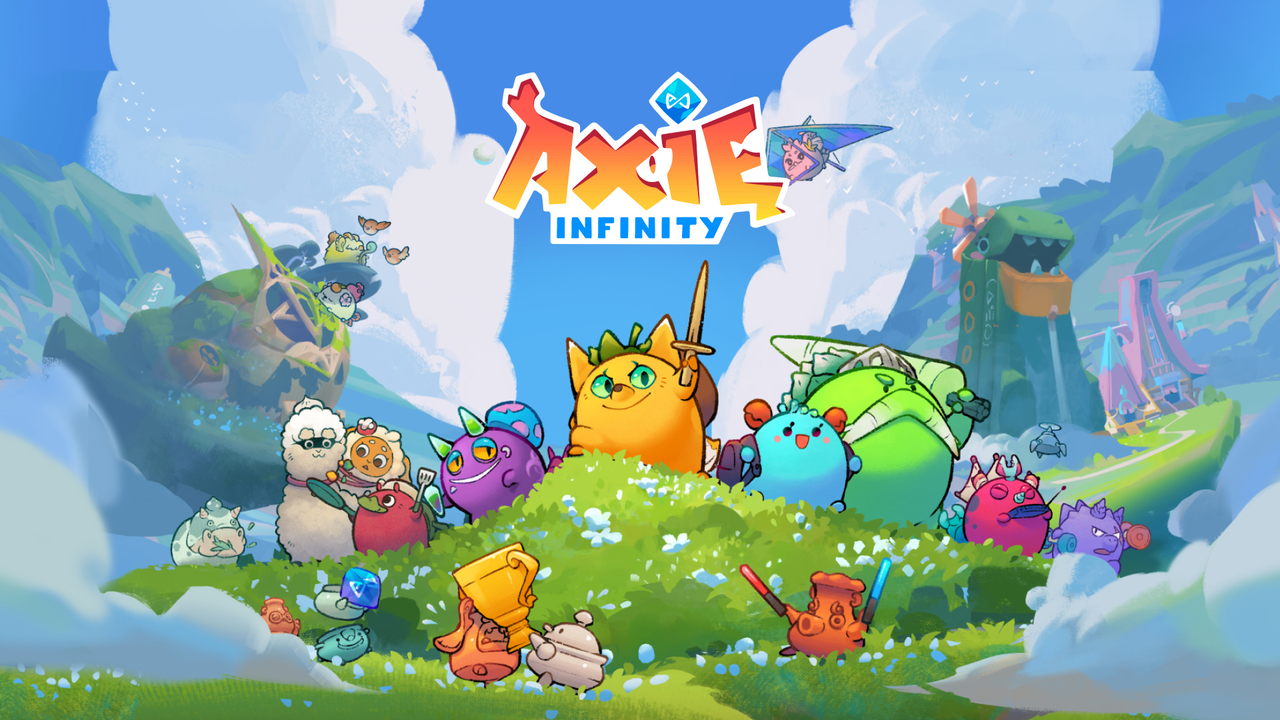
Data Source: COINCU
What Is AXS? Understanding the Axie Infinity Token
AXS, or Axie Infinity Shards, is the native governance token of the Axie Infinity ecosystem. It is designed to connect players, creators, and other participants within the Axie economy.
AXS has historically served several functions. Holders can stake AXS to receive staking rewards, participate in governance, and use the token in certain activities within the Axie ecosystem. AXS has also been used for breeding Axies and transactions in the Axie NFT marketplace.
The token is closely connected to the Axie community treasury. Fees generated from activities such as marketplace trading and Axie breeding have historically contributed to the Community Treasury, which is intended to be governed by AXS stakers as the ecosystem becomes increasingly decentralized.
However, the role of AXS is evolving. In 2026, Sky Mavis introduced Bonded AXS, or bAXS, as an in-game token designed to have the same utility as AXS within Axie Core while encouraging users to keep rewards circulating inside the ecosystem. bAXS can be used for activities such as breeding, evolving Axies, forging items, and staking.
This change is important because it represents a shift away from the earlier model in which AXS itself was distributed broadly as a gameplay reward. As more rewards move toward bAXS, AXS increasingly functions as the reserve and governance asset of the broader Axie economy.
How Does Axie Infinity Work?
Axie Infinity combines blockchain-based ownership with traditional game mechanics. Players can collect Axies, compete in battles, breed new Axies, and participate in different games and experiences across the ecosystem.
Unlike a conventional game where characters and items exist only inside a publisher-controlled database, Axie assets are represented as blockchain-based NFTs. Players can therefore own, trade, and use these assets across supported parts of the Axie ecosystem.
Today, the Axie universe includes multiple experiences rather than a single game. Players can access Axie Infinity: Origins, Axie Classic, Homeland and other games through the Axie ecosystem.
Axies and NFT-Based Gameplay
Axies are the central characters of the ecosystem. Each Axie is an NFT with its own attributes, characteristics, and genetic composition. Players can acquire Axies and use them in supported games. In Axie Origins, for example, players can use NFT Axies in battles, while other Axie experiences provide different ways to use or interact with Axie NFTs.
The NFT model gives Axies an economic dimension beyond their gameplay utility. Players can buy and sell Axies through the ecosystem's NFT marketplace, while collectors can value Axies based on their traits, rarity, history, and potential utility. Axies can also evolve through different mechanics. Their characteristics and genetics can influence the attributes inherited by offspring, creating a breeding system that adds another layer of strategy and scarcity to the NFT economy.
Battles, Breeding, and In-Game Economy
Battles have traditionally been one of the core gameplay loops in Axie Infinity. Axie Classic uses turn-based combat mechanics, while Axie Origins introduced a different battle system and additional gameplay features. Over time, Sky Mavis has continued adding new modes, quests, tournaments, and progression systems to make the games less dependent on simple token farming.
Breeding is another important component of the Axie economy. Players can combine two Axies to create offspring with inherited genetic characteristics. Breeding requires both AXS and SLP, with the AXS cost currently set at 0.5 AXS per breeding transaction, while the amount of SLP required depends on the parents' previous breeding counts. Axies can be bred a maximum of seven times.
This creates an economic loop connecting gameplay, NFTs, and tokens. Players can acquire Axies, use them in games, breed them, and trade the resulting NFTs. The sustainability of this model, however, depends heavily on organic player demand rather than purely speculative demand for rewards.
The Ronin Network and Axie Infinity
Ronin is the blockchain infrastructure closely associated with Axie Infinity and was originally developed by Sky Mavis to provide a gaming-focused environment for the Axie ecosystem.
When Ronin launched in 2021, Axie Infinity was its first major game. The network was designed to provide lower-cost transactions and a more suitable infrastructure for blockchain gaming than users would typically experience on Ethereum.
Over time, Ronin expanded beyond Axie Infinity and became a broader gaming ecosystem. In 2025, Ronin reported more than 800,000 monthly active users and 31 million wallets across its ecosystem, with games such as Pixels and other applications joining the network.
Ronin completed its migration back to Ethereum infrastructure in May 2026 while continuing to operate as a gaming-focused network. The transition was presented as part of Ronin's broader effort to bring its gaming infrastructure and ecosystem to Ethereum.
For Axie Infinity, Ronin remains important because it provides the infrastructure for wallets, NFTs, transactions, and other blockchain interactions associated with the game's ecosystem.
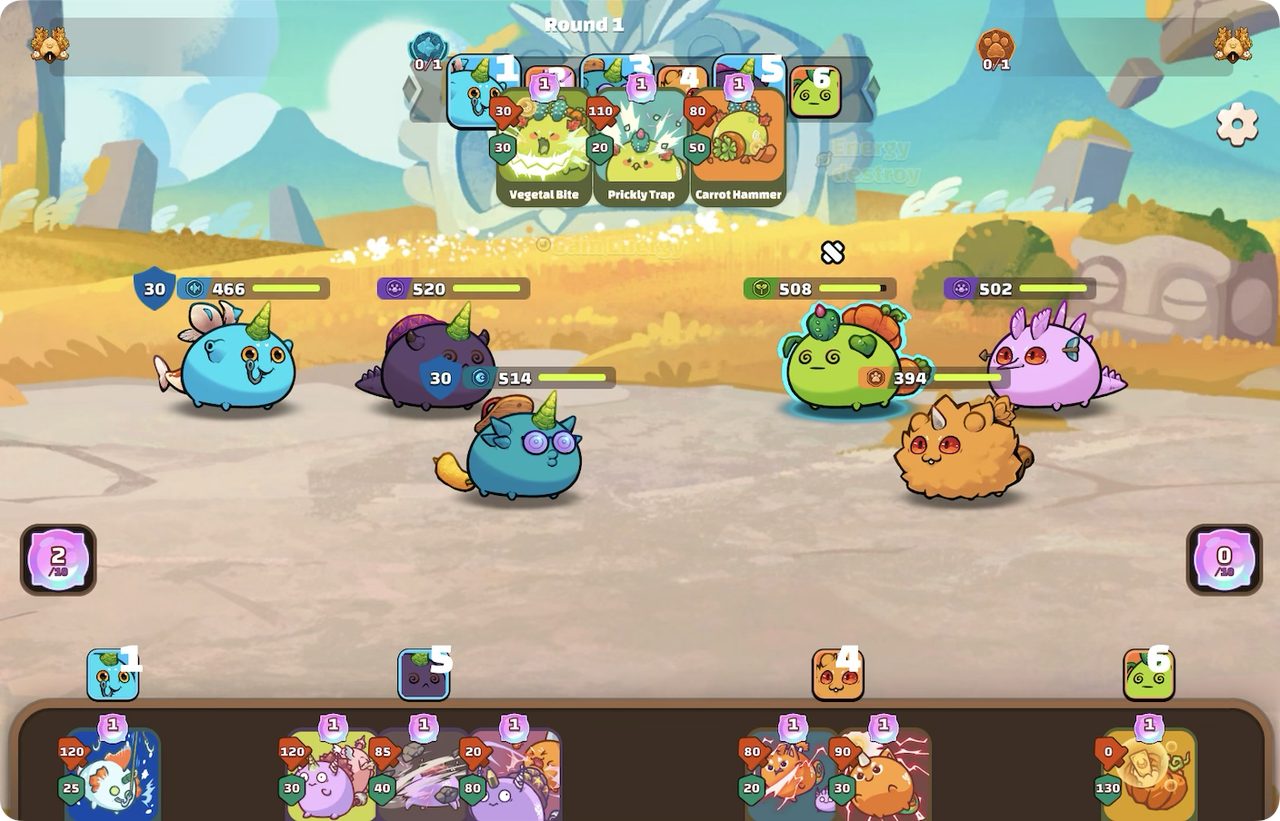
Data Source: Axie Infinity
How Has the Axie Infinity Player Base Changed?
Axie Infinity experienced one of the largest user surges in blockchain gaming history during 2021. The game's Play-to-Earn model attracted a large number of players, particularly in emerging markets where players could potentially generate income through gameplay.
However, the model proved difficult to sustain when token prices declined and the supply of in-game rewards grew faster than organic demand. As the broader crypto market entered a bear cycle, Axie Infinity's player activity fell substantially from its previous peak.
Third-party player estimates also showed that Axie maintained a meaningful user base during 2024 and early 2025, although the numbers remained well below the extraordinary levels associated with its 2021 peak. One third-party tracker estimated around 200,000 monthly players and roughly 50,000 daily active players in early 2025. These figures should be treated as estimates rather than official user statistics.
The more important change is therefore qualitative as well as quantitative. Axie Infinity has been moving away from a pure Play-to-Earn model toward a broader gaming ecosystem. The introduction of new gameplay modes, creator programs, land-based experiences, and the bAXS economy reflects an effort to create reasons for players to remain active even when token rewards are not the primary incentive.
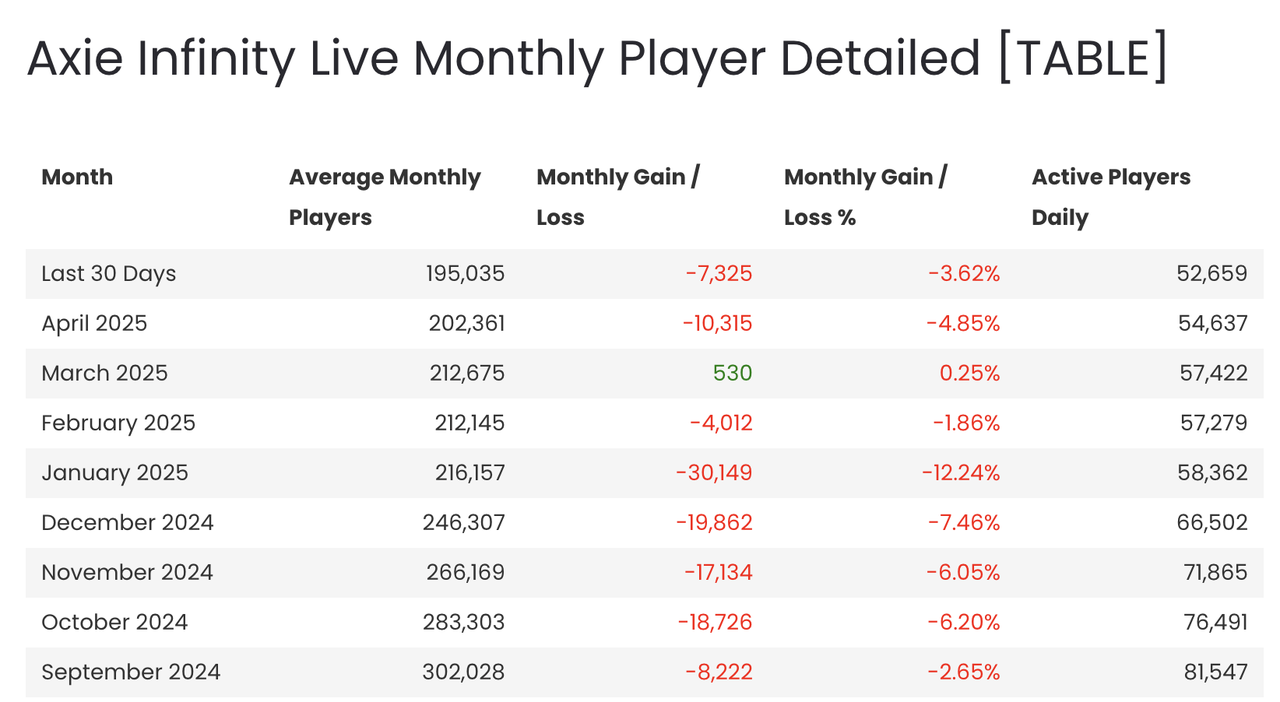
Data Source: Active Player
AXS Tokenomics
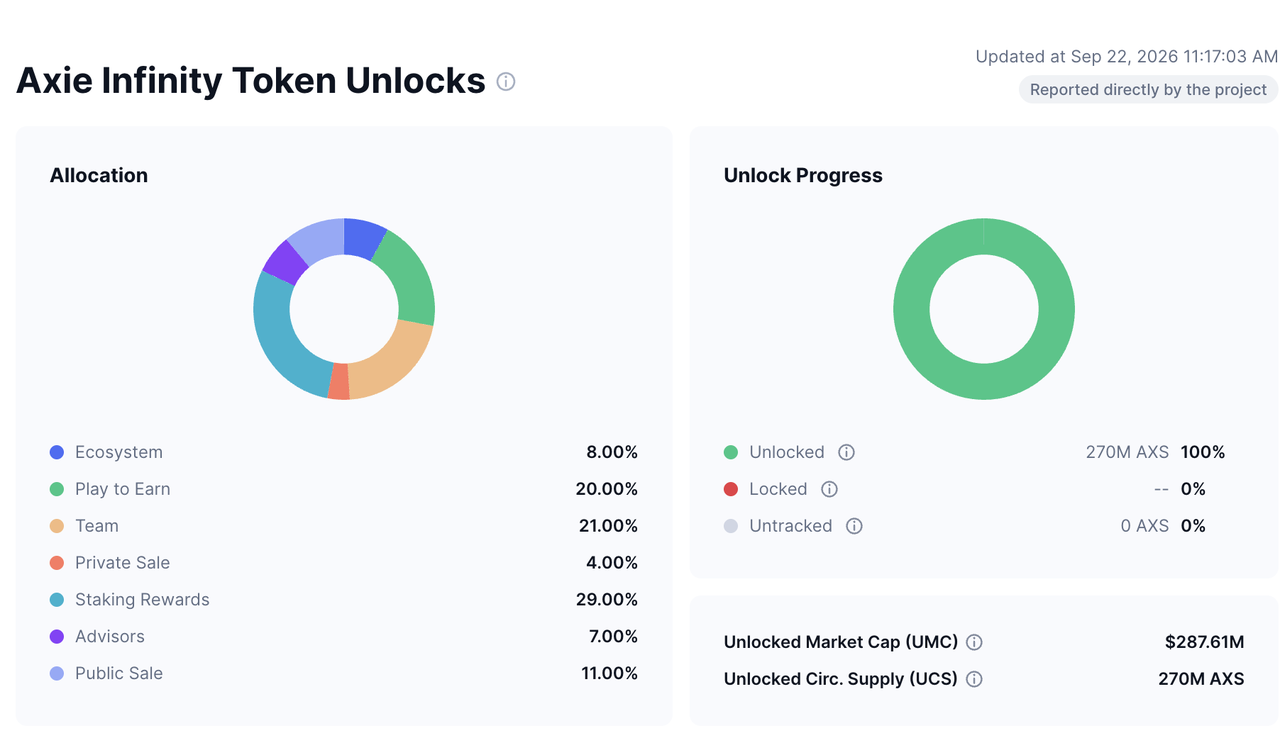
AXS has a maximum supply of 270 million tokens. The token was designed with several allocation categories, including the community treasury, staking rewards, the team, advisors, investors, and ecosystem-related programs. The original AXS model was closely linked to staking and gameplay. AXS holders could stake their tokens to receive newly issued AXS rewards, while players could earn AXS through supported activities.
The introduction of bAXS in 2026 represents an important evolution in this model. According to Sky Mavis, bAXS is designed as a bonded in-game token backed by AXS and can be used for activities including breeding, evolving Axies, forging items, and staking. The project also began shifting certain gameplay rewards from AXS to bAXS.
This distinction is important for understanding future AXS demand. Rather than distributing AXS directly across every part of the in-game economy, the ecosystem can use bAXS for gameplay rewards while retaining AXS as the underlying reserve and governance asset.
Data Source: Coinmarketcap
AXS Price History
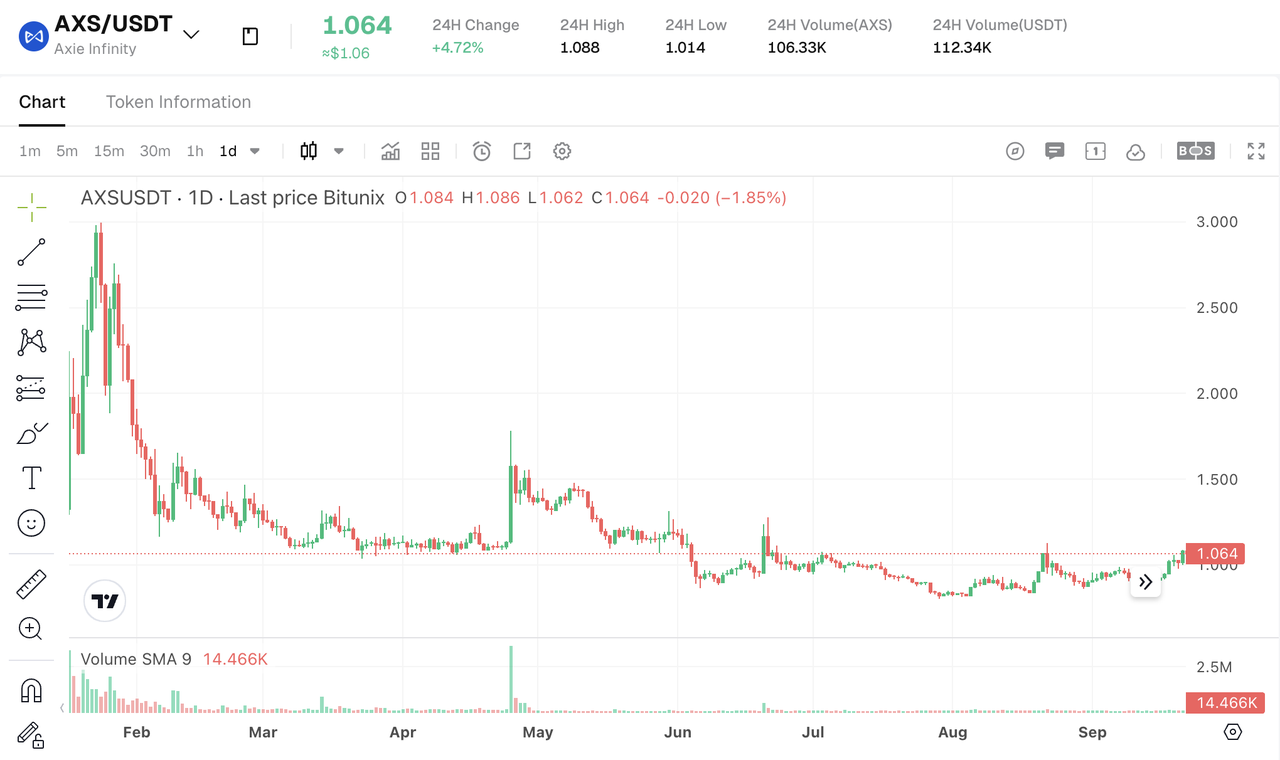
AXS became one of the strongest performers in the blockchain gaming sector during 2021.
The token experienced a major rally as Axie Infinity's user base expanded and the Play-to-Earn model attracted significant attention from crypto investors. The growth of NFT trading, Axie breeding, and in-game economic activity further strengthened the token's market narrative.
AXS reached its all-time high of approximately $165.37 in November 2021. The token subsequently entered a prolonged decline as the broader crypto market weakened and the Play-to-Earn model came under pressure.
The decline reflected both macro market conditions and project-specific challenges. As speculative demand for NFTs and blockchain gaming assets weakened, the economic model that had driven Axie Infinity's rapid expansion became increasingly difficult to maintain.
AXS has therefore become an example of how closely gaming tokens can be tied to both user activity and market expectations. Its future valuation depends not only on broader crypto market conditions but also on whether Axie Infinity can build a sustainable gaming economy around its growing collection of games and experiences.
Data Source: Bitunix
How to Buy AXS
Users looking to trade AXS can currently access the token through centralized exchanges that support AXS or through decentralized trading platforms compatible with the Ronin ecosystem. For users familiar with on-chain trading, a Ronin-compatible wallet can be connected to supported decentralized applications to trade or manage AXS. Those who prefer a simpler trading interface may instead choose a centralized exchange that supports AXS.
Buying AXS through centralized cryptocurrency exchanges such as Bitunix allows users to trade through a centralized intermediary and, depending on the platform, use fiat currencies or stablecoins such as USDT to purchase crypto assets. Some platforms may also support instant purchases by credit card, lowering the barrier to entry for new users. Before trading, users generally need to register an account and complete identity verification (KYC) to comply with applicable Anti-Money Laundering (AML) and Counter-Terrorist Financing requirements. Bitunix provides compliance and risk-control measures, including hot and cold wallet separation, multi-signature mechanisms, and real-time monitoring, to help protect user assets.