Apple Inc. (NASDAQ: AAPL) is one of the world's largest technology companies, known for its iPhone, Mac, iPad, and other consumer electronics. Beyond hardware, Apple has built a powerful ecosystem of software, digital services, and subscriptions that encourages long-term customer loyalty and generates recurring revenue.
In 2026, Apple continues to expand its product portfolio with new technologies, including its first foldable iPhone, more advanced Apple Intelligence capabilities, and new generations of MacBook Pro. Understanding Apple's business model, financial performance, and product strategy can help investors evaluate the company's long-term growth potential and AAPL stock.
Data Source: ITPro
What Is Apple? Understanding the Global Technology Company
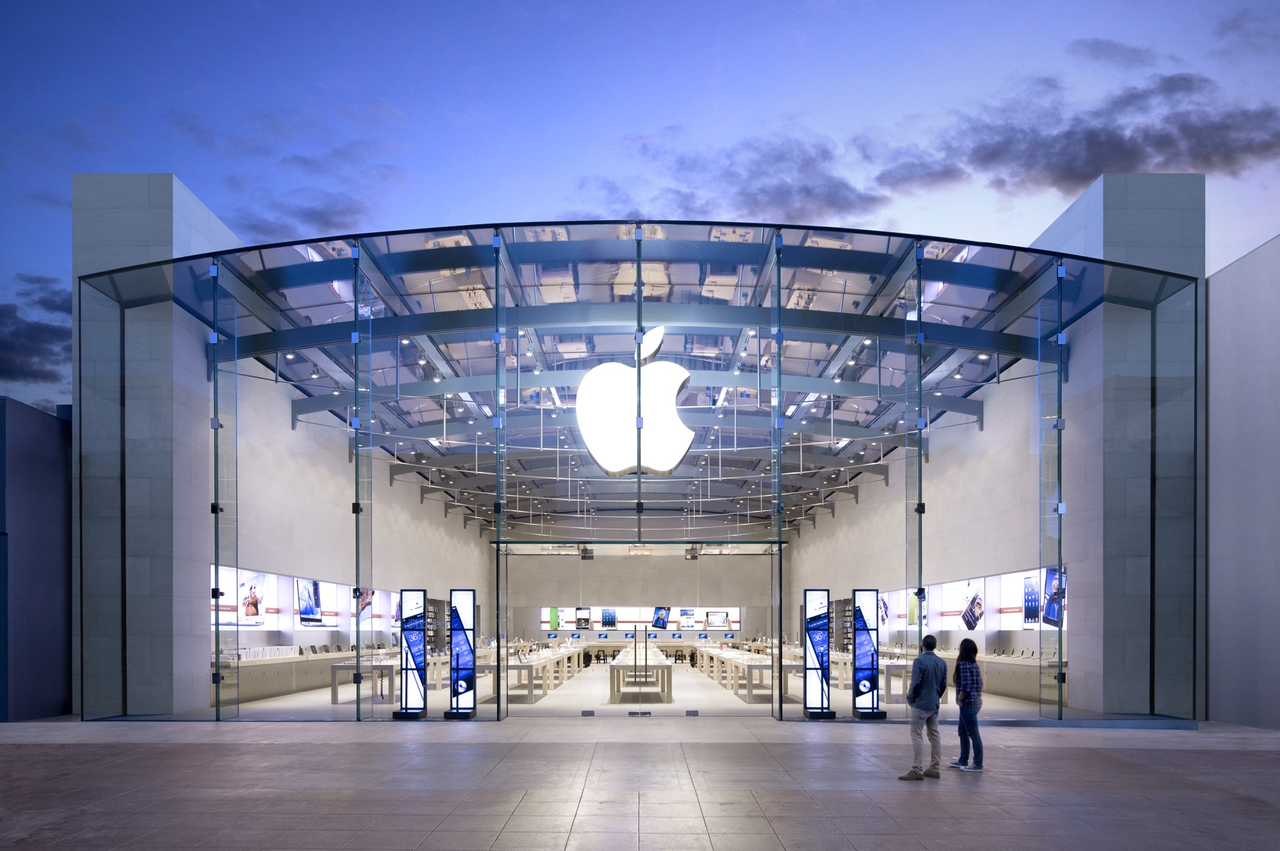
Apple Inc. is an American technology company headquartered in Cupertino, California. Founded in 1976 by Steve Jobs, Steve Wozniak, and Ronald Wayne, the company initially focused on personal computers before expanding into smartphones, tablets, wearable devices, and digital services.
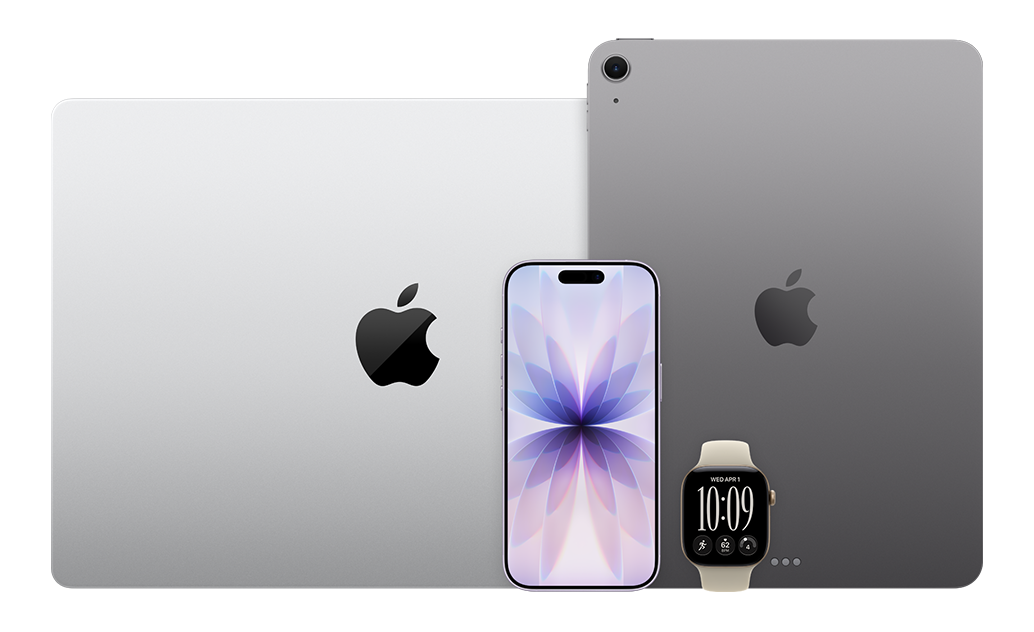
Apple's product ecosystem includes the iPhone, Mac, iPad, Apple Watch, AirPods, and Apple Vision Pro. Its software platforms, including iOS, macOS, iPadOS, and visionOS, connect these devices and provide a consistent user experience across different products.
Apple's competitive advantage comes from its combination of hardware design, proprietary software, brand recognition, and customer loyalty. Rather than competing solely on device specifications, the company focuses on delivering an integrated ecosystem that makes it convenient for customers to continue using multiple Apple products and services.
Data Source: Apple
Apple's Business Model: How Does Apple Make Money?
Apple generates revenue primarily through two business segments: hardware products and services. Its product sales provide a large share of total revenue, while its services business contributes recurring income and generally delivers higher gross margins. This combination allows Apple to benefit from both new device purchases and the continued activity of its existing customer base.
iPhone and Hardware Sales
The iPhone remains Apple's most important revenue driver, supported by a broad range of models targeting different consumer segments. Other major hardware categories include Mac computers, iPad tablets, Apple Watch, AirPods, and accessories.
Apple's hardware strategy focuses on premium positioning, product differentiation, and close integration between devices. Customers who already own an iPhone may be more likely to purchase an Apple Watch, MacBook, or AirPods because these products work seamlessly together.
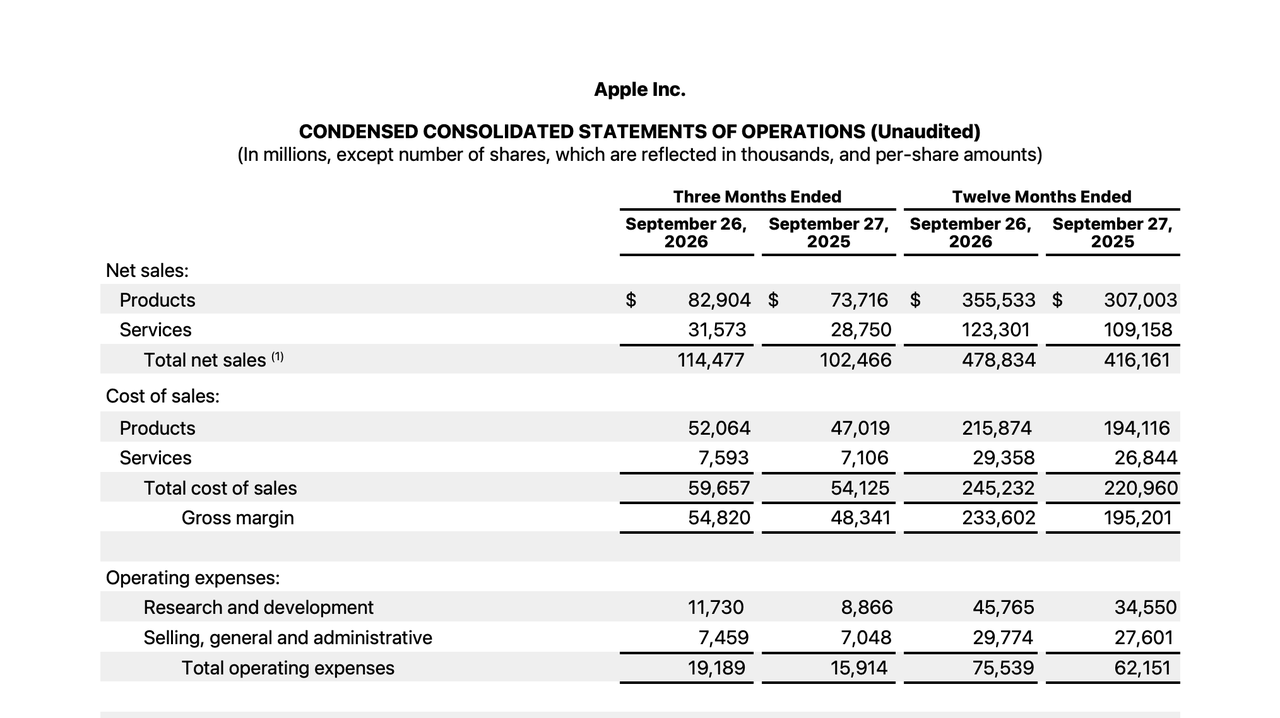
In fiscal year 2026, Apple generated approximately $355.5 billion in product revenue, accounting for around 74% of total net sales. iPhone revenue alone reached approximately $254.1 billion, making it the company's largest individual product category.
Services Revenue and Apple's Ecosystem
Apple's services business includes the App Store, Apple Music, Apple TV+, iCloud, Apple Pay, AppleCare, advertising, and other subscription-based offerings. These services allow the company to generate revenue beyond the initial sale of its devices.
The ecosystem also creates opportunities for cross-selling. For example, an iPhone user may subscribe to iCloud storage, purchase applications through the App Store, and pay for Apple Music or Apple TV+.
Services generated approximately $123.3 billion in fiscal year 2026, representing around 26% of Apple's total revenue. More importantly, the segment achieved a gross margin of 76.2%, significantly higher than the 39.3% gross margin recorded by hardware products.
Apple's Product Lineup: iPhone, MacBook, and Vision Pro
Apple's product launches play an important role in driving revenue growth, improving profitability, and shaping investor expectations. New product generations can stimulate consumer upgrade demand, increase average selling prices, and expand Apple's addressable market, potentially translating into higher revenue and earnings. For AAPL investors, the commercial success of major product launches is therefore an important indicator of the company's future financial performance and stock valuation. In 2026, Apple's product lineup expanded with several major releases, including iPhone Duo, the iPhone 18 Pro series, and an upgraded MacBook Pro.
iPhone Duo: Apple's First Foldable iPhone
In September 2026, Apple introduced the iPhone Duo, its first foldable smartphone. The device represents a major change in Apple's iPhone strategy, allowing the company to enter the foldable smartphone market with its own approach to hardware design and software integration.
The iPhone Duo features a 7.6-inch internal display when unfolded and a 5.4-inch external display when folded. Its design incorporates a precision hinge and a specialized nano-texture display finish intended to reduce glare.
The foldable design creates new opportunities for multitasking, gaming, video consumption, and mobile productivity. For Apple, the iPhone Duo could attract customers seeking a larger screen without carrying a separate tablet, while potentially supporting a higher average selling price.

Data Source: Youtube
iPhone 18: Features, Upgrades, and Market Potential
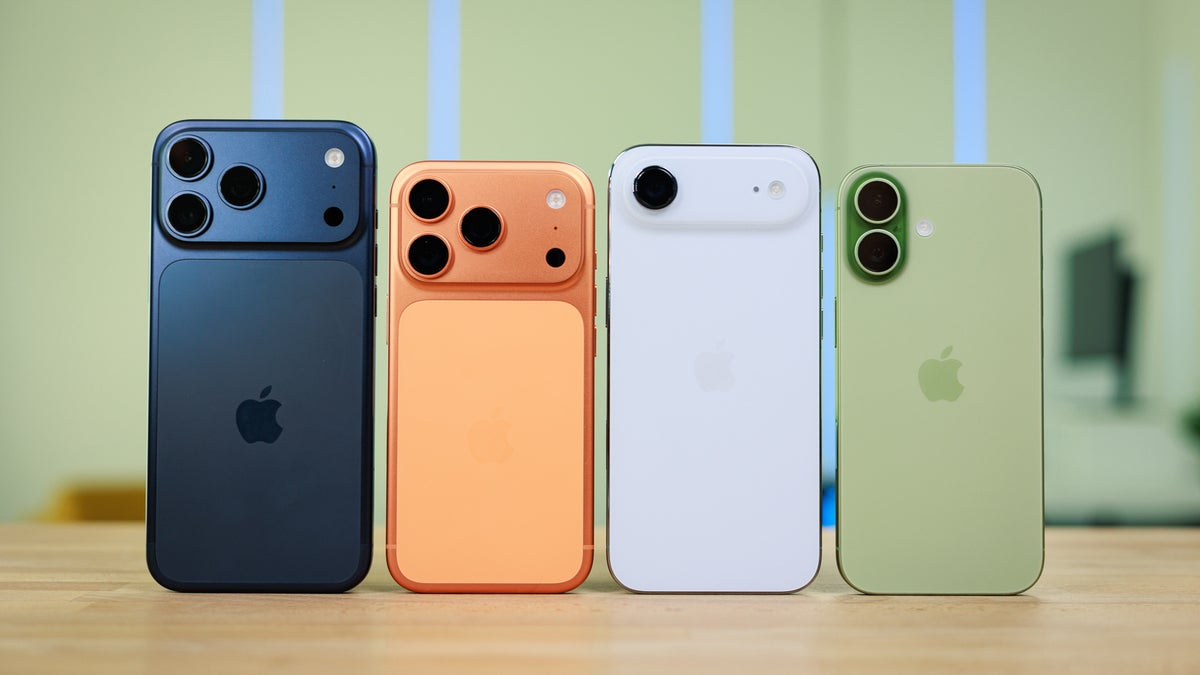
The iPhone 18 generation represents another important stage in Apple's smartphone development. The iPhone 18 Pro and iPhone 18 Pro Max were introduced in September 2026, featuring upgraded cameras, improved performance, and deeper integration with Apple Intelligence.
Both models are powered by Apple's A20 Pro chip, built using a 2-nanometer manufacturing process. The new chip includes dedicated Neural Accelerators designed to improve on-device AI processing, while the 48MP Fusion Main camera introduces variable aperture for greater photographic flexibility.
Other upgrades include a redesigned Dynamic Island, improved battery life, and a next-generation vapor chamber for sustained performance. The integration of Siri AI also makes the iPhone 18 Pro lineup an important platform for Apple's broader AI strategy.
Data Source: PhoneArena
MacBook Pro: Apple's Professional Computing Lineup
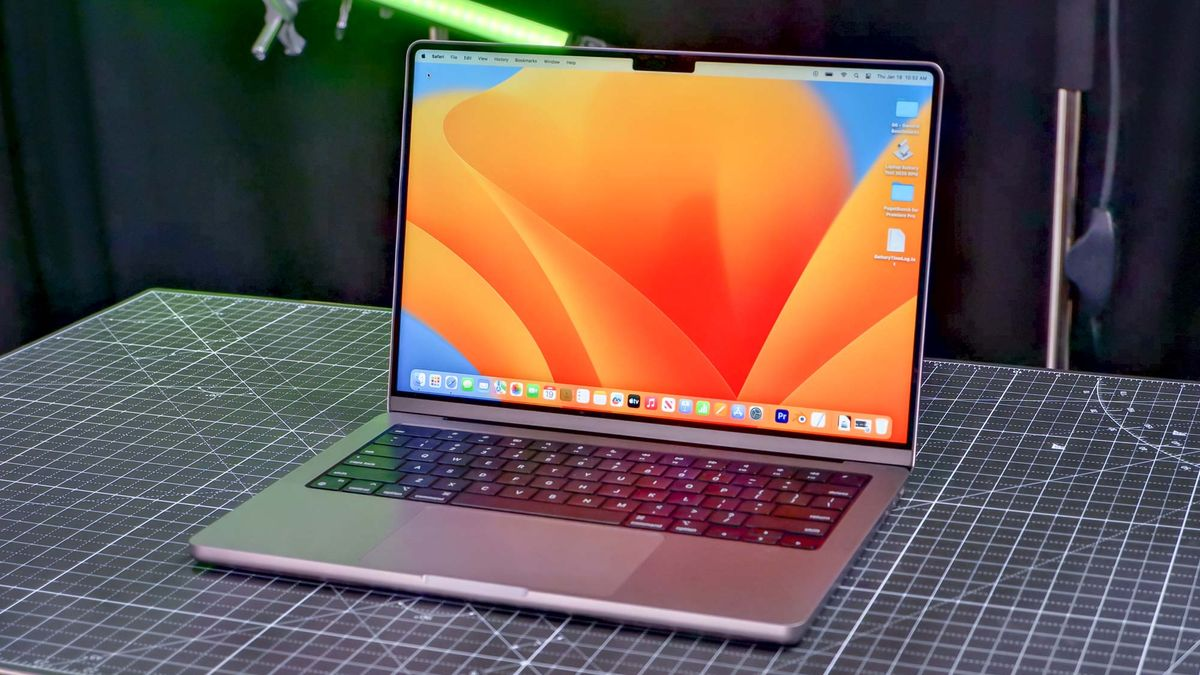
The MacBook Pro is Apple's flagship laptop for professional users, including software developers, designers, video editors, researchers, and other users with demanding computing requirements.
In 2026, Apple expanded the MacBook Pro lineup with M5 Pro and M5 Max processors, delivering improvements in CPU performance, graphics processing, and on-device AI capabilities. These chips feature Neural Accelerators designed to support demanding AI workloads directly on the device.
In October 2026, Apple introduced another major MacBook Pro upgrade featuring a tandem OLED display branded as PROLED XDR. The new models also introduced touchscreen capabilities to Mac for the first time, alongside a Dynamic Island interface and up to 128GB of unified memory.
Apple Vision Pro: The Future of Spatial Computing
Apple Vision Pro is Apple's spatial computing headset, designed to combine digital content with the physical environment. Powered by visionOS, the device allows users to interact with applications, entertainment, and virtual workspaces through eye tracking, hand gestures, and voice commands. Apple initially positioned Vision Pro as a new computing platform, but its commercial performance has fallen short of expectations.
The headset's high starting price of $3,499, relatively heavy design, and limited selection of dedicated applications have restricted consumer adoption. According to IDC estimates reported by the Financial Times, Apple was expected to ship only around 45,000 Vision Pro units in the fourth quarter of 2025, while reports in 2026 suggested that Apple had significantly reduced its investment in the product and reassigned members of its development team to other projects. These developments raise questions about whether Apple will introduce another generation of Vision Pro in the near future.
From an investment perspective, weaker-than-expected Vision Pro sales limit the product's potential contribution to Apple's near-term revenue and earnings growth. The reported suspension of successor projects also suggests that Apple may prioritize AI-powered smart glasses and other wearable devices with broader consumer appeal. Investors should therefore monitor whether Apple can successfully redirect its innovative resources toward products that generate stronger demand and deliver more meaningful financial returns.

Data Source: Apple
Q4 2026 Apple Financial Analysis: Revenue Growth, Profit Margins, and Cash Flow
Apple reported revenue of $114.5 billion for the fourth quarter of fiscal year 2026, ended September 26, representing a 12% increase year over year. For the full fiscal year, revenue reached a record $479 billion, marking Apple's strongest annual performance to date. The iPhone achieved record September-quarter revenue, while Services also reached an all-time high, highlighting the continued strength of Apple's core hardware business and recurring revenue streams.
Apple's gross margin stood at 47.9% in Q4 2026, although this figure included a favorable impact of approximately 1 percentage point from tariff refunds. Diluted earnings per share (EPS) increased 14% year over year to $2.10, including a $0.05 benefit from tariff refunds. While the quarterly results demonstrated solid earnings growth, investors should distinguish between underlying operating performance and temporary benefits from tariff refunds when assessing Apple's future profitability.
Cash flow generation remained another major financial strength, with Apple producing $28 billion in operating cash flow during the quarter. The company returned the same amount to shareholders through dividends and share repurchases, demonstrating its ability to generate substantial cash while maintaining shareholder distributions. Apple also declared a quarterly cash dividend of $0.27 per share, while its installed base of active devices reached a new all-time high across major product categories and geographic regions. For investors, strong cash generation, customer loyalty, and consistent capital returns provide important support for Apple's long-term financial position and stock valuation.
Data Source: Apple Financial Statement
Apple Stock Performance and Valuation
Apple is listed on the Nasdaq Stock Market under the ticker symbol AAPL. As one of the world's most valuable publicly traded companies, its stock is widely followed by institutional investors, retail traders, and technology-focused funds.
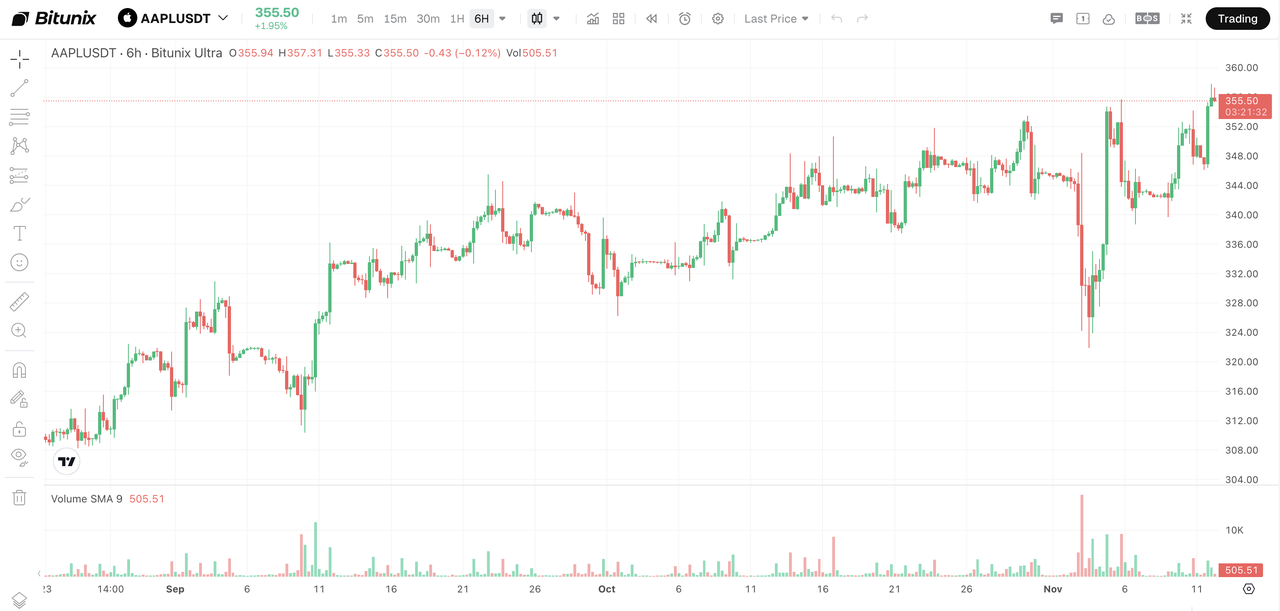
As of November 11, 2026, AAPL closed at approximately $355.63 per share, giving Apple a market capitalization of around $5.17 trillion. The stock had gained approximately 30.8% year to date, reflecting strong earnings growth and positive investor expectations.
Valuation is another important consideration. Based on trailing twelve-month earnings, Apple's price-to-earnings (P/E) ratio stood at approximately 39.6, indicating that investors were willing to pay nearly $40 for every dollar of earnings. A premium valuation reflects Apple's strong brand, established ecosystem, recurring services revenue, and expectations for future innovation. However, a relatively high P/E ratio also means that the stock could become vulnerable if earnings growth slows or the company fails to meet market expectations.
Data Source: Bitunix
What Could Drive AAPL Stock?
Apple's future stock performance will depend on its ability to maintain hardware demand, expand its services business, and turn emerging technologies into sustainable revenue sources. Several factors could influence the company's growth trajectory.
iPhone Upgrade Cycle and Consumer Demand
The iPhone upgrade cycle remains one of the most important factors affecting Apple's revenue. New models with improved cameras, processors, battery life, and AI capabilities can encourage existing customers to replace older devices.
The introduction of the iPhone Duo also creates a potential opportunity to attract consumers interested in foldable smartphones. If Apple successfully expands its addressable market, the new product category could support higher average selling prices and additional revenue growth.
However, smartphone replacement cycles can be relatively long, particularly when consumers see limited differences between generations. Weak consumer spending, higher device prices, or economic uncertainty could also delay purchases.
Apple Intelligence and AI Integration
Artificial intelligence is becoming an increasingly important part of Apple's product strategy. Through Apple Intelligence and the new Siri AI, Apple aims to integrate AI capabilities into everyday applications and services rather than treating AI as a standalone product.
The new Siri AI introduces improved personal context understanding, broader knowledge capabilities, and deeper integration across Apple's operating systems. Its architecture combines on-device processing with Private Cloud Compute, allowing more complex AI tasks to be handled while maintaining Apple's privacy-focused approach.
Successful AI integration could increase device demand, improve customer engagement, and strengthen Apple's competitive position. However, investors should evaluate whether these capabilities can translate into measurable revenue growth rather than relying solely on AI-related market enthusiasm.
Product Innovation and New Market Opportunities
Apple's long-term growth also depends on its ability to develop new product categories and expand existing markets. The iPhone Duo demonstrates the company's willingness to explore different smartphone designs, while Vision Pro represents its longer-term ambitions in spatial computing.
Other opportunities include AI-powered personal devices, smart home products, and more advanced wearable technologies. These markets could create additional revenue streams if Apple successfully develops products that attract mainstream consumers.
However, new product categories typically require substantial investment and may take years to become commercially significant. Investors should distinguish between technological innovation and products that can generate meaningful financial returns.
Global Supply Chain and Regulatory Risks
Apple relies on a global network of suppliers and manufacturing partners, particularly across Asia. Disruptions caused by geopolitical tensions, trade restrictions, tariffs, or component shortages could affect production costs, product availability, and delivery schedules.
Rising semiconductor and memory prices are also important risks, especially as Apple's newer products require increasingly advanced components. Higher production costs may reduce gross margins if the company cannot pass them on to consumers through higher prices.
Regulatory developments represent another potential challenge. Antitrust investigations, App Store regulations, privacy requirements, and restrictions on digital services could affect Apple's business model in major markets.
How to Trade AAPL Stock
For investors looking to gain exposure to Apple, the traditional approach is to purchase AAPL shares through a U.S. stock brokerage account. Investors generally need to open a brokerage account, complete identity verification, deposit funds, and then place an order to buy Apple shares on Nasdaq. However, buying U.S. stocks directly may involve brokerage account requirements, cross-border fund transfers, and transaction fees. Traditional stock investing also primarily benefits investors when the stock price rises, which may limit flexibility when market expectations change.
Another option is to trade Apple stock contracts through cryptocurrency trading platforms such as Bitunix. Compared with directly purchasing AAPL shares, stock contracts can provide more flexible ways to participate in the market. Traders can establish long positions when they expect Apple's stock price to rise or short positions when they expect the stock to decline. If AAPL contracts are available on the platform, users should check the applicable leverage limits and contract specifications before trading. Before trading, users need to register a Bitunix account and complete identity verification (KYC). As leveraged products can magnify both gains and losses, users should understand the relevant risks and manage their positions carefully.