Coinbase Global, Inc. (NASDAQ: COIN) is one of the most prominent publicly traded companies in the cryptocurrency industry. Best known for its cryptocurrency exchange, Coinbase has expanded into institutional trading, digital asset custody, stablecoin infrastructure, staking, and blockchain development. Its strategy increasingly extends beyond buying and selling crypto to providing the financial infrastructure that supports onchain activity.
A key part of this strategy is Base, Coinbase's Ethereum Layer 2 blockchain. By combining a regulated exchange business with USDC-related revenue, institutional services, and onchain infrastructure, Coinbase is building a broader business that could benefit from the adoption of digital assets across multiple markets.
For investors, understanding COIN requires looking beyond cryptocurrency prices. Trading activity, interest rates, stablecoin adoption, regulatory developments, and Base's ecosystem growth can all influence the company's revenue and valuation.
Data Source: Coinbase
What Is Coinbase? Understanding Coinbase Global
Coinbase Global is a US-based financial technology company founded in 2012 by Brian Armstrong and Fred Ehrsam. The company went public on the Nasdaq in April 2021 through a direct listing under the ticker symbol COIN.
Coinbase initially focused on making cryptocurrency purchases and sales accessible to individual investors. Over time, it expanded into a broader platform serving retail customers, professional traders, institutions, and blockchain developers. Its services now include spot trading, derivatives, custody, staking, stablecoin infrastructure, and developer tools.
Coinbase's business has two important dimensions. The first is its exchange and financial services business, which generates revenue from trading, customer balances, subscriptions, and institutional services. The second is its infrastructure business, which includes Base and other tools designed to support blockchain applications and onchain financial activity.
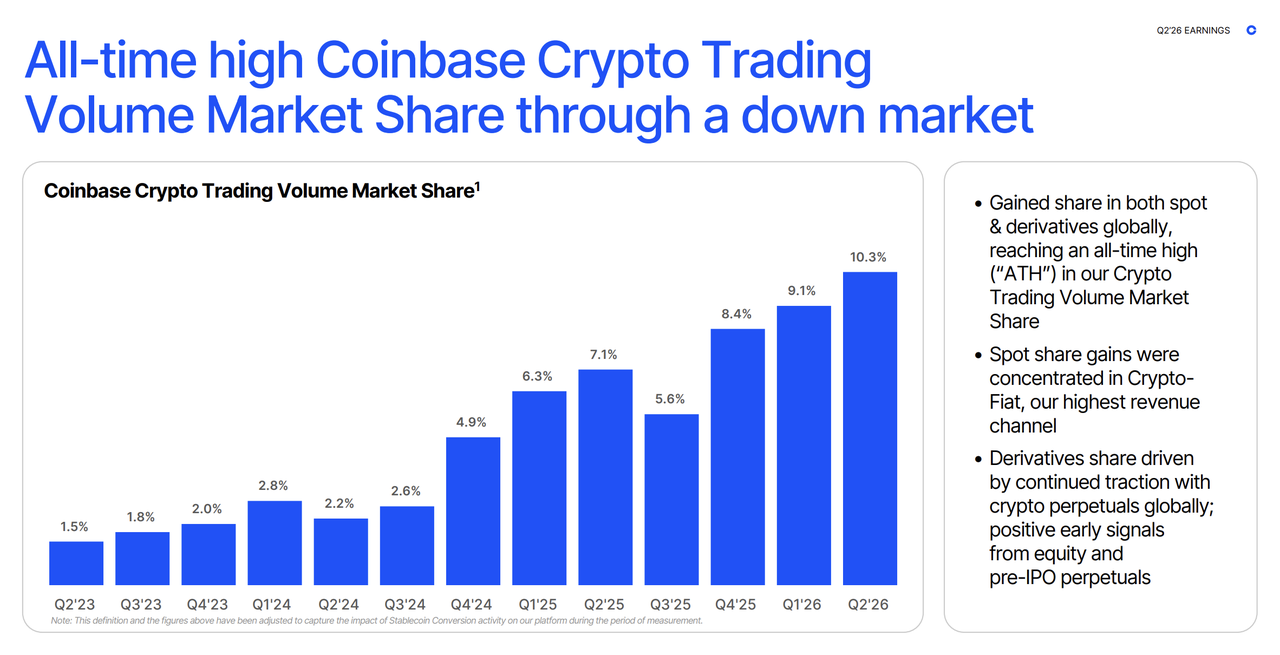
This distinction matters for investors. A company that depends primarily on trading fees may be highly sensitive to crypto market cycles. Coinbase still has that exposure, but its expanding range of services gives it additional opportunities to generate revenue when spot trading slows.
Data Source: Coinbase
How Does Coinbase Make Money?
Coinbase generates revenue through transaction fees, subscriptions, staking, custody, and other financial and infrastructure services. Its revenue mix is important because these businesses respond differently to market conditions.
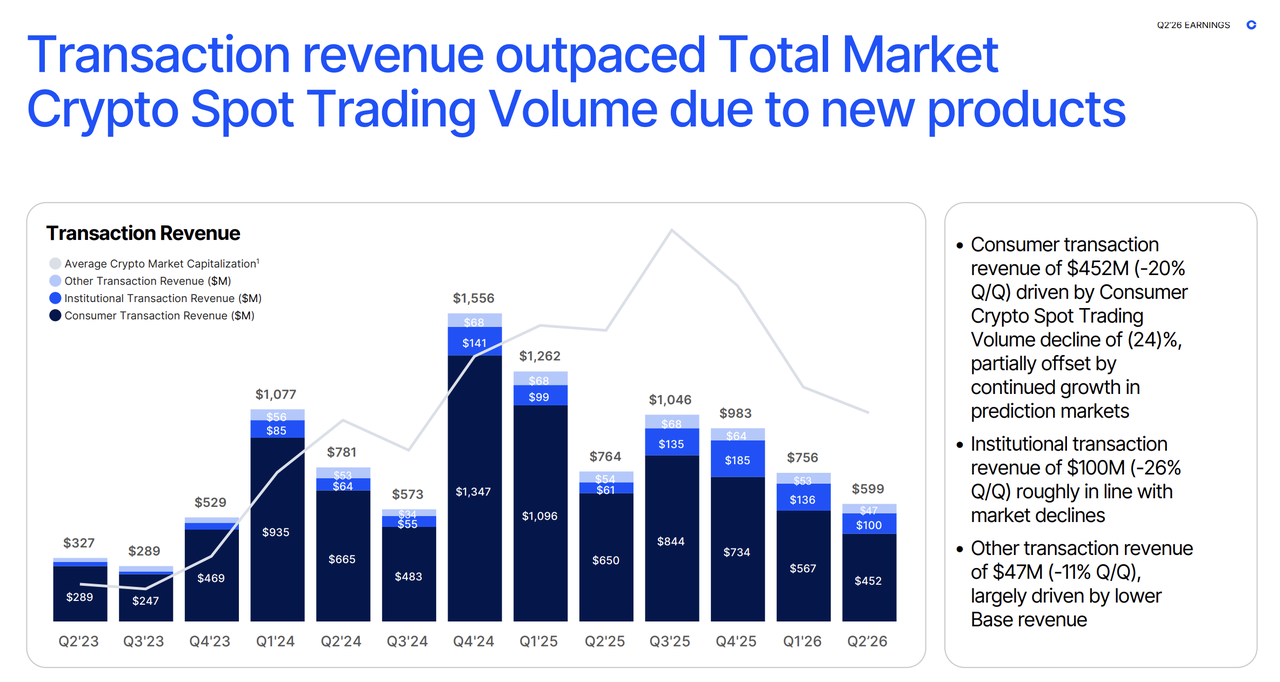
According to its 2025 annual report, Coinbase generated approximately $6.9 billion in net revenue for the year, comprising $4.1 billion in transaction revenue and $2.8 billion in subscription and services revenue. This represented a more diversified revenue profile than a business relying exclusively on trading commissions.
Retail and Institutional Trading Fees
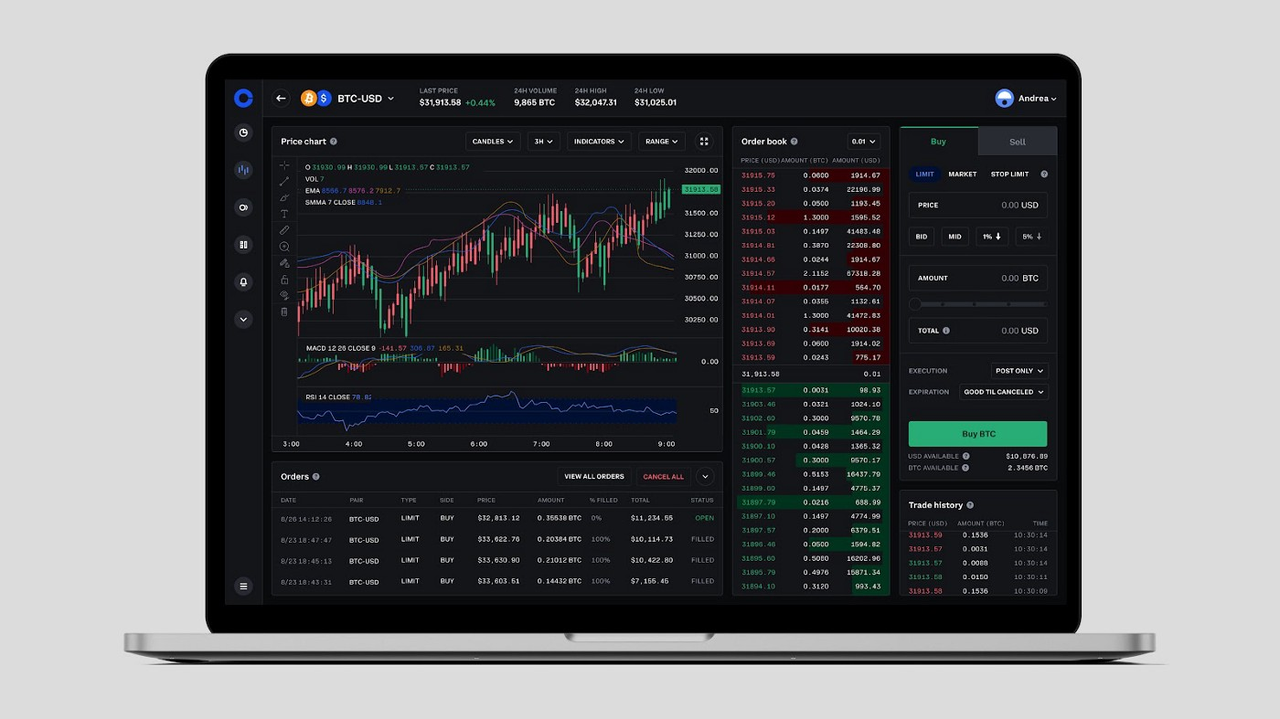
Trading fees remain one of Coinbase's core revenue sources. Retail customers may pay transaction fees when buying or selling cryptocurrencies, depending on the product, order type, pricing structure, and applicable subscription benefits. Coinbase Advanced offers a different trading experience, with fees generally based on a maker-taker schedule and trading volume.
Institutional customers use services such as Coinbase Prime to access execution, liquidity, financing-related services, and custody infrastructure. Professional and institutional trading can involve substantial transaction volumes, although fees and revenue per dollar traded differ from those of retail customers.
Trading revenue is closely linked to market activity. During a strong bull market, rising prices and increased volatility can encourage customers to trade more frequently. Conversely, a prolonged downturn may reduce trading activity even if the value of assets held on the platform remains substantial. Coinbase's challenge is to grow trading market share while reducing its dependence on any single market cycle.
Data Source: Coinbase
Subscription and Services Revenue
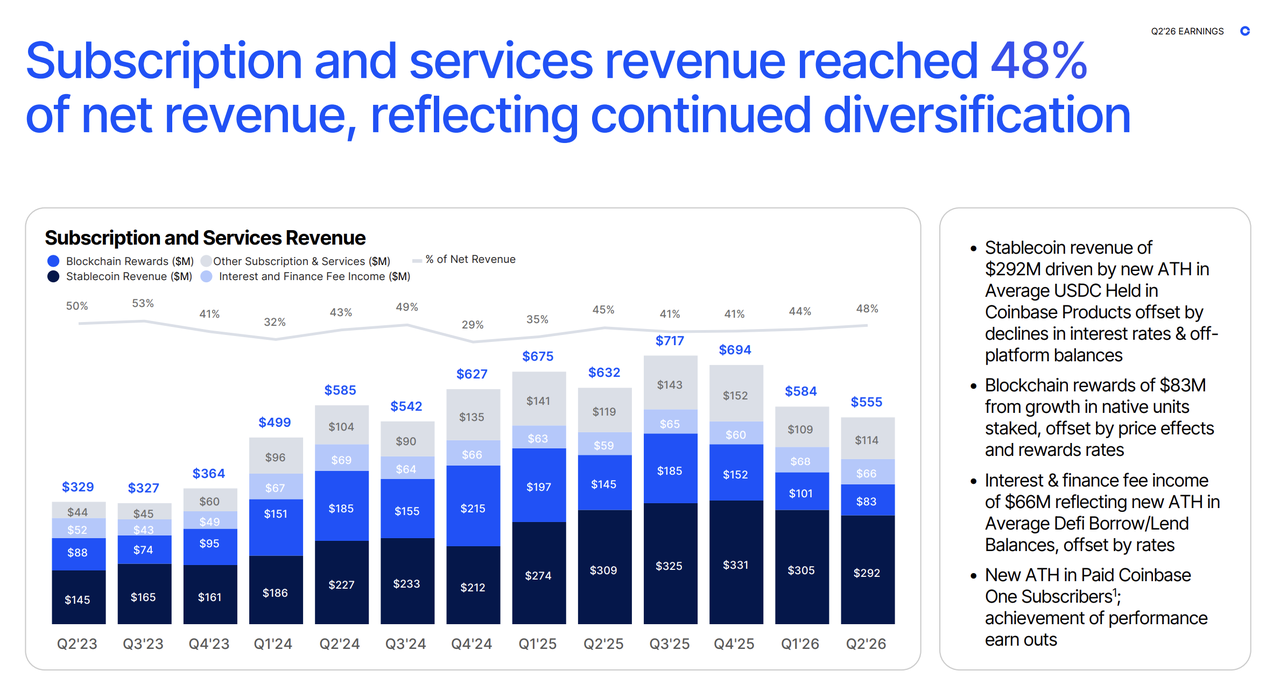
Coinbase's subscription and services business includes revenue from services such as Coinbase One, staking, custody, stablecoin-related activities, and other products that do not depend directly on each individual spot trade.
Coinbase One is a paid subscription offering that can include trading-related benefits, customer support, and other features depending on the plan and region. Recurring subscription payments can provide a more predictable revenue stream than transaction fees, although the overall value of the business still depends on customer retention, product usage, and the benefits included in each subscription tier.
In 2025, Coinbase's subscription and services revenue reached approximately $2.8 billion. The company also reported nearly one million paid Coinbase One subscribers. For investors, the important question is whether these services can continue to expand and offset some of the revenue pressure that typically occurs during weaker crypto markets.
Data Source: Coinbase
Base Blockchain: How Does Coinbase's Ethereum Layer 2 Work?
Base is an Ethereum Layer 2 blockchain incubated by Coinbase and built using the OP Stack, the open-source technology framework associated with Optimism. It is designed to make transactions and decentralized applications more accessible by reducing the cost and friction of using Ethereum.
A Layer 2 network processes transactions outside Ethereum's main execution layer and uses Ethereum as a settlement and security foundation. On Base, transactions are executed on the Layer 2 network, while transaction data and related commitments are posted to Ethereum according to the network's design. This architecture can support faster and cheaper transactions than executing every operation directly on Ethereum mainnet.
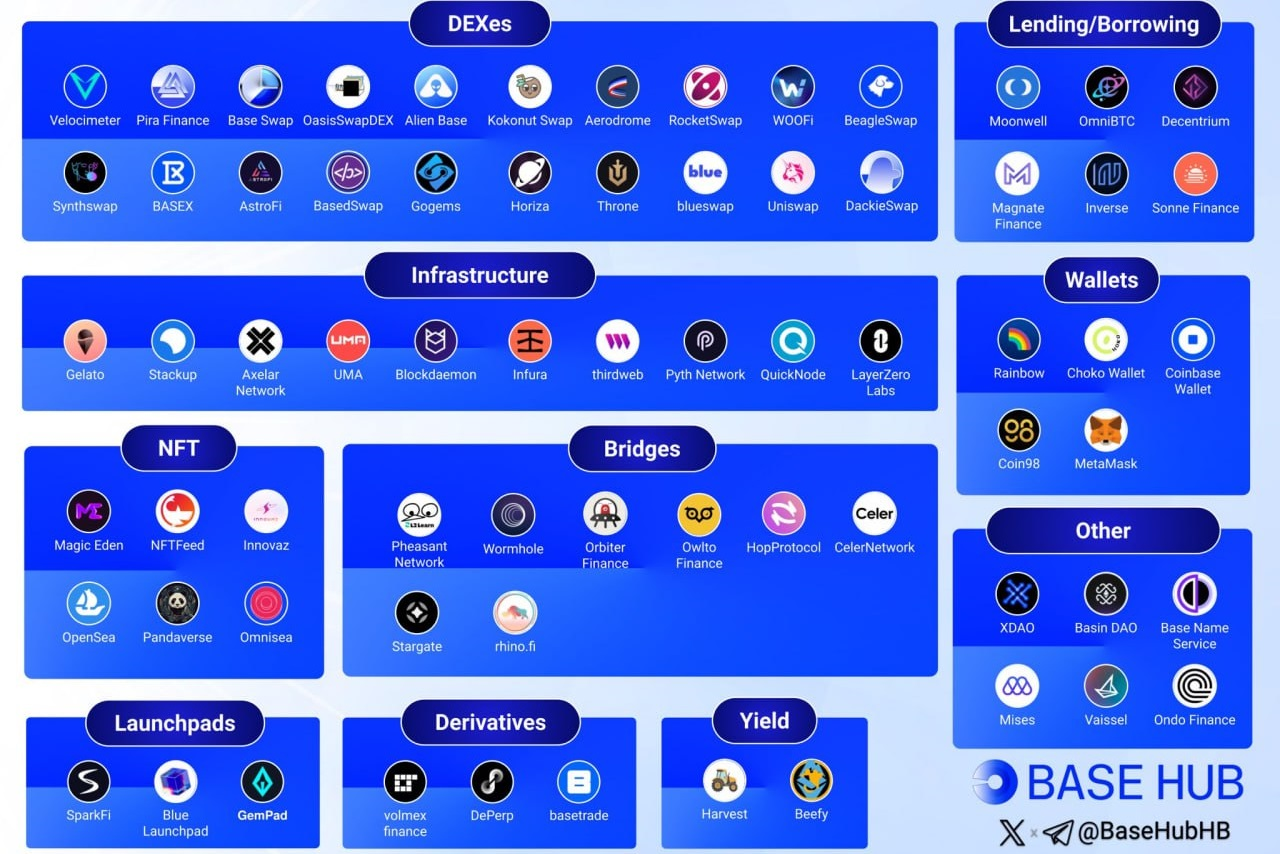
Base supports applications such as decentralized exchanges, lending protocols, stablecoin payments, onchain trading, and consumer-oriented applications. Developers can deploy Ethereum-compatible smart contracts, while users can access applications through compatible wallets and other interfaces. Coinbase's distribution, developer tools, and existing customer base give Base a potential advantage in attracting users and applications.
For Coinbase, Base represents both a strategic opportunity and an investment consideration. More onchain activity can increase demand for transaction infrastructure, developer services, and related products. However, network adoption does not automatically translate into large profits for Coinbase. Investors should monitor transaction activity, fees, active users, stablecoin balances, application liquidity, and the costs associated with operating and developing the network.
What Drives Coinbase Stock Price?
COIN is an equity investment in a company whose earnings are connected to the cryptocurrency market. Its stock price can therefore react to crypto prices, trading activity, interest rates, regulatory developments, company earnings, and changes in investor expectations about future growth.
Unlike directly holding Bitcoin, owning COIN shares means owning an interest in Coinbase's business. Even when Bitcoin rises, Coinbase stock may underperform if trading revenue disappoints, expenses increase, or the market expects lower future earnings. The reverse can also occur when Coinbase improves its market share or expands revenue from services beyond trading.
Crypto Prices, Trading Volume, and Market Volatility
Bitcoin and Ethereum prices influence investor sentiment toward Coinbase, but trading volume and customer behavior are more direct operating indicators. Strong price movements can encourage customers to trade, while periods of low volatility or declining prices may reduce activity.
The relationship is not always linear. Sharp sell-offs can temporarily increase trading volume as investors reposition, yet prolonged market weakness may eventually reduce participation and assets held on the platform. Coinbase's revenue also depends on its share of market activity, fee rates, trading mix, and competition from other exchanges.
Investors should therefore monitor quarterly transaction revenue alongside trading volume, retail and institutional activity, and Coinbase's share of the broader crypto market. Bitcoin's price alone is not a sufficient indicator of the company's financial performance.
USDC Adoption and Subscription Revenue
USDC adoption and recurring subscription revenue can influence how investors value Coinbase's earnings stability. A larger USDC balance held in relevant Coinbase products may support stablecoin-related revenue, while growth in Coinbase One and other services can reduce reliance on transaction fees.
However, stablecoin revenue is sensitive to interest rates. Lower rates can reduce the interest income generated by reserve assets, potentially offsetting growth in USDC balances. Revenue-sharing arrangements and the cost of acquiring and retaining customers also affect the final contribution to earnings.
A useful indicator is the relationship between subscription and services revenue, average USDC balances, and interest-rate expectations. Sustained growth across several service categories would suggest that Coinbase is building a more diversified revenue base.
Base Activity and Onchain Revenue Growth
Base is a longer-term driver because its value depends on the development of an onchain economy rather than solely on centralized exchange activity. More transactions, active users, stablecoin transfers, decentralized applications, and liquidity can strengthen the network's position.
For COIN shareholders, the key question is how much economic value Coinbase can capture from that activity. Transaction fees are only one part of the picture; developer infrastructure, payment services, and the integration of Base with Coinbase's consumer and institutional products may also matter.
Investors should distinguish between network growth and company profitability. Rising transaction counts or total value locked do not necessarily mean that revenue and margins are increasing at the same rate. Base's competitive position, fee economics, operating costs, and ability to retain developers and users are important measures of its long-term contribution.
Coinbase Stock Performance
Coinbase's stock performance has closely reflected the broader cryptocurrency market cycle. Since its Nasdaq listing in April 2021, COIN has experienced significant price swings, rising above $400 during its initial trading period before falling sharply during the 2022 crypto winter. Its subsequent recovery from 2023 through 2025 demonstrated how improving crypto market sentiment can influence investor expectations for the company's growth and profitability.
2021: Public Listing and Initial Rally. Coinbase went public on Nasdaq in April 2021 under the ticker symbol COIN. As one of the first major publicly traded cryptocurrency exchanges in the United States, the company attracted substantial investor attention. Its share price surged above $400, reflecting strong demand for exposure to the rapidly expanding cryptocurrency market.
2022: Crypto Winter and Record Low. The prolonged crypto downturn in 2022 put considerable pressure on Coinbase's business and stock valuation. Falling cryptocurrency prices, reduced trading activity, and deteriorating investor sentiment contributed to a sustained decline in COIN. In December 2022, as Bitcoin fell below $20,000, Coinbase shares dropped to approximately $31, marking their lowest price since the company's public listing.
2023–2025: Market Recovery and New Highs. As the cryptocurrency market recovered, Coinbase shares staged a substantial rebound. Renewed investor interest in digital assets, growing institutional participation, and the expansion of Coinbase's services helped improve market sentiment toward the company. In July 2025, as Bitcoin moved above $110,000, COIN reached an intraday high of approximately $444.65, setting a new record. The rally highlighted the stock's sensitivity to crypto market momentum, although company-specific developments and earnings expectations also influenced its valuation.
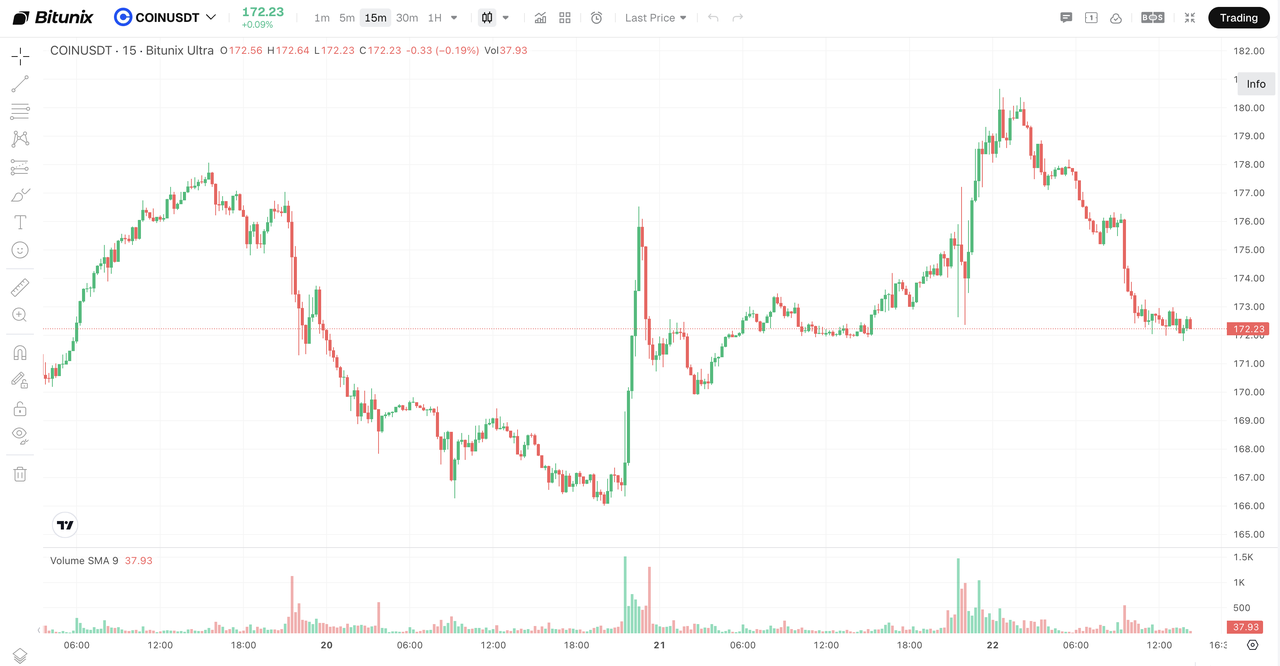
2026: Correction and Lower Trading Range. After the strong rally through 2025, the cryptocurrency market entered a period of correction in 2026. Coinbase shares retreated from their record highs as investors reassessed the outlook for digital assets and crypto-related businesses. By October 2026, COIN was trading broadly in the $150–$200 range, well below its 2025 peak. This pullback illustrates the volatility associated with crypto-linked equities and the importance of evaluating Coinbase's underlying business performance alongside broader market trends.
Data Source: Bitunix
How to Buy COIN Stock
For investors looking to gain exposure to Coinbase stock, the traditional approach is to purchase COIN shares through a U.S. stock brokerage account. Investors typically need to open a trading account, complete identity verification, and place orders to buy Coinbase shares directly. However, trading U.S. stocks may involve account opening procedures, cross-border fund transfers, and transaction fees. Some brokerage platforms may also charge relatively high trading costs. In addition, traditional stock investing generally allows investors to benefit from upward price movements, offering fewer ways to respond directly to short-term price declines.
Beyond traditional stock investing, investors can also trade Coinbase contracts through cryptocurrency trading platforms such as Bitunix. Compared with directly purchasing shares, contract trading offers more flexible market participation options, allowing traders to open long positions when expecting Coinbase's stock price to rise or short positions when anticipating a decline. Bitunix COIN contracts support a 0-fee trading model and offer up to 20x leverage, allowing users to access larger market positions with less initial capital. However, leverage also magnifies potential losses. Before initiating their first trade, users need to register a Bitunix account and complete identity verification (KYC). Through risk control systems, asset management measures, and transaction monitoring mechanisms, the platform provides users with a trading environment designed to support secure and efficient trading.