SK hynix is one of the biggest beneficiaries of the artificial intelligence (AI) boom, supplying high-bandwidth memory (HBM) and other advanced memory products used in AI accelerators and data centers. As demand for AI computing continues to grow, the company has delivered record financial results and strengthened its position in the global semiconductor industry. However, SK hynix stock also faces substantial volatility, driven by the cyclical nature of the memory market, intensifying competition, and sharp swings in South Korea's equity market.
For investors, understanding SK hynix requires looking beyond the AI growth story. Its long-term prospects depend on whether AI infrastructure spending can sustain demand for premium memory, whether the company can maintain its HBM leadership, and how effectively it manages supply and pricing through the semiconductor cycle.
Data Source: SK hynix
SK hynix: The HBM Leader at the Center of the AI Boom
SK hynix is a South Korean semiconductor company specializing in dynamic random-access memory (DRAM) and NAND flash memory. Its products are used in servers, personal computers, smartphones, enterprise storage, and other computing devices. The company has become particularly important to the AI industry through its high-bandwidth memory (HBM), which enables processors to move large amounts of data quickly and efficiently.
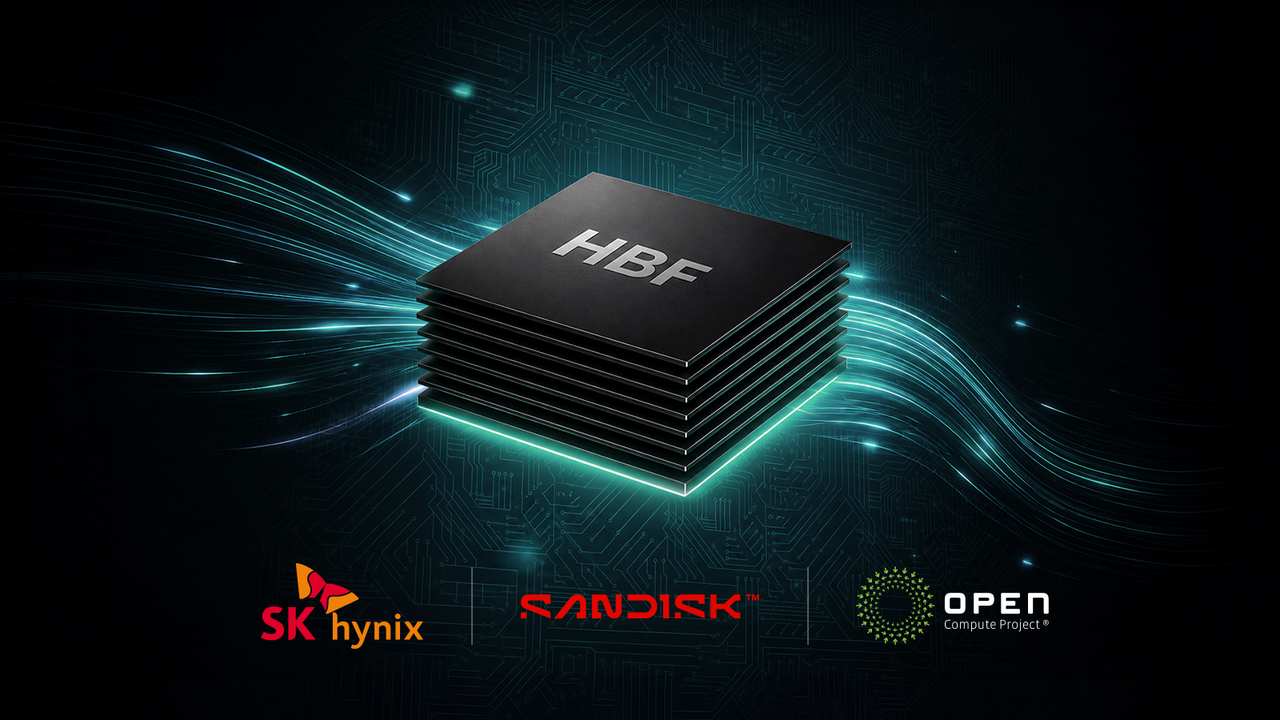
HBM stacks multiple memory dies vertically and connects them through advanced packaging technology. Compared with conventional DRAM, HBM offers substantially greater memory bandwidth, making it valuable for AI accelerators that process large datasets and perform intensive calculations. As AI models grow and data center operators deploy more powerful computing systems, demand for HBM and high-performance server memory has become a major growth driver for SK hynix.
SK hynix has established a leading position in the HBM market, supported by its product development, manufacturing capabilities, and relationships with major AI chipmakers. According to the latest data published by Counterpoint Research on June 25, 2026, SK hynix ranked first in the global HBM market by revenue in Q1 2026, with a 58% market share. Samsung Electronics and Micron Technology tied for second place, each accounting for 21% of global HBM revenue.
This lead reinforces SK hynix's position in the AI memory supply chain, although competition remains intense as rivals develop and expand their advanced HBM offerings. The company is also expanding its portfolio of advanced server DRAM and enterprise solid-state drives, positioning it to benefit from broader AI infrastructure investment. However, its future performance will still depend on customer demand, product qualification cycles, manufacturing execution, and its ability to maintain its technological and commercial advantages.
Data Source: SK hynix
Why SK hynix Stock Is So Volatile: South Korea vs. the U.S. Stock Market
SK hynix stock is exposed to the cyclical semiconductor industry, where changes in supply, demand, and memory prices can cause earnings expectations to shift quickly. HBM demand has supported strong growth, but investors still need to consider potential changes in AI capital expenditure, inventory levels, manufacturing capacity, and pricing. When expectations for memory demand improve, SK hynix can benefit from rising earnings forecasts; When the market anticipates oversupply or slower AI investment, the stock can experience sharp corrections.
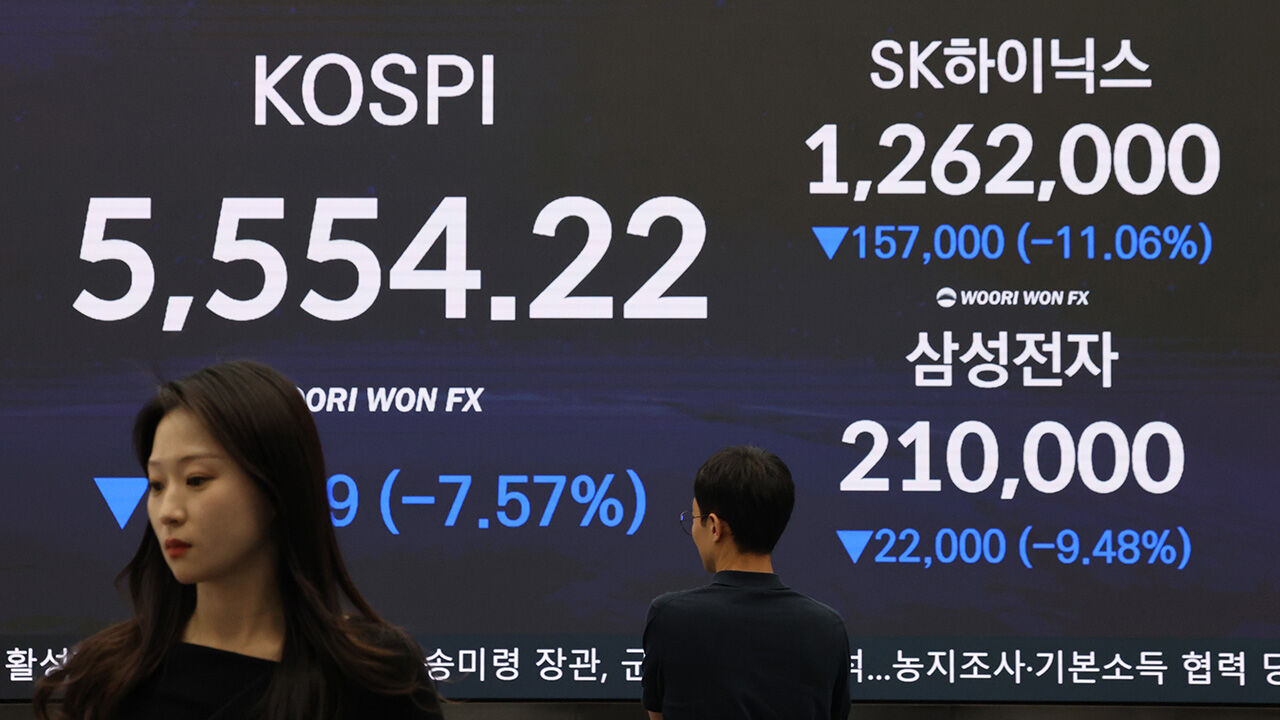
South Korea's stock market structure can amplify these movements. SK hynix and Samsung Electronics represent a substantial share of the country's equity market, making the KOSPI particularly sensitive to semiconductor-sector developments. A July 2026 report from the Korea Capital Market Institute found that the volatility of daily KOSPI returns reached 3.6% in the first half of 2026, compared with 1.4% in 2025. The report identified the rising influence of Samsung Electronics and SK hynix, global memory-industry volatility, and differences in investor buying and selling as contributing factors.
The U.S. stock market has a broader range of large companies and industries, although semiconductor stocks can also experience significant volatility. SK hynix now has a Nasdaq-listed American Depositary Receipt (ADR) under the ticker SKHY, in addition to its primary listing on the Korea Exchange under 000660. The ADR gives U.S. investors another way to access the company, but it does not eliminate the underlying risks associated with memory prices, semiconductor cycles, currency movements, or global equity sentiment.
Data Source: SBS News
SK hynix Q3 2026 Financial Report: Record Revenue and Operating Profit
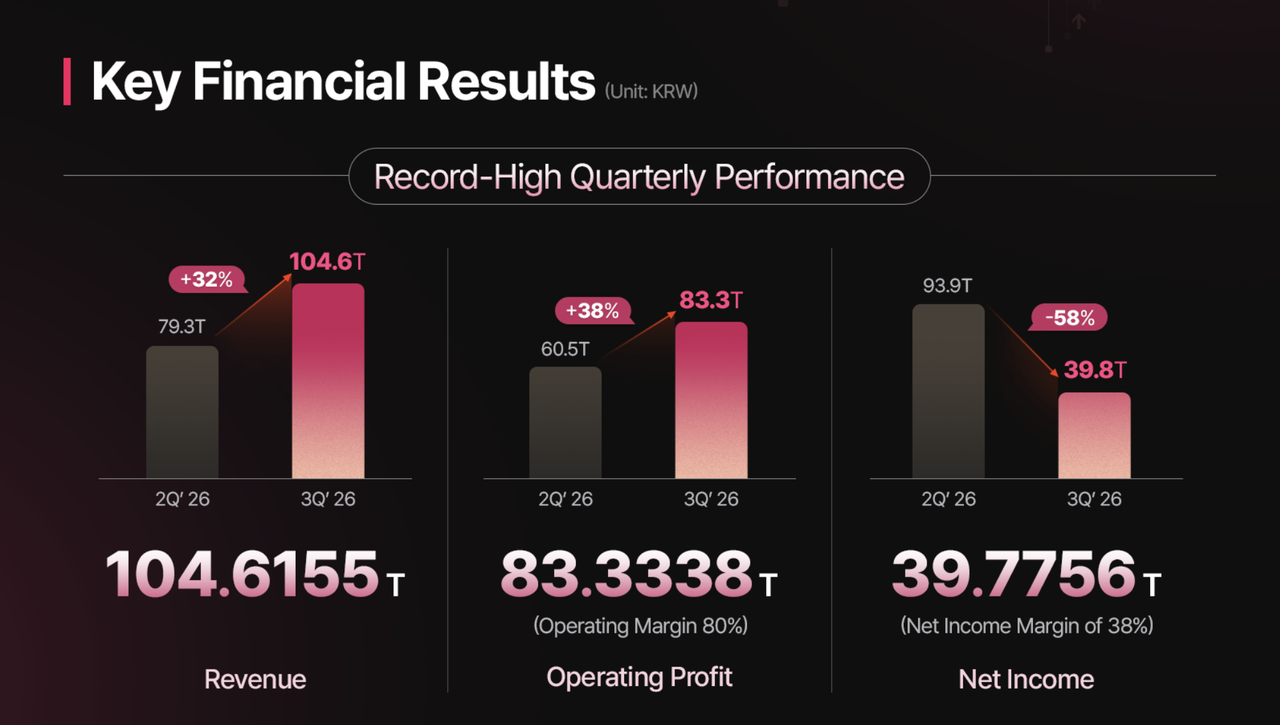
SK hynix reported record quarterly revenue and operating profit for the third quarter of 2026, supported by rising demand and prices for AI-related memory products. According to its October 28 earnings announcement, the company recorded revenue of KRW 104.62 trillion, operating profit of KRW 83.33 trillion, and net income of KRW 39.78 trillion. Revenue increased 32% quarter over quarter, while operating profit rose 38%. The operating margin reached approximately 80%, reflecting the contribution of high-value-added memory products and favorable market conditions.
The company attributed its strong operating performance to higher-value memory products. In DRAM, server DDR5 sales expanded, while HBM4 shipments began to ramp up. In NAND, demand for 321-layer triple-level-cell (TLC) enterprise solid-state drives also increased. These developments highlight SK hynix's strategy of prioritizing advanced products for AI servers and data centers rather than relying solely on conventional memory products.
Despite the strong operating results, net income declined 58% from the previous quarter, so investors should not treat every financial metric as moving in the same direction. The company also reported KRW 114.5 trillion in cash and cash equivalents and KRW 15.8 trillion in borrowings at the end of Q3, leaving it with net cash of approximately KRW 98.7 trillion. Looking ahead, SK hynix expects memory demand to remain strong and said it has secured long-term agreements covering more than 50% of its production capacity for 2027 and 2028. It also expects HBM4 to become a mainstream product from Q4 2026. These are management expectations, however, and actual results will depend on customer demand, execution, pricing, and competitive conditions.
Data Source: SK hynix
What Could Drive SK hynix Stock?
AI Infrastructure Spending: Will Hyperscalers Sustain Their Investment?
Cloud service providers and other large technology companies are investing heavily in AI data centers, including accelerators, high-speed networking, server systems, and advanced memory. SK hynix benefits when these investments translate into stronger demand for HBM, server DRAM, and enterprise storage. Continued expansion in AI model training, inference, and enterprise adoption could support further growth in memory demand.
The key question is whether this spending can remain strong enough to justify continued capacity expansion. If AI monetization disappoints, major cloud providers could slow investment or become more selective about new infrastructure projects. That could weaken demand forecasts and affect the premium investors are willing to pay for SK hynix stock.
Investors should monitor capital expenditure guidance from major cloud providers, AI chip shipment trends, and SK hynix's customer orders. The company's long-term agreements with customers may improve demand visibility, but they do not eliminate the risks of changing market conditions or shifts in product requirements.
HBM4 Adoption and Competition With Samsung and Micron
HBM4 is an important next stage in the development of high-bandwidth memory. As AI accelerators become more powerful, customers require memory systems that can deliver higher bandwidth, greater capacity, and better energy efficiency. SK hynix has begun shipping HBM4 and expects the product to become mainstream in Q4 2026, potentially increasing its contribution to revenue as adoption expands.
However, SK hynix does not have an uncontested position in the market. Samsung Electronics and Micron are also competing to supply advanced HBM products, and customers may qualify multiple suppliers to improve supply security and negotiate pricing. Industry data published in September 2026 showed Samsung gaining HBM market share in Q2, narrowing the gap with SK hynix. This illustrates why maintaining technological leadership does not automatically guarantee stable market share.
For investors, the key indicators include HBM4 shipment volumes, customer qualification progress, product yields, production capacity, and market share. If SK hynix successfully scales HBM4 while maintaining quality and profitability, it could strengthen its competitive position. If rivals catch up faster than expected, however, market-share pressure or pricing competition could limit future gains.
Memory Supply, Pricing Power, and the Risk of a Downturn
Memory manufacturing requires substantial capital investment, advanced process technology, and long lead times to expand capacity. When demand grows faster than supply, memory prices can rise and producers may enjoy strong margins. SK hynix's Q3 2026 results demonstrate how favorable pricing and a product mix weighted toward high-value memory can support exceptional operating profitability.
The same industry structure creates downside risk. If manufacturers expand capacity too aggressively or demand growth slows, supply may eventually exceed demand. Customers could reduce orders, inventories could rise, and memory prices could fall. Because semiconductor manufacturing involves significant fixed costs, lower selling prices and reduced utilization can cause profits to decline faster than revenue.
Investors should therefore assess not only current earnings but also their sustainability. Memory pricing trends, inventory levels, capacity expansion plans, capital expenditure, and customer commitments can help indicate where the industry stands in the cycle. Strong earnings during a period of constrained supply do not guarantee that margins will remain at the same level indefinitely.
How to Trade SK hynix Stock
For investors looking to gain exposure to SK hynix, the traditional approach is to purchase its shares through a brokerage account that supports the Korea Exchange, where the stock trades under ticker 000660, or through a U.S. brokerage account that provides access to its Nasdaq-listed ADR under ticker SKHY. Investors generally need to open a brokerage account, complete identity verification, deposit funds, and then place an order to buy SK hynix shares. However, investing in overseas stocks may involve additional account requirements, cross-border fund transfers, currency conversion, and transaction fees. Traditional stock investing also primarily benefits investors when the share price rises, which may limit flexibility when market expectations change.
Another option is to trade SK hynix stock contracts through cryptocurrency trading platforms such as Bitunix. Compared with directly purchasing shares, stock contracts can provide more flexible ways to participate in the market. Traders can establish long positions when they expect SK hynix's stock price to rise or short positions when they expect it to decline. If an SK hynix-linked contract is available on Bitunix, its leverage and trading terms will depend on the specific product. Before trading, users need to register a Bitunix account and complete identity verification (KYC). As leveraged products can magnify both gains and losses, users should understand the relevant risks and manage their positions carefully.