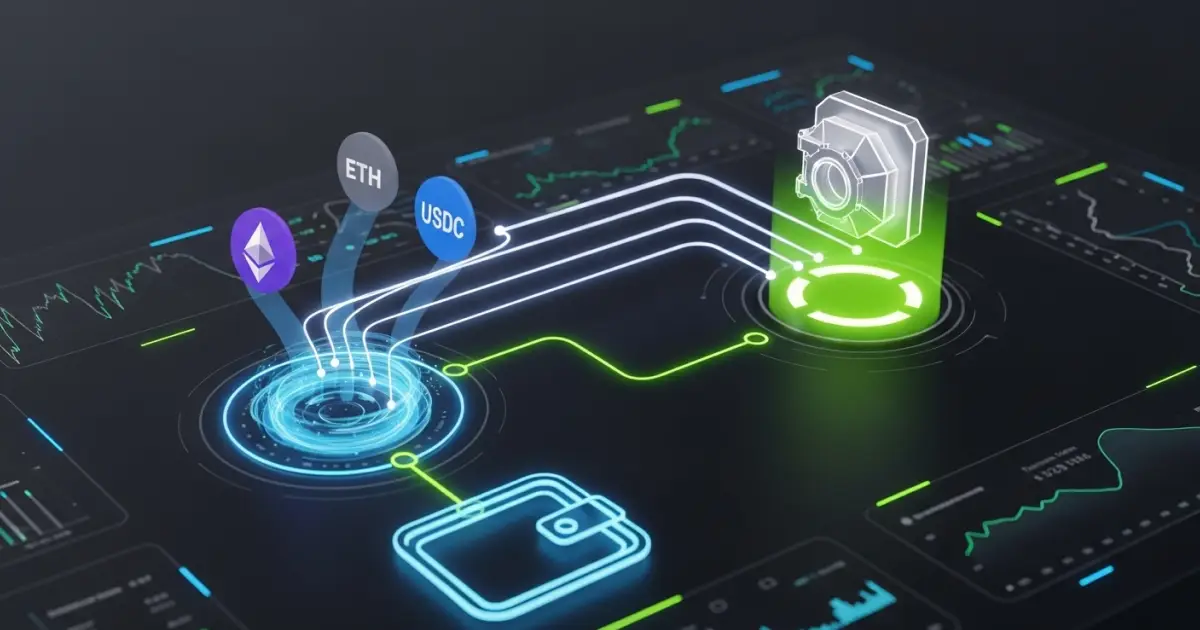
Decentralized finance (DeFi) has become one of the most important innovations in the cryptocurrency industry. Instead of relying on centralized banks or brokers, DeFi protocols allow users to lend, borrow, trade, and interact with financial applications directly on blockchain networks.
Unlike centralized exchanges that rely on traditional order books to match buyers and sellers, many DeFi protocols use liquidity pools powered by smart contracts and automated market makers (AMMs). These pools contain collections of tokens that allow decentralized exchanges (DEXs) to process trades without requiring a traditional intermediary.
For beginners, understanding how to add liquidity to a DeFi liquidity pool can feel complicated. Common questions include:
What tokens are required to provide liquidity?
How do liquidity providers earn trading fees?
What risks should be considered before depositing crypto assets?
The process becomes easier once the core concepts are understood. Adding liquidity involves depositing a token pair into a pool, receiving LP tokens that represent your contribution, and monitoring risks such as impermanent loss, market volatility, and smart contract vulnerabilities.
What Is a Liquidity Pool?

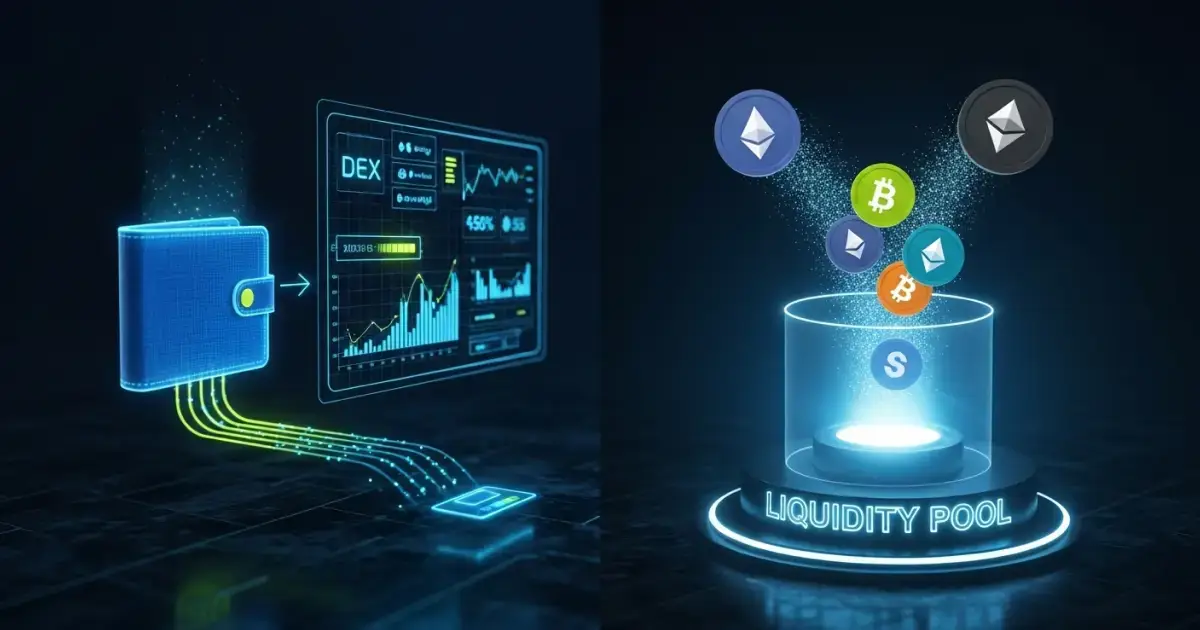
A liquidity pool is a collection of cryptocurrency tokens locked inside a smart contract and used to facilitate decentralized trading.
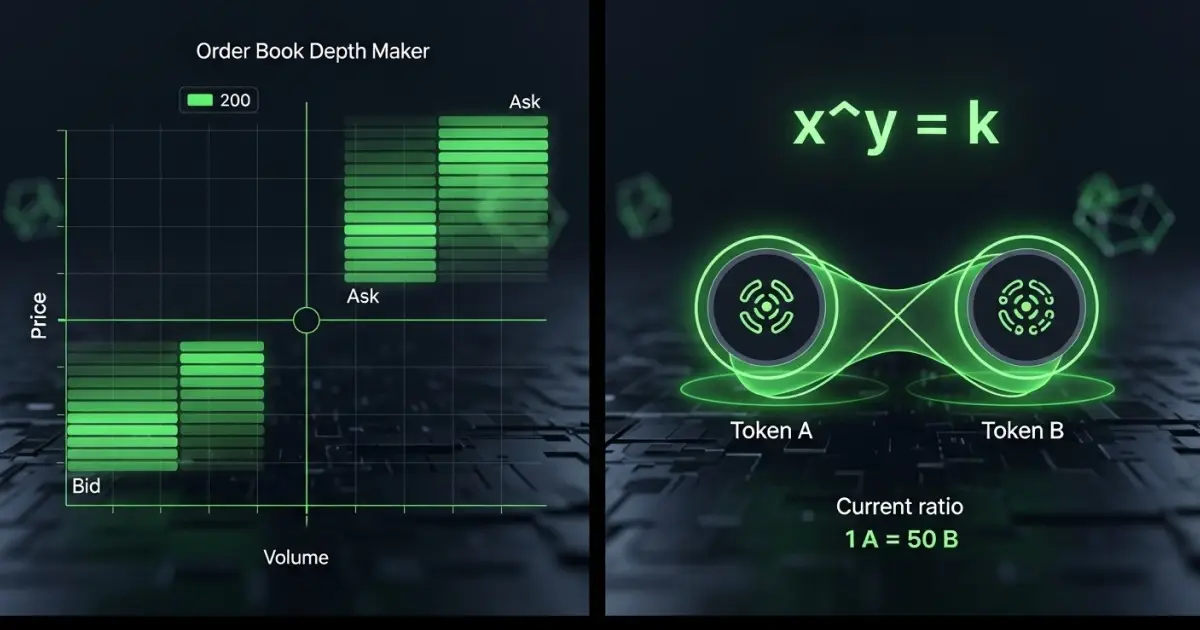
Unlike traditional exchanges that rely on order books to connect buyers and sellers, decentralized exchanges often use automated market makers (AMMs) to determine token prices and execute swaps.
In an AMM-based system:
Liquidity providers deposit token pairs into a pool.
Traders swap one token for another directly against the pool.
Smart contracts automatically adjust token balances and prices.
Liquidity providers receive a share of trading fees generated by the pool.
For example, in an ETH/USDC liquidity pool, providers deposit both ETH and USDC. If a trader swaps ETH for USDC, the pool sends USDC to the trader and receives ETH in return. The ratio between the two assets changes, which updates the pool price.
The most common AMM pricing model uses the constant product formula:
x × y = k
Where:
x represents the amount of one token in the pool.
y represents the amount of the second token.
k represents a constant value maintained by the smart contract.
Liquidity providers receive LP tokens, which represent their proportional share of the pool. These tokens can typically be redeemed later for the underlying assets plus any accumulated trading fees.
Liquidity Pool vs Traditional Order Book
Understanding the difference between liquidity pools and traditional exchanges helps explain why DeFi works differently.
Feature | Liquidity Pool (AMM) | Traditional Order Book |
|---|
Trading Mechanism | Smart contract-based swaps | Buyer and seller matching |
Liquidity Source | Liquidity providers | Market makers and traders |
Price Determination | Mathematical formula | Supply and demand from orders |
Intermediary | No central exchange required | Usually managed by exchange infrastructure |
This difference allows DeFi platforms to provide permissionless trading but also introduces unique risks, including smart contract vulnerabilities and impermanent loss.
Why Participate as a Liquidity Provider?

Providing liquidity allows users to contribute assets to decentralized markets while potentially receiving trading fee rewards. However, liquidity provision is not risk-free and requires understanding how pool mechanics affect asset positions.
Earn Trading Fee Rewards
When users trade through a liquidity pool, each transaction typically generates fees distributed among liquidity providers.
The amount received depends on factors such as:
High-volume pools may generate more fee activity, but returns can vary depending on market conditions and pool performance.
Support the DeFi Ecosystem
Liquidity pools are essential infrastructure for decentralized exchanges and many DeFi applications.
Without liquidity providers:
Traders would face higher slippage.
Token swaps would become less efficient.
Decentralized applications would have limited functionality.
By supplying liquidity, participants help improve market efficiency within decentralized ecosystems.
Portfolio Exposure Across Multiple Assets
Liquidity pools generally require providers to hold multiple tokens simultaneously.
For example:
ETH/USDC pools provide exposure to both ETH and a stablecoin.
BTC/ETH pools involve two volatile crypto assets.
Stablecoin pools focus on assets designed to maintain similar values.
However, holding multiple assets through a liquidity pool can create different risk exposures compared with simply holding tokens individually.
Access to Additional DeFi Strategies
In some ecosystems, LP tokens can be used in additional DeFi applications, including yield farming platforms.
However, each additional protocol layer may introduce:
Additional smart contract risks
More complex transaction requirements
Greater dependency on third-party platforms
Users should evaluate each protocol separately rather than assuming additional rewards always justify additional risk.
Understanding Automated Market Makers (AMMs)

Automated Market Makers (AMMs) are the foundation of how many DeFi liquidity pools operate.
Instead of relying on centralized market makers or order books, AMMs use smart contracts to manage trades automatically based on predefined mathematical rules.
The most widely used AMM model is based on the constant product formula:
x × y = k
Here:
x represents the reserve of one token.
y represents the reserve of another token.
k remains constant during trades.
When a trader swaps one asset for another, the AMM adjusts the ratio between the two tokens. This change determines the new exchange price.
For example:
A trader buys ETH from an ETH/USDC pool.
The amount of ETH in the pool decreases.
The amount of USDC increases.
The ETH price inside the pool adjusts based on the updated ratio.
This mechanism enables continuous trading without requiring buyers and sellers to be matched manually.
How AMMs Create Prices
Unlike traditional markets where prices are determined through matching buy and sell orders, AMMs calculate prices based on the relationship between assets inside a liquidity pool.
The simplified process:
A liquidity provider deposits two assets.
The AMM records the token balance ratio.
A trader swaps one token for another.
The smart contract updates pool reserves.
The new ratio determines the updated price.
This automated pricing model improves accessibility but also creates unique considerations, including price impact, slippage, and impermanent loss.
Step-by-Step Guide to Adding Liquidity

Adding liquidity to a DeFi pool involves several steps, from selecting a suitable protocol to monitoring your position after depositing assets. Before providing liquidity, users should understand the pool structure, supported networks, transaction fees, and associated risks.
Before Adding Liquidity: A Quick Risk Checklist
Before depositing assets into any liquidity pool, consider:
Protocol Security: Has the smart contract been audited? Does the project have a transparent security history?
Liquidity Depth: Does the pool have sufficient liquidity to reduce slippage?
Token Pair Risk: Are both assets highly volatile, or does the pool contain relatively stable assets?
Transaction Costs: Will gas fees significantly affect the size of your position?
Exit Conditions: Do you understand how and when you can withdraw liquidity?
This preparation helps reduce avoidable mistakes, especially for users participating in DeFi for the first time.
Step 1: Choose the Right Platform
The first step is selecting a decentralized exchange (DEX) or DeFi protocol where you want to provide liquidity.
Popular platforms include:
Uniswap: One of the earliest and most widely used AMM-based DEXs.
SushiSwap: An AMM platform offering liquidity pools and additional ecosystem features.
Curve Finance: Known for stablecoin-focused pools.
PancakeSwap: A popular DEX within the BNB Chain ecosystem.
When selecting a platform, evaluate:
Security
Check:
Liquidity
Higher liquidity generally helps:
Fees
Consider:
Blockchain Network
Different networks have different characteristics:
Step 2: Set Up Your Wallet
To interact with a DEX, you need a compatible Web3 wallet.
Common options include:
MetaMask
Trust Wallet
Coinbase Wallet
Steps:
Download the wallet application or browser extension.
Create a new wallet.
Store your recovery phrase securely offline.
Add funds to your wallet.
Keep enough native blockchain tokens to pay transaction fees.
For example:
Ethereum transactions require ETH for gas fees.
BNB Chain transactions require BNB.
Polygon transactions require POL.
Wallet Security Reminder
Never share:
Recovery phrases
Private keys
Wallet passwords
A legitimate DeFi platform will never request your recovery phrase.
Users should also verify:
Step 3: Select a Liquidity Pool
Every liquidity pool contains a specific token pair.
Common examples include:
ETH/USDT
DAI/USDC
BTC/ETH
MATIC/USDC
Different pools have different risk profiles.
Stablecoin Pools
Examples:
Characteristics:
Volatile Asset Pools
Examples:
Characteristics:
Greater exposure to price movements
Potentially higher trading activity
Higher impermanent loss risk
Before choosing a pool, review:
Step 4: Acquire the Tokens
Most liquidity pools require users to deposit two assets in a specific ratio.
For example:
If you want to provide $1,000 liquidity to an ETH/USDC pool:
$500 worth of ETH
$500 worth of USDC
You can acquire tokens through:
Before depositing, confirm:
Token contract addresses
Network compatibility
Available wallet balance
Step 5: Connect Your Wallet
On the selected DEX:
Click “Connect Wallet.”
Approve the connection request.
Confirm you are using the correct blockchain network.
Review wallet permissions carefully.
Connecting a wallet allows the platform to interact with your assets, but it does not automatically transfer funds unless you approve a transaction.
Step 6: Add Liquidity
Once connected:
Open the Liquidity or Pools section.
Select your preferred token pair.
Enter the amount for one asset.
The platform calculates the required amount of the second asset.
Approve token spending permissions.
Confirm the liquidity transaction.
After completion, you receive LP tokens.
LP tokens represent:
Your share of the liquidity pool
Your claim on deposited assets
Your portion of accumulated trading fees
Understanding LP Token Permissions
When interacting with DeFi protocols, users may approve smart contracts to access specific tokens.
Before confirming approvals:
Check the contract address.
Avoid unlimited approvals when unnecessary.
Review wallet notifications carefully.
Managing token permissions is an important part of DeFi security.
Step 7: Monitor and Manage Your Position
Providing liquidity is not a completely passive process.
Liquidity providers should regularly monitor:
Trading fee earnings
Token price changes
Impermanent loss
Pool incentives
Smart contract updates
Network costs
Useful tracking tools include:
Users may decide to:
depending on market conditions and personal risk preferences.
Key Risks of Liquidity Provision

Providing liquidity can create opportunities within DeFi markets, but it also involves several risks. Understanding these risks is essential before participating.
Impermanent Loss
Impermanent loss occurs when the relative prices of tokens in a liquidity pool change compared with when assets were deposited.
For example:
A user provides ETH and USDC to a liquidity pool. If ETH increases significantly in value, the pool’s automated balancing mechanism may result in the provider holding less ETH than they would have by simply holding the original assets separately.
The loss is called “impermanent” because it may decrease if token prices return closer to their original ratio. However, if liquidity is withdrawn while prices remain changed, the impact becomes realized.
Factors affecting impermanent loss include:
Smart Contract Risk
Liquidity pools rely on smart contracts.
If a contract contains vulnerabilities, users may face risks such as:
Before providing liquidity, review:
Audit reports
Protocol history
Developer transparency
Security practices
Audits reduce risk but do not guarantee complete security.
High Gas Fees
Blockchain transaction fees can affect liquidity strategies.
High network fees may reduce efficiency when:
Adding liquidity
Removing liquidity
Claiming rewards
Rebalancing positions
Users should consider whether transaction costs are reasonable compared with the size of their position.
Market Volatility
Crypto markets can experience significant price movements.
Volatility affects liquidity providers through:
Token price changes
Impermanent loss
Reduced pool activity
Changing fee generation
Pools with highly volatile assets may require more active monitoring.
Security Measures for Liquidity Pools

Security is a critical consideration when interacting with DeFi protocols. Because liquidity pools are controlled by smart contracts, both protocol-level security and user-level security practices matter.
Important security measures include:
Review Smart Contract Audits
Before using a liquidity pool:
Check whether reputable security firms have reviewed the protocol.
Read available audit reports.
Understand whether previous vulnerabilities occurred.
Audits provide additional information but should not be treated as a guarantee of safety.
Verify Official Platforms
Many DeFi users lose funds through phishing websites or fake applications.
Before connecting a wallet:
Confirm the official website.
Verify domain spelling.
Avoid links from unknown sources.
Check contract addresses carefully.
Use Wallet Security Best Practices
Recommended practices:
Keep recovery phrases offline.
Use hardware wallets for larger holdings.
Separate experimental DeFi wallets from long-term storage wallets.
Review transaction approvals regularly.
Diversify Protocol Exposure
Concentrating all assets in one liquidity pool creates additional dependency on:
One smart contract
One protocol
One token pair
Using multiple pools may reduce single-protocol exposure, although diversification does not remove all risks.
Best Practices for Participating in Liquidity Pools
Providing liquidity can help support decentralized markets, but it requires ongoing monitoring and risk awareness. A thoughtful approach focuses not only on potential rewards but also on understanding market conditions, protocol security, and asset exposure.
Start With a Small Amount Before Increasing Exposure
For beginners, starting with a smaller liquidity position can help build practical experience.
Before committing larger amounts, users should understand:
How liquidity deposits and withdrawals work
How LP tokens are tracked
How fees are calculated
How impermanent loss affects positions
A smaller initial position allows users to learn the mechanics of DeFi liquidity pools while limiting potential losses from unfamiliar risks.
Research Protocol Audits and Security History
Security should be one of the first considerations when choosing a liquidity pool.
Before providing liquidity, review:
A project with clear documentation and an established security history may provide more information for users evaluating potential risks.
Diversify Across Multiple Pools
Putting all assets into a single liquidity pool can increase exposure to:
One protocol
One smart contract
One token pair
One market condition
Some liquidity providers choose to spread exposure across different pools to reduce dependency on a single platform.
However, diversification does not eliminate risks such as market volatility or smart contract vulnerabilities.
Consider Stablecoin Pools for Lower Volatility Exposure
Stablecoin pools such as:
are designed around assets that aim to maintain similar values.
Compared with volatile token pairs, stablecoin pools may experience:
However, stablecoin pools still carry risks, including:
Smart contract risks
Stablecoin-related risks
Protocol risks
Lower volatility does not mean zero risk.
Stay Updated on DeFi Developments
The DeFi ecosystem changes rapidly.
Liquidity providers should monitor:
Protocol updates
Governance changes
Security announcements
Network developments
Regulatory changes
Keeping informed helps users understand whether a liquidity strategy still matches current conditions.
Evaluate Liquidity Mining Opportunities Carefully
Some protocols provide additional incentives through liquidity mining programs.
These rewards may include:
However, users should evaluate:
Additional rewards may introduce additional complexity and risk.
Understand Yield Farming Risks
Yield farming involves using LP tokens in additional DeFi protocols to generate further rewards.
For example:
A user deposits assets into a liquidity pool.
The user receives LP tokens.
LP tokens are deposited into another protocol.
Additional rewards are generated.
While this can increase complexity and potential returns, it also introduces additional layers of risk:
Research Concentrated Liquidity Models
Some advanced AMMs, such as Uniswap V3, use concentrated liquidity models.
Unlike traditional liquidity pools where capital is distributed across all price ranges, concentrated liquidity allows providers to select specific price ranges.
Advantages:
Challenges:
This approach is generally more complex than traditional liquidity provision.
Monitor Pool Performance Regularly
Liquidity provision requires ongoing evaluation.
Important factors include:
Trading volume changes
Fee generation
Token price movements
Impermanent loss
Pool liquidity changes
On-chain analytics tools and portfolio trackers can help users monitor positions more effectively.
Plan for Gas Fees and Network Congestion
Transaction costs can affect liquidity strategies.
Before interacting with a pool, consider:
Lower-cost networks or Layer 2 solutions may reduce transaction expenses, but users should still evaluate network security and ecosystem maturity.
Avoiding Common Mistakes
For new liquidity providers, several mistakes can create unnecessary risks.
Ignoring Impermanent Loss
Some users focus only on trading fee rewards and overlook how token price changes affect their position.
Before adding liquidity, understand:
Choosing Pools Without Research
Not all liquidity pools have the same risk profile.
Before depositing assets, review:
Pool liquidity
Trading volume
Protocol reputation
Smart contract security
Token fundamentals
Using Unsafe Websites or Contracts
Fake DeFi websites and malicious contracts are common attack methods.
Always verify:
Treating Liquidity Provision as Completely Passive
Although liquidity pools automate many processes, they still require monitoring. Market conditions, token prices, and protocol changes can affect outcomes.
Glossary
Liquidity Pool:
A smart-contract-based pool containing cryptocurrency assets that enables decentralized trading through automated market makers.
Liquidity Provider (LP):
A user who deposits cryptocurrency assets into a liquidity pool and receives LP tokens representing their contribution.
LP Token:
A token issued to liquidity providers that represents ownership of a portion of a liquidity pool.
Automated Market Maker (AMM):
A decentralized trading mechanism that uses mathematical formulas and liquidity pools instead of traditional order books.
Impermanent Loss:
A potential loss caused by price changes between assets deposited into a liquidity pool compared with holding those assets separately.
Total Value Locked (TVL):
The total value of assets deposited into a DeFi protocol or liquidity pool.
Slippage:
The difference between the expected trade price and the actual executed price due to market conditions.
Smart Contract Audit:
A security review process that examines blockchain code for potential vulnerabilities.
Yield Farming:
A DeFi strategy where users deploy assets or LP tokens across protocols to receive additional rewards.
Conclusion
Liquidity pools are one of the fundamental building blocks of decentralized finance, allowing users to contribute assets and enabling decentralized exchanges to operate without traditional intermediaries.
Adding liquidity involves several key steps: selecting a suitable protocol, connecting a wallet, choosing a token pair, depositing assets, and managing LP tokens.
However, liquidity provision is not without risks. Impermanent loss, smart contract vulnerabilities, market volatility, and network costs should all be considered before participating.
A strong understanding of AMM mechanics, security practices, and risk management principles can help users make more informed decisions when exploring DeFi liquidity pools.
About Bitunix
Bitunix is a global cryptocurrency derivatives exchange trusted by over 5 million users across more than 150 countries/districts. The platform is committed to providing a transparent, compliant, and secure trading environment for every user. Bitunix offers a fast registration process and a user-friendly verification system supported by mandatory KYC to ensure safety and compliance. With global standards of protection through Proof of Reserves (POR) and the Bitunix Care Fund, Bitunix prioritizes user trust and fund security. The K-Line Ultra chart system delivers a seamless trading experience for both beginners and advanced traders, while leverage of up to 200x and deep liquidity make Bitunix one of the most dynamic platforms in the market.
Bitunix Global Accounts
X | Telegram Announcements | Telegram Global | CoinMarketCap | Instagram | Facebook | LinkedIn | Reddit | Medium