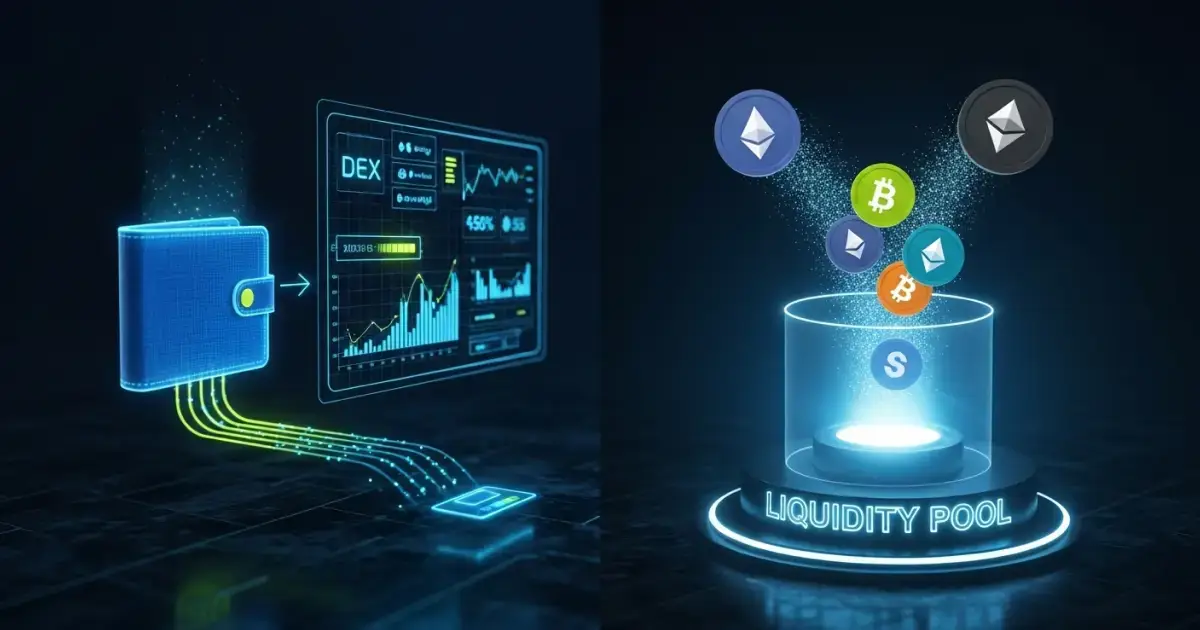
Have you ever tried to sell something truly unique—like a rare collectible or heirloom furniture—only to find there’s no one around to buy it? That frustrating silence where a transaction should be is what the crypto world calls illiquidity. For years, it haunted decentralized finance (DeFi). Building a new financial system was impossible if users couldn't reliably trade one digital asset for another.
The solution came directly from code: the liquidity pool. At its simplest, a liquidity pool is a shared reservoir of crypto assets locked in a smart contract that enables decentralized exchanges to operate without traditional market makers. It powers efficient trading and lets you swap tokens at any hour of the day. To understand the future of finance, you must understand why crypto needs them.
The Problem Before Pools

To appreciate the solution, consider early decentralized exchanges (DEXs). On centralized platforms like Coinbase or Binance, traditional market makers—large firms with massive capital—constantly list buy and sell orders. They provide liquidity, ensuring someone is always available to trade. However, relying on these intermediaries contradicted what crypto set out to eliminate.
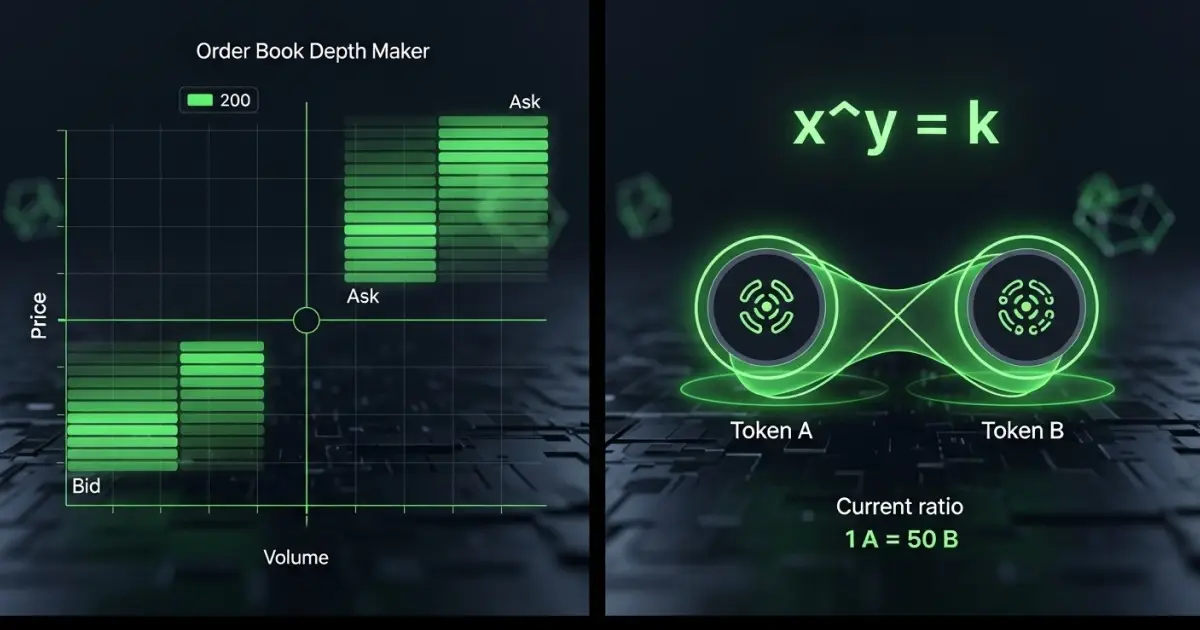
Early DEXs used on-chain order books, but low liquidity made trade execution slow and inefficient compared to centralized venues. If you wanted to sell a lesser-known altcoin, you had to wait for a buyer to appear who wanted that exact coin at your exact price. This resulted in thin markets, massive price swings on small trades (slippage), and a clunky user experience. The central challenge was clear: how do you create continuous trading liquidity on-chain?
The Invention of the Automated Shopkeeper: How Liquidity Pools Work
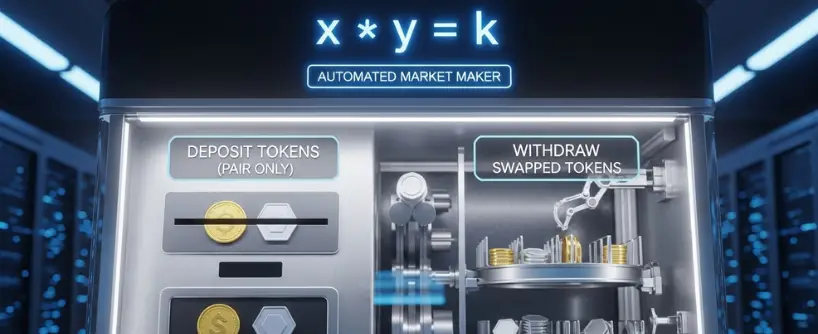
The answer was straightforward: instead of waiting for matching buyers and sellers, create a pool of funds that anyone can trade against. Think of a liquidity pool as a communal vending machine stocked by the community rather than a single entity.
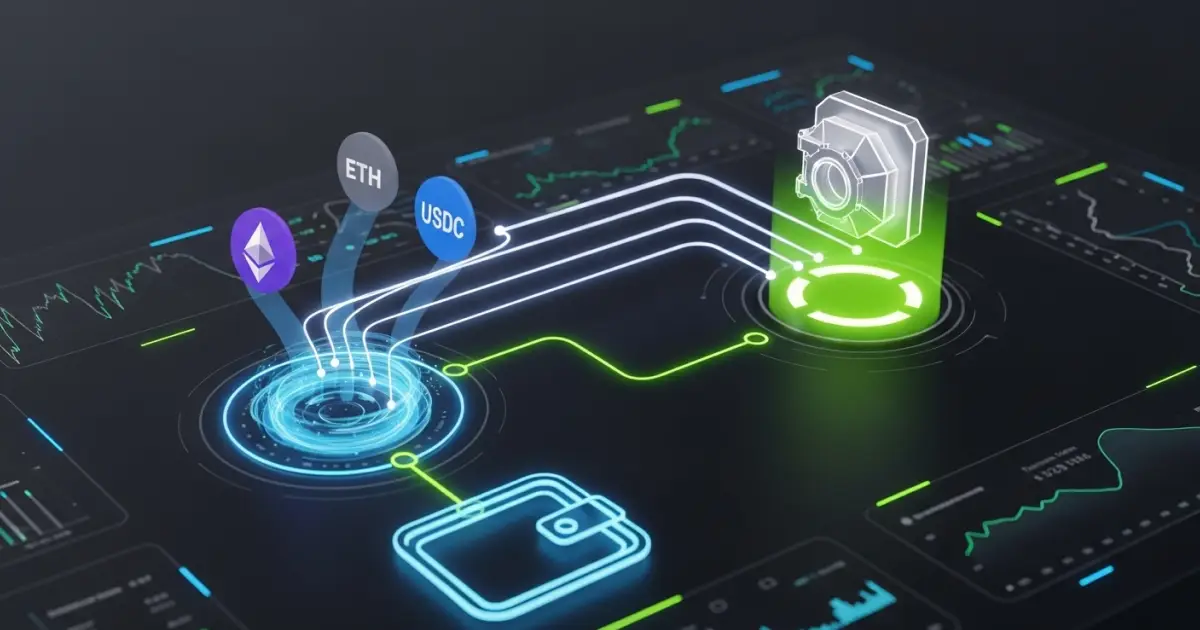
Users Provide Liquidity: Liquidity providers (LPs) deposit pairs of tokens into a smart contract. For example, to provide liquidity for an ETH/USDT pair, you deposit an equal value of both ETH and USDT.
The Pool is Created: This combined capital forms the liquidity pool, which serves as the counterparty for every trade.
Automated Market Makers (AMMs) Determine Prices: The pool uses an automated market maker (AMM) algorithm—a mathematical formula that sets exchange rates based on the token ratio inside the pool. The standard formula (like x * y = k) ensures that larger trades shift the price more, naturally reflecting supply and demand.
Trading Happens Instantly: When swapping ETH for USDT, you trade directly with the pool rather than another user. The AMM calculates the price, sends your USDT, and updates the pool's ratio, adjusting the price for the next trader.
This mechanism provides continuous, 24/7 liquidity without requiring active order matching.
The Incentive: How Liquidity Providers Earn Fees

Why do users lock up their crypto in a pool? The main incentive is yield. Every time a trader completes a token swap, they pay a transaction fee. While legacy pools used flat rates (such as 0.3%), modern protocols like Uniswap v3 offer multiple fee tiers—typically 0.01% (for stablecoins like USDC/USDT), 0.05% (for major pairs like ETH/USDC), 0.30% (for standard altcoins), and 1.00% (for highly volatile assets). This fee is distributed proportionally to all liquidity providers in that pool based on their share of total deposits.
This process lets users put idle assets to work to earn passive income from trading activity. When protocols issue extra governance tokens to reward depositors, the practice is often called liquidity mining or yield farming. To track your ownership, the protocol issues liquidity pool tokens (LP tokens). These tokens represent your claim to the underlying assets plus accumulated fees. When you exit, you return your LP tokens to reclaim your initial deposit and earned fees.
Beyond Swaps: The Deeper Impact of Crypto Liquidity Pools

Crypto liquidity pools do more than facilitate basic swaps. Algorithmic price determination has enabled several core functions across DeFi:
Price Discovery: For new tokens lacking active order books, AMMs offer a transparent, code-driven method for organic market price discovery.
Accessible Financial Services: Liquidity pools help democratize finance. Anyone with an internet connection and crypto can act as a market maker and earn yield—a role previously restricted to institutional trading firms.
Composability: Pools act as foundational building blocks across DeFi. Lending, borrowing, and derivatives protocols all rely on them as dependable, on-chain liquidity sources.
Because of these capabilities, liquidity pools serve as a primary gateway to open financial services for millions of users.
The Associated Risks

While liquidity pools offer clear benefits, liquidity providers must evaluate several key risks before participating:
For example, if you deposit 1 ETH ($2,000) and 2,000 USDT ($4,000 total) into a pool, and ETH doubles to $4,000, the AMM algorithm balances the pool by selling ETH for USDT. Upon withdrawing, you would hold approximately 0.707 ETH and 2,828 USDT (worth $5,656).
If you had simply held the original assets in your wallet, they would be worth $6,000 ($4,000 + $2,000). The $344 difference (~5.7%) represents your impermanent loss (which becomes permanent once withdrawn), unless offset by collected trading fees.
Smart Contract Vulnerabilities: Pools run on code. Bugs or exploits in smart contract logic can lead to lost funds. Using thoroughly audited protocols with established security track records is essential.
Counterparty Risk: In advanced pools that concentrate liquidity within narrow price ranges, risk management can become significantly more complex.
Recognizing these risks is a necessary step for making informed choices in DeFi.
Liquidity Pools vs Traditional Market Makers

In traditional finance, institutional market makers manually balance buyer and seller orders through centralized order books and brokerages. In contrast, crypto liquidity pools execute trades automatically via smart contracts.
Feature | Traditional Market Makers | Crypto Liquidity Pools |
Execution | Manual matching via intermediaries | Automated smart contract execution |
Control | Centralized firms | Decentralized protocols |
Access | Restricted to institutional capital | Open to any capital provider |
This transition shifts asset trading away from centralized Wall Street intermediaries toward global, permissionless execution.
Conclusion
So, what is a liquidity pool? It is the core engine of decentralized finance. By facilitating trades, powering DEXs, offering yield farming opportunities, and broadening access to market infrastructure, liquidity pools underpin the broader DeFi ecosystem.
While risk management remains vital, liquidity pools achieve what legacy market makers could not: a borderless, 24/7 financial infrastructure. Without them, decentralized finance would struggle to scale. They keep markets liquid, fair, and accessible to anyone worldwide.
About Bitunix
Bitunix is a global cryptocurrency derivatives exchange trusted by over 5 million users across more than 150 countries/districts. The platform is committed to providing a transparent, compliant, and secure trading environment for every user. Bitunix offers a fast registration process and a user-friendly verification system supported by mandatory KYC to ensure safety and compliance.
With global standards of protection through Proof of Reserves (POR) and the Bitunix Care Fund, Bitunix prioritizes user trust and fund security. The K-Line Ultra chart system delivers a seamless trading experience for both beginners and advanced traders, while leverage of up to 200x and deep liquidity make Bitunix one of the most dynamic platforms in the market.
Bitunix Global Accounts
X | Telegram Announcements | Telegram Global | CoinMarketCap | Instagram | Facebook | LinkedIn | Reddit | Medium
Frequently Asked Questions
How do automated market makers work in liquidity pools?
Automated market makers (AMMs) use mathematical algorithms instead of traditional order books to set prices, enabling instant swaps and continuous price discovery.
How do crypto liquidity pools work?
Crypto liquidity pools allow users to deposit token pairs into a smart contract. Traders can then swap assets directly against this pooled capital without waiting for an individual buyer or seller.
What are liquidity pool tokens (LP tokens)?
Liquidity pool tokens represent a user's proportional share of a pool. Depositors redeem these tokens to withdraw their initial crypto assets along with accrued trading fees.
What is liquidity mining?
Liquidity mining occurs when protocols reward users who supply capital to pools with extra tokens (often governance tokens) on top of standard trading fees.
Why are liquidity pools important in decentralized finance?
In DeFi, liquidity pools provide the foundation for token trading, lending platforms, and yield strategies, making decentralized financial services functional and scalable.
How do liquidity pools strengthen the DeFi ecosystem?
They sustain the ecosystem by guaranteeing continuous trading depth, supporting new token launches, and allowing peer-to-contract trading without centralized intermediaries.
What does liquidity provision mean?
Liquidity provision is the act of supplying crypto assets to a smart contract pool, helping trades execute smoothly while earning the provider a share of trading transaction fees.