Crypto markets are influenced by more than price charts and fundamentals. Social media discussions, news events, and community sentiment can quickly change how traders perceive an asset.
In 2026, AI-powered sentiment analysis tools are helping traders process these signals at a much larger scale. By analyzing data from social platforms, news sources, and blockchain activity, AI models can identify changes in market sentiment and organize information that would be difficult to track manually.
AI trading algorithms do not predict markets with certainty. Instead, they help traders analyze patterns, reduce emotional bias, and combine sentiment data with other research methods such as technical analysis and risk management.
This article explores five types of AI algorithms used for crypto sentiment analysis, explains how they work, and examines how traders can use them as part of a broader decision-making process.
Why Sentiment Analysis Matters in Crypto Trading

Crypto markets are heavily influenced by investor sentiment because online discussions and community activity can quickly affect market expectations.
Unlike traditional markets, many crypto assets do not have the same valuation frameworks as stocks or bonds. As a result, market perception often plays a significant role in price movements.
Examples of sentiment-driven market behavior include:
Positive community discussions increasing attention around a project
Fear spreading during market downturns
Social media trends influencing interest in meme coins and emerging tokens
Sentiment analysis attempts to measure these changes by analyzing large amounts of public information.
Traditional analysis usually requires traders to manually review news, social platforms, and market conditions. AI models can process these signals at a much larger scale and identify patterns that may be difficult to detect manually.
However, sentiment is only one factor affecting crypto markets. Price movements can also be influenced by liquidity, regulations, macroeconomic conditions, and unexpected events.
How AI Trading Algorithms Analyze Crypto Sentiment
AI sentiment systems typically combine multiple technologies rather than relying on a single model.
Common approaches include:
Algorithm Type | Main Function |
|---|
Neural Network Sentiment Classifiers | Identify emotional patterns in text and social discussions |
Natural Language Processing (NLP) Models | Analyze news, announcements, and written information |
Reinforcement Learning Systems | Adapt strategies based on previous outcomes |
Hybrid Technical-Sentiment Models | Combine sentiment signals with market indicators |
Social Media Graph Analysis | Track how information spreads across networks |
Each algorithm focuses on a different part of market behavior.
Algorithm 1: Neural Network Sentiment Classifiers

Neural network classifiers analyze language patterns to determine whether market discussions are positive, negative, or neutral.
These models are trained to recognize changes in online conversations, including crypto-specific language, community slang, and emerging narratives.
In practice, neural sentiment models may analyze:
Social media posts
Community discussions
Crypto forums
Market commentary
For example, a sudden increase in positive discussions around a specific token may indicate growing attention from traders.
Strengths
Can adapt to changing crypto terminology and online language
Processes large volumes of text data quickly
Helps identify shifts in community sentiment
Common Use Cases
Neural classifiers are often used to monitor:
Early discussions around emerging projects
Changes in investor mood during market cycles
Community reactions to major announcements
Limitations
Sentiment models can misinterpret sarcasm, coordinated campaigns, or artificial engagement. A large amount of online discussion does not always represent genuine market demand.
Algorithm 2: Natural Language Processing (NLP) for Crypto News Analysis

NLP models help traders analyze how news events may influence market sentiment.
Crypto markets often react quickly to announcements such as:
Regulatory updates
Exchange developments
Network upgrades
Institutional activity
NLP systems process written information from different sources and evaluate factors such as:
Tone
Context
Relevance
Topic importance
For example, an NLP model may identify whether a regulatory announcement is being interpreted positively or negatively by the market.
Strengths
Processes large amounts of news data efficiently
Helps organize information from multiple sources
Identifies changes in market narratives
Common Use Cases
NLP models can help analyze:
Limitations
AI models depend on the quality of their data sources. Misleading reports, incomplete information, or rapidly changing events can affect analysis accuracy.
Algorithm 3: Reinforcement Learning for Adaptive Sentiment Strategies

Reinforcement learning models use feedback from previous outcomes to adjust how they respond to changing market conditions.
Unlike traditional rule-based systems, reinforcement learning algorithms can update their decision-making process based on historical results.
In crypto sentiment analysis, these models may combine multiple data sources, including:
Social media sentiment
Market price movements
Trading volume changes
On-chain activity
The system evaluates whether previous decisions produced useful results and adjusts its approach over time.
Strengths
Adapts to changing market conditions
Can process multiple variables simultaneously
Useful for testing complex trading strategies
Common Use Cases
Reinforcement learning may be applied to:
Sentiment-based strategy testing
Portfolio allocation models
Automated decision-support systems
For example, a model may learn that positive social sentiment alone is not enough to justify a trading signal and require confirmation from additional market data.
Limitations
Reinforcement learning depends heavily on training data and model design. A strategy that performed well under historical conditions may not perform the same way during unexpected market events.
Algorithm 4: Hybrid Technical and Sentiment Models
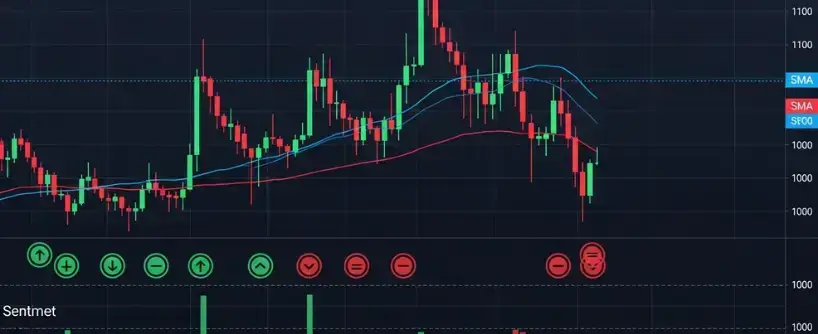
Hybrid AI models combine sentiment analysis with technical indicators to create a broader view of market conditions.
Sentiment data alone can produce misleading signals. A token may receive significant online attention while price momentum, trading volume, or market structure suggests a different situation.
Hybrid models address this by combining different types of information, such as:
Social sentiment
Trading volume
Price trends
Technical indicators
For example, an algorithm may identify positive Ethereum sentiment but only generate a stronger signal if technical indicators also show supporting market conditions.
Strengths
Reduces reliance on a single data source
Helps filter out short-term online noise
Provides more context around sentiment changes
Common Use Cases
Hybrid models are often used for:
Limitations
Combining more data does not automatically create better decisions. Poor-quality inputs or incorrect assumptions can still affect the final analysis.
Algorithm 5: Social Media Graph Analysis
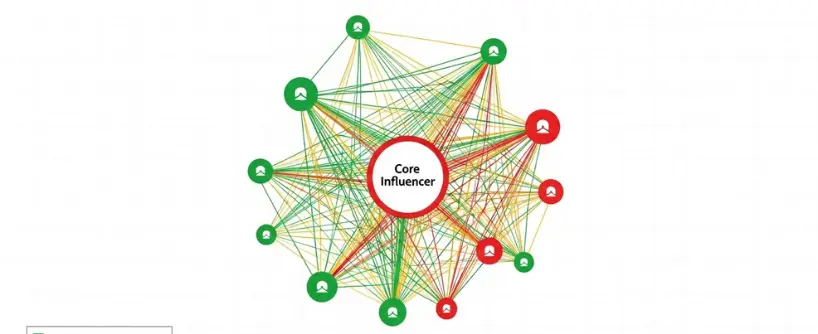
Graph analysis focuses on how information spreads across online networks rather than simply counting mentions or posts.
In crypto markets, influence is often distributed across communities, influencers, developers, and trading groups.
Graph analysis algorithms examine relationships between accounts and information flows to understand:
Who is driving a discussion
How quickly a narrative spreads
Whether activity appears organic or coordinated
For example, a sudden increase in mentions from unrelated communities may indicate broader interest, while activity concentrated around a small group of accounts may require additional verification.
Strengths
Identifies influential sources within networks
Provides deeper context than simple mention counts
Helps analyze how narratives develop
Common Use Cases
Graph analysis can support research into:
Community growth patterns
Potential coordinated activity
Spread of market narratives
Limitations
Online networks are constantly changing. An algorithm may miss new influence patterns or misinterpret unusual but legitimate activity.
How Traders Use AI Sentiment Algorithms
AI sentiment tools are most effective when used as research support rather than standalone trading systems.
Different algorithms provide different types of information:
Tool Type | Main Purpose |
|---|
Neural Classifiers | Measure changes in online sentiment |
NLP Models | Analyze news and written information |
Reinforcement Learning | Adapt strategies based on feedback |
Hybrid Models | Combine sentiment with market indicators |
Graph Analysis | Study information flow and influence |
A trader may combine these signals in a broader analysis process:
Identify emerging sentiment changes through social and community data.
Review news context using NLP-based analysis.
Compare sentiment with market conditions through technical indicators.
Apply risk controls before making decisions.
The goal is not to replace human judgment but to organize complex information more efficiently.
Benefits of AI Sentiment Analysis in Crypto Trading
AI-powered sentiment tools provide several advantages when analyzing large amounts of market information.
1. Faster Data Processing
AI systems can review large volumes of text, including social media posts, news articles, and market discussions, much faster than manual analysis.
This allows traders to monitor broader sources of information without reviewing every data point individually.
2. Reduced Emotional Bias
Human traders can be influenced by fear, excitement, and market hype.
AI systems analyze predefined data inputs instead of reacting emotionally to price movements. This can help traders maintain a more structured research process.
3. Ability to Monitor Multiple Assets
Manual sentiment tracking becomes difficult when following many cryptocurrencies at the same time.
AI tools can monitor multiple assets, communities, and information sources simultaneously, helping traders organize market research more efficiently.
4. Adaptation to Changing Market Conditions
Some AI models can adjust based on new information and changing market patterns.
However, adaptation does not mean guaranteed accuracy. Market conditions can shift quickly, and historical patterns may not always repeat.
Risks and Limitations of AI Sentiment Trading
AI sentiment analysis can improve information processing, but it cannot remove the uncertainty of crypto markets.
Several limitations should be considered:
Data Quality Problems
AI models depend on the information they analyze.
False reports, manipulated discussions, spam activity, or incomplete data can affect the quality of AI-generated insights.
Market Volatility
Crypto prices can move rapidly due to unexpected events, including regulatory changes, security incidents, or broader market conditions.
AI models may not react correctly when situations differ significantly from historical examples.
Overreliance on AI Signals
AI tools should not replace independent analysis.
A sentiment signal alone does not provide a complete picture of market conditions. Traders may also consider:
Market liquidity
Project fundamentals
Technical indicators
Personal risk tolerance
Cost and Technical Requirements
Advanced AI systems may require significant computing resources, data access, or technical knowledge.
For many users, simpler sentiment tools may be more practical than building complex models independently.
How Bitunix Academy Helps Traders Understand AI Sentiment Analysis

Learning how AI models work is an important step before using sentiment-based tools in crypto trading.
AI algorithms can process large amounts of information, but traders still need to understand what the signals represent, where the data comes from, and what limitations may affect the results.
Educational resources can help traders build a stronger foundation by explaining:
How AI sentiment models collect and analyze data
How different algorithms interpret market information
How to combine AI insights with risk management
Why AI signals should be evaluated alongside other research methods
Bitunix Academy provides educational content designed to help traders understand crypto concepts, trading tools, and market analysis approaches.
By learning the principles behind AI sentiment analysis, users can better evaluate these tools and apply them as part of a broader trading framework.
Case Study: How AI Models Analyze Crypto Sentiment During Market Events
AI sentiment analysis is often used to monitor how market narratives develop during major events.
For example, when a cryptocurrency project announces a major update, AI systems may analyze:
Changes in social media discussions
News coverage sentiment
Community engagement patterns
Price and volume movements
A neural classifier may identify whether online discussions are becoming more positive or negative.
An NLP model may evaluate how news outlets describe the event.
A hybrid model may compare sentiment changes with technical indicators to provide additional context.
This multi-source approach helps traders understand how different factors interact.
However, AI analysis does not guarantee that a market move will happen or predict the exact direction of future prices. Unexpected events and changing market conditions can still influence outcomes.
Conclusion: AI Sentiment Algorithms Are Tools, Not Predictions
AI trading algorithms have changed how traders analyze crypto sentiment by making it possible to process large amounts of social, news, and market data more efficiently.
In 2026, several AI approaches are commonly used in crypto sentiment analysis:
Neural network classifiers identify language and sentiment patterns
NLP models analyze news and written information
Reinforcement learning systems adapt based on feedback
Hybrid models combine sentiment with technical indicators
Graph analysis studies how information spreads across communities
These technologies can help traders organize information and reduce emotional decision-making, but they are not a replacement for risk management or independent analysis.
The most effective approach is to treat AI sentiment tools as one part of a broader research process. Understanding the data behind each signal, recognizing its limitations, and applying proper risk controls remain essential in volatile crypto markets.
About Bitunix
Bitunix is a global cryptocurrency derivatives exchange trusted by over 5 million users across more than 150 countries/districts. The platform is committed to providing a transparent, compliant, and secure trading environment for every user. Bitunix offers a fast registration process and a user-friendly verification system supported by mandatory KYC to ensure safety and compliance.
With global standards of protection through Proof of Reserves (POR) and the Bitunix Care Fund, Bitunix prioritizes user trust and fund security. The K-Line Ultra chart system delivers a seamless trading experience for both beginners and advanced traders, while leverage of up to 200x and deep liquidity make Bitunix one of the most dynamic platforms in the market.
Bitunix Global Accounts
X | Telegram Announcements | Telegram Global | CoinMarketCap | Instagram | Facebook | LinkedIn | Reddit | Medium