Have you ever looked at your collection of digital assets and wondered, "Is this really the best it can be?" You're not alone. Most crypto investors assemble a few tokens they believe in, only to watch the market's wild swings turn their careful picks into a source of uncertainty.
But what if your crypto portfolio wasn't just a random assortment of coins, but a structured strategy designed around your financial goals, risk tolerance, and long-term objectives?
The truth is, the difference between sporadic gains and sustained portfolio management isn't luck — it's strategy. Optimizing your crypto portfolio is a continuous process of strategic allocation, portfolio monitoring, and informed rebalancing, designed to manage risk while adapting to changing market conditions.
It’s about becoming more intentional with your decisions rather than simply reacting to market movements.
What Is a Crypto Portfolio

Before we dive into optimization, let's lay the foundation.
Think of your crypto portfolio not just as a list of coins, but as a detailed map of your journey in the digital economy. It is the complete collection of your cryptocurrency investments, from major assets like Bitcoin and Ethereum to smaller altcoins, DeFi positions, staking assets, and other blockchain-based investments.
Every asset, every token, and every position contributes to your portfolio's overall value, performance, liquidity, and risk exposure.
Understanding this is the first step toward effective crypto portfolio management. A well-structured portfolio is not simply a collection of individual assets; it is a strategy where each allocation has a specific purpose.
Crypto Portfolio Components in 2026
As the crypto market continues to mature, portfolios increasingly include different types of digital assets beyond traditional spot holdings.
Portfolio Component | Purpose in Portfolio Management |
|---|
Bitcoin and major cryptocurrencies | Core market exposure and long-term value allocation |
Ethereum and ecosystem assets | Exposure to blockchain infrastructure and applications |
Altcoins | Growth opportunities with higher volatility |
Stablecoins | Liquidity management and portfolio stability |
DeFi positions | Yield opportunities and decentralized finance exposure |
Understanding how each component affects overall portfolio risk is essential when building a balanced crypto investment strategy.
How to Build a Crypto Portfolio from the Ground Up

Building a robust portfolio is the most critical step. A shaky foundation can create unnecessary risks during periods of market volatility.
Here’s how investors can approach portfolio construction.
Define Your Financial Goals and Risk Tolerance
This is the "why" behind your portfolio build.
Are you investing for long-term wealth accumulation, generating additional yield, or seeking higher-growth opportunities?
Your financial goals determine your investment approach. Next, evaluate your risk tolerance.
Consider:
How much volatility can you realistically tolerate?
How long do you plan to hold your assets?
How much capital can you afford to allocate to higher-risk investments?
Use tools such as risk questionnaires, portfolio stress tests, and scenario analysis to understand whether your approach aligns with your financial situation.
For example, an investor who would panic during a 20% weekly decline may need a different portfolio structure compared with someone who accepts higher volatility for potential long-term growth.
The Cornerstone of Success: Strategic Asset Allocation
This is where your investment strategy comes to life. Asset allocation is the process of dividing investment capital among different assets within your crypto portfolio. The goal is diversification — reducing dependence on any single asset while maintaining exposure to potential growth opportunities.
A common allocation framework may look like this:
Portfolio Category | Example Allocation | Purpose |
|---|
The Foundation | 50–70% | Large-cap assets such as Bitcoin and Ethereum |
The Growth Engine | 20–30% | Mid-cap cryptocurrencies with strong fundamentals and use cases |
High-Potential Speculation | 5–10% | Higher-risk assets with greater volatility |
This is only one example. The appropriate allocation depends on individual goals, risk tolerance, and investment horizon. Some may allocate a portion to staking or DeFi yields, treating them as the fixed-income component of their crypto portfolio. Diversifying beyond crypto, into gold or ETFs, can further stabilize returns.
2026 Market Context: Why Portfolio Allocation Matters
Crypto markets in 2026 continue to be influenced by broader financial conditions, institutional participation, and market liquidity cycles.
Several factors make portfolio allocation increasingly important:
Macro Environment: Interest rate expectations and global liquidity conditions continue to influence risk assets, including cryptocurrencies.
Institutional Participation: Spot crypto ETF activity has become an important factor affecting market sentiment and capital flows.
Derivatives Market Dynamics: High leverage and liquidation events can amplify short-term price movements.
Market Rotation: Capital often shifts between major cryptocurrencies, emerging sectors, stable assets, and alternative opportunities during different market phases.
A structured allocation strategy helps investors manage exposure instead of relying solely on short-term market predictions.
Choose Your Tools: Wallets and Exchanges Wisely
Your assets need a secure home.
This means understanding the difference between holding assets in wallets and using exchanges for trading activities.
For long-term holdings, self-custody solutions such as hardware wallets or non-custodial wallets may provide greater control over private keys.
Exchanges can provide liquidity, trading infrastructure, and portfolio management tools. However, users should evaluate platform security, transparency, available features, and risk management practices before choosing where to manage their assets.
Recommended tools include hardware wallets such as Ledger or Trezor, software wallets such as Trust Wallet, and portfolio tracking applications such as CoinStats, CoinLedger, and CoinTracking.
From Building to Managing: The Art of Optimization
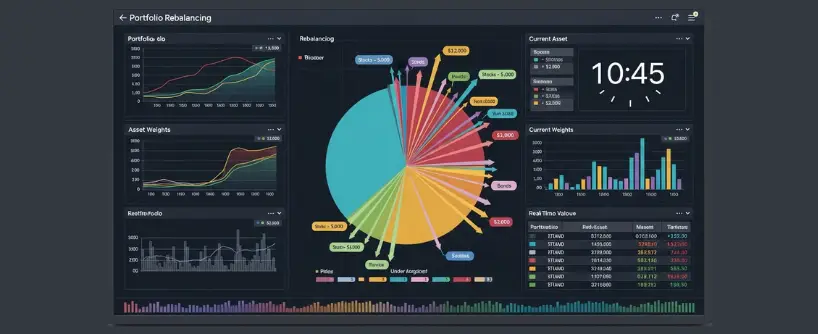
Once your portfolio is built, the real work begins. Crypto portfolio optimization is an active and ongoing process that involves monitoring performance, managing risk exposure, and making adjustments as market conditions change.
A portfolio that performs well in one market cycle may require adjustments in another. Regular evaluation helps investors identify whether their original allocation strategy still matches their financial goals and risk tolerance.
The Indispensable Tool: Using a Crypto Portfolio Tracker
You cannot manage what you cannot measure.
A crypto portfolio tracker acts as a central dashboard for monitoring your digital assets. By connecting APIs with read-only access to exchange accounts and wallets, these tools aggregate holdings into one interface, helping investors understand their overall portfolio performance.
The best crypto portfolio tracker apps typically provide:
Feature | Purpose |
|---|
Real-time performance data | Monitor portfolio value, profit and loss (P&L), and asset changes |
Allocation analysis | Understand exposure across different cryptocurrencies and asset categories |
Transaction tracking | Review historical trades and portfolio changes |
Price alerts | Monitor important market movements and predefined price levels |
Tax reporting support | Simplify transaction records and reporting preparation |
Using a portfolio tracker transforms scattered investment data into actionable insights. Instead of relying on memory or emotional reactions, investors can make decisions based on portfolio-level information.
Portfolio Monitoring in a More Complex 2026 Market Environment
As crypto portfolios become more diversified, tracking individual token prices is no longer sufficient.
Modern portfolio management increasingly requires monitoring:
Asset Concentration: Whether a single cryptocurrency represents an excessive portion of total portfolio exposure.
Correlation Risk: Whether multiple assets are moving in similar directions during market stress.
Liquidity Conditions: Whether positions can be adjusted efficiently during periods of high volatility.
Derivatives Exposure: Whether leveraged positions may introduce additional liquidation risk.
For active traders, workflow tools such as automated alerts can support faster market monitoring. For example, Bitunix Super Alert can be used as a market monitoring workflow tool, helping users track predefined price movements and important market changes without constantly watching charts.
The purpose of these tools is not to predict market direction, but to improve awareness and decision-making efficiency.
Permanent Review: Rebalancing Your Portfolio
The cryptocurrency market is dynamic. What started as a 10% allocation to a small altcoin might increase significantly after a strong market move, unintentionally changing your original risk exposure.
Rebalancing is the process of adjusting your portfolio back toward its intended allocation by buying or selling assets.
For example:
If one asset grows beyond its target allocation, an investor may reduce part of that position.
If another allocation falls below its target range, an investor may increase exposure according to their strategy.
This approach helps maintain portfolio discipline and reduces the risk of allowing market movements to determine portfolio structure.
Risk-Controlled Portfolio Adjustments in 2026
With increased market volatility and faster price movements, portfolio management increasingly focuses on controlling downside exposure.
Common risk management practices include:
Setting maximum allocation limits for individual assets.
Separating high-conviction positions from speculative positions.
Using predefined adjustment rules instead of reacting emotionally to sudden price changes.
For traders managing multiple strategies, tools such as Bitunix Fixed Risk can support a structured approach by helping define risk parameters before entering positions. This type of workflow focuses on improving consistency and position management rather than predicting market outcomes.
Advanced Strategies for the Seasoned Builder
As you become more experienced in managing a crypto portfolio, you can explore additional strategies designed to improve efficiency and risk management.
Tax Loss Harvesting
Tax loss harvesting involves strategically selling assets that have declined in value to potentially offset taxable gains, depending on applicable tax regulations. The strategy requires understanding local tax rules and should not be applied without considering the broader investment plan.
Dollar-Cost Averaging (DCA)
Dollar-cost averaging (DCA) involves investing a fixed amount at regular intervals regardless of short-term price movements. This approach can help reduce the impact of market timing decisions by spreading purchases over time.
However, DCA does not eliminate investment risk, and its suitability depends on individual goals and market conditions.
Defining an Exit Strategy
An exit strategy defines how and when an investor plans to reduce exposure, take profits, or limit losses.
A clear exit plan may include:
Defining these rules before entering a position can reduce emotional decision-making during periods of market uncertainty.
Portfolio Diversification Beyond Crypto
Although cryptocurrencies can provide growth opportunities, some investors choose to diversify across additional asset classes.
Traditional assets such as:
may provide broader portfolio exposure and help balance risk depending on an investor’s overall financial strategy. The appropriate allocation depends on individual circumstances and should align with personal investment objectives.
Managing Multiple Trading Strategies More Efficiently
For active crypto traders, portfolio optimization is not only about asset selection but also about organizing different strategies.
A portfolio may include:
Separating these strategies can make performance evaluation clearer. Tools such as Bitunix Multi-Trade can support this workflow by allowing traders to manage multiple positions and strategies more independently, helping reduce confusion between different trading objectives.
Psychology and Continuous Learning

The most advanced strategy cannot compensate for poor decision-making habits. Crypto markets are influenced by market sentiment, and emotional reactions remain one of the most common challenges for investors.
Stick to Your Plan
Your investment strategy provides structure during periods of uncertainty. Having predefined allocation rules, risk limits, and review schedules can help investors avoid making decisions based solely on short-term emotions.
Stay Informed, Not Overwhelmed
Following market developments is important, but not every price movement requires action.
Stay informed about meaningful developments that may influence the crypto market, including blockchain innovation, market structure changes, regulatory updates, and broader macroeconomic trends. Avoid making decisions based solely on short-term price speculation.
Never Stop Learning
The crypto industry continues to evolve rapidly. Continuous learning helps investors better understand new technologies, market mechanisms, and risk management approaches.
Crypto Portfolio Optimization in Action

To understand how portfolio allocation works in practice, imagine an investor with a $10,000 portfolio.
A sample allocation strategy may look like this:
Asset Category | Allocation | Purpose |
|---|
Bitcoin | 40% | Core cryptocurrency exposure |
Ethereum | 25% | Blockchain ecosystem exposure |
Stablecoins | 15% | Liquidity and risk management |
DeFi protocols | 10% | Higher-risk growth opportunities |
Other cryptocurrencies | 10% | Additional diversification |
This example demonstrates how investors can balance growth opportunities with risk management. The appropriate allocation depends on individual goals, financial circumstances, and risk tolerance.
Portfolio Allocation Considerations in 2026
Market conditions can change significantly across different crypto cycles.
Investors may consider reviewing:
Whether their portfolio remains overly concentrated in one sector.
Whether their risk exposure matches current market conditions.
Whether liquidity reserves are sufficient for unexpected opportunities or volatility.
Whether portfolio performance aligns with their original objectives.
Regular reviews help ensure that a portfolio continues to reflect an investor’s strategy rather than simply following market movements.
Optimizing your crypto portfolio is not a one-time task; it is an ongoing process that requires planning, monitoring, and adjustment.
A well-managed portfolio begins with clear financial goals, a suitable asset allocation strategy, and disciplined risk management. By regularly reviewing portfolio performance, using analytical tools, and making informed adjustments, investors can better navigate changing market conditions.
The goal of crypto portfolio optimization is not to predict every market movement. Instead, it is to create a structured approach that helps investors make decisions based on data, strategy, and their individual risk tolerance.
About Bitunix
Bitunix is a global cryptocurrency derivatives exchange trusted by over 5 million users across more than 150 countries/districts. The platform is committed to providing a transparent, compliant, and secure trading environment for every user. Bitunix offers a fast registration process and a user-friendly verification system supported by mandatory KYC to ensure safety and compliance. With global standards of protection through Proof of Reserves (POR) and the Bitunix Care Fund, Bitunix prioritizes user trust and fund security. The K-Line Ultra chart system delivers a seamless trading experience for both beginners and advanced traders, while leverage of up to 200x and deep liquidity make Bitunix one of the most dynamic platforms in the market.
Bitunix Global Accounts
X | Telegram Announcements | Telegram Global | CoinMarketCap | Instagram | Facebook | LinkedIn | Reddit | Medium