Have you ever wondered how traders make money when cryptocurrency prices fall instead of rise? In 2026, with markets more volatile than ever, shorting crypto has become one of the most discussed trading strategies. But what does it actually mean, and why do some traders choose to open short positions instead of only waiting for prices to recover?
If you've ever experienced a market downturn and wondered how traders manage exposure during bearish conditions, understanding crypto short selling can provide valuable market knowledge. However, shorting is not simply the opposite of buying crypto. It involves additional mechanics, including borrowed assets, margin requirements, derivatives contracts, and liquidation risks.
In this complete 2026 guide, we'll explain what shorting crypto means, how crypto short selling works, common methods such as margin and futures shorting, potential risks, and key considerations before using a short strategy.
What Is Shorting Crypto?
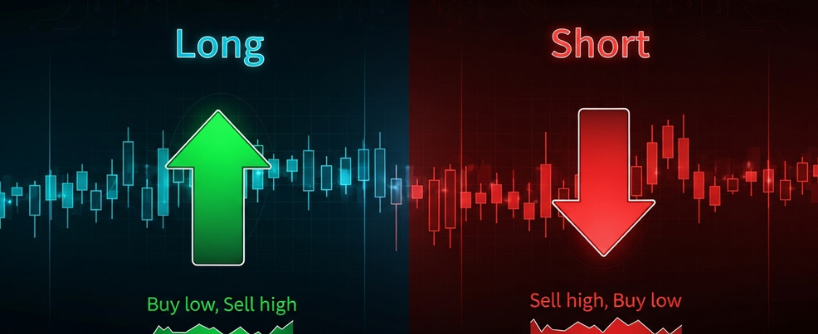
At its core, shorting crypto is the act of taking a position that benefits from a cryptocurrency’s price decline. Unlike buying crypto (also known as taking a long position), where traders expect prices to increase, short sellers expect the asset price to decrease.
The basic process involves selling an asset first and buying it back later at a lower price. If the price falls, the trader may benefit from the difference. If the price rises, the trader faces losses, which can theoretically be unlimited because there is no fixed ceiling on how high an asset’s price can go.
The traditional method of short selling involves borrowing an asset from a brokerage firm or exchange, selling it at the current market price, and later purchasing it back to return the borrowed asset. The difference between the initial selling price and the repurchase price determines the trading result, after accounting for fees and borrowing costs.
In the crypto market, this concept has been adapted to a 24/7 digital asset environment. Traders can gain short exposure through several methods, including margin trading, perpetual futures contracts, options, and other cryptocurrency derivatives.
How Crypto Short Selling Differs From Traditional Short Selling
While the basic concept is similar, crypto short selling has several differences compared with traditional stock markets:
24/7 Market Access: Cryptocurrency markets operate continuously, meaning short positions can be affected by price movements at any time.
Higher Volatility: Crypto assets can experience rapid price swings, increasing both profit opportunities and liquidation risks.
Derivative-Based Trading: Many crypto traders short assets through futures contracts rather than directly borrowing and selling the underlying cryptocurrency.
Leverage Impact: Crypto derivatives often allow leveraged positions, which can magnify both potential gains and potential losses.
Why does this matter in 2026? Cryptocurrency prices continue to react to factors such as interest rates, regulatory developments, institutional participation, and broader market sentiment. For some traders, short positions may be used to manage downside exposure or express a bearish market view.
However, shorting crypto should be understood as an advanced trading strategy rather than a guaranteed way to profit from falling markets. Successful short selling requires understanding market conditions, position management, and the risks involved.
How Short Selling Works in the Cryptocurrency Market: The Step-by-Step Breakdown

Ever wondered what happens behind the scenes when you open a short position? Understanding how to short crypto requires knowing the basic process behind borrowing, selling, and eventually closing a position.
Unlike traditional spot trading, where traders buy an asset first and sell it later, crypto short selling reverses the process. Traders typically open a short position by gaining exposure to a potential price decline through borrowed assets or derivative contracts.
Let's break down the process with a simple example.
Suppose Bitcoin trades at $120,000 (a hypothetical scenario for illustration), and you believe the price may decline based on your market analysis. Here's how a short trade could work:
Borrow the Asset
You cannot sell an asset you do not own through traditional short selling, so the first step is borrowing Bitcoin from an exchange or another market participant.
Through a margin account on a platform like Bitunix, traders may borrow Bitcoin to open a short position. Borrowing usually involves costs, which can vary depending on market demand, available liquidity, and the duration of the position.
These costs are important because even if the market moves in your expected direction, excessive borrowing fees can reduce the overall trading result.
For crypto futures traders, the process can work differently. Futures contracts generally allow traders to gain short exposure without directly borrowing the underlying cryptocurrency. Instead, traders open a futures position that tracks the price movement of the asset.
Sell at Market Price
After borrowing the asset, the trader sells it at the current market price.
Using the Bitcoin example:
At this point, the trader holds a short position. The goal is to buy Bitcoin back later at a lower price.
Wait for the Price Movement
If the market moves according to the trader's expectation and Bitcoin falls to $110,000, the trader may close the position by purchasing Bitcoin at the lower price.
The simplified calculation:
Initial short sale: Sell BTC at $120,000
Buy back BTC: Purchase BTC at $110,000
Price difference: $10,000
The potential result is the difference between the selling price and the repurchase price, minus trading fees, borrowing costs, and other expenses.
However, the opposite scenario creates losses.
If Bitcoin rises from $120,000 to $130,000:
The trader still needs to buy Bitcoin back.
The repurchase price is higher than the selling price.
The short position loses value.
Because cryptocurrency prices can theoretically continue rising, short positions carry potentially unlimited downside risk.
Close the Position
Closing a short position is known as covering the short.
The trader buys back the asset or closes the derivative contract, ending the position.
For margin shorting:
Buy back the borrowed cryptocurrency.
Return the borrowed asset.
Pay applicable fees.
Calculate the final trading result.
For futures shorting:
Open a short futures position.
Monitor price movements and margin requirements.
Close the contract when the trader exits.
Understanding Liquidation Risk When Shorting Crypto
When leverage is involved, traders must monitor their margin level carefully.
If the market moves significantly against a short position, the account may no longer have enough collateral to maintain the trade. In this situation, the exchange may automatically close the position to prevent further losses.
This process is known as liquidation.
Factors that influence liquidation risk include:
For this reason, experienced traders often evaluate liquidation levels before entering leveraged short positions.
Key Methods for Shorting Crypto in 2026
Now that you understand the basic mechanism, let's explore the most common ways traders gain short exposure in the cryptocurrency market.
The two primary methods are:
Margin shorting
Crypto futures shorting
Both approaches allow traders to benefit from declining prices, but they operate differently and involve different risk considerations.
Margin Shorting

The most direct analogue to traditional stock short selling is margin shorting.
In a margin account, traders provide collateral and borrow additional assets to increase their trading exposure. The borrowed cryptocurrency can then be sold, with the goal of buying it back later at a lower price.
For example, if a trader wants to short $10,000 worth of Ethereum, they may only need to provide part of the position value as collateral, depending on the platform's margin requirements.
If Ethereum decreases in price, the trader may benefit from the difference.
However, leverage also increases the impact of unfavorable price movements.
If Ethereum rises instead:
The short position loses value.
Additional margin may be required.
The position may eventually face liquidation if margin requirements are not maintained.
Key Factors to Monitor When Margin Shorting Crypto
Before opening a margin short position, traders should understand:
Borrowing Costs: Borrowing fees can accumulate over time, especially when many traders are shorting the same asset.
Margin Requirements: Different platforms may apply different initial margin and maintenance margin requirements.
Market Liquidity: Low-liquidity assets may experience larger price movements, making short positions more difficult to manage.
Exit Planning: Short positions should have clearly defined exit conditions because rapid price increases can create losses quickly.
Futures Shorting

For many traders, futures shorting is one of the most common ways to gain exposure to falling cryptocurrency prices.
Unlike margin shorting, where traders borrow the underlying asset, futures contracts allow traders to speculate on price movements without directly owning or borrowing the cryptocurrency.
When a trader opens a short futures position, they are essentially taking the opposite side of a long position. If the cryptocurrency price decreases, the short position may gain value. If the price increases, the position loses value.
For example:
Bitcoin futures price: $120,000
Trader opens a short futures position
Bitcoin falls to $110,000
Trader closes the position at a lower price
The difference between the entry and exit price determines the trading result, after considering trading fees and other contract-related costs.
In 2026, crypto futures remain one of the most widely used methods for shorting Bitcoin and other major cryptocurrencies because they provide flexibility, liquidity, and access to both long and short positions.
However, futures trading also introduces additional risks, especially when leverage is involved.
Understanding Crypto Futures Mechanics Before Shorting
Before using crypto futures to open short positions, traders should understand several key concepts.
Funding Rate
Many perpetual futures contracts use funding rates to help keep the futures price aligned with the spot market.
Depending on market conditions:
A trader holding a futures short position for an extended period should consider how funding costs may affect the overall position.
Mark Price
Crypto futures platforms typically use a mark price to calculate unrealized profit and loss and determine liquidation conditions.
The mark price is designed to reduce the impact of temporary price fluctuations or abnormal market movements.
Understanding the difference between:
Last traded price
Mark price
Index price
can help traders better understand how futures positions are managed.
Maintenance Margin and Liquidation Price
Futures positions require traders to maintain sufficient margin.
If the market moves against a short position and the account margin falls below the required level, the position may be automatically liquidated.
For example:
A trader opens a leveraged Bitcoin short position expecting prices to decline. Instead, Bitcoin rises sharply due to unexpected market news. If the position reaches its liquidation price, the exchange may close the position automatically.
This is why leverage management is one of the most important considerations when learning how to short Bitcoin futures.
Margin Shorting vs. Futures Shorting: Key Differences
Feature | Margin Shorting | Futures Shorting |
|---|
Asset ownership | Requires borrowing the cryptocurrency | Uses derivative contracts |
Trading mechanism | Sell borrowed asset and buy back later | Open and close futures contracts |
Main costs | Borrowing fees | Trading fees and funding rates |
Main risks | Borrowing costs and liquidation | Leverage and liquidation |
Common use case | Direct short exposure | Speculation and hedging |
Both methods can create short exposure, but they require different levels of market knowledge and risk management.
Other Shorting Methods

Besides margin trading and futures contracts, traders may use several other methods to gain short exposure to cryptocurrency markets. These approaches are generally less common but may be available depending on market conditions and platform support.
Options Trading
Crypto options allow traders to gain exposure to potential price movements without directly buying or selling the underlying asset.
For example, put options can provide a way to benefit from declining prices.
However, options involve additional concepts such as:
Strike price
Expiration date
Option premium
Implied volatility
Because of their complexity, options are generally considered more advanced derivatives instruments.
Inverse ETFs and Synthetic Short Products
Some financial products are designed to move in the opposite direction of an underlying asset.
For example, an inverse product linked to Bitcoin may increase in value when Bitcoin declines.
However, these products may have specific limitations, including:
DeFi-Based Short Exposure
Certain decentralized finance (DeFi) protocols allow users to create synthetic short positions through blockchain-based financial products.
These systems may involve:
Users should understand the underlying technology and risks before interacting with decentralized derivatives products.
Naked Shorting
Naked shorting refers to selling an asset without first borrowing it or ensuring the ability to deliver it. This practice is restricted or prohibited in many traditional financial markets.
In cryptocurrency markets, some derivatives products may create similar exposure without direct ownership of the underlying asset, but these mechanisms operate differently from traditional naked short selling.
Choosing a Shorting Method: Questions to Consider
Before selecting a shorting method, traders should evaluate:
1. Do You Understand the Product?
Margin, futures, and options each have different mechanics.
A futures contract is not the same as borrowing and selling cryptocurrency.
2. How Much Risk Can You Manage?
Higher leverage may require less upfront capital but increases sensitivity to price movements.
3. How Long Will You Hold the Position?
Different products have different costs:
Margin positions may accumulate borrowing fees.
Futures positions may be affected by funding rates.
Options positions are affected by time decay.
4. Do You Have an Exit Plan?
A short position should include:
Entry conditions
Risk limits
Exit scenarios
Position monitoring plan
Without a clear plan, traders may make emotional decisions during rapid market movements.
The Role of Short Sellers in Markets

Contrary to popular belief, short sellers are not always negative participants in financial markets. Short selling can play several roles in market ecosystems, including cryptocurrency markets.
Short sellers may contribute to:
Identifying overvalued assets: Short positions can reflect market participants’ concerns about asset valuations, business models, or market conditions.
Increasing market liquidity: Short sellers create additional trading activity by participating on both sides of the market.
Improving price discovery: Different market views help prices adjust based on available information.
In traditional financial markets, short sellers have sometimes helped expose risks within companies or financial products. In cryptocurrency markets, short positions can similarly reflect bearish market expectations or risk management strategies.
However, when a large number of traders hold short positions at the same time, market conditions can create a situation known as a crypto short squeeze.
What Is a Short Squeeze in Crypto?

A short squeeze in crypto happens when a cryptocurrency price rises rapidly, forcing short sellers to close their positions by buying back the asset. This additional buying pressure can push prices even higher, creating a cycle that causes further losses for short traders.
The basic mechanism:
Many traders open short positions expecting prices to decline.
The cryptocurrency price unexpectedly rises.
Short sellers begin closing positions to limit losses.
Their buy orders increase demand.
The price moves higher, putting more short positions under pressure.
This process can happen quickly in cryptocurrency markets because digital assets often experience significant price movements within short periods.
What Causes a Crypto Short Squeeze?
Several factors can contribute to a short squeeze:
High Short Interest: When a large number of traders are positioned against the same asset, there may be more potential buyers waiting to close short positions if prices rise.
Unexpected Market Events
Short squeezes can occur after:
Low Market Liquidity: When there are fewer buyers and sellers available, even moderate trading activity can create larger price movements.
Excessive Leverage: Highly leveraged short positions are more sensitive to price increases. Rapid upward movements can trigger liquidations, adding additional buying pressure.
Historical crypto markets have experienced multiple short squeeze events, demonstrating why short positions require careful risk management.
For example, traders who entered short positions during strong bullish reversals have sometimes faced rapid losses because the market moved against their expectations faster than they could adjust their positions.
Risks Involved in Shorting Crypto

While the potential benefits of shorting crypto may attract traders during declining markets, short selling also carries significant risks that should be carefully understood.
Unlike buying cryptocurrency, where the maximum loss is generally limited to the amount invested, short positions have a different risk profile. Since cryptocurrency prices can theoretically continue rising, traders may face losses beyond their initial expectations if the market moves against their position.
Understanding these risks is especially important when using leverage, as borrowed funds and derivatives can amplify both gains and losses.
Unlimited Risk Potential
One of the biggest differences between long and short positions is the potential loss structure.
When buying cryptocurrency, the asset price can theoretically fall to zero, limiting the maximum loss to the original investment amount.
However, when shorting crypto, there is no fixed upper limit to how high an asset’s price can rise.
For example:
A trader opens a Bitcoin short position at $100,000, expecting the price to decline.
Instead, Bitcoin moves higher:
Bitcoin rises to $120,000
Bitcoin rises to $150,000
Bitcoin rises to $200,000
The trader must still buy back Bitcoin to close the position, meaning losses continue increasing as the price rises.
This is why short selling requires careful position sizing and risk management. A correct market prediction may still result in losses if the position size or leverage level is not properly managed.
Borrowing Fees and Trading Costs
When using margin shorting, traders typically borrow cryptocurrency before selling it. This borrowing process may involve fees that accumulate over time.
In addition to borrowing costs, traders may also need to consider:
Trading fees when opening and closing positions
Funding rates for perpetual futures contracts
Other platform-related costs
These expenses can affect the final outcome of a trade, especially when a short position remains open for an extended period.
For example, a trader may correctly predict that an asset price will decline but still see reduced returns because borrowing fees or funding payments offset part of the price movement.
Margin Calls and Liquidation Risk
Leverage allows traders to control larger positions with a smaller amount of collateral, but it also increases the risk of liquidation.
When a leveraged short position moves against the trader, the account’s margin level may decrease. If the available collateral falls below the required maintenance margin, the exchange may automatically close the position.
For crypto futures trading, traders should understand concepts such as:
Initial margin: The collateral required to open a position.
Maintenance margin: The minimum margin required to keep the position open.
Liquidation price: The price level where the position may be automatically closed.
Mark price: The reference price commonly used to calculate unrealized profit and loss.
Because crypto markets can move quickly, liquidation risks are often higher compared with less volatile financial markets.
Market Volatility Risk
Cryptocurrency markets are known for rapid price movements. A short position that appears reasonable based on current market conditions can become risky if unexpected events change market sentiment.
Factors that may influence crypto price movements include:
For example, a trader may open a short position during a market decline, but unexpected positive news could trigger a rapid recovery and create losses for short sellers.
Understanding volatility is therefore an important part of evaluating any crypto short-selling strategy.
Short Squeeze Risk
Another major risk associated with shorting crypto is the possibility of a short squeeze.
A short squeeze occurs when rising prices force short sellers to buy back their positions, creating additional demand that can push prices even higher.
This situation can become especially challenging when:
Many traders hold short positions on the same asset.
Market liquidity is limited.
Leverage levels are high.
Short squeezes demonstrate that even a bearish market view can fail when market dynamics change quickly.
Regulatory and Platform Risks
Shorting crypto also involves risks related to regulations and trading platforms.
Depending on the user’s location and the platform being used, factors such as the availability of derivatives products, leverage limits, and trading requirements may differ.
Traders should understand:
The rules applicable in their jurisdiction.
The terms and conditions of the trading platform.
The mechanics of the specific product they are using.
Practical Considerations Before Shorting Crypto
Before opening a short position, traders generally evaluate more than just whether they expect prices to fall.
Important considerations include:
Position size: A position should match the trader’s risk tolerance and available capital.
Leverage usage: Higher leverage can reduce the margin for error during sudden price movements.
Market conditions: Volatility, liquidity, and major events can significantly affect short positions.
Exit planning: Understanding when and why to close a position can help avoid emotional decisions during fast market movements.
Short selling is a complex trading strategy that requires an understanding of market mechanics, risk management, and the costs involved. Education and preparation are important before using any leveraged trading product.
Shorting Crypto vs. Shorting Stocks
Although the basic concept of short selling is similar in both cryptocurrency and stock markets, the trading environment, available instruments, and risk factors can be very different.
In both cases, traders attempt to benefit from a decline in an asset’s price by selling first and buying back later at a lower price. However, the way traders gain short exposure, manage positions, and handle risks varies significantly between traditional markets and crypto markets.
Understanding these differences is important for anyone exploring shorting crypto or comparing it with traditional short selling strategies.
How Short Exposure Is Created
In traditional stock markets, short sellers usually borrow shares from a broker, sell those shares on the market, and later buy them back to return to the lender.
Crypto markets often work differently.
Many traders gain short exposure through:
For example, a trader looking to short Bitcoin does not always need to borrow and sell actual BTC. Instead, they may open a Bitcoin futures short position that tracks the price movement of Bitcoin.
This difference makes crypto shorting more accessible, but it also introduces additional considerations such as funding rates, leverage, and liquidation mechanisms.
Market Hours and Volatility
One major difference between crypto and traditional stocks is market availability.
Stock markets generally operate during specific trading hours, while cryptocurrency markets operate 24/7.
This means crypto short positions can be affected by price movements at any time, including:
Cryptocurrency markets also tend to experience larger price swings compared with many traditional assets. A sharp price movement can quickly impact leveraged short positions and increase liquidation risk.
Regulation and Trading Structure
Traditional stock short selling usually operates within highly established regulatory frameworks, including rules around borrowing availability, reporting requirements, and market restrictions.
Crypto markets have developed differently. The availability of shorting tools, leverage limits, and derivatives products can vary significantly depending on the platform and jurisdiction.
Before opening a short position, traders should understand:
Which products are available in their region.
How the platform handles margin and liquidation.
What fees apply to the selected trading method.
Costs and Position Management
Both stock and crypto short selling involve costs, but the specific mechanisms differ.
For stock short selling, common costs may include:
Borrowing fees
Broker fees
Market restrictions
For crypto shorting, traders may encounter:
Borrowing costs for margin positions
Funding rates for perpetual futures
Trading fees
Liquidation-related risks when using leverage
These costs can affect the performance of a short position, particularly when trades remain open for longer periods.
Key Difference: Crypto Shorting Often Involves Derivatives
A key distinction between traditional stock short selling and crypto shorting is the widespread use of derivatives.
Crypto derivatives allow traders to gain exposure to price movements without directly owning the underlying asset. While this provides flexibility, it also requires traders to understand additional concepts such as:
Contract specifications
Funding mechanisms
Margin requirements
Liquidation rules
For this reason, learning how crypto futures work is an important step before attempting to short Bitcoin or other cryptocurrencies.
Building a Shorting Strategy in 2026
If you’re considering shorting crypto in 2026, having a clear trading approach is important. Short selling is not simply about predicting that prices will fall. It also requires understanding market conditions, managing risk exposure, and planning how to respond if the market moves differently than expected.
A short strategy usually involves several key considerations.
Market Research and Analysis
Before opening a short position, traders often evaluate factors that may influence price movements, including:
Market trends
Trading volume
Liquidity conditions
Technical indicators
Broader economic factors
No single indicator can predict future price movements with certainty. Market analysis is typically used to evaluate probabilities rather than guarantee outcomes.
Risk Management
Risk management is one of the most important parts of short selling.
Because losses on short positions can increase if prices rise, traders often pay close attention to:
Position size
Leverage level
Margin requirements
Potential exit points
Using excessive leverage can make even a small market movement significant, which is why many experienced traders avoid taking positions larger than they can manage.
Start With a Clear Understanding of the Product
Different shorting methods operate differently.
For example:
Margin shorting involves borrowing assets and managing borrowing costs.
Futures shorting involves contracts, funding rates, and liquidation mechanics.
Options strategies involve additional factors such as expiration dates and volatility.
Understanding the specific product is essential before opening a position.
Choosing a Trading Platform
The platform used for shorting crypto can affect the overall trading experience.
Important factors may include:
For traders monitoring volatile markets, features such as price alerts can help track market movements without continuously watching charts.
Common Mistakes When Shorting Crypto
Many short-selling losses come not only from incorrect market predictions but also from poor position management.
Common mistakes include:
Opening a short position after a large price drop without considering a possible rebound.
Using excessive leverage with limited margin.
Ignoring funding fees or borrowing costs.
Failing to define when a trade idea is no longer valid.
Understanding these mistakes can help traders better evaluate the risks involved before using crypto short-selling strategies.
Real-World Examples and Past Performance
Historical market events can help illustrate how short positions behave during extreme price movements. However, past performance does not guarantee future results, and every market situation develops under different conditions. Studying previous examples is useful for understanding the mechanics and risks of short selling rather than predicting future price movements.
The Terra Luna Collapse
The 2022 Terra Luna collapse is often discussed as an example of how some traders identified risks within a crypto ecosystem before a major decline. As confidence in the Terra ecosystem weakened and UST lost its peg, LUNA experienced a significant price decline.
Traders who had established short positions before the collapse benefited from the downward movement. However, this example also highlights an important point: successful short positions often depend on timing, risk management, and accurate assessment of market conditions. Market events of this scale are uncommon and difficult to predict consistently.
The 2021 Bitcoin Bull Market and Short Squeeze Risk
The 2021 Bitcoin rally demonstrated the risks faced by traders who entered short positions during strong upward market trends.
Bitcoin increased significantly during the bull market, causing some short sellers to experience losses and liquidation as prices continued moving higher.
This period showed why short sellers need to consider not only bearish signals but also:
A market can continue moving against a short position longer than expected, especially during periods of strong demand.
What Historical Examples Teach About Shorting Crypto
Past market events highlight several important lessons:
Market timing matters: A correct long-term view does not always result in a profitable short position if the entry or exit timing is incorrect.
Risk management is essential: Position size and leverage can determine whether a trader can withstand unexpected price movements.
Market conditions change quickly: Crypto markets can shift from bearish to bullish sentiment in a short period.
Historical examples are best used to understand market behavior, not as guarantees of future trading outcomes.
Should You Short Crypto in 2026?
Shorting crypto is an advanced trading strategy that requires a strong understanding of market mechanics, derivatives, and risk management.
Unlike simply buying and holding cryptocurrency, short selling requires traders to manage additional factors such as:
Borrowing costs
Funding rates
Margin requirements
Liquidation risk
Market volatility
Before considering a short position, traders should evaluate whether they understand how the product works and whether they can manage potential losses.
Shorting may be used by some experienced traders for speculation or hedging purposes, but it is not suitable for everyone.
Conclusion
Shorting crypto provides traders with a way to gain exposure during declining markets, but it also introduces additional risks compared with traditional long positions. Understanding how short selling works, including margin requirements, futures mechanics, liquidation risks, and market volatility, is essential before using any shorting strategy.
Successful short selling is not only about predicting whether prices will fall. It also requires careful risk management, an understanding of market conditions, and awareness of the costs involved.
For anyone learning how to short crypto, building a strong foundation in trading mechanics and risk management is an important first step before exploring more advanced strategies.
About Bitunix
Bitunix is a global cryptocurrency derivatives exchange trusted by over 5 million users across more than 150 countries/districts. The platform is committed to providing a transparent, compliant, and secure trading environment for every user. Bitunix offers a fast registration process and a user-friendly verification system supported by mandatory KYC to ensure safety and compliance. With global standards of protection through Proof of Reserves (POR) and the Bitunix Care Fund, Bitunix prioritizes user trust and fund security. The K-Line Ultra chart system delivers a seamless trading experience for both beginners and advanced traders, while leverage of up to 200x and deep liquidity make Bitunix one of the most dynamic platforms in the market.
Bitunix Global Accounts
X | Telegram Announcements | Telegram Global | CoinMarketCap | Instagram | Facebook | LinkedIn | Reddit | Medium