What Is XAUT?
Tether Gold (XAUT) is a gold-backed digital asset launched in January 2020 by TG Commodities, a company within the Tether ecosystem. Each full XAUT token represents ownership of one fine troy ounce of physical gold held in reserve. XAUT is designed to combine the established value of physical gold with the portability and transferability of blockchain-based assets. It has expanded beyond its original Ethereum deployment, with availability across multiple blockchain networks, including Ethereum, TRON, and BNB Chain. This multichain approach gives users more flexibility in transferring and accessing tokenized gold across different digital asset ecosystems.
Tether is best known as the issuer of USDT, one of the world's largest stablecoins. Through its gold-backed product, Tether extends its digital-asset infrastructure beyond fiat-pegged tokens to provide blockchain-based exposure to physical gold. XAUT is issued by TG Commodities, S.A. de C.V., which operates under El Salvador's digital-asset regulatory framework. The product is designed to give token holders an ownership interest in allocated gold rather than merely tracking the gold price through a derivative contract.
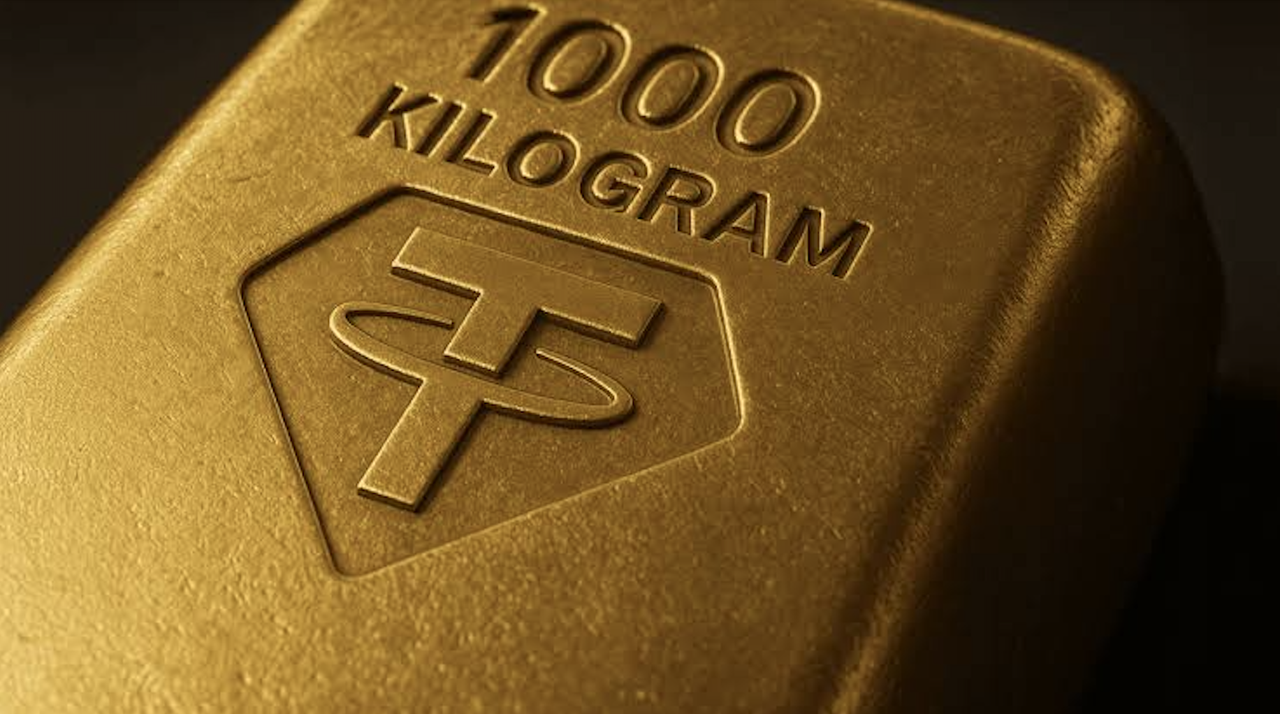
Each full XAUT represents one fine troy ounce of gold held in reserve, with the underlying bullion stored in Swiss vaults as London Good Delivery bars. Tether Gold provides information that allows holders to look up details associated with the gold reserves, including bar-related information such as serial number, weight, and purity. The issuer also publishes reserve attestation information to support transparency around its backing.
However, the 1:1 backing mechanism does not mean that every holder can redeem a single token for a physical gold bar. Physical redemption is subject to identity verification, minimum redemption requirements, fees, and other conditions specified by the issuer. The terms also distinguish between holding a token in the secondary market and purchasing or redeeming directly through Tether Gold. Investors should review the current Tether Gold terms of service before assuming that physical redemption will be practical for their investment size.
Data Source: Bitcoin News
XAUT Market Size and Growth
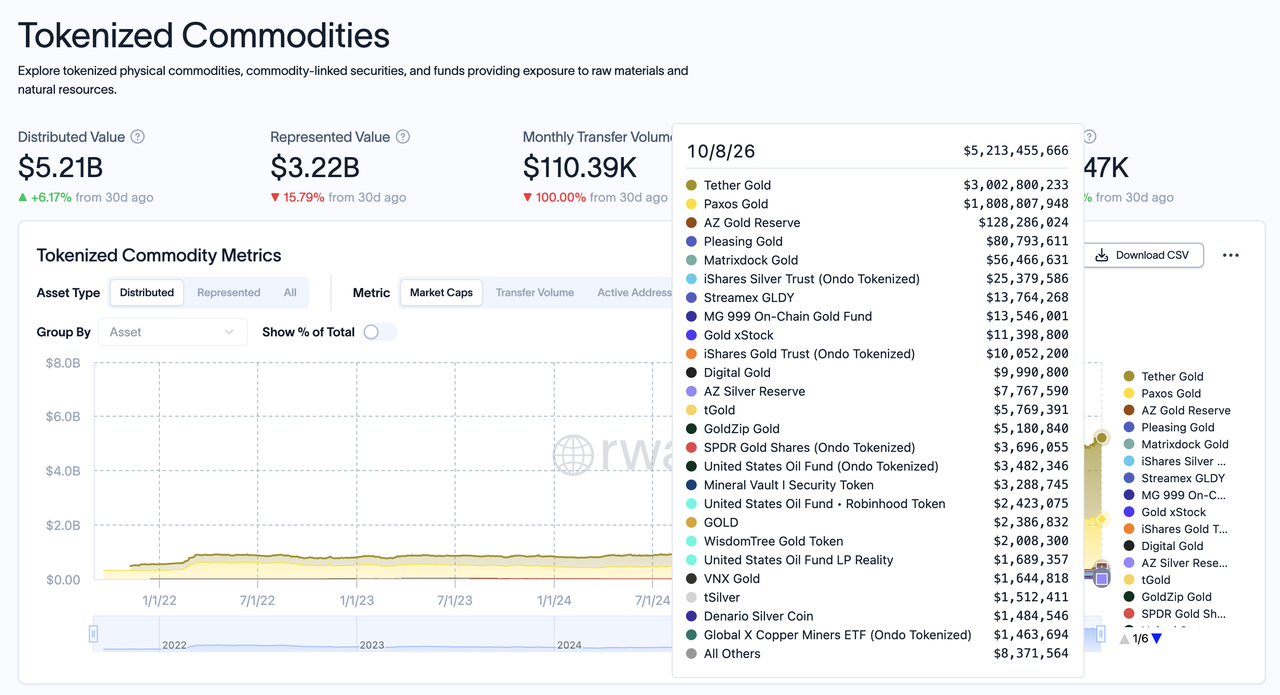
As of early October 2026, XAUT is the largest gold-backed token by market capitalization. Market trackers put its market capitalization at approximately $3 billion, making it the leading product in a tokenized-gold market worth several billion dollars. The reported figure can vary across data providers and dates because market capitalization depends on the circulating token supply and market price. Based on the comparison with October 2025, XAUT's market capitalization has grown by nearly 200% year over year, reflecting the expansion of demand for blockchain-based gold exposure.
XAUT's growth has coincided with a broader expansion in tokenized gold. Rising gold prices, demand for alternative stores of value, and interest in bringing traditional assets onto blockchain networks have all helped the category attract attention. Unlike conventional gold investments that may involve physical delivery, vault arrangements, or traditional-market settlement, tokenized gold can be transferred to supported blockchain networks and traded through participating digital-asset platforms. Its on-chain format can also make it easier to integrate gold exposure into digital-asset portfolios.
XAUT's growth has also been supported by strategic investments and new payment use cases. In February 2026, Tether announced a $150 million strategic investment in Gold.com, a publicly traded precious metals company and retailer, which allocated $20 million to purchase XAUT tokens. In June 2026, Tether partnered with digital banking platform Fasset and global payments company Visa to launch a cross-border credit card backed by XAUT. These developments highlight efforts to expand XAUT beyond a digital representation of gold, potentially connecting tokenized gold with traditional precious metals markets and everyday payment services.
Data Source: RWA.xyz
XAUT Price Performance Over the Past Three Years
XAUT is designed to track the value of physical gold, so its long-term price movements largely reflect changes in the international gold market. Its price is generally quoted in U.S. dollars per fine troy ounce, although the token's actual market price can differ slightly from the spot gold price because of trading liquidity, exchange-specific supply and demand, and temporary premiums or discounts.
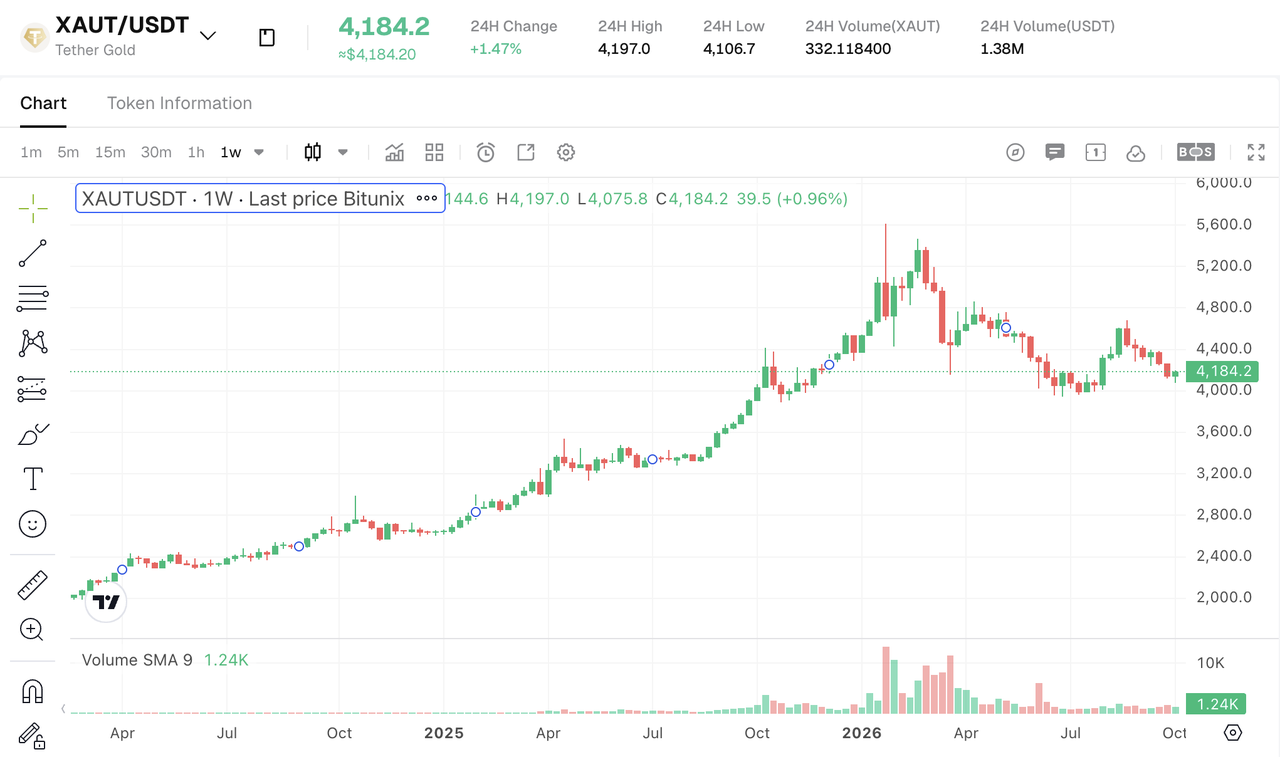
Over the past three years, gold has experienced a substantial upward trend, followed by a sharp correction from its early-2026 peak.
2023: Gold begins a sustained advance. Gold traded around the $1,900-per-ounce area in October 2023. Persistent central-bank demand, changing interest-rate expectations, and geopolitical uncertainty helped support the market.
2024: Prices move higher. By October 2024, gold was trading around $2,700–$2,800 per ounce. Expectations for monetary easing, continued official-sector purchases, and investment demand contributed to the rally.
2025: The rally accelerates. Gold climbed sharply during 2025, moving above $4,000 per ounce in October as investors responded to geopolitical uncertainty, economic concerns, and demand for safe-haven assets.
2026: Record highs give way to volatility. Gold surged above $5,500 per ounce intraday in January 2026 before retreating. By early October, spot gold was trading around $4,200 per ounce, demonstrating that even a long-term uptrend can include substantial corrections.
Data Source: Bitunix
Key Fundamental Factors That Drive Gold Prices
Because XAUT is backed by physical gold, understanding gold-market fundamentals is essential to evaluating its price outlook. The most relevant factors include real interest rates, inflation, central-bank purchases, and the balance between gold supply and demand. The World Gold Council identifies currencies, interest rates, inflation, economic growth, market risk, investment flows, and supply-related factors as interconnected drivers of gold prices.
Central Bank Net Gold Purchases
Central banks hold gold as part of their foreign-exchange reserves and may increase their holdings to diversify reserve assets, reduce concentration risk, or respond to changes in the international monetary environment.
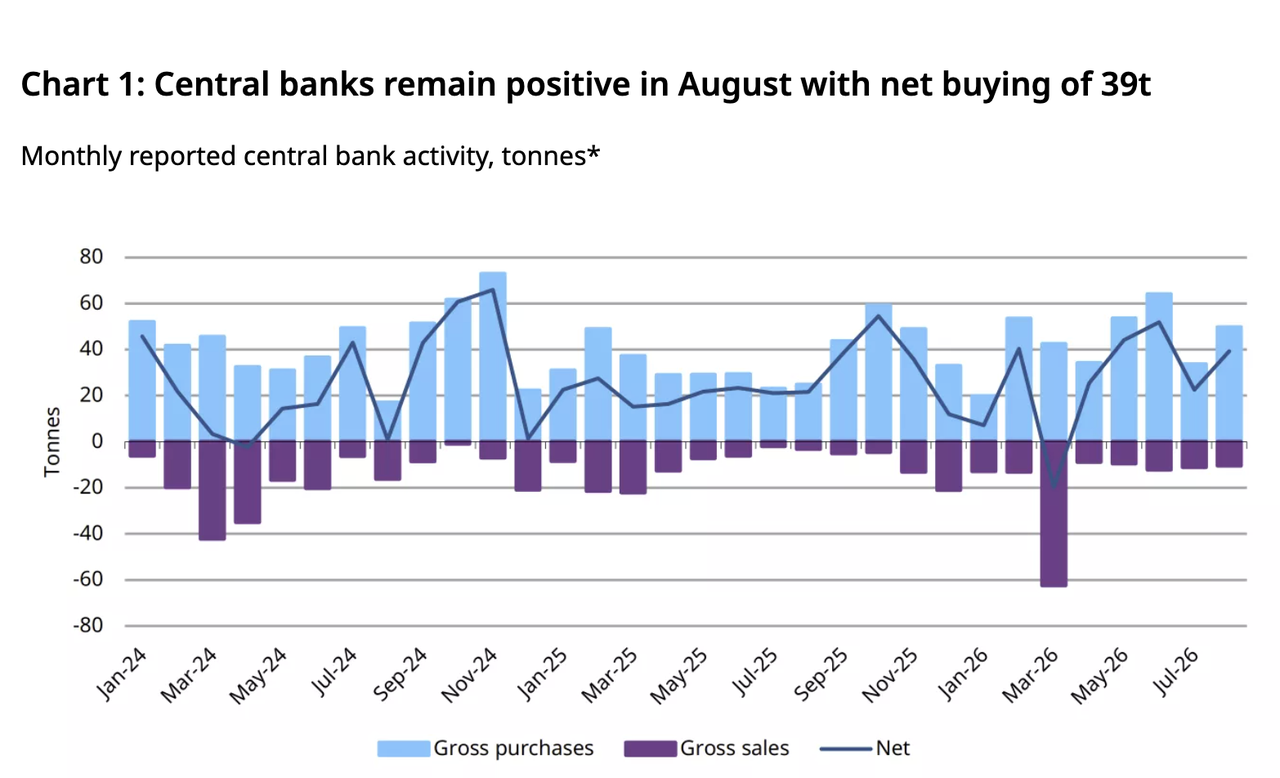
Global central-bank net purchases are therefore an important indicator of structural gold demand. Sustained buying can provide support for prices over the medium to long term, particularly when official-sector demand coincides with strong investment inflows. A slowdown in purchases may weaken one source of demand, although it does not necessarily imply that gold prices will fall.
Investors can track central-bank gold-reserve data and the World Gold Council's quarterly Gold Demand Trends reports. These sources help distinguish between short-term speculative buying and changes in official-sector demand.
Data Source: World Gold Council
U.S. 10-Year Real Interest Rates
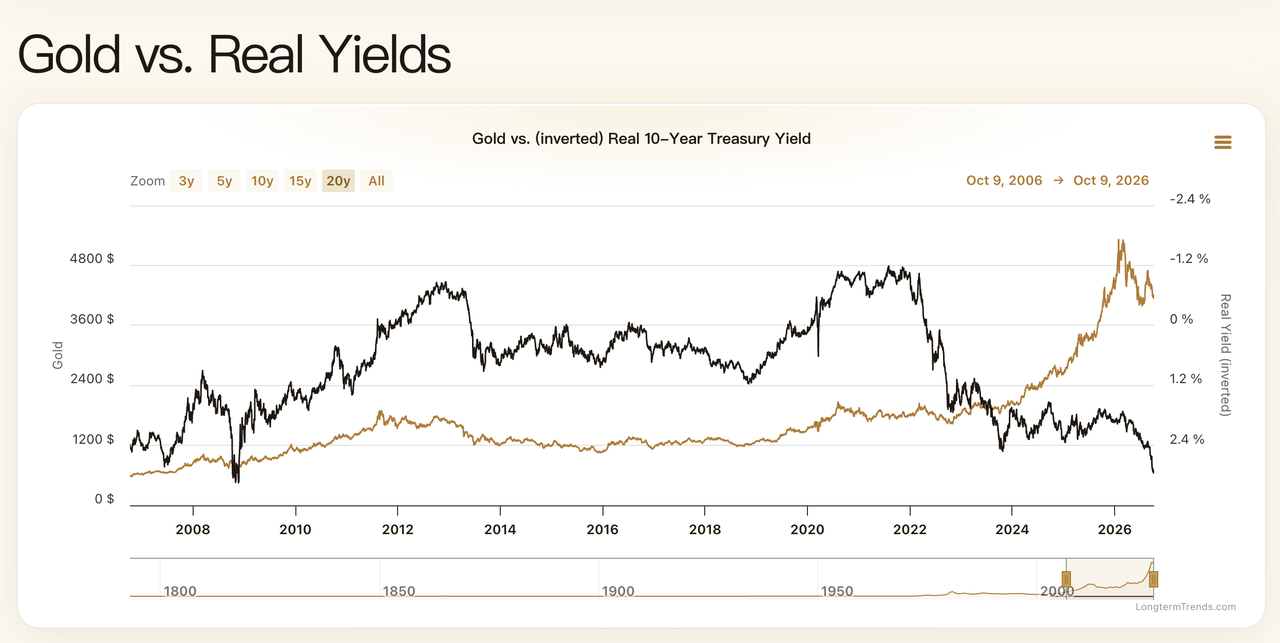
The U.S. 10-year real yield is one of the most useful indicators for understanding gold's opportunity cost. Real yields reflect the return on inflation-protected U.S. Treasury securities, making them a useful reference for comparing a non-yielding asset such as gold with an interest-bearing investment.
When real yields rise, investors may find Treasury securities more attractive relative to gold, potentially putting downward pressure on gold prices. When real yields fall, the opportunity cost of holding gold generally decreases, which can support demand. The relationship is not mechanical, however: gold can rise alongside higher yields when safe-haven demand or other market forces are strong.
Investors can monitor the U.S. 10-year Treasury Inflation-Protected Securities (TIPS) yield, Federal Reserve policy expectations, and Treasury-market movements to assess whether the interest-rate environment is becoming more or less supportive of gold.
Data Source: Longterm Trends
Mine Production and Recycled Gold Supply
Gold supply comes mainly from newly mined gold and recycled gold. According to the World Gold Council, an estimated 222,600 tonnes of gold had been mined throughout history by the end of Q2 2026. The Council estimates global underground gold reserves at approximately 61,000 tonnes, while the U.S. Geological Survey puts the figure at around 66,000 tonnes. Estimates vary by source, but they highlight an important distinction: gold reserves refer to deposits that can be economically extracted under current conditions, rather than all the gold that remains underground.
Mine production is influenced by ore grades, operating costs, project development timelines, permitting requirements, and investment in new capacity. Because developing or expanding a mine can take years, mine supply typically responds slowly to changes in gold prices. Although higher prices can make previously uneconomical deposits viable, bringing additional production online takes time.
Recycled gold behaves differently. When prices rise, households and businesses may be more willing to sell old jewelry, bullion, or other gold products, increasing the supply of recycled metal. This additional supply can help meet demand and may moderate price increases.
A useful analysis therefore considers both mine production and recycling rather than looking at mining output alone. If demand rises while mine supply responds only gradually, the market may become more supportive of higher prices. If recycling increases substantially during a rally, the additional supply may help ease tightness in the physical market.
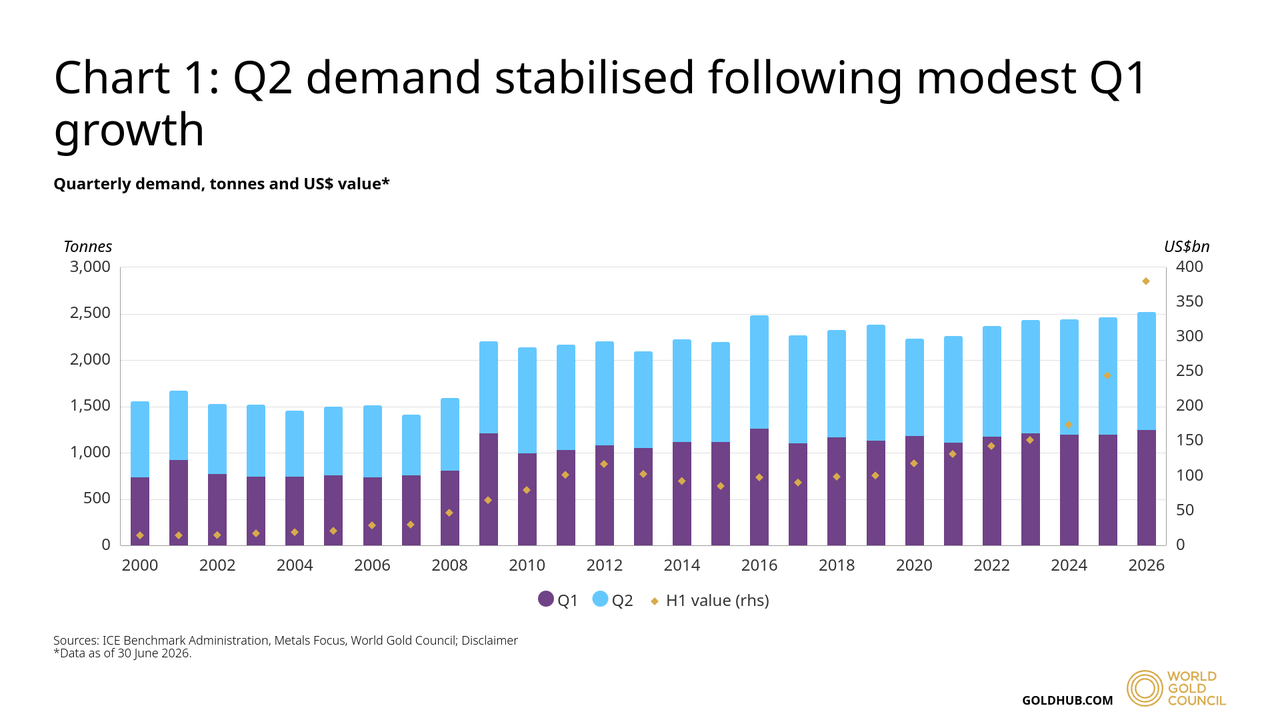
Data Source: World Gold Council
How to Trade XAUT
XAUT is issued by Tether and backed by physical gold on a 1:1 basis, with each token representing one fine troy ounce of gold. In theory, eligible users can obtain XAUT directly from Tether, subject to its minimum purchase requirements, fees, and verification procedures. This direct route is generally more suitable for users seeking direct issuance and redemption rather than everyday retail purchases.
For most people, the simplest way to get XAUT is to buy it on a centralized exchange such as Bitunix, where available. Users can typically purchase XAUT using supported trading pairs and available funding methods, including other crypto assets. Before trading, users may need to complete standard KYC checks to meet anti-money laundering (AML) and compliance requirements.
Once your account is verified and funded, buying XAUT on Bitunix is a straightforward process. You can place an order through the available XAUT trading pair and review the price, trading fees, and order details before confirming the transaction. As XAUT is backed by physical gold, its market price generally tracks the price of gold, although it may trade at a premium or discount. Before buying, consider the token’s liquidity, network support, and applicable deposit and withdrawal fees.