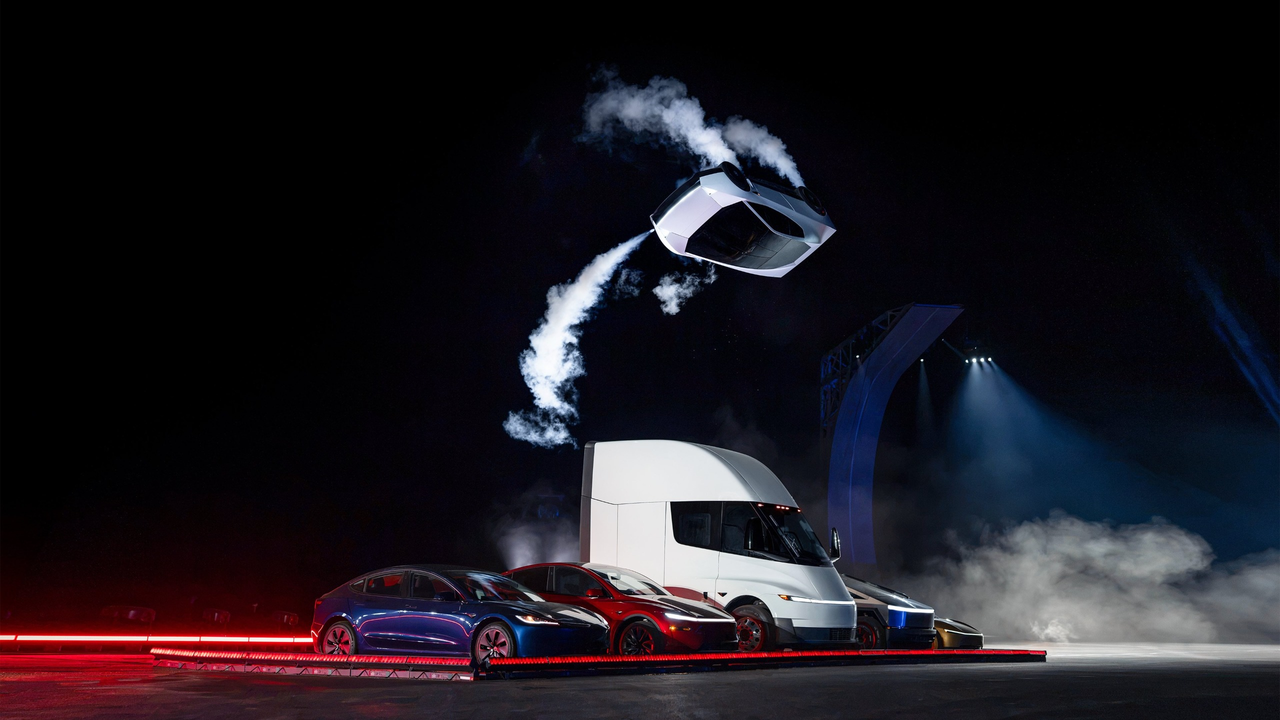
Tesla made global headlines in October 2026 when it demonstrated a new version of the Roadster capable of briefly lifting off the ground and performing aerial maneuvers using rocket-style thrusters. The presentation brought renewed attention to Tesla's ambitions beyond conventional electric vehicles, combining high-performance engineering with technologies associated with its collaboration with SpaceX. However, the demonstration does not mean that Tesla has developed a commercially available flying car, and the vehicle's production timeline remains a key consideration for prospective buyers.
Founded in 2003 by Elon Musk and a group of co-founders, Tesla (NASDAQ: TSLA) has grown from an electric vehicle manufacturer into a company operating across automotive technology, battery storage, charging infrastructure, and artificial intelligence. Its Model Y and Model 3 remain central to its vehicle lineup, while the Roadster and Cybertruck showcase different approaches to performance and design. Meanwhile, Full Self-Driving (FSD), robotaxis and AI have become increasingly important to the company's long-term strategy.
For investors, Tesla presents a combination of established automotive operations and emerging technology opportunities. Understanding its core products, financial performance, competitive position, and execution risks can help explain what may influence the company's future growth and TSLA stock.
Data Source: Space
Tesla's Core Products: Model Y, Model 3, and Roadster
Tesla's vehicle lineup spans mass-market sedans and SUVs, premium vehicles, electric pickups, and high-performance sports cars. The Model Y and Model 3 address everyday transportation needs, while the Cybertruck serves customers seeking a distinctive electric pickup. The Roadster occupies a different position, emphasizing acceleration, performance, and experimental engineering.
These models also reflect different stages of product development and commercial maturity. Model 3 and Model Y are established products with broader customer bases, whereas Roadster's future production and delivery schedule remain important uncertainties. Comparing vehicles requires looking beyond headline performance figures to consider price, range, practicality, availability, and intended use.
Tesla Model Y: The Compact SUV That Exceeded 1 Million Annual Sales
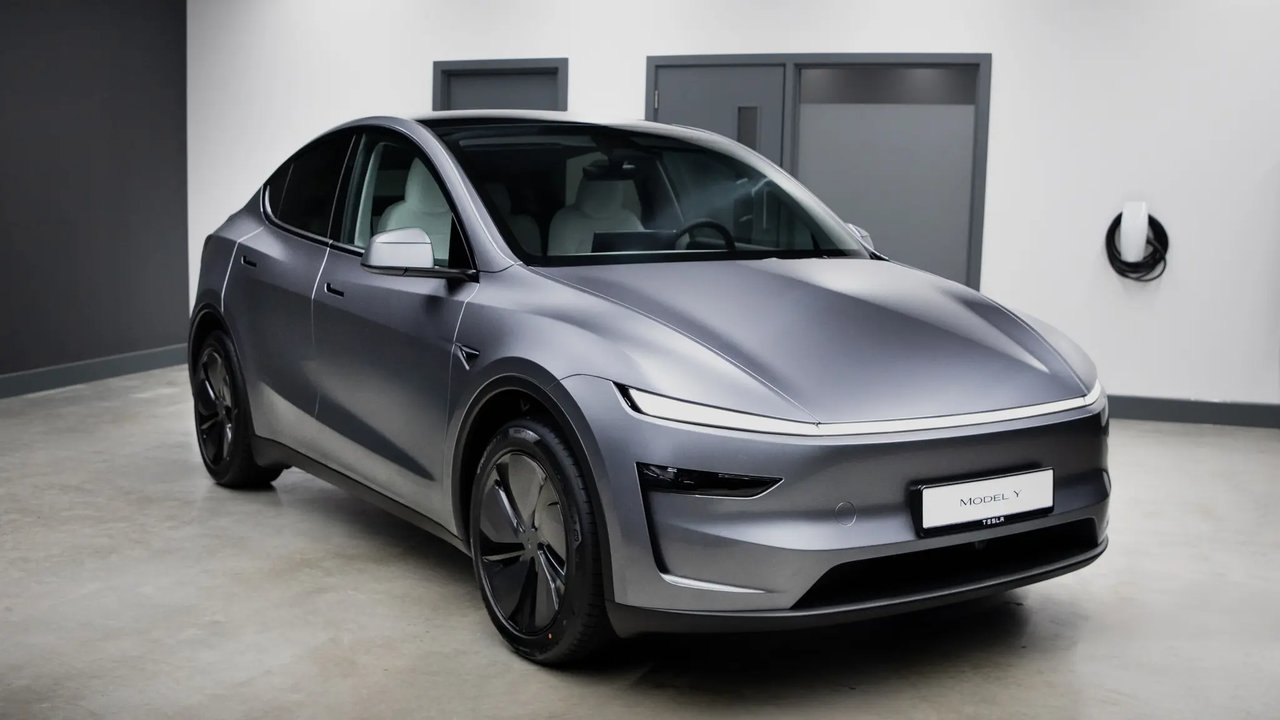
The Tesla Model Y has become one of the world's most successful electric vehicles, combining SUV practicality with Tesla's software-driven driving experience. Its global sales grew from approximately 410,500 units in 2021 to 747,500 in 2022, before reaching around 1.22 million in 2023, when the Model Y became the world's best-selling car across all powertrain types by several industry rankings. Sales eased to approximately 1.18 million in 2024, while estimates for 2025 ranged from 1.069 million to 1.15 million units. From January through July 2026, global sales reached approximately 654,600 units, keeping Model Y among the leading electric vehicle models worldwide.
Pricing has been an important part of Tesla's strategy for maintaining demand amid intensifying competition. In October 2025, Tesla introduced a lower-cost Model Y Standard version in the United States, with a starting price of $39,990, as the federal EV tax credit was approaching its expiration. The move expanded the Model Y lineup's entry-level appeal while reducing some features available on higher-priced trims. Tesla's U.S. Model Y lineup has been listed at approximately $39,990 to $57,990, depending on the configuration, although actual prices and available versions may change.
The Model Y's market position rests on its combination of cargo space, passenger flexibility, over-the-air software updates, and access to Tesla's charging network. However, its sales trajectory also highlights the challenges facing Tesla as competition increases and consumers become more price-sensitive. For investors, Model Y deliveries are an important indicator of Tesla's automotive demand, while price reductions and lower-cost variants can support sales volume but may also put pressure on automotive profit margins.
Data Source: Carmagzine
Tesla Model 3: Tesla’s Entry-Level EV With Over 3 Million Sold Worldwide
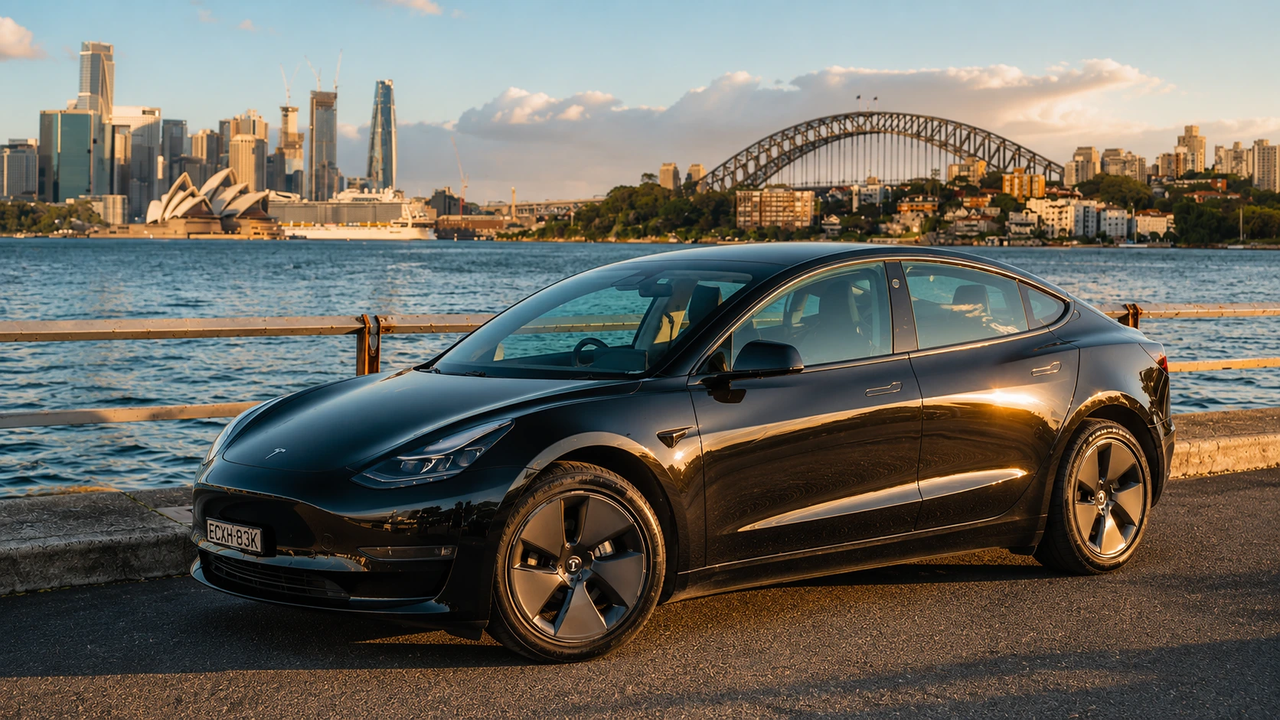
Launched in 2016, the Tesla Model 3 marked a major step in the company's effort to bring electric vehicles to a broader consumer market. On April 1, 2026, Tesla marked the model's 10th anniversary and announced that cumulative global sales had exceeded 3 million units. The milestone highlights Model 3's role in expanding Tesla's customer base beyond the premium segment and establishing electric sedans as a mainstream alternative to gasoline-powered cars. A decade after its debut, the Model 3 remains a core part of Tesla's global vehicle lineup.
The 2026 Tesla Model 3 starts at $36,990 in the United States for the Rear-Wheel Drive version, before destination and order fees, taxes, and other applicable charges. According to Tesla's official configurator, this version offers an EPA-estimated range of up to 321 miles and accelerates from 0 to 60 mph in 5.8 seconds. Buyers seeking longer range or stronger acceleration can consider the Premium and Performance variants, which offer different drivetrain configurations and performance characteristics at higher prices. Actual range varies with driving speed, weather, road conditions, and other factors, so specifications should be compared by trim rather than across the Model 3 lineup as a whole.
The Model 3's commercial appeal combines relatively accessible pricing, energy efficiency, over-the-air software updates, and access to Tesla's Supercharger network. It competes with electric sedans from both established automakers and newer EV brands, making pricing, range, charging convenience, and ownership costs important factors in purchasing decisions. Compared with the Model Y, the Model 3 offers a sedan-style body and a different balance of efficiency and practicality, while the Model Y generally provides more SUV-style cargo flexibility.
Data Source: Ecofactor
Tesla Roadster: Tesla and SpaceX’s Jointly Developed Flying Car Stuns the World
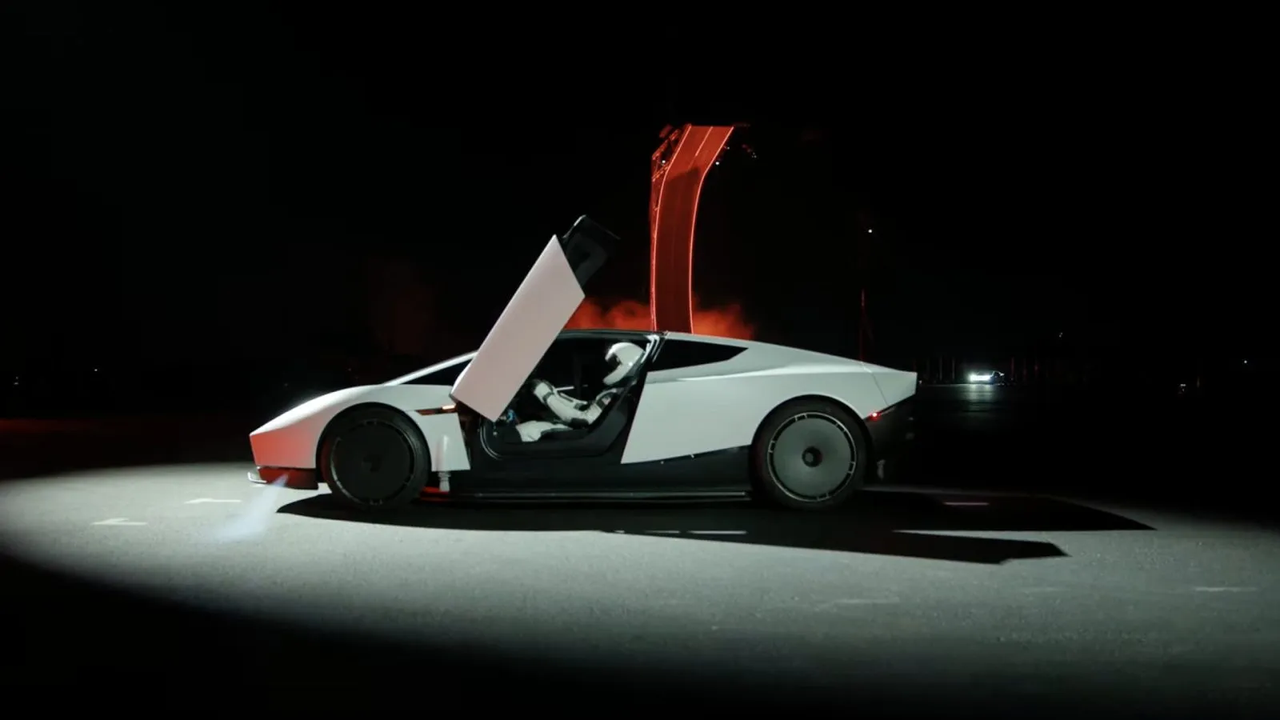
The Tesla Roadster 2 made headlines in October 2026 when Elon Musk unveiled the redesigned electric sports car at SpaceX's test facility in McGregor, Texas. Nearly nine years after Tesla first announced the second-generation Roadster in 2017, the vehicle finally appeared in a dramatic demonstration that looked more like a science-fiction movie than a conventional car launch. The remotely operated prototype drove upside down along a specially designed ramp, performed midair maneuvers, and landed with the help of rocket-style thrusters. The demonstration attracted global attention, although it showed a controlled engineering stunt rather than a flying car ready for everyday use.
The Tesla Roadster 2 combines high-performance electric propulsion with two experimental technologies: an active suction system and SpaceX-inspired cold-gas thrusters. The suction system uses fans and retractable panels to reduce air pressure beneath the chassis, increasing grip and allowing the car to travel along specially designed surfaces at unusual angles. The thrusters use high-pressure nitrogen released through nozzles to generate short bursts of thrust and help control the vehicle's movement in the air. Tesla has stated that the Roadster can accelerate from 0 to 60 mph in less than one second, reach a top speed above 230 mph, and travel more than 300 miles on a single charge. These figures are company claims, and final production specifications may differ.
Tesla says Roadster production is expected to begin in 2028, but the model's history of delays makes the timeline worth watching. The company has outlined different configurations, including a Performance version, a Thrust version with acceleration thrusters, and an invitation-only Rocket version featuring a more extensive flight system. The last configuration is intended to go beyond the capabilities of a conventional road car, and its specialized hardware raises additional safety and regulatory questions. Tesla has not confirmed final retail pricing, and the vehicle's actual production specifications, delivery schedule, and availability remain subject to change. For prospective buyers and investors, the key question is whether Tesla can turn Roadster 2's extraordinary demonstration into a commercially viable vehicle.
Data Source: Lifestyle Asia
Tesla 2026 Q3 Financial Report
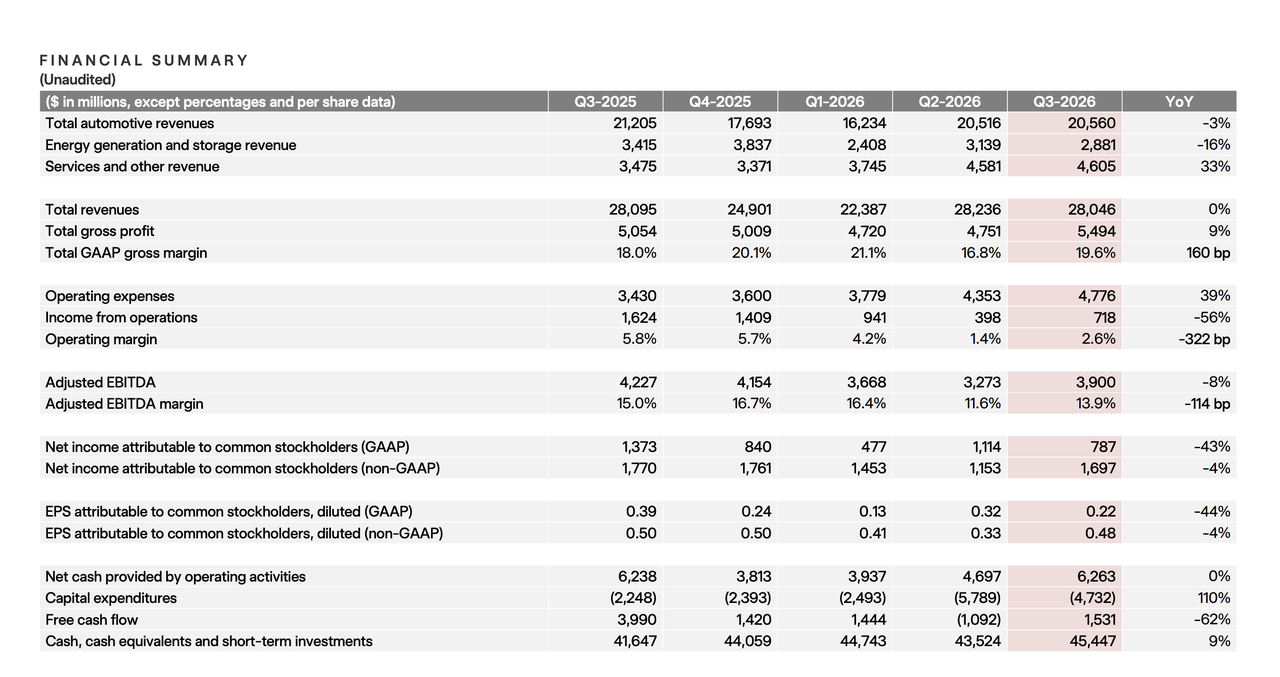
On October 21, 2026, Tesla released its third-quarter financial results, reporting revenue of $28.046 billion, down 0.2% year over year. Automotive revenue fell 3% to $20.560 billion, while global vehicle deliveries declined approximately 2% to 486,532 units. GAAP net income attributable to common stockholders dropped 43% to $787 million, highlighting the pressure on Tesla's core automotive business as competition intensifies. However, gross profit increased 9% to $5.494 billion, and the overall GAAP gross margin improved to 19.6% from 18.0% a year earlier. The divergence between improving gross profitability and declining net income suggests that higher operating expenses, rather than weaker gross profit alone, were a major factor behind the earnings decline.
Investment spending has become a major factor in Tesla's financial outlook. Research and development expenses rose 69% year over year to $2.761 billion, while total operating expenses increased 39% to $4.776 billion. Separately, capital expenditures surged 110% to $4.732 billion, contributing to a 62% decline in free cash flow to $1.531 billion. Capital expenditure is recorded differently from operating expenses, but the figures together illustrate the scale of Tesla's current investment cycle. The company ended the quarter with $45.447 billion in cash, cash equivalents, and short-term investments, providing substantial financial resources for further expansion. Nevertheless, sustained spending on AI computing infrastructure, semiconductor manufacturing, autonomous driving, and robotics will make returns on these investments increasingly important to future financial performance.
Tesla's long-term growth strategy increasingly depends on whether these emerging businesses can complement its established vehicle operations. Management indicated that some customer vehicles could enter the unsupervised Robotaxi fleet around the second quarter of 2027, while external deliveries of its Optimus humanoid robot are targeted for around the end of 2027. Elon Musk also described an eventual Optimus production rate of 20,000 units per week, although reaching that level will require further manufacturing, software, and reliability improvements.
Data Source: Tesla Financial Report
What Could Drive TSLA Stock?
TSLA stock is influenced by both Tesla's current financial results and investor expectations for its future. Vehicle deliveries, pricing, margins, energy storage deployments, and cash flow provide measurable indicators of business performance. At the same time, expectations surrounding FSD, robotaxis, AI, and the Roadster can influence how investors value Tesla's longer-term opportunities.
This combination can lead to significant differences between the company's near-term operating results and market expectations. Strong execution in established businesses may support financial performance, while delays in new technology or weaker vehicle demand may create pressure. Investors therefore need to distinguish reported results from management targets, product demonstrations, and speculative future scenarios.
Federal Reserve Policy and Market Liquidity
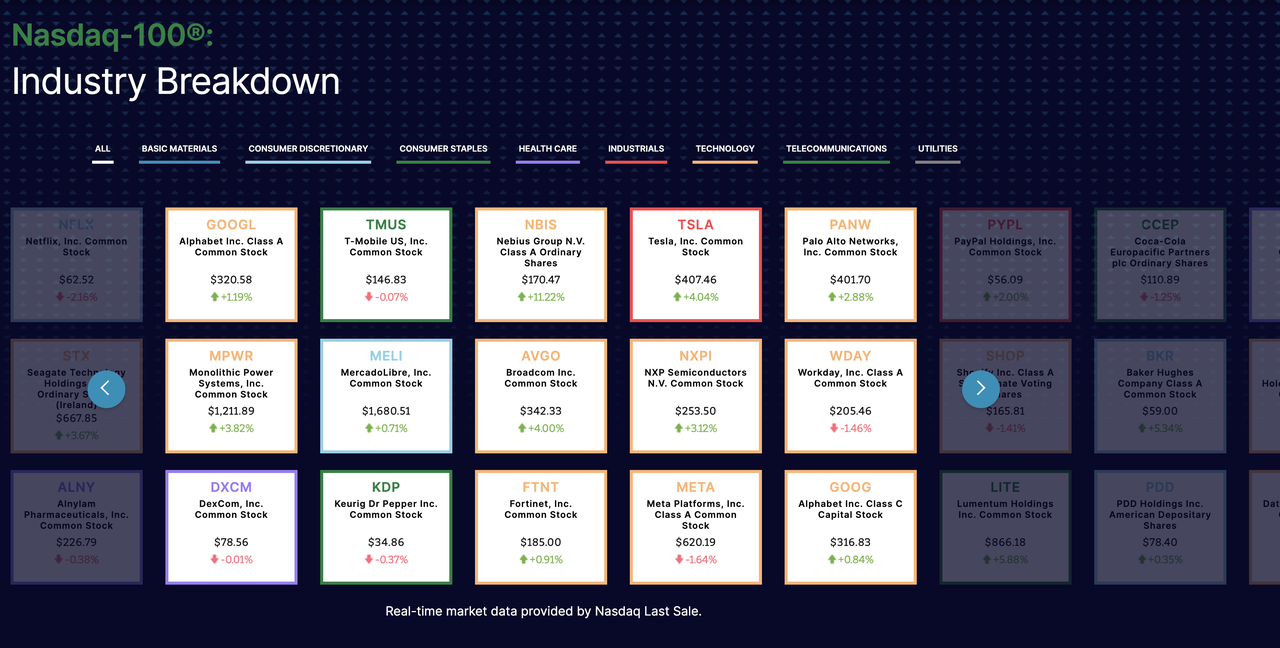
Tesla is a constituent of both the S&P 500 and Nasdaq-100, making it a holding in many index-tracking funds and ETFs. When the Federal Reserve raises interest rates or signals tighter monetary policy, higher bond yields may reduce the appeal of equities and prompt institutional investors to reduce their stock market exposure.
If investors withdraw money from index funds and ETFs, fund managers may need to sell underlying holdings, potentially adding downward pressure to TSLA and other constituent stocks. However, the impact depends on actual fund flows, market expectations, and Tesla's own financial performance, so rate hikes do not automatically lead to institutional selling.
Data Source: NASDAQ
Earnings Results vs. Market Expectations
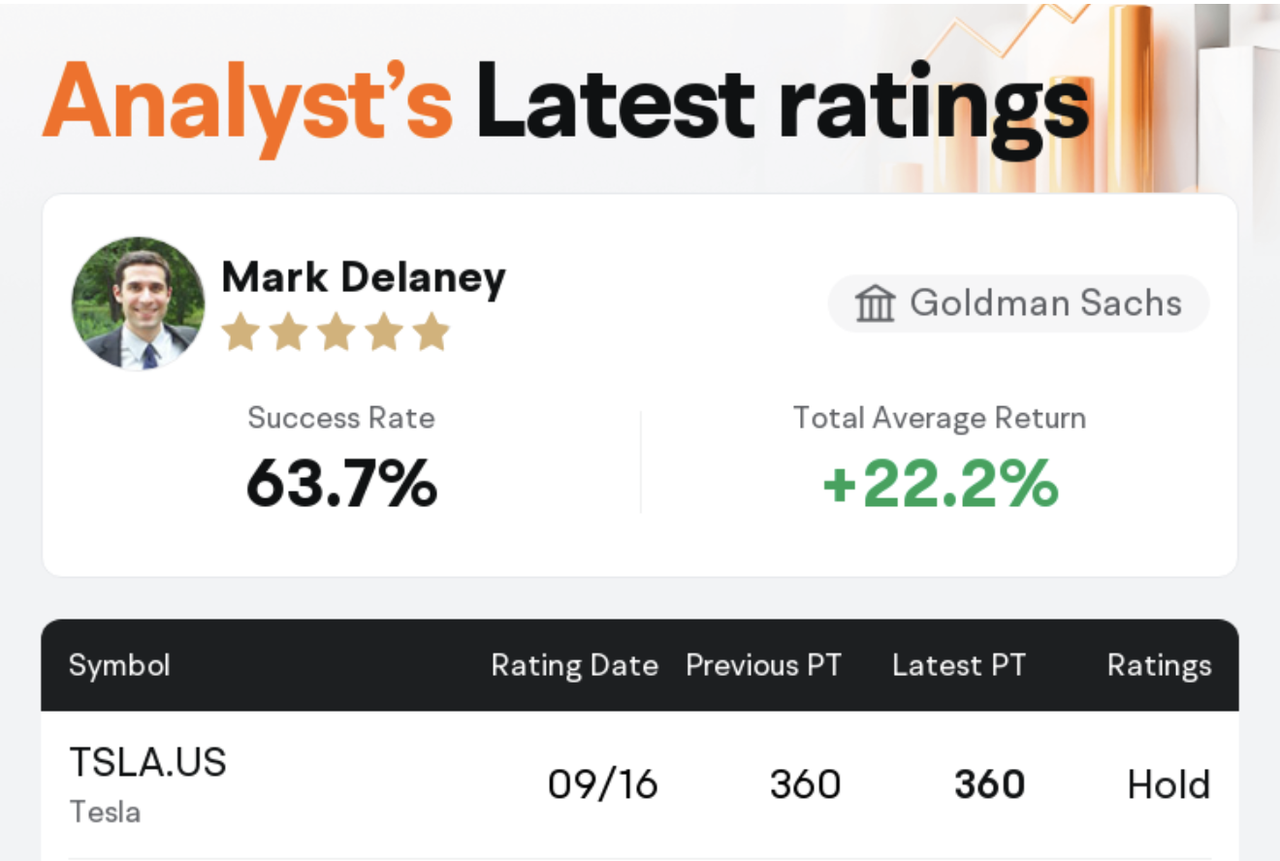
Wall Street financial institutions, including JPMorgan, Citigroup, and Goldman Sachs, have analysts who assess Tesla's revenue, earnings, and future growth prospects. Before each earnings report, analysts publish financial forecasts and may revise their stock ratings and price targets as new information becomes available, shaping market expectations for TSLA.
When Tesla reports revenue and profits that exceed market consensus, its stock may rise as investors reassess the company's growth prospects; results that fall short of expectations can trigger selling pressure and downward revisions to price targets. However, the stock's reaction also depends on profit margins, future guidance, and whether the results have already been priced into the market.
Data Source: Futu
FSD: Autonomous Driving Technology and Development
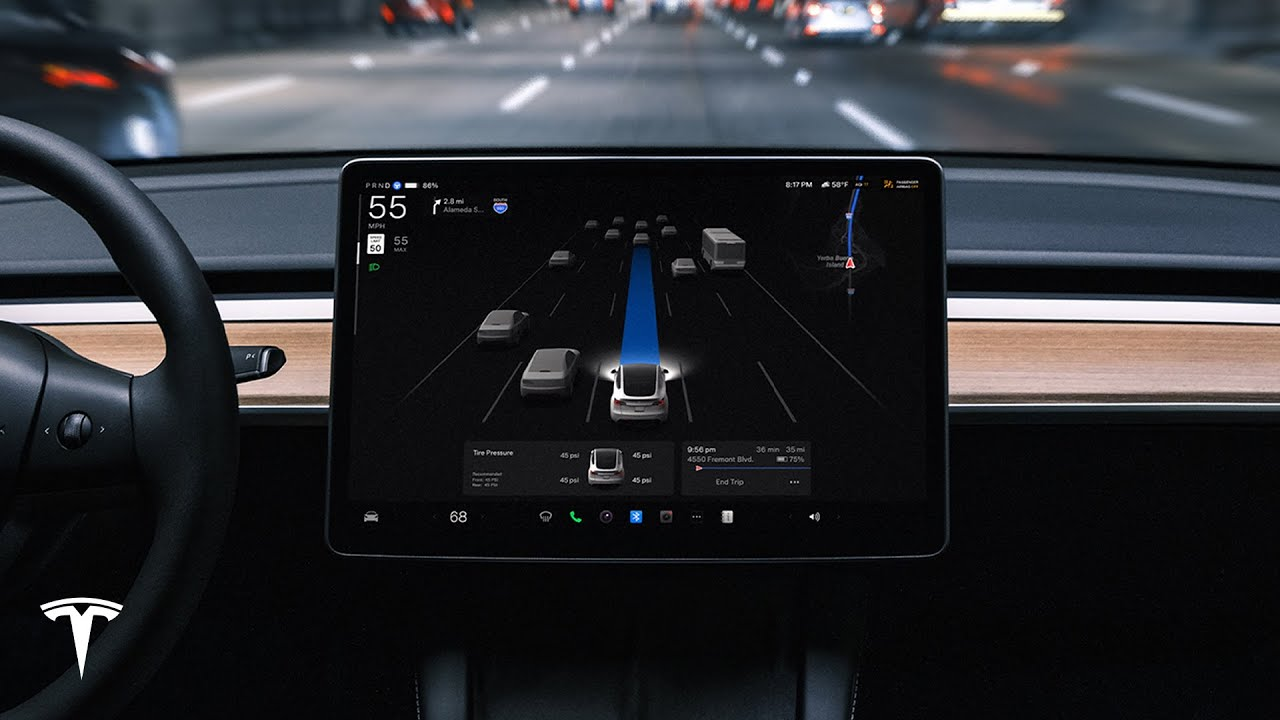
The global self-driving cars and trucks market is projected to grow from $25.3 billion in 2025 to $115.1 billion by 2033, representing a compound annual growth rate (CAGR) of 20% from 2026 to 2033. Tesla aims to capitalize on this opportunity through Full Self-Driving (FSD), which provides advanced driver-assistance features and is available in the United States through a $99 monthly subscription.
In its third-quarter 2026 update, Tesla reported 1.74 million active FSD subscriptions under its stated metric, up 67% year over year, while more than 75% of new deliveries in North America included FSD subscriptions. However, Tesla's reported subscription count includes both monthly subscriptions and legacy one-time purchases, and the company does not separately disclose how many customers currently pay monthly.
For investors, FSD's potential value depends on technical reliability, customer adoption, subscription or purchase revenue, and regulatory approval. If Tesla can expand its capabilities and commercial deployment, software and mobility services could become increasingly important to its business model. However, the timing and scale of those opportunities remain uncertain, and safety performance, legal requirements, and public trust will affect how quickly technology can expand.
Data Source: Youtube
Potential Tesla–SpaceX Merger Speculation
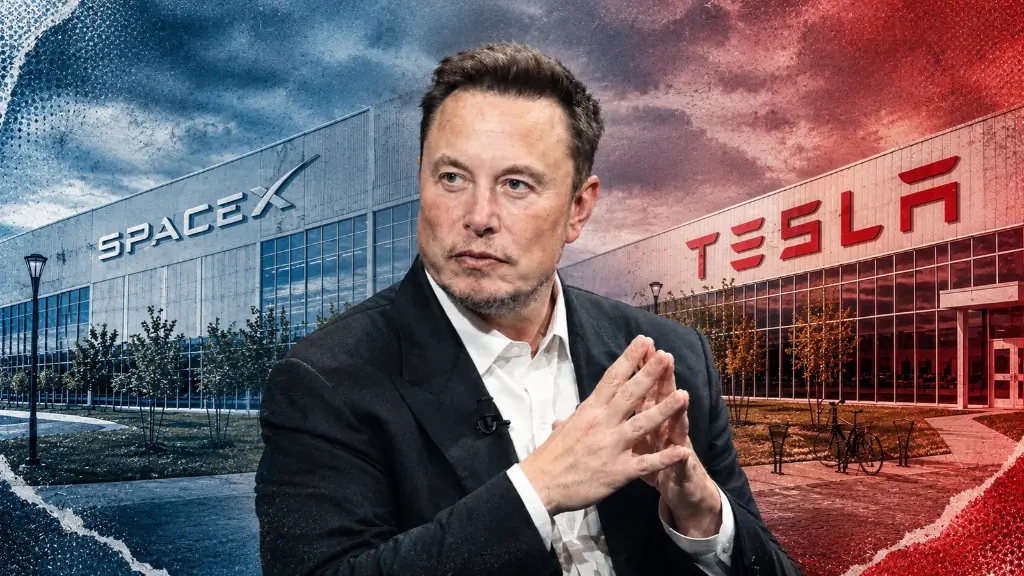
Tesla and SpaceX are separate companies with different core businesses, although Elon Musk's leadership of both has led to speculation about potential collaboration or a closer corporate relationship. The Roadster's rocket-style thruster demonstration has renewed public interest in the technological links between the companies. Such overlap, however, does not establish that a merger is planned or that either company has committed to a transaction.
Any potential merger or major corporate combination would involve substantial financial, legal, governance, and regulatory considerations. Investors should distinguish public speculation from formal announcements, regulatory filings, or confirmed transaction terms. Until credible details emerge, a possible Tesla–SpaceX merger should be treated as an uncertain scenario rather than a basis for valuing TSLA stock.
Data Source: CBT News
How to Trade TSLA
For investors looking to gain exposure to Tesla, the traditional approach is to purchase TSLA shares through a U.S. stock brokerage account. Investors generally need to open a brokerage account, complete identity verification, deposit funds, and then place an order to buy Tesla shares on Nasdaq. However, buying U.S. stocks directly may involve brokerage account requirements, cross-border fund transfers, and transaction fees. Traditional stock investing also primarily benefits investors when the stock price rises, which may limit flexibility when market expectations change.
Another option is to trade Tesla stock contracts through cryptocurrency trading platforms such as Bitunix. Compared with directly purchasing TSLA shares, stock contracts can provide more flexible ways to participate in the market. Traders can establish long positions when they expect Tesla's stock price to rise or short positions when they expect it to decline. Bitunix TSLA contracts offer leverage of up to 20x, allowing users to gain exposure to larger positions with less initial capital. Before trading, users need to register a Bitunix account and complete identity verification (KYC). As leveraged products can magnify both gains and losses, users should understand the relevant risks and manage their positions carefully.