NVIDIA (NASDAQ: NVDA) has become one of the most influential companies in the artificial intelligence industry. Its graphics processing units (GPUs), networking technologies, and software ecosystem power many of the data centers used to train and run AI models. As businesses invest in generative AI, cloud computing, and AI-powered applications, NVIDIA has emerged as a major beneficiary of growing demand for computing infrastructure.
However, NVIDIA stock is not driven by AI enthusiasm alone. Revenue growth, data center capital expenditure, interest rates, competition, and U.S. Export restrictions can all influence its valuation. Understanding these factors can help investors assess NVIDIA's business outlook and the potential risks of trading NVDA stock.
Data Source: Nvidia
What Is NVIDIA? Understanding AI Computing and GPU Leader
NVIDIA is a U.S. technology company founded in 1993 and headquartered in Santa Clara, California. Originally known for its graphics processors used in gaming and computer graphics, the company has expanded into AI computing, data center infrastructure, professional visualization, and automotive technologies.
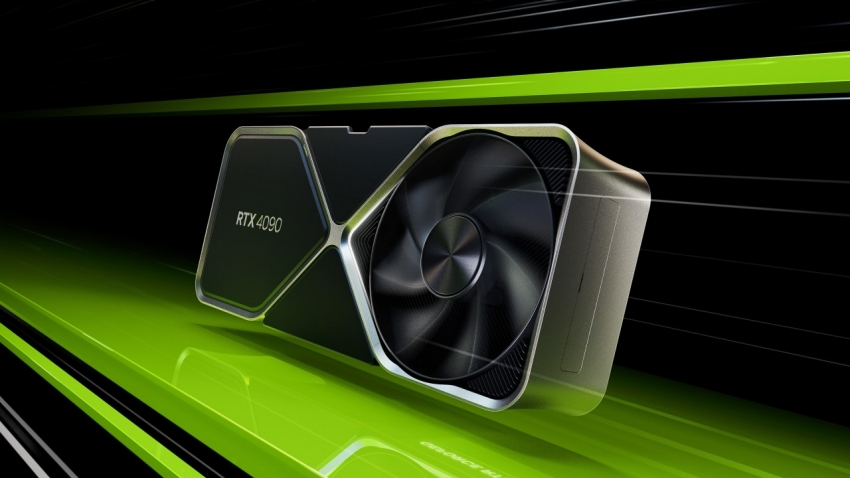
Its GPUs are particularly well suited to parallel computing, allowing them to process many calculations simultaneously. This capability makes them useful for training large AI models and running inference workloads that generate responses to user prompts.
Today, NVIDIA's Data Center business is its primary growth engine. The company supplies GPUs, AI computing systems, high-speed networking equipment, and software that help cloud providers, technology companies, and AI developers build large-scale computing infrastructure. Its gaming and automotive businesses remain important parts of its broader portfolio.
Data Source: Nvidia
What Are NVIDIA's Key Competitive Advantages in AI Computing?
GPU Performance, CUDA, and the Software Ecosystem
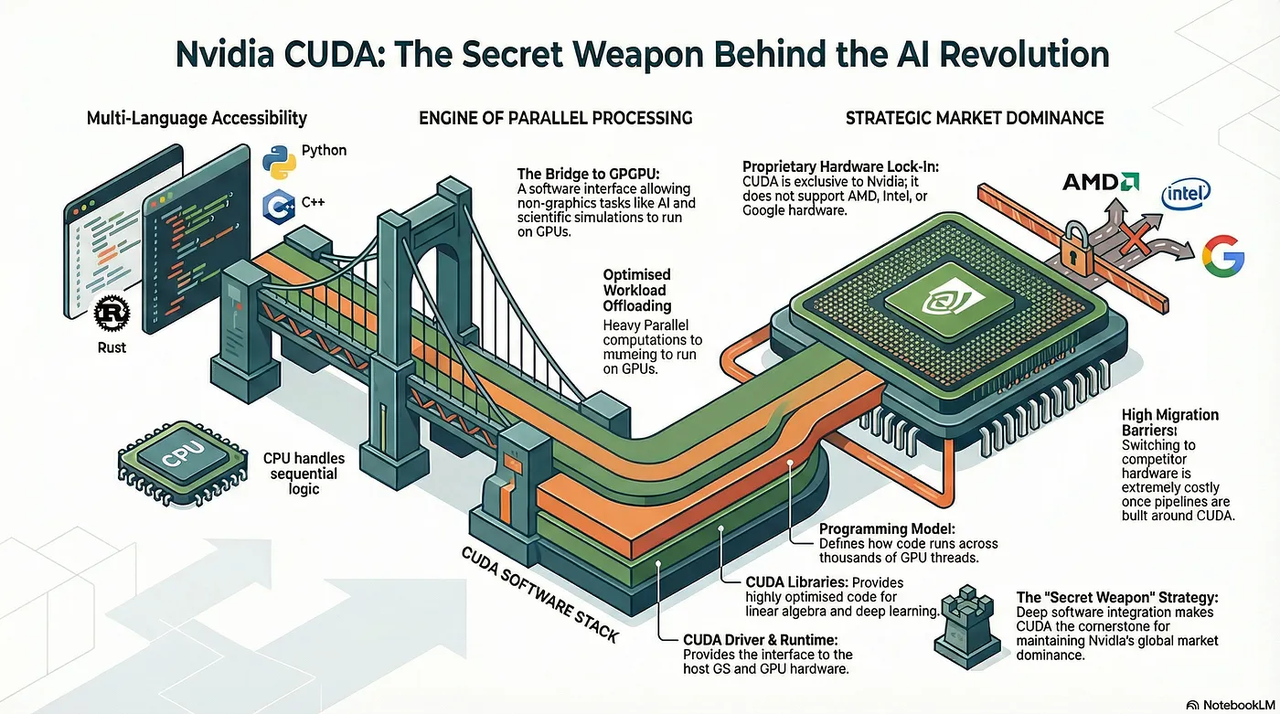
NVIDIA's competitive advantage extends beyond the performance of its GPUs. Its CUDA parallel computing platform enables developers to build and optimize applications for NVIDIA hardware, supported by extensive libraries, development tools, and AI frameworks.
This software ecosystem creates meaningful switching costs. Developers and businesses that have invested in CUDA-based applications may face additional engineering work when migrating workloads to competing hardware. As a result, customers often evaluate the entire computing platform rather than comparing chip specifications alone.
NVIDIA also continues to develop its GPU architecture to improve computing performance and efficiency. Its Blackwell and next-generation Vera Rubin platforms illustrate its strategy of advancing hardware while maintaining compatibility with a mature software ecosystem.
Integrated AI Infrastructure and Networking Solutions
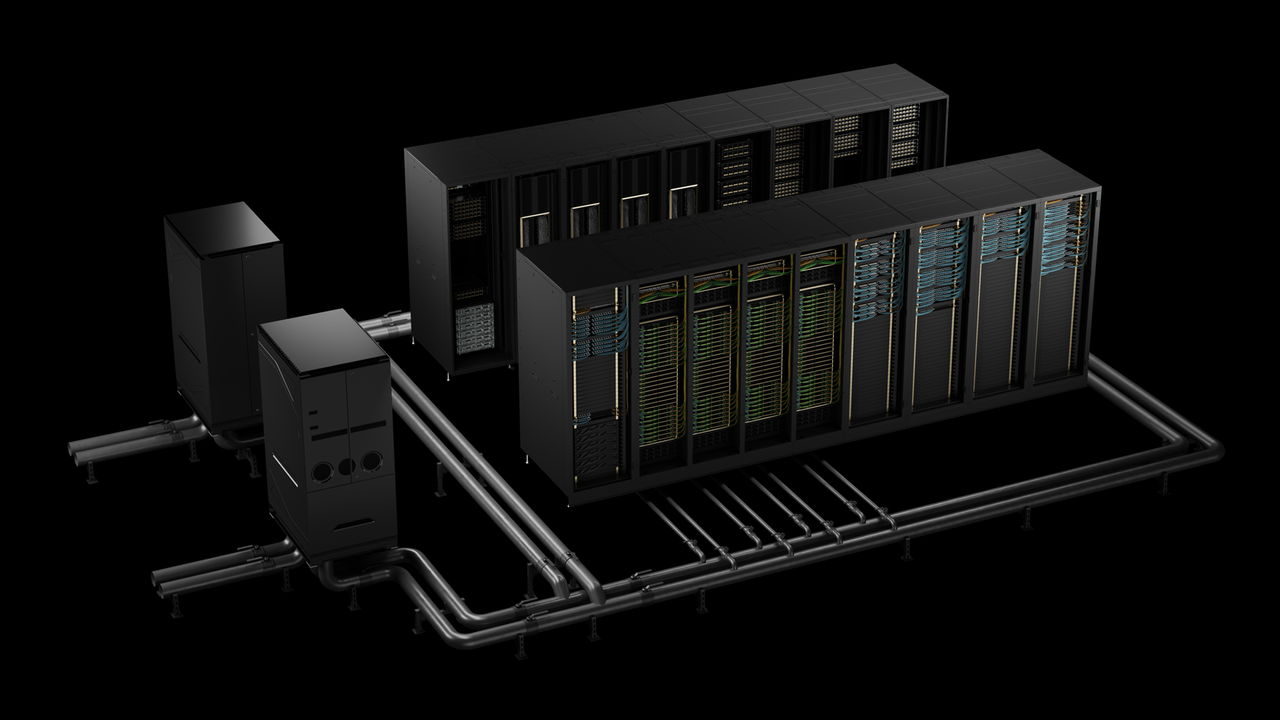
Large AI models require more than individual high-performance chips. They depend on thousands of processors working together, supported by high-bandwidth memory, fast networking, storage, and efficient power and cooling systems.
NVIDIA addresses these requirements through integrated platforms that combine GPUs, CPUs, networking technologies, and system-level software. Its InfiniBand and Spectrum networking products help connect computing resources, while its NVLink technology enables high-speed communication between processors.
By supplying components across the AI infrastructure stack, NVIDIA can capture more value from data center investment than a company selling standalone chips. This integrated approach can also make its systems attractive to customers seeking to deploy large AI clusters quickly.
Data Source: Tahir
NVIDIA Financial Analysis: Revenue Growth, Profitability, and Business Outlook
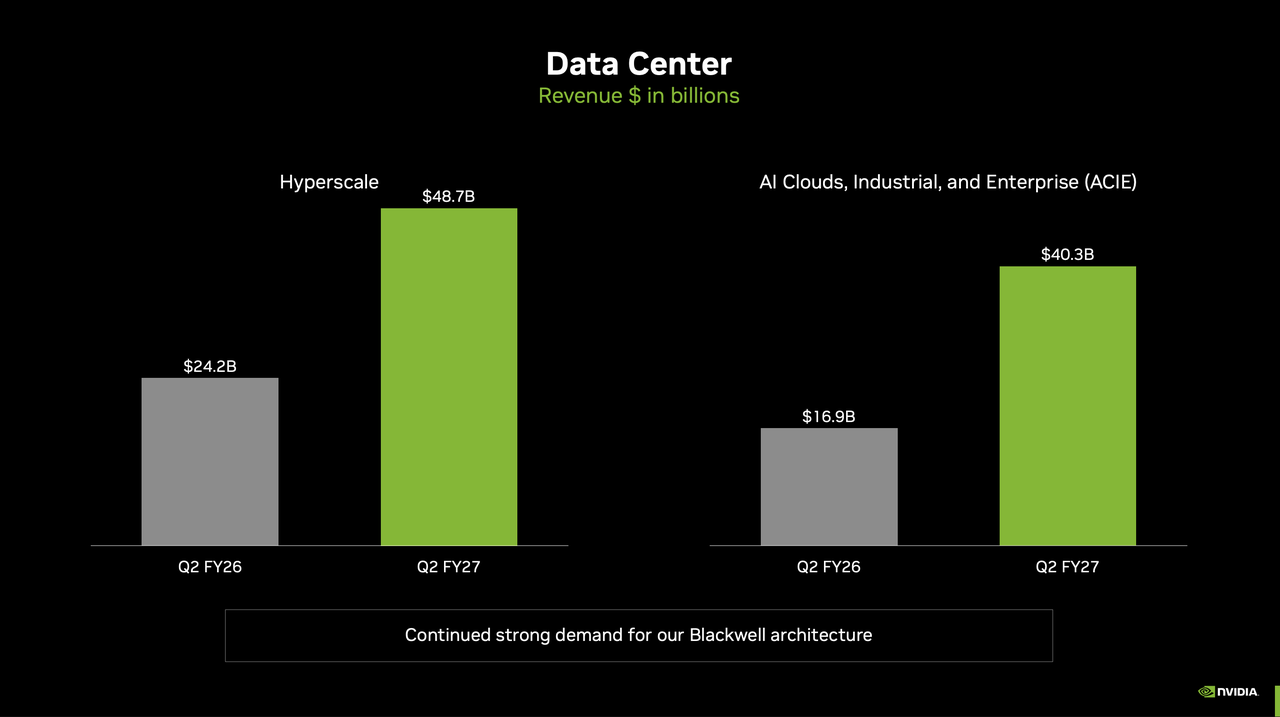
NVIDIA's second-quarter fiscal 2027 results, released on August 26, 2026, demonstrate the scale of demand for AI computing infrastructure. For the quarter ended July 26, 2026, the company reported the following results.
Data Center revenue accounted for approximately 92.5% of total revenue, highlighting how strongly NVIDIA's financial performance depends on AI infrastructure spending. Revenue increased 18% sequentially, while both GAAP and non-GAAP gross margins reached 75%.
NVIDIA also returned approximately $26 billion to shareholders through share repurchases and cash dividends during the quarter. Its next quarterly dividend was announced at $0.25 per share, payable on October 1, 2026, to shareholders of record on September 10.
Looking ahead, NVIDIA projected fiscal Q3 2027 revenue of $108 billion, plus or minus 2%, with gross margins expected to be approximately 74%, plus or minus 0.5 percentage points. Notably, its revenue guidance assumed no Data Center compute revenue from China. These figures suggest that management expects demand to remain strong, although investors should monitor whether actual results meet or exceed already elevated market expectations.
Strong revenue growth does not automatically make NVDA stock inexpensive. Investors also need to consider its valuation, future earnings growth, customer concentration, and the possibility that AI infrastructure spending may eventually slow.
Data Source: Nvidia
NVDA Stock Performance: How Has NVDA Stock Performed Over the Past Year?
NVIDIA stock has remained closely tied to expectations for AI adoption and data center investment. Its earnings growth has attracted investors seeking exposure to the expansion of AI computing, while changes in valuation expectations have periodically driven volatility.
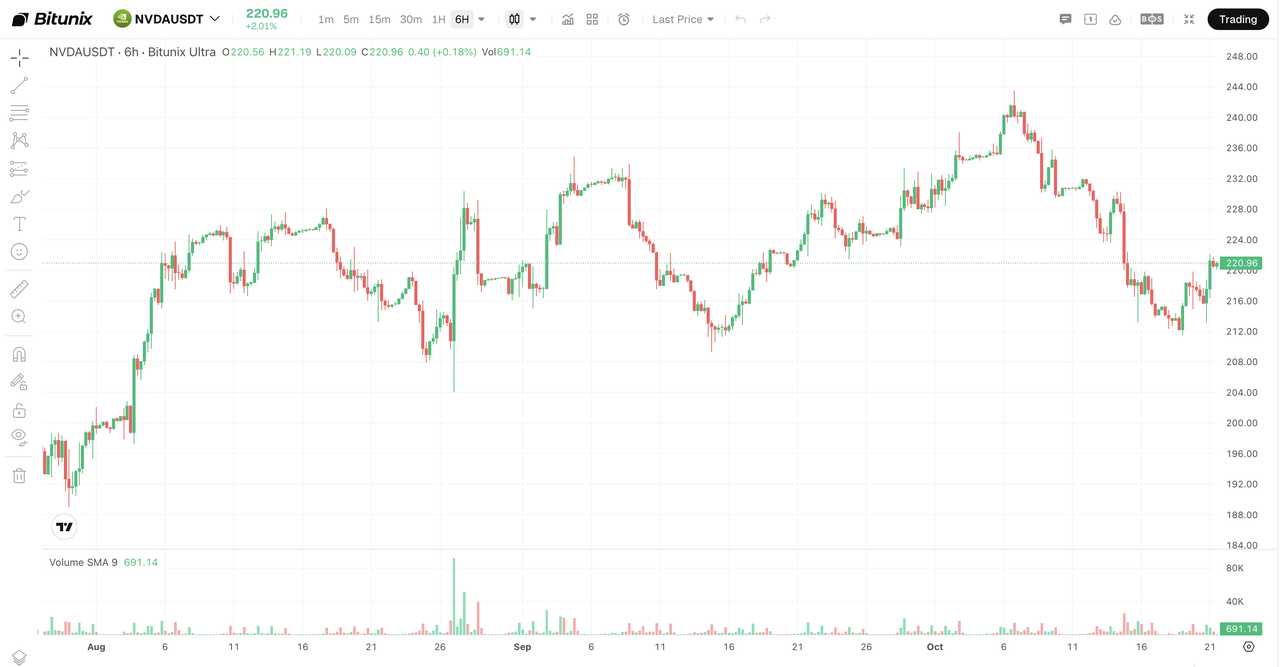
Based on historical market data, NVDA closed at approximately $179.83 on October 15, 2025, and $221.30 on October 14, 2026. This represents a price gain of roughly 23% over the year, excluding dividends.
The stock's performance reflects the difference between business growth and investor returns. Even when NVIDIA reports strong results, its share price may decline if investors believe growth is slowing, margins will narrow, or expectations have become too optimistic. Conversely, stronger-than-expected earnings or an improved outlook can support further gains.
Investors evaluating NVDA should therefore look beyond its headline price change. Revenue growth, earnings revisions, valuation multiples, and the stock's performance relative to the broader technology sector can provide a more complete picture.
Data Source: Bitunix
Key Factors Affecting NVIDIA Stock Price
Interest Rates, Macroeconomic Conditions, and Index Flows
Interest rates can influence NVIDIA's valuation by changing the discount rate investors apply to future earnings. When the Federal Reserve cuts rates, lower borrowing costs and improved liquidity may support growth-oriented stocks. However, rate cuts are not automatically bullish: if they reflect deteriorating economic conditions, technology spending and investor risk appetite may weaken.
NVIDIA is also a major component of prominent U.S. equity benchmarks and exchange-traded funds, including the Nasdaq-100 and Invesco QQQ. As of September 28, 2026, NVIDIA represented approximately 6.36% of the portfolio of Invesco's QQQ Income Advantage ETF, illustrating the stock's importance within technology-focused investment products.
Index inclusion can create indirect demand through passive funds and benchmark-aware portfolios. However, these flows do not guarantee price appreciation. NVIDIA can still fall when broader equity markets sell off, bond yields rise, or investors reduce exposure to highly valued technology stocks.
Capital Expenditure by Big Tech Companies and AI Model Developers
Spending by major cloud providers and AI developers is one of the most important drivers of NVIDIA's business. Companies such as Microsoft, Amazon, Alphabet, and Meta invest in data centers, computing equipment, and networking infrastructure to support AI models and cloud services.
AI model developers also require substantial computing resources to train increasingly capable models and serve inference workloads. If AI applications generate sufficient revenue or strategic value, customers may continue expanding their infrastructure budgets, supporting NVIDIA's sales.
The main risk is that capital expenditure may grow more slowly than expected. If AI monetization disappoints, computing capacity becomes excessive, or customers prioritize returns on existing investments, data center orders could weaken. Investors should monitor both announced spending budgets and evidence that AI infrastructure is generating sustainable revenue.
Technology Advancements, New Products, and Competition
NVIDIA must continue improving computing performance, energy efficiency, and total system economics to maintain its competitive position. New GPU architectures and integrated systems can support demand by making larger AI workloads practical and improving performance per unit of power.
Competition is also intensifying. AMD offers alternative AI accelerators, while cloud providers such as Google, Amazon, and Microsoft are developing custom chips for their own workloads. Cerebras takes a different approach with wafer-scale processors and systems designed for AI computing, including inference applications. These alternatives may appeal to customers with specialized performance or cost requirements.
Competition does not necessarily mean NVIDIA will lose its leadership. CUDA, networking, system integration, and the availability of a mature developer ecosystem remain important advantages. Nevertheless, if competing solutions deliver better economics for specific workloads, NVIDIA could face pricing pressure or slower growth in some market segments.
U.S. Export Restrictions and NVIDIA's Access to China
U.S. export controls have become a material risk for NVIDIA because they restrict which advanced computing products the company can sell to China. The rules may limit access to a significant market while encouraging domestic competitors to develop alternative AI chips and software ecosystems.
In its fiscal Q2 2027 filing, NVIDIA stated that it was effectively unable to compete in China's data center computing market under then-current regulatory conditions. Its fiscal Q3 revenue outlook also assumed no Data Center compute revenue from China.
The impact extends beyond near-term sales. Continued restrictions could help Chinese chipmakers build stronger customer relationships and developer ecosystems, potentially increasing competition in other markets over time. Conversely, changes in export policy could create new sales opportunities if products receive the required approvals.
Investors should avoid assuming that any particular NVIDIA GPU can be exported to China simply because it is available elsewhere. Eligibility depends on the product, applicable U.S. rules, licensing decisions, and relevant Chinese regulatory requirements.
How to Trade NVDA Stock
For investors looking to gain exposure to NVIDIA, the traditional approach is to purchase NVDA shares through a U.S. stock brokerage account. Investors generally need to open a brokerage account, complete identity verification, deposit funds, and place an order to buy NVIDIA shares on Nasdaq. However, buying U.S. stocks directly may involve brokerage account requirements, cross-border fund transfers, and transaction fees. Traditional stock investing also primarily benefits investors when the stock price rises, which may limit flexibility when market expectations change.
Another option is to trade NVIDIA stock contracts through cryptocurrency trading platforms such as Bitunix. Compared with directly purchasing NVDA shares, stock contracts can provide more flexible ways to participate in the market. Traders can establish long positions when they expect NVIDIA's stock price to rise or short positions when they expect it to decline. Bitunix NVDA contracts offer leverage of up to 20x, allowing users to gain exposure to larger positions with less initial capital. Before trading, users need to register a Bitunix account and complete identity verification (KYC). As leveraged products can magnify both gains and losses, users should understand the relevant risks and manage their positions carefully.