
McDonald's Corporation (NYSE: MCD) is one of the world's most recognizable fast-food companies, supported by a global franchise network, a powerful brand, and a business model designed to generate recurring revenue. Unlike restaurant operators that rely primarily on company-owned locations, McDonald's generates a substantial portion of its income from franchise royalties, rent, and fees, allowing it to expand its footprint without directly funding every restaurant.
However, even a globally established brand is not immune to changing consumer preferences, inflation, labor costs, and shifts in discretionary spending. For investors evaluating McDonald's stock, the key questions are whether the company can sustain comparable sales growth, protect its profit margins, and maintain its competitive position in an increasingly price-sensitive restaurant market.
This article examines McDonald's business model, financial performance, competitive advantages, stock price history, and the main factors that could influence MCD shares.

How Does McDonald's Make Money?
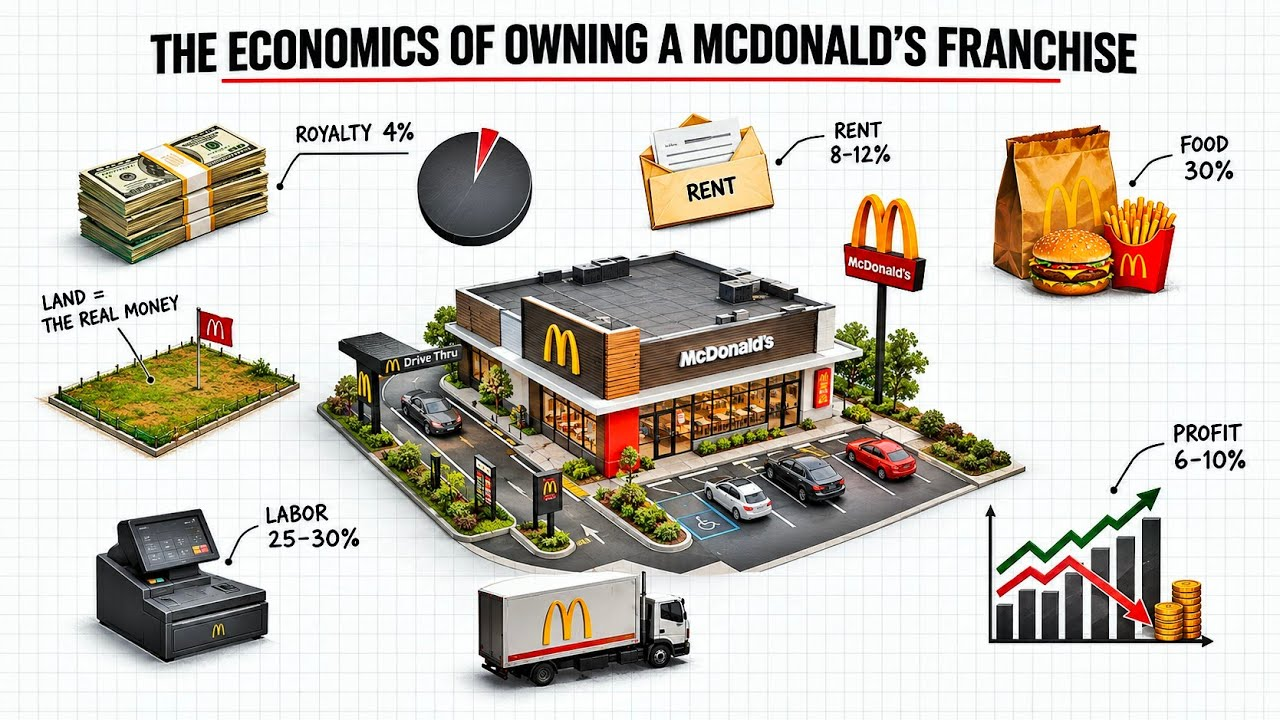
McDonald's generates revenue through several main channels:
Franchise royalties and fees: Franchisees pay royalties and other fees in exchange for operating under the McDonald's brand and using its business system.
Rental income: McDonald's owns or controls real estate associated with many franchised restaurants and collects rent from franchisees.
Company-operated restaurants: The company earns revenue directly from restaurants it operates, while also bearing their operating expenses.
The franchise model is central to McDonald's financial structure. Franchisees typically cover many restaurant-level expenses, including labor and day-to-day operations. McDonald's can therefore earn recurring income from its franchise network without having to manage every location directly.
Rental income also gives the company an additional source of revenue beyond royalties. However, the model is not entirely asset-light: McDonald's still requires significant capital to support its real estate portfolio, restaurant development, technology, and corporate operations.
This combination of franchise income, rental revenue, and company-operated restaurants helps McDonald's maintain a global presence while balancing growth opportunities with operating costs.
Data Source: Youtube
What Are McDonald's Key Competitive Advantages in the Restaurant Industry?
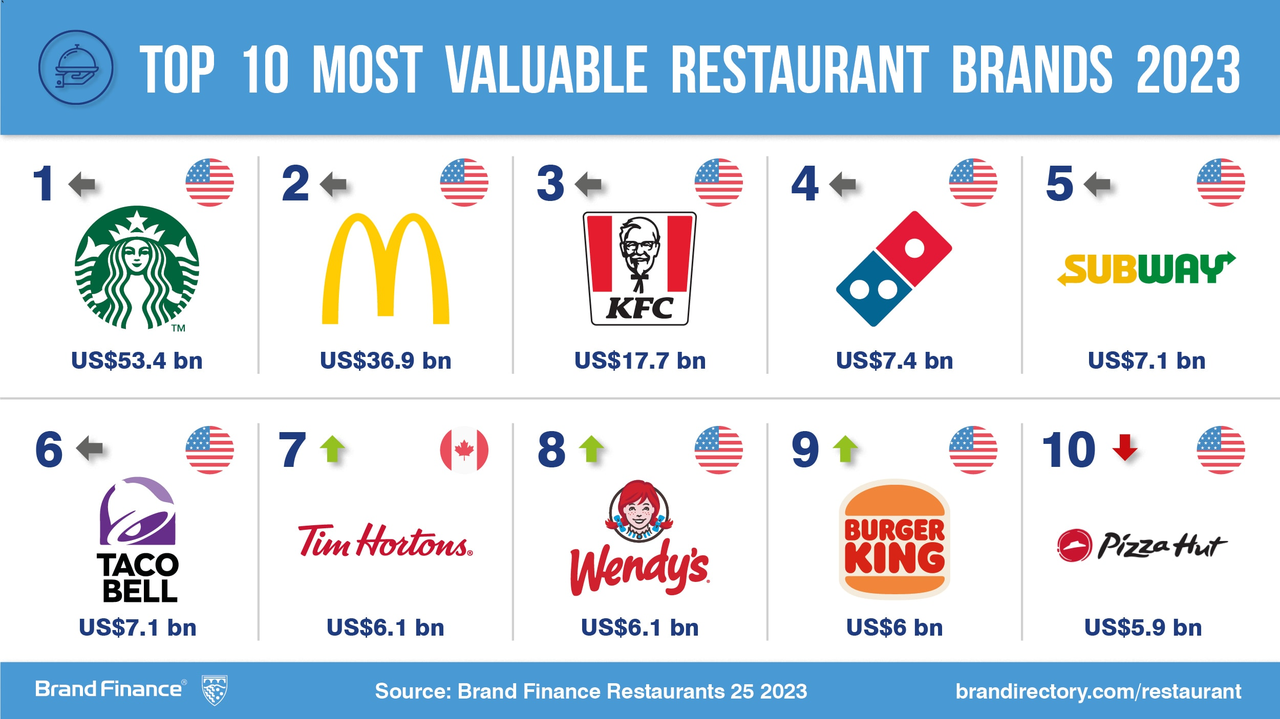
McDonald's competitive position rests on more than its menu. Its brand recognition, franchise infrastructure, purchasing scale, and ability to adapt to local markets create advantages that are difficult for smaller restaurant chains to replicate.
Global Brand Recognition and Customer Loyalty
McDonald's has built a recognizable identity around familiar products, consistent service, and relatively accessible prices. Customers often know what to expect before entering a restaurant, reducing uncertainty when choosing where to eat.
This familiarity can be especially valuable during periods of economic uncertainty. When consumers become more cautious about spending, McDonald's may benefit from customers trading down from more expensive restaurants or choosing familiar quick-service meals.
However, brand recognition does not guarantee sales growth. Customers still compare prices, evaluate food quality, and respond to changing preferences. McDonald's must continually demonstrate value to maintain its appeal.
A Scalable Global Franchise Network
McDonald's franchise model allows the company to expand its restaurant network without directly financing and operating every new location.
Franchisees contribute local market knowledge and operating resources, while McDonald's provides brand standards, operating systems, menu development, and marketing support.
This structure can help the company expand into new markets while generating recurring royalty and rental income. It also creates opportunities to improve profitability as systemwide sales increase.
The trade-off is that franchisee economics matter. If restaurant operators face higher wages, food costs, or weaker customer traffic, their profitability may deteriorate, potentially affecting their ability to invest in new locations and maintain strong operating performance.
Purchasing Power and Operational Efficiency
As one of the world's largest restaurant chains, McDonald's benefits from substantial purchasing scale. Its size can support negotiations with suppliers, standardized processes, and more efficient distribution.
The company can also spread certain technology, marketing, and product-development costs across a large restaurant network.
These advantages can help McDonald's compete on price while protecting profitability. Nevertheless, economies of scale cannot fully eliminate the effects of higher commodity prices, labor expenses, or supply-chain disruptions.
Data Source: Brandfinance
McDonald's Financial Analysis: Revenue Growth, Profitability, and Business Outlook
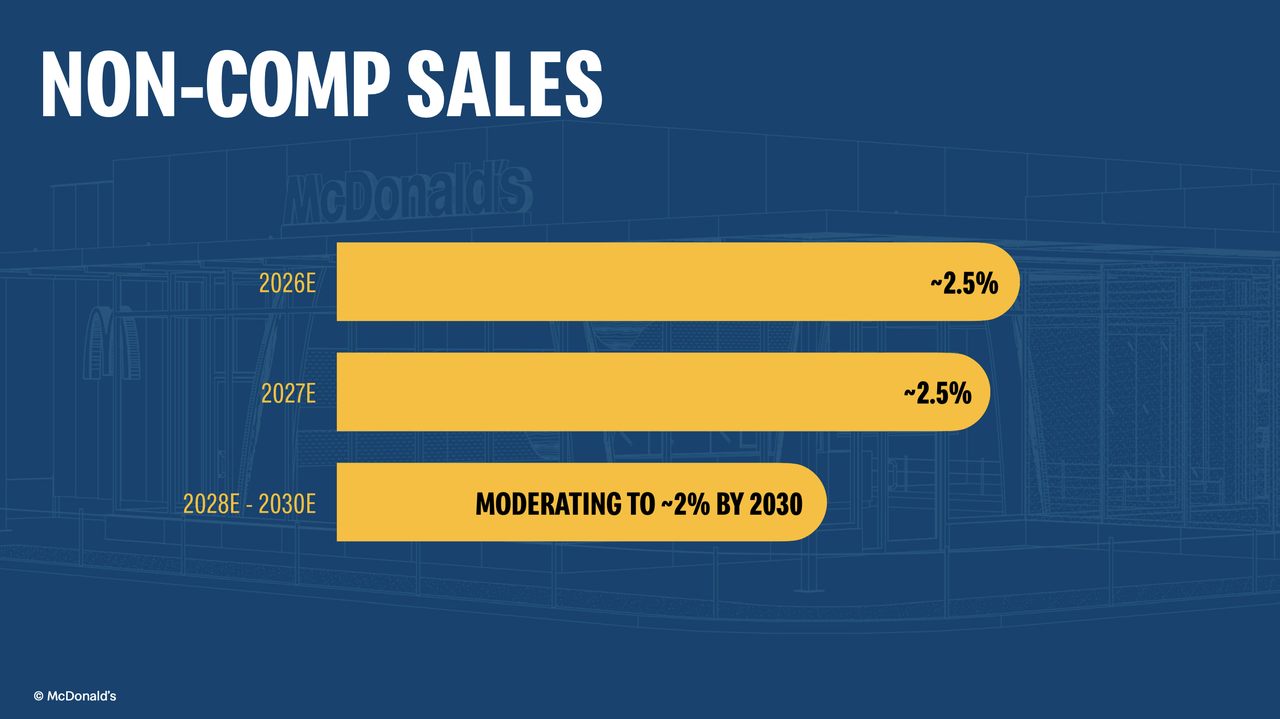
McDonald's reported consolidated revenue of $7.10 billion in Q2 2026, up 4% year over year, or 2% at constant currencies. Global systemwide sales increased 5% to $37 billion, reflecting continued growth across its worldwide restaurant network. Global comparable sales rose 1.3%, led by International Developmental Licensed Markets at 1.9%, followed by International Operated Markets at 1.5% and the US at 0.8%.
Profitability also improved during the quarter. Operating income increased 3% to $3.34 billion, while net income rose 5% to $2.36 billion. Diluted earnings per share reached $3.32, up 6% year over year. Excluding restructuring-related charges, operating income grew 4%, suggesting that underlying earnings performance was slightly stronger than the reported figures indicated.
Looking ahead, McDonald's growth will depend on sustaining customer demand, managing operating costs, and strengthening performance in its largest market, the United States. Its loyalty program offers another growth opportunity: trailing 12-month systemwide sales to loyalty members increased more than 20% to $40 billion across 70 markets, while 90-day active users rose 13% to nearly 220 million. These trends support the company's digital engagement strategy, although maintaining comparable sales growth and protecting margins will remain key challenges.
Data Source: Mcdonald
MCD Stock Performance: A Five-Year Price Review
Over the past five years, McDonald's stock has experienced periods of appreciation, reflecting its global brand strength, franchise-based business model, and role as an established consumer company. However, the longer-term trend has also included corrections and changes in investor expectations.
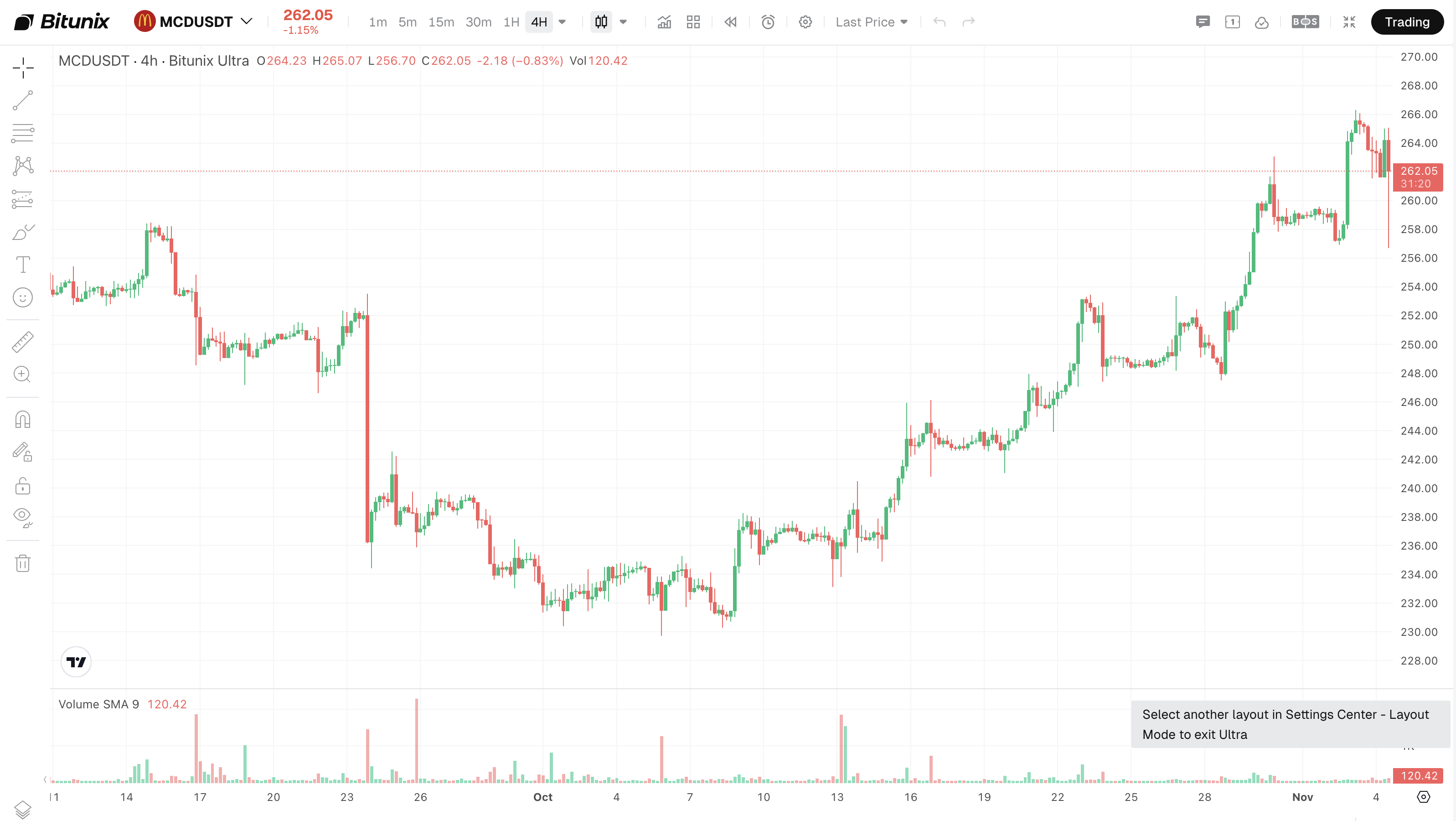
McDonald's shares reached a reported peak of approximately $335 in March 2026, according to the historical price reference used for this review. Other market data reported a 52-week high of $341.75 during the same month, reflecting a difference in the price series or reference period.
The subsequent retreat toward the $236 level by October 2026 highlights the risks of judging a stock solely by its historical growth.
A five-year analysis of MCD should consider three dimensions:
Share price appreciation. Investors should compare the stock's beginning and ending prices over the selected period, while accounting for the effects of major market corrections.
Dividend income. McDonald's has a long history of paying dividends. For a dividend-paying stock, total return provides a more complete picture than price appreciation alone because it includes dividends and, where applicable, their reinvestment.
Valuation and earnings growth. A rising share price does not necessarily mean the stock is becoming more attractive. If the valuation multiple expands faster than earnings, future returns may be more dependent on continued investor optimism.
When evaluating MCD's five-year performance, investors should distinguish between price return and total return, use consistent dates, and compare the results with relevant benchmarks such as the S&P 500 and other restaurant stocks.
Data Source: Bitunix
How to Buy and Trade McDonald's (MCD) Stock
For investors looking to gain exposure to McDonald's, the traditional approach is to purchase MCD shares through a U.S. stock brokerage account. Investors generally need to open a brokerage account, complete identity verification, deposit funds, and then place an order to buy McDonald's shares on the New York Stock Exchange. However, buying U.S. stocks directly may involve brokerage account requirements, cross-border fund transfers, and transaction fees. Traditional stock investing also primarily benefits investors when the stock price rises, which may limit flexibility when market expectations change.
Another option is to trade McDonald's stock contracts through cryptocurrency trading platforms such as Bitunix. Compared with directly purchasing MCD shares, stock contracts can provide more flexible ways to participate in the market. Traders can establish long positions when they expect McDonald's stock price to rise or short positions when they expect the stock to decline. Bitunix MCD contracts offer leverage of up to 20x, allowing users to gain exposure to larger positions with less initial capital. Before trading, users need to register a Bitunix account and complete identity verification (KYC). As leveraged products can magnify both gains and losses, users should understand the relevant risks and manage their positions carefully.