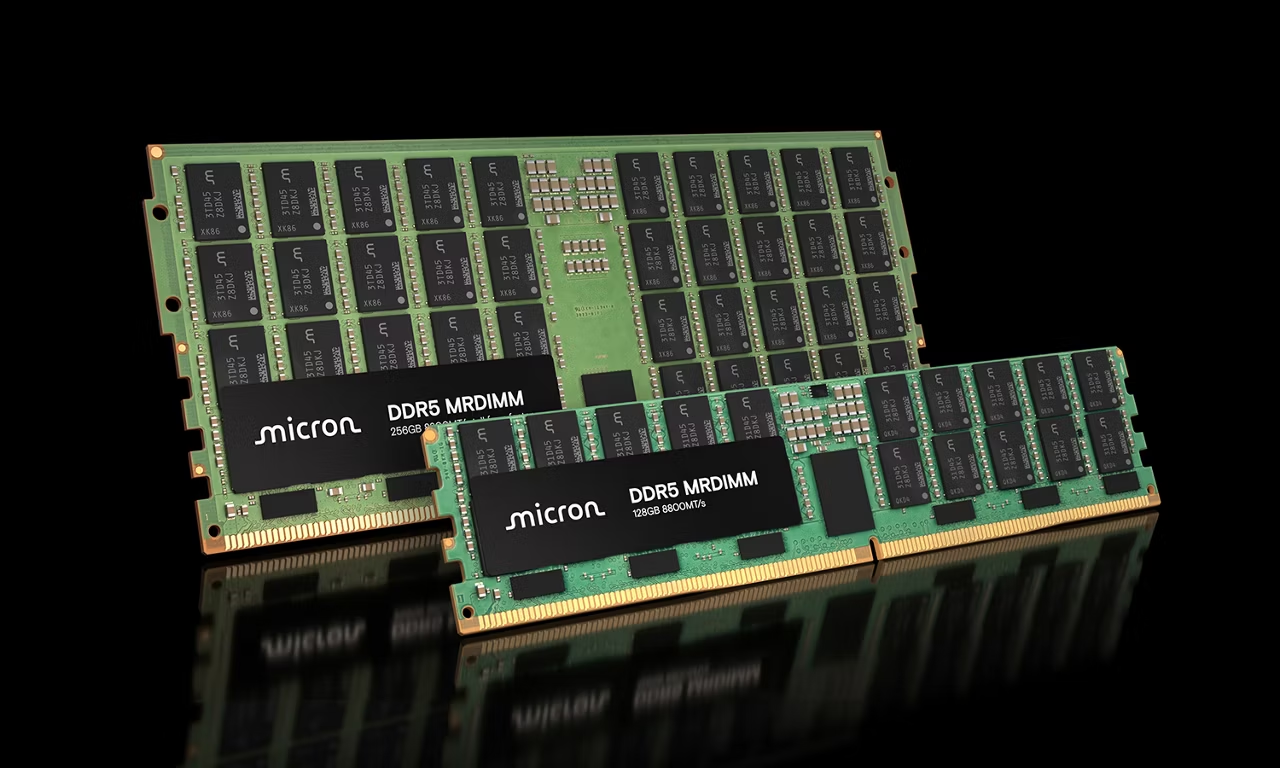
Micron Technology (NASDAQ: MU) is one of the world's leading memory chip manufacturers, supplying DRAM and NAND products for data centers, personal computers, smartphones, and other electronic devices. As artificial intelligence (AI) workloads expand, memory has become an increasingly important part of the computing infrastructure behind large language models and AI applications. Micron is benefiting from rising demand for high-bandwidth memory (HBM), server DRAM, and advanced storage solutions.
However, the company's growth story goes beyond the current AI boom. As conventional DRAM scaling becomes more challenging, Micron is exploring next-generation technologies, including wafer bonding and three-dimensional (3D) DRAM architectures, to improve memory density and performance. For investors, the key question is whether Micron can turn today's strong demand into sustainable growth while maintaining its technological competitiveness against SK Hynix and Samsung.
Data Source: Micron
Why AI Is Driving Micron and Memory Stocks Higher
AI models require enormous amounts of data to be processed and transferred between processors and memory. While GPUs provide the computing power needed to train and run these models, memory determines how quickly data can be supplied to those processors. High-bandwidth memory is particularly important because it delivers substantial data throughput in a compact package, helping reduce bottlenecks in AI computing systems. As cloud providers and technology companies build more AI infrastructure, demand for advanced memory products has increased.
The impact extends beyond HBM. AI servers also require substantial quantities of conventional DRAM to support CPUs, system operations, and data-intensive workloads, while NAND flash provides storage for datasets, model files, and other information. These products serve different functions, but all can benefit from expanding data center investment. As a result, AI-related demand can support multiple parts of Micron's business rather than relying on a single product category.
At the same time, the supply of advanced memory cannot expand immediately in response to stronger demand. Manufacturing facilities require significant investment, and new production capacity takes time to build and qualify. When memory producers allocate more resources to HBM and other high-value products, the supply of certain conventional memory products can also become constrained. This combination of growing demand and limited near-term supply can push prices higher, improve profit margins, and encourage investors to reassess the earnings potential of memory manufacturers.

Data Source: Biggo
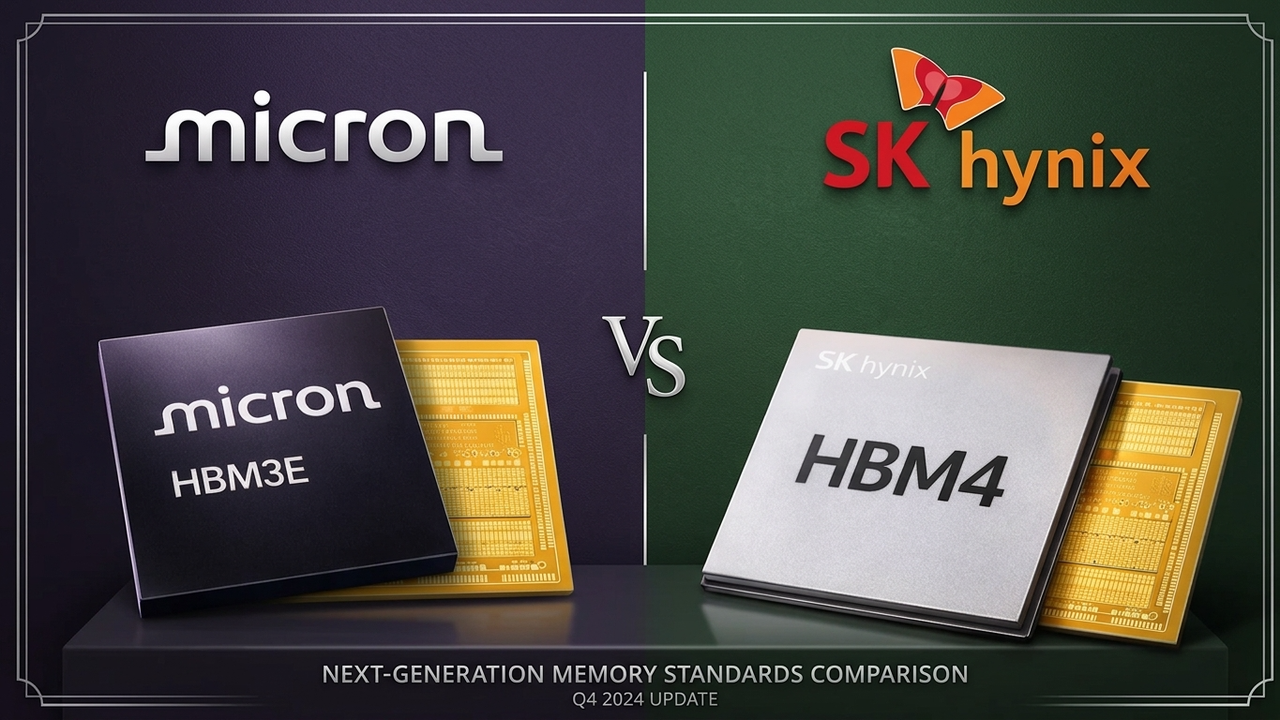
Micron vs. SK Hynix: Who Will Win the AI Memory Race?
SK Hynix has established a strong position in the HBM market through its technology development, manufacturing execution, and relationships with major AI chipmakers. HBM is a demanding product category because manufacturers must combine multiple memory dies into compact stacks while maintaining bandwidth, power efficiency, thermal performance, and reliability. Securing design wins with major customers can provide an advantage as new generations of AI accelerators enter production. SK Hynix's established position therefore represents a significant competitive challenge for Micron.
Micron is working to close the gap through its own HBM roadmap and advanced DRAM manufacturing processes. In its fiscal third-quarter 2026 results, the company reported that HBM4 had entered high-volume shipments for a lead customer's platform, while qualification samples had been shipped to multiple other customers. Micron also said HBM4E development was underway, with volume production expected in calendar 2027. These milestones demonstrate progress in its AI memory business, although future market-share gains will depend on customer adoption, manufacturing yields, production capacity, and execution.
Beyond HBM, Micron competes with SK Hynix and Samsung across conventional DRAM and NAND, where manufacturing efficiency, product quality, and capital allocation influence profitability. A company that brings new capacity online too aggressively may face weaker pricing if supply grows faster than demand. Conversely, disciplined investment and a favorable product mix can help preserve margins during a market upswing. Micron's challenge is not simply to manufacture more memory, but to secure attractive positions in advanced products while remaining competitive in the broader memory market.
Micron's Big Bet on Next-Generation 3D DRAM
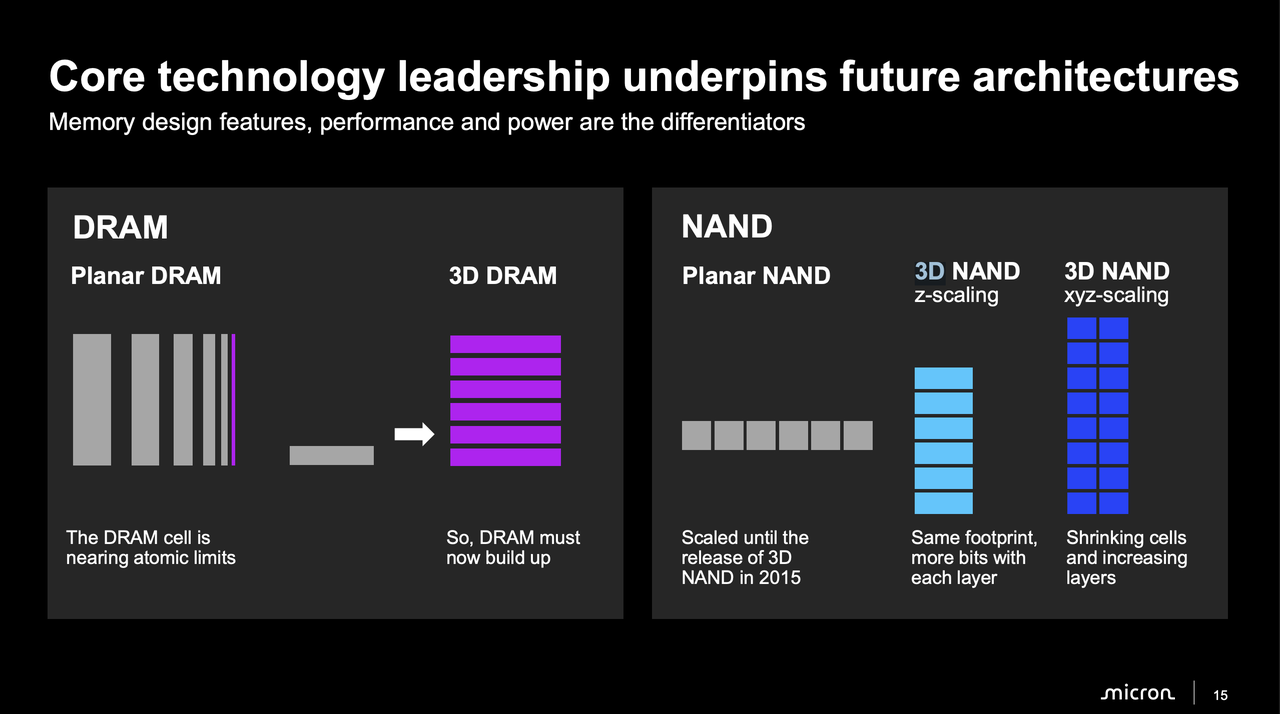
Traditional DRAM manufacturers have improved memory density over many generations by shrinking features and refining cell designs. However, continued scaling brings increasing challenges involving manufacturing complexity, power consumption, electrical characteristics, and the cost of further process improvements. As AI systems demand more memory capacity and bandwidth, manufacturers are exploring ways to improve density without relying exclusively on conventional two-dimensional scaling. Three-dimensional DRAM is one potential direction because it aims to extend memory scaling through a more vertically integrated architecture.
Micron's technology roadmap includes continued development of conventional DRAM nodes, wafer bonding, and research into 3D DRAM. In its October 2026 technology roadmap discussion, the company outlined plans to extend its 6F² DRAM cell approach through the 1-delta node, expected to ramp in the second half of 2027, before introducing wafer bonding at a subsequent node. The roadmap also identifies later development stages as part of its path toward 3D DRAM. This is a longer-term technology strategy, not evidence that Micron has already begun commercial production of 3D DRAM.
If the technology proves commercially viable, 3D DRAM could offer new opportunities to increase memory density and improve the balance between capacity, performance, and power efficiency. Yet a successful laboratory design does not automatically translate into a competitive mass-market product. Micron must demonstrate that the architecture can be manufactured reliably at scale, achieve acceptable yields, and deliver enough economic value to justify the added process complexity. Until the company provides clearer production milestones and cost information, investors should treat 3D DRAM as a potential long-term growth driver rather than a near-term source of revenue.
Data Source: Micron Technology
Micron Q3 2026 Financial Analysis
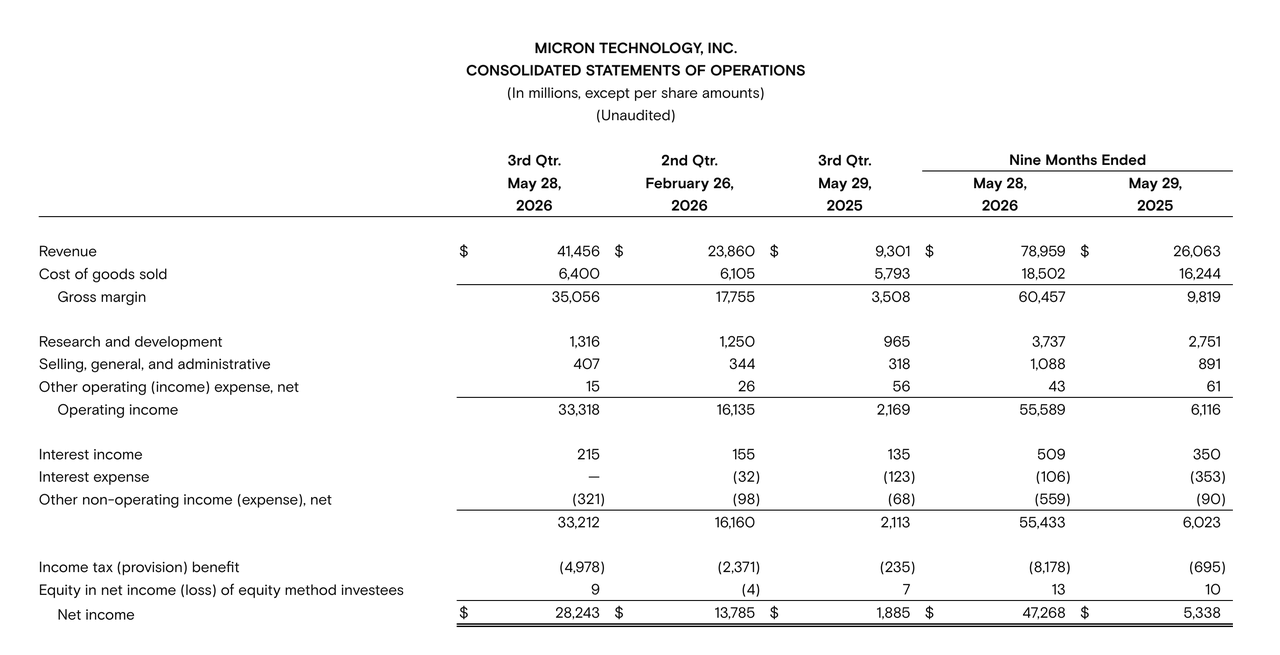
Micron reported record revenue of $41.46 billion for its fiscal third quarter of 2026, which ended on May 28, 2026. Revenue increased from $23.86 billion in the previous quarter and $9.30 billion in the same quarter a year earlier, reflecting a sharp improvement in demand and pricing across its memory business. GAAP net income reached $28.24 billion, or $24.67 per diluted share, compared with $13.79 billion in the prior quarter. These results illustrate how quickly earnings can expand when memory prices, product mix, and capacity utilization move in the company's favor.
Profitability improved alongside revenue growth. Micron's GAAP gross margin rose to 84.6%, compared with 74.4% in the previous quarter and 37.7% a year earlier. Its cloud memory business generated $13.77 billion in revenue, while the core data center business contributed $11.52 billion. These figures highlight the importance of data center demand, although mobile, client, automotive, and embedded products also contribute to the company's overall performance.
Micron generated $25.39 billion in operating cash flow during the quarter and reported adjusted free cash flow of $18.3 billion, while net capital expenditure was $7.1 billion. The company also held $30.2 billion in cash, marketable investments, and restricted cash at quarter-end. For fiscal Q4 2026, management guided revenue of approximately $50 billion, plus or minus $1 billion, and a gross margin of about 86%. These figures provide a strong snapshot of the AI-driven memory upcycle, but investors should remember that memory markets are cyclical and that exceptionally high margins may not persist if supply catches up with demand.
Data Source: Micron
What Could Drive MU Stock?
AI Infrastructure Spending: Will Hyperscalers Keep Expanding Their Budgets?
Continued investment in AI data centers is one of the most important factors for Micron's long-term outlook. Cloud providers and technology companies need GPUs, networking equipment, HBM, server DRAM, and storage to build and operate AI systems. If AI adoption translates into sustained infrastructure spending, Micron could benefit from higher shipments, favorable product pricing, and demand for increasingly advanced memory. However, if customers slow their capital expenditure or find that AI investments are generating weaker returns than expected, memory demand and investor expectations could weaken.
3D DRAM Commercialization: Can Micron Turn Its Technology Bet Into Profits?
Micron's progress in next-generation DRAM could influence how investors value its longer-term competitive position. Evidence of successful wafer-bonding development, improving yields, clear production milestones, and commercially attractive performance would strengthen the case for its technology strategy. The market may also pay attention to whether Micron can maintain its manufacturing execution as it moves toward more complex architectures. On the other hand, delays, cost overruns, or disappointing technical results could reduce the expected value of the project, particularly if competitors introduce compelling alternatives first.
Price Wars With Asian Memory Giants: Could Competition Reverse the Memory Boom?
Micron operates in a global market where SK Hynix, Samsung, and other manufacturers compete on technology, output, and price. If demand remains strong while supply is constrained, producers may retain pricing power and healthy margins. But as new capacity comes online, aggressive expansion or a shift in product allocation could create oversupply and put pressure on memory prices. Investors should therefore track industry capacity plans, inventory levels, contract pricing, and the balance between HBM and conventional DRAM demand rather than assuming the current earnings environment will continue indefinitely.
How to Trade MU Stock
For investors looking to gain exposure to Micron Technology, the traditional approach is to purchase MU shares through a U.S. stock brokerage account. Investors generally need to open a brokerage account, complete identity verification, deposit funds, and then place an order to buy Micron shares on Nasdaq. However, buying U.S. stocks directly may involve brokerage account requirements, cross-border fund transfers, and transaction fees. Traditional stock investing also primarily benefits investors when the stock price rises, which may limit flexibility when market expectations change.
Another option is to trade Micron stock contracts through cryptocurrency trading platforms such as Bitunix. Compared with directly purchasing MU shares, stock contracts can provide more flexible ways to participate in the market. Traders can establish long positions when they expect Micron's stock price to rise or short positions when they expect the stock to decline. Bitunix MU contracts offer leverage of up to 20x, allowing users to gain exposure to larger positions with less initial capital. Before trading, users need to register a Bitunix account and complete identity verification (KYC). As leveraged products can magnify both gains and losses, users should understand the relevant risks and manage their positions carefully.