Crypto trading bots can automate trade execution, but automation does not guarantee profitable results. A bot can lose money because of poor strategy selection, unrealistic backtesting, excessive trading costs, unsuitable settings, or technical failures. Even a well-designed strategy can underperform when market conditions change or risk controls fail.
Understanding common crypto trading bot mistakes helps traders identify weaknesses before committing capital. The key is to test strategies realistically, account for execution costs, set clear risk limits, and monitor live performance rather than assuming a bot can run indefinitely without supervision.
1. Choosing the Wrong Bot Strategy for Market Conditions

A trading bot can execute its rules correctly and still lose money if its strategy does not suit the current market.
Different bot strategies are designed for different conditions. A grid bot places orders across a predefined price range, while a trend-following bot attempts to capture sustained price movements. Arbitrage bots seek price discrepancies between markets or trading venues, but their results depend on execution speed, costs, and available liquidity.
Problems arise when traders deploy a strategy without considering its limitations.
For example, a grid bot designed for a sideways market may accumulate a losing position when prices trend persistently below its range. A trend-following bot may generate repeated false signals when the market moves sideways. Arbitrage opportunities may disappear before orders execute.
How to avoid this mistake:
Identify the market conditions your strategy is designed for.
Define when the bot should stop trading or reduce exposure.
Test performance across trending, ranging, and volatile periods.
Review liquidity and trading costs for each trading pair.
Avoid assuming that running several bots automatically diversifies risk, especially when their positions are highly correlated.
The objective is not to find one bot that works in every market. It is to understand when a strategy may stop working and establish rules for responding.
2. Overfitting a Strategy to Historical Data

Overfitting occurs when a trading strategy is optimized so closely to historical data that it performs poorly on new market data.
A backtest may show impressive returns because the trader repeatedly adjusts indicators, entry thresholds, and exit rules until they fit past price movements. These settings may capture historical noise rather than a repeatable market pattern.
This is particularly relevant to AI-powered trading bots. Machine learning models can identify complex relationships in historical data, but those relationships are not necessarily predictive. A model may also fail when market behavior changes.
How to recognize an overfitted strategy
Warning signs include:
Strong backtest results but poor performance on unseen data.
Profitability that depends on a narrow set of parameter values.
Results that deteriorate sharply when fees and slippage are included.
Performance that depends heavily on one asset or a short historical period.
Large drawdowns during market conditions absent from the training data.
How to avoid this mistake:
Separate training data from validation and test data.
Evaluate the strategy across different market regimes.
Use walk-forward testing to assess how the strategy performs as the testing period advances.
Include realistic trading costs and execution assumptions.
Prefer strategies that remain reasonably stable under small parameter changes.
A successful backtest is evidence worth investigating, not proof of future profitability. If a strategy only works under one narrowly optimized set of conditions, treat its results cautiously.
3. Ignoring Slippage, Fees, and Funding Costs
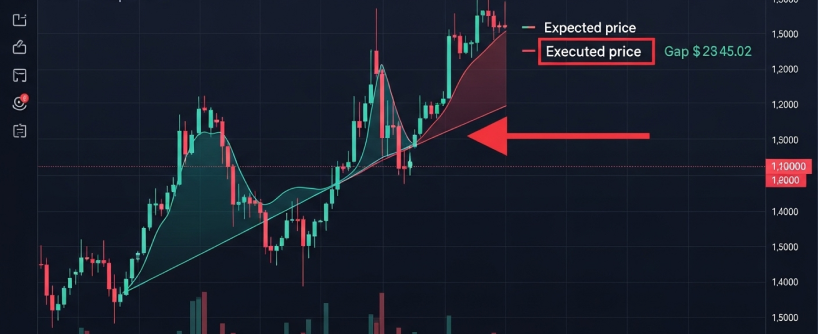
A bot can generate profitable trading signals while losing money after execution costs.
Slippage occurs when an order executes at a different price from the expected price. It can increase during volatile periods, when liquidity is limited, or when an order is large relative to the available order-book depth.
Trading fees and bid-ask spreads also reduce net returns. For perpetual futures, funding payments can add another cost or provide a credit, depending on the funding rate, position direction, and exchange rules.
Consider a strategy that repeatedly targets small price movements. Even if its signals are directionally accurate, fees, spreads, and slippage may consume most of the expected gain. Frequent trading can make this problem worse.
How to avoid this mistake:
Calculate expected net returns after entry and exit fees.
Include realistic spreads and slippage in backtests.
Review actual fill prices rather than relying only on signal prices.
Monitor funding rates if the strategy trades perpetual futures.
Compare the expected profit per trade with the total estimated execution cost.
Limit orders can provide more control over the execution price, but they may remain unfilled or execute only partially. Market orders prioritize execution but can incur greater slippage. The appropriate order type depends on liquidity, urgency, and strategy requirements.
4. Using Poor Bot Settings and Position Sizing

Incorrect configuration can undermine an otherwise reasonable trading strategy.
For example, a grid bot may use a price range that is too narrow for current volatility. A trend-following bot may use overly sensitive indicators that trigger excessive trades. A DCA bot may keep adding to a losing position without a sufficiently strict limit on total exposure.
Position sizing matters just as much. If a bot commits too much capital to one asset or increases exposure after every loss, an adverse price move can cause substantial account damage.
Leverage adds another layer of risk. It increases exposure relative to the margin committed, making liquidation possible when the market moves against a position.
How to avoid this mistake:
Set maximum capital allocation per bot and trading pair.
Define the permitted position size and maximum total exposure.
Test grid ranges, order spacing, and indicator settings against realistic volatility.
Establish limits on averaging down and repeated entries.
If using futures, account for leverage, margin requirements, and liquidation risk.
Reassess settings when market conditions change rather than adjusting them impulsively after losses.
A configuration should reflect the strategy's assumptions and risk limits, not simply maximize the backtest's reported return.
5. Skipping Backtesting and Paper Trading
Launching a bot directly into live trading leaves little room to identify problems without financial consequences.
Backtesting evaluates a strategy against historical data. Paper trading or demo trading evaluates its behavior using current market data in a simulated environment. Testnets can help developers verify API connectivity and order-handling logic, although their execution conditions may differ from those of live markets.
Each method reveals different weaknesses.
A backtest may expose poor historical performance or excessive drawdowns. Paper trading may reveal missed signals, unrealistic assumptions, or unexpected behavior in changing markets. Neither necessarily reproduces live liquidity, order-book competition, or actual execution costs.
How to avoid this mistake:
Backtest the strategy with realistic fees and slippage.
Validate it against data that was not used to develop it.
Run paper trading to observe behavior under current market conditions.
Test order handling, error recovery, alerts, and shutdown procedures.
Define objective criteria for moving to live trading.
If the strategy passes, start with limited capital and monitor its actual results closely.
There is no universal testing period that guarantees readiness. The necessary duration depends on the strategy, trading frequency, market conditions, and the number of meaningful observations collected.
6. Neglecting Stop-Loss Rules and Risk Limits
Automation can execute a poor decision repeatedly and consistently. Without predefined risk controls, a bot may continue trading even when losses exceed acceptable limits.
A stop-loss can help manage the loss on an individual position, but it does not eliminate risk. Execution may occur at a worse price than expected, and technical failures can prevent an order from being placed or completed.
Account-level controls are also important because several positions can lose money simultaneously.

Key risk controls for automated crypto trading, from stop-losses to account-level trading limits.
How to avoid this mistake:
Define the maximum acceptable risk per trade.
Set position-size and total-exposure limits.
Establish daily loss or maximum drawdown thresholds where supported.
Monitor correlated positions rather than assessing each trade in isolation.
Test what happens when a stop-loss fails or an order is rejected.
Define conditions that automatically pause trading.
For leveraged positions, risk controls should also account for margin requirements and potential liquidation. A stop-loss should not be treated as a substitute for appropriate position sizing.
7. Treating a Trading Bot as a Set-and-Forget System

A bot that performs well under one set of market conditions may struggle when volatility, liquidity, or price behavior changes.
Automated systems do not necessarily understand why the market has changed. Unless explicitly designed and validated to adapt, they continue following their configured rules even when those rules become less suitable.
Regular monitoring helps identify performance deterioration before it develops into a larger problem.
How to avoid this mistake:
Review realized and unrealized PnL, drawdowns, and trading costs.
Compare live execution with backtest and paper-trading assumptions.
Monitor changes in volatility, liquidity, and market structure.
Set alerts for unusual losses, repeated order failures, and unexpected exposure.
Establish clear conditions for pausing the bot and reviewing its strategy.
Monitoring does not mean changing parameters after every losing trade. Frequent, reactive adjustments can introduce new errors. Changes should be based on evidence and tested before being deployed.
8. Ignoring API Errors and Order Execution Failures
Trading bots depend on reliable market data, exchange connectivity, and order management. Technical problems can disrupt a strategy even when its trading logic is sound.
An API rate limit may prevent requests from being processed as expected. A connection interruption may leave the bot uncertain whether an order was accepted. A partially filled order may create an exposure different from the one recorded internally.
Poor error handling can make these problems worse. For example, blindly retrying a request may create duplicate orders if the original order was accepted but the response was lost.
How to avoid this mistake:
Follow the exchange's API documentation and rate limits.
Log order requests, responses, errors, and position changes.
Reconcile the bot's internal state with actual exchange orders and balances.
Use supported client order identifiers and duplicate-order safeguards.
Handle rejected and partially filled orders explicitly.
Detect stale market data and pause trading when inputs cannot be trusted.
Test recovery procedures before deploying real capital.
A bot should never assume that an order succeeded simply because a request was sent. Its internal records must remain consistent with the exchange's actual state.
9. Exposing API Keys or Using Unsafe Bot Integrations
API keys connect a trading bot to an exchange account. If those credentials are exposed or granted unnecessary permissions, an attacker may be able to access account information or execute unauthorized trades.
The level of risk depends on the permissions enabled, the exchange's security controls, and how the credentials are stored and used.
Third-party bot platforms introduce additional considerations because account access may depend on another provider's security practices and infrastructure.
How to avoid this mistake:
Grant only the permissions the bot actually needs.
Disable withdrawal permissions unless a specific, justified requirement exists.
Use IP allowlisting where supported and appropriate.
Store API credentials securely rather than embedding them in public code or repositories.
Avoid sharing credentials through unsecured messages or files.
Review connected applications and revoke access that is no longer needed.
Evaluate third-party providers before connecting an exchange account.
API permissions and security features vary by exchange. Check the applicable documentation and account settings instead of assuming that every platform supports the same controls.
10. Trusting AI Trading Bots Without Understanding Their Limits

AI trading bots may use machine learning to analyze market data, generate signals, or adjust parameters. These capabilities can support research and automation, but they do not eliminate uncertainty.
An AI model can learn misleading patterns from poor-quality data. Its behavior may change when market conditions differ from its training data, and some models may provide limited explanations for their decisions.
Most importantly, AI functionality does not automatically mean that a bot continuously learns from new trades or independently improves its strategy. Those capabilities depend on how the system is designed and deployed.
How to avoid this mistake:
Understand what data the model uses and how signals are generated.
Check whether the model updates automatically or requires manual retraining.
Validate its outputs against unseen data and realistic trading costs.
Set independent position, exposure, and loss limits.
Monitor unexpected decisions and maintain a way to stop automated execution.
Avoid granting an AI system unrestricted authority over account funds.
Treat AI as a component of a trading system, not as a replacement for testing, execution controls, or risk management.
How to Troubleshoot a Crypto Trading Bot Before Relaunching
When a bot starts underperforming, changing several settings at once can make the underlying problem harder to identify. Start by reviewing the evidence and isolate the most likely cause.
Symptom | Possible cause | What to check |
Profitable backtest but losing live trades | Overfitting or underestimated costs | Compare actual fills, fees, and live results with test assumptions |
Frequent small wins followed by a large loss | Weak exit rules or oversized positions | Review stop-loss behavior, position sizing, and drawdown limits |
Bot suddenly stops placing orders | API errors, insufficient balance, or rejected orders | Check logs, exchange responses, and account balances |
Grid bot accumulates a losing position | Price moves outside its intended range | Review range boundaries, exposure, and exit rules |
Futures bot approaches liquidation | Excessive leverage or insufficient margin | Check position size, margin requirements, and funding costs |
Reported profits do not match account equity | Fees, funding, unrealized losses, or accounting errors | Reconcile realized PnL, unrealized PnL, fees, and account balances |
Duplicate orders appear | Retry logic or order-state synchronization errors | Review request handling and duplicate-order safeguards |
Bot trades during unsuitable conditions | Missing or ineffective market filters | Reassess the strategy's operating conditions and pause rules |
Before restarting, confirm that the underlying issue has been corrected and that the relevant fix has been tested. If the cause remains unclear, pausing the bot is generally preferable to continuing to expose capital while experimenting with live settings.
A practical pre-launch checklist should cover strategy validation, execution costs, position sizing, API permissions, order recovery, monitoring alerts, and shutdown procedures.