The Solana ecosystem has grown into a broad network of financial applications, wallets, infrastructure, consumer products, DePIN networks, NFT platforms, and token-based communities.
While meme coins remain a visible part of Solana activity, they are only one segment of the ecosystem. DeFi protocols, stablecoins, tokenized assets, payments, lending markets, trading infrastructure, and consumer applications have become increasingly important parts of the network.
As of 2026, Solana's official ecosystem directory spans areas including DePIN, DeSci, BTCFi, gaming, creators, network infrastructure, and developer resources.
This guide explains how the Solana ecosystem is structured, which projects are notable in each category, and what users should evaluate before interacting with a Solana-based project.
Note: Project examples in this guide are selected for their ecosystem role, visibility, or relevance. They are not presented as a ranking or investment recommendation.
What Is the Solana Ecosystem?
The Solana ecosystem refers to the collection of applications, protocols, tokens, infrastructure providers, and communities built on or connected to the Solana blockchain.
Solana itself is a Layer-1 blockchain. The ecosystem is the much broader application layer that develops around that network.
For example, SOL is the native asset used to pay transaction fees and interact with the network, while Jupiter is a trading and liquidity protocol, Kamino provides lending and other DeFi services, and Phantom is a wallet used to hold assets and connect to Solana applications.
The distinction matters because these projects do not all serve the same function.
Layer | Examples | Main function |
Blockchain | Solana | Network infrastructure and transaction settlement |
Native asset | SOL | Fees, staking, and network participation |
DeFi | Jupiter, Kamino, Raydium, Drift | Trading, lending, liquidity, and financial markets |
Wallets | Phantom, Solflare, Backpack | Asset custody and application access |
Infrastructure | Pyth, RPC providers, validators | Data, connectivity, and network services |
DePIN | Helium, Render | Physical infrastructure and decentralized computing |
NFTs & consumer apps | Tensor, Magic Eden and others | Digital assets, marketplaces, and consumer experiences |
Meme coins | BONK, WIF and others | Community-driven and speculative token markets |
Solana's own ecosystem directory now separates network resources from application categories, reflecting how much broader the ecosystem has become.
Why Does the Solana Ecosystem Matter in 2026?
Solana's ecosystem is increasingly defined by the range of applications using its transaction infrastructure rather than by a single use case.
DeFi remains one of its most active sectors. DeFiLlama's current Solana data shows more than $2.6 billion in 24-hour DEX volume and more than $75 billion over 30 days at the time of this update. These figures fluctuate continuously, so they should be treated as point-in-time measurements rather than fixed ecosystem statistics.

Source: DeFiLlama
DEX aggregation is also a major part of the trading infrastructure. DeFiLlama currently tracks more than $1.2 billion in 24-hour DEX aggregator volume on Solana, with Jupiter representing a substantial share of that activity.
At the same time, Solana's 2026 ecosystem activity has expanded into areas such as tokenized assets, stablecoins, payments, lending, prediction markets, and institutional infrastructure. Solana's monthly ecosystem reports have documented continued development across these categories throughout 2026.
This makes the ecosystem useful to understand as a network of interconnected applications, rather than simply a list of tokens.
How Does Solana Work?
Solana is a Layer-1 blockchain designed to process transactions with relatively short block times and low transaction costs.
Its architecture combines several mechanisms to coordinate transaction ordering, execution, and validator participation. One important component is Proof of History (PoH), which provides a verifiable passage of time that helps the network establish transaction ordering. Solana also uses Proof of Stake for validator participation and network security.
For users, the practical part is simpler: applications submit transactions to the Solana network, validators process them, and the resulting state changes are recorded onchain.
Solana transactions are paid for in SOL. The current base fee is 5,000 lamports per signature, while an optional priority fee can be added to increase transaction scheduling priority.
The fee structure is:
Total transaction fee = Base fee + Priority fee
The base fee is charged per signature. The priority fee depends on the compute-unit price and compute-unit limit specified for the transaction.
For everyday users, this means that a simple Solana transaction can remain inexpensive, while complex or highly competitive transactions may involve additional priority fees.
Main Categories in the Solana Ecosystem
The ecosystem is easier to understand when projects are grouped by what they actually do.
1. DeFi and Trading
This category includes decentralized exchanges, aggregators, lending markets, perpetuals platforms, liquid staking protocols, and other onchain financial applications.
Examples include:
Jupiter: DEX aggregation, trading, and a growing range of DeFi products.
Raydium: Decentralized exchange and liquidity infrastructure.
Kamino: Lending, borrowing, liquidity, and automated DeFi products.
Drift: Perpetuals, spot markets, lending, and other trading infrastructure.
Jito: Liquid staking and MEV-related infrastructure.
Save: A lending and borrowing protocol formerly known as Solend.
2. Wallets
Wallets provide the interface through which users hold assets, approve transactions, stake SOL, and connect to decentralized applications.
Solana's official wallet directory currently lists 157 wallets across the broader Solana-supported ecosystem, including native and multi-chain options. Featured examples include Phantom, Solflare, and Backpack.
3. Infrastructure and Data
Infrastructure projects support the applications running on Solana.
This category includes:
Pyth Network, for example, provides market data infrastructure used by blockchain applications.
4. DePIN
DePIN, or decentralized physical infrastructure networks, connects blockchain-based incentives with physical infrastructure.
Examples include wireless connectivity, computing, storage, mapping, and other real-world resources.
Helium and Render are two well-known examples associated with the Solana ecosystem.
5. NFTs and Consumer Applications
Solana also supports NFT marketplaces, creator platforms, games, social applications, payments, and other consumer-focused products.
These applications can use Solana's low-cost transaction infrastructure for activities such as minting, trading, transferring assets, or interacting with onchain applications.
6. Meme Coins
Meme coins are community-driven tokens whose value can be heavily influenced by attention, liquidity, narratives, and social activity.
BONK and WIF are among the most recognizable Solana meme coins, while newer tokens can emerge and gain liquidity quickly.
Unlike infrastructure or DeFi protocols, meme coins may have limited utility and can experience particularly sharp changes in liquidity and market interest.
Notable Solana DeFi Projects in 2026
Rather than ranking projects from first to last, it is more useful to compare them by their role within Solana's financial infrastructure.
1. Jupiter
Jupiter is one of the major trading and liquidity-routing protocols in the Solana ecosystem.
Its core role is to aggregate liquidity across Solana markets and route swaps between available venues. DeFiLlama currently tracks Jupiter as the largest Solana DEX aggregator by 24-hour and 30-day aggregator volume in its current dataset.
Jupiter has also expanded beyond basic swap aggregation. Its 2026 product development includes lending, portfolio management, and other financial-market functions. Solana's August 2026 ecosystem roundup highlighted Jupiter Lend v2 and its Smart Vaults as part of the network's continued DeFi expansion.
What it is mainly used for:
2. Kamino
Kamino is a Solana DeFi protocol focused on lending, borrowing, liquidity, and automated financial strategies.
Its product range has expanded beyond basic lending markets. In 2026, Kamino introduced additional fixed-term and fixed-rate borrowing functionality while continuing to develop its lending and liquidity infrastructure.
What it is mainly used for:
Lending
Borrowing
Liquidity management
DeFi strategies
Collateralized positions
3. Raydium
Raydium is a decentralized exchange and liquidity protocol on Solana.
It has remained an important component of Solana's DEX infrastructure, with DeFiLlama currently recording substantial Raydium spot DEX volume.
Raydium has also continued adding trading functionality. Solana's May 2026 ecosystem roundup highlighted features including limit orders, dynamic fees, and single-sided fees for its concentrated liquidity market maker.
What it is mainly used for:
Token swaps
Liquidity provision
Token markets
Automated market making
4. Drift
Drift is a Solana-based trading protocol focused on derivatives and other financial markets.
Its role is different from a basic spot DEX because it provides more advanced trading infrastructure, including perpetual markets and margin-based products.
For users evaluating Solana DeFi, Drift is therefore better understood as part of the ecosystem's onchain derivatives and trading layer rather than simply another token-swap platform.
5. Jito
Jito operates across Solana's staking and MEV infrastructure.
Its ecosystem role extends beyond a conventional DeFi application because liquid staking and validator-related infrastructure can affect how SOL is used throughout other Solana protocols.
Liquid staking can allow users to maintain exposure to staked SOL while using a liquid representation of that position in supported DeFi applications.
6. Save
Save, formerly known as Solend, is a Solana lending and borrowing protocol.
The project rebranded from Solend to Save and expanded its product scope beyond its original lending focus. Its documentation describes Save as a permissionless savings and DeFi protocol on Solana.
The rebrand is worth noting because older Solana ecosystem articles may still refer to the protocol as Solend.
What it is mainly associated with:
How These DeFi Projects Differ
Project | Primary role | Typical use case |
Jupiter | DEX aggregator & DeFi | Swaps, routing, portfolio tools |
Kamino | Lending & liquidity | Lending, borrowing, liquidity |
Raydium | DEX & AMM | Swaps and liquidity provision |
Drift | Trading & derivatives | Perpetuals and margin-based markets |
Jito | Liquid staking & MEV | Staking and Solana infrastructure |
Save | Lending & DeFi | Lending, borrowing, and related products |
The important point is that these projects are not direct substitutes for one another. A DEX aggregator, lending protocol, derivatives platform, and liquid staking protocol solve different problems, even though users may combine them within the same DeFi strategy.
Solana Wallets and Infrastructure Projects
Wallets and infrastructure sit underneath much of the Solana ecosystem. Users typically interact with these services before they ever interact directly with a DeFi protocol, NFT marketplace, or DePIN application.
1. Phantom
Phantom is a self-custody wallet that supports Solana and multiple other networks.
On Solana, users can use Phantom to hold tokens, approve transactions, connect to decentralized applications, manage NFTs, and access other onchain features. Solana's official wallet directory currently lists Phantom among its featured wallets.
Phantom is therefore better classified as a wallet and application interface, rather than a Solana DApp itself.
2. Solflare
Solflare is another Solana-focused self-custody wallet.
Its current feature set includes staking, NFT support, Solana Pay, hardware-wallet integration, and support for Solana's Token Extensions, Blinks, and Actions.
For users exploring the Solana ecosystem, Solflare provides a direct interface for managing SOL and other Solana-based assets while connecting to supported applications.
3. Backpack
Backpack is a multi-function crypto wallet and ecosystem platform with Solana support.
Its product suite includes wallet functionality, staking, NFTs, and multisignature features. It is also associated with the Backpack exchange ecosystem.
As with Phantom and Solflare, the primary role of Backpack in this context is wallet and user infrastructure, not a standalone DeFi protocol.
4. Pyth Network
Pyth Network provides market-data infrastructure for blockchain applications.
Oracles connect onchain applications with information that cannot be generated directly from the blockchain, such as asset prices and other external market data.
For DeFi protocols, reliable pricing data is particularly important because lending markets, derivatives platforms, and automated trading systems may rely on oracle feeds to determine asset values.
This makes Pyth part of the infrastructure layer of the Solana ecosystem, rather than a conventional DApp.
Solana DePIN Projects
DePIN, short for Decentralized Physical Infrastructure Networks, refers to blockchain-based networks that coordinate physical resources such as wireless connectivity, computing power, storage, sensors, or other infrastructure.
Solana has become an important blockchain for several DePIN projects.
1. Helium
Helium is a decentralized wireless network that uses token-based incentives to coordinate independently operated wireless infrastructure.
The project moved its blockchain infrastructure to Solana in 2023. Its ecosystem has since continued to develop around decentralized wireless networks and related connectivity services.
The key difference between Helium and a conventional DeFi application is the underlying resource being coordinated: rather than liquidity or financial positions, the network is designed around physical wireless infrastructure.
2. Render
Render Network is a decentralized GPU computing network.
It connects users who need GPU computing resources with providers that contribute available GPU capacity.
This gives Render a different role from Solana DeFi protocols. Instead of primarily facilitating token swaps or financial positions, it focuses on decentralized computing infrastructure.
Render is therefore commonly discussed as a DePIN and decentralized computing project within the broader Solana ecosystem.
Why DePIN Matters to the Solana Ecosystem
DePIN broadens the potential use cases for Solana beyond financial applications.
A simplified comparison looks like this:
Sector | Resource being coordinated | Example |
DeFi | Capital and liquidity | Kamino |
DEX | Trading liquidity | Jupiter, Raydium |
Liquid staking | Staked assets | Jito |
Oracle infrastructure | Market data | Pyth |
Wireless DePIN | Connectivity | Helium |
Compute DePIN | GPU resources | Render |
This distinction is useful when evaluating ecosystem growth. A rise in Solana activity does not necessarily come from token trading alone; different applications can create different types of network demand.
Solana NFTs and Consumer Applications
NFTs remain part of the Solana ecosystem, although the market is broader than simple NFT collectibles.
Solana supports NFT marketplaces, creator platforms, gaming assets, digital collectibles, and consumer applications.
1. Tensor
Tensor is a Solana NFT marketplace and trading platform.
Its products are designed around NFT discovery, trading, and collection management, making it part of the ecosystem's digital-asset marketplace infrastructure.
2. Magic Eden
Magic Eden remains a notable name in the Solana NFT market.
However, its current business structure is different from older ecosystem guides. In 2026, Magic Eden announced that it would wind down certain marketplace services while continuing to support its Solana Marketplace and Packs. Its EVM and Bitcoin marketplace support was scheduled to end in March 2026.
For this reason, older descriptions of Magic Eden as a broad multi-chain NFT marketplace should be treated cautiously when writing about its 2026 role.
3. Metaplex
Metaplex provides standards and infrastructure for digital assets on Solana.
Rather than functioning only as an NFT marketplace, Metaplex operates closer to the asset-creation and application infrastructure layer.
Its tooling supports developers and creators building tokenized assets and digital experiences on Solana.
4. Solana Consumer Applications
The ecosystem has also expanded into areas such as payments, gaming, social applications, creator tools, and other consumer-facing products.
These applications can benefit from Solana's transaction architecture without necessarily being classified as DeFi.
This is an important distinction for understanding the ecosystem in 2026: Solana is not simply a DeFi chain or a meme-coin chain.
Notable Solana Meme Coins in 2026
Meme coins are one of the most visible parts of the Solana ecosystem, particularly during periods of high retail activity and rapid token launches.
However, meme coins should be separated from infrastructure and DeFi protocols because their value proposition, token distribution, and risk profile can be very different.
1. BONK
BONK is one of the best-known meme coins associated with Solana.
It gained visibility as a community-driven token and became part of the broader Solana culture and application ecosystem.
BONK has also been integrated into various Solana-based applications, making it more deeply connected to the network than a purely isolated meme token.
2. dogwifhat (WIF)
dogwifhat (WIF) is another major Solana meme coin that gained significant market attention.
Its core appeal is primarily community and meme-driven rather than based on a complex protocol utility.
As with other meme coins, market liquidity, social attention, token distribution, and broader risk appetite can have a major effect on its price.
3. POPCAT
POPCAT is a cat-themed meme coin that became closely associated with the Solana meme-coin market.
Its growth illustrates how Solana's low-cost token-launch environment can support rapid experimentation with community-driven assets.
4. PENGU
PENGU is the token associated with the Pudgy Penguins ecosystem and has a strong connection to the Solana network.
Unlike many purely native meme coins, PENGU is tied to an established NFT brand and broader consumer ecosystem.
That makes its market structure and use cases different from tokens whose activity is almost entirely driven by meme culture.
5. GIGA
GIGA is another Solana-based meme coin that has attracted community and market attention.
Its inclusion in an ecosystem guide is primarily relevant to the meme-coin segment rather than to Solana's core infrastructure.
How Solana Meme Coins Differ From DeFi Tokens
Type | Primary driver | Examples |
DeFi protocol token | Protocol activity and governance/utility | JUP, RAY |
Infrastructure token | Network or infrastructure utility | PYTH |
DePIN token | Physical or computing infrastructure | HNT, RENDER |
Meme coin | Community, attention, and market activity | BONK, WIF, POPCAT |
The categories can overlap, but the distinction helps users avoid treating every Solana token as if it represents the same type of project.
Meme-coin liquidity can change rapidly, and token prices can move substantially without a corresponding change in underlying network fundamentals. Users should therefore examine liquidity, holder concentration, token distribution, contract details, and trading activity before interacting with a newly launched token.
How to Research Solana Projects Before Trading
The number of Solana projects makes simple popularity-based research unreliable.
A project can have a large social following while having limited liquidity, weak token utility, or significant concentration among a small number of wallets.
A more structured review can include the following factors.
1. Understand What the Project Actually Does
Start with the basic question:
What problem does this project solve?
For example:
Jupiter → liquidity aggregation and DeFi trading
Kamino → lending and liquidity
Pyth → market-data infrastructure
Helium → decentralized wireless infrastructure
Render → decentralized GPU computing
Phantom → wallet and application access
If the project's function is difficult to explain without relying on price predictions or social-media narratives, further research may be necessary.
2. Check Token Utility
Not every token in the Solana ecosystem has the same purpose.
Check whether the token is used for:
Also distinguish between protocol utility and speculative demand. A token can have a documented use case without that use case automatically determining its market value.
3. Review Token Supply and Distribution
Tokenomics can materially affect the supply available to the market.
Check:
For newer tokens, future unlocks can be particularly relevant because the circulating supply may change over time.
4. Examine Liquidity and Trading Activity
Market capitalization alone does not tell you how easy a token is to trade.
Review:
A token with high reported volume but limited liquidity can behave very differently from a deeply traded asset during periods of market stress.
5. Check Smart-Contract and Protocol Risks
For DeFi projects, users should review:
An audit can reduce some technical uncertainty, but it does not eliminate smart-contract or economic risk.
6. Look Beyond Social-Media Metrics
Follower counts and social engagement can help measure attention, but they are not substitutes for product usage.
Where available, compare social activity with:
Active users
Transaction volume
TVL
Fees generated
Developer activity
Protocol revenue
Liquidity
Actual product usage
The right metrics depend on the type of project being evaluated.
For example, TVL may be useful for a lending protocol but less meaningful for a wallet or a decentralized computing network.
Solana Ecosystem: What Should You Watch in 2026?
The Solana ecosystem is moving across several different growth areas rather than following a single narrative.
DeFi and Onchain Trading
DEX activity, lending markets, derivatives, and liquid staking remain important areas to monitor.
Changes in trading volume, liquidity, stablecoin activity, and protocol revenue can provide a clearer picture of ecosystem usage than token prices alone.
Stablecoins and Payments
Stablecoins are becoming increasingly important to Solana's application layer.
Their use extends beyond trading into payments, transfers, DeFi liquidity, and other financial applications.
Tokenized Real-World Assets
Tokenized securities and other real-world assets have become another area of Solana ecosystem development.
This category is particularly different from meme-coin activity because its growth depends more on issuers, infrastructure, compliance frameworks, and institutional participation.
DePIN and Consumer Applications
Helium and Render illustrate how Solana-based projects can connect blockchain incentives with real-world infrastructure.
Gaming, payments, creator applications, and other consumer products represent another potential source of ecosystem activity.
Network Upgrades
Solana's technical roadmap is also relevant because improvements to network performance and finality can affect the experience of both developers and users.
For anyone researching Solana in 2026, it is therefore useful to monitor application growth and technical development together, rather than treating SOL's price as the only measure of ecosystem progress.
Trading Solana Ecosystem Tokens on Bitunix
Solana ecosystem tokens can be traded through both centralized and decentralized markets, depending on the asset and available liquidity.
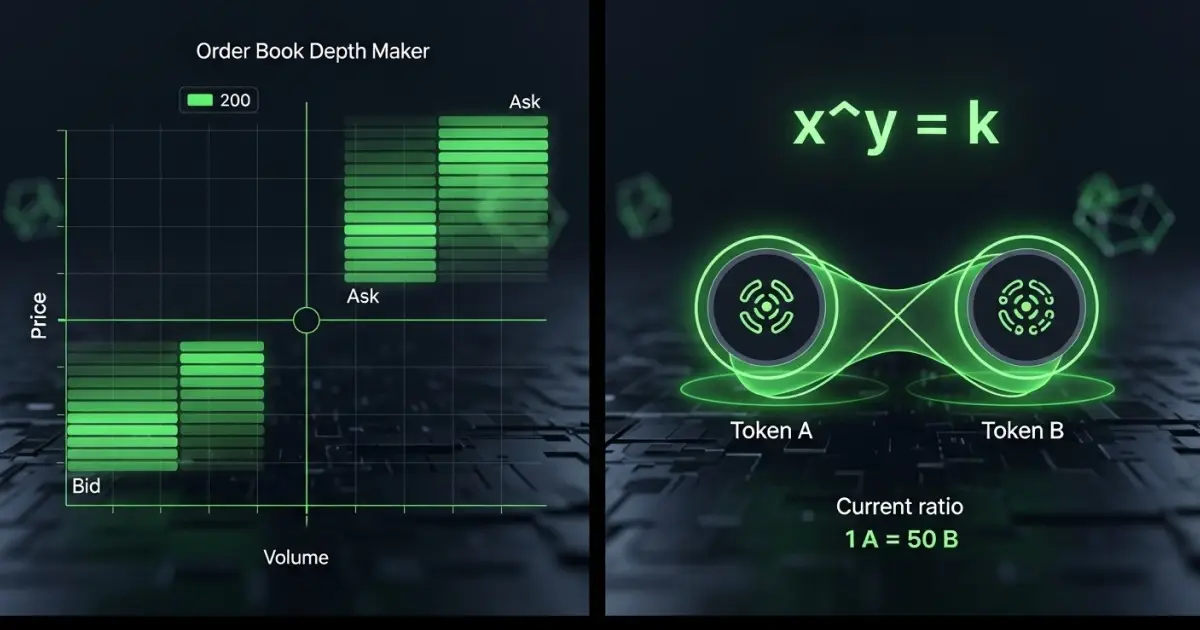
On a centralized exchange, users can access supported spot or derivatives markets through an order book, while decentralized markets generally rely on onchain liquidity pools or other trading mechanisms.
For users who want to trade supported Solana ecosystem assets on Bitunix, available markets can include SOL/USDT and selected ecosystem tokens. Market availability can change over time, so check the current Bitunix market list before trading.
For example, SOL can be traded through the SOL/USDT market on Bitunix, while supported ecosystem tokens such as BONK may also have their own markets.
Before placing a trade, check:
Current market and liquidity
Spot or derivatives availability
Trading fees
Minimum order requirements
Funding rates for perpetual contracts
Regional restrictions
Current risk disclosures
For users primarily researching the Solana ecosystem, the purpose of a trading platform is not simply to provide access to tokens. It can also provide a way to monitor liquidity, price movements, market structure, and trading activity across supported assets.
For a deeper look at SOL's potential price scenarios and the factors that may influence its market outlook, see Bitunix's Solana Price Prediction 2026 guide.
Risks to Consider in the Solana Ecosystem
Solana's low transaction costs and broad application ecosystem do not eliminate the risks associated with blockchain applications.
Different parts of the ecosystem carry different types of risk.
Risk | What it means | Where it can matter |
Smart-contract risk | Code vulnerabilities can lead to loss of funds | DeFi, staking, NFT applications |
Token concentration | A small number of wallets may control a large share of supply | New and low-cap tokens |
Liquidity risk | Limited liquidity can increase slippage | Meme coins and smaller tokens |
Oracle risk | Incorrect external data can affect protocol operations | Lending and derivatives |
Protocol risk | Economic or governance mechanisms may fail | DeFi protocols |
Network risk | Transactions can fail or experience delays under certain conditions | All Solana applications |
Regulatory risk | Rules can affect access, products, or token activity | Exchanges and financial applications |
Market risk | Crypto prices can move sharply in either direction | SOL and ecosystem tokens |
Smart-Contract and Protocol Risk
Interacting with a DeFi protocol means relying on its smart contracts and economic design.
Even audited protocols can contain vulnerabilities or experience unexpected behavior. Users should review a project's security documentation, audit history, upgrade permissions, and incident history where available.
Liquidity and Token Risk
A token's market capitalization does not necessarily indicate how much liquidity is available for trading.
Smaller Solana tokens and newly launched meme coins can experience large price movements when liquidity changes or market attention shifts.
Token distribution also matters. A high concentration of holdings among a small number of wallets can create additional market and liquidity risks.
Network and Transaction Risk
Solana transactions generally have low base fees, but users may still encounter failed transactions, congestion-related issues, or additional priority fees depending on network conditions and transaction requirements.
Applications may also depend on RPC providers, wallets, or other infrastructure. A problem in one part of that stack can affect the user experience even when the underlying blockchain remains operational.
Regulatory and Access Risk
Crypto regulations vary by jurisdiction and can change over time.
Exchange availability, token access, derivatives products, and other services may therefore differ depending on where a user is located.
Users should check the rules and product availability that apply to their jurisdiction before interacting with an asset or platform.
Solana Ecosystem Outlook for 2026
The Solana ecosystem in 2026 is best understood through several parallel developments rather than a single narrative.
DeFi Is Becoming More Diverse
Solana DeFi is no longer centered only on token swaps.
The ecosystem now includes:
This diversification gives Solana users more ways to use onchain liquidity, while also introducing different types of protocol and smart-contract risk.
Stablecoins and Payments Are Expanding the Use Cases
Stablecoins can serve as trading pairs, settlement assets, payment instruments, and liquidity within DeFi applications.
Solana's low-cost transaction environment makes it suitable for applications that require frequent transfers or relatively small transactions.
The development of payment infrastructure is therefore worth watching alongside traditional DeFi metrics.
DePIN Connects Solana to Physical Infrastructure
DePIN represents a different type of blockchain use case.
Helium's wireless infrastructure and Render's decentralized computing network demonstrate how token incentives can be connected to physical or computational resources.
The key metric for these projects is therefore not simply token price. Network usage, contributed resources, demand, revenue, and the sustainability of incentives can all provide useful context.
Consumer Applications Could Broaden Adoption
Wallets, payments, gaming, social applications, creator tools, and other consumer products can introduce blockchain technology to users who may never interact directly with traditional DeFi protocols.
This creates a different adoption path from speculation-driven token activity.
Infrastructure Remains a Core Theme
As more applications use the network, infrastructure such as wallets, RPC services, validators, data providers, asset standards, and developer tooling becomes increasingly important.
Projects such as Pyth and Metaplex therefore play a different but complementary role to DeFi protocols such as Jupiter or Kamino.
For ecosystem research, looking at these underlying layers can provide a more complete picture than tracking token prices alone.
Conclusion: Understanding the Solana Ecosystem
The Solana ecosystem has developed from a relatively focused smart-contract network into a broad collection of financial, infrastructure, consumer, and physical-network applications.
Its major sectors now include:
DeFi and trading: Jupiter, Kamino, Raydium, Drift, Jito, Save
Wallets: Phantom, Solflare, Backpack
Infrastructure: Pyth, Metaplex, RPC and validator services
DePIN: Helium, Render
NFTs and consumer applications: Tensor, Magic Eden, gaming and creator platforms
Meme coins: BONK, WIF, POPCAT, PENGU, GIGA
These categories serve different purposes, so comparing every Solana project through the same metric can be misleading.
For users researching the ecosystem, a more useful approach is to identify what a project does, examine its token structure and liquidity, review its security and governance model, and then consider how it fits into the wider Solana network.
The ecosystem can continue to change quickly. New protocols can launch, existing projects can expand into new products, and market conditions can alter liquidity and user activity. Checking current project documentation and market data is therefore essential before making decisions involving Solana ecosystem assets.