The crypto market is driven not only by charts and economic data but also by sentiment. In a market where volatility is constant, trader psychology and collective mood can influence price movements as strongly as fundamental factors. Understanding these emotional drivers helps traders better interpret market conditions and manage uncertainty. Unlike traditional financial markets, cryptocurrency prices are often influenced by collective emotions, online narratives, and rapid changes in participant behavior.
By 2026, crypto sentiment analysis has become increasingly data-driven. Traders now combine social media monitoring, blockchain activity, derivatives metrics, search trends, and news analysis to better understand market psychology.
This article explores six widely used tools for analyzing crypto market sentiment and explains how traders can combine sentiment indicators with technical and fundamental research. Understanding market trends and investor behavior can help traders recognize periods of extreme optimism, fear, or uncertainty.
Why Sentiment Analysis Matters in Crypto

Unlike stocks, where earnings reports, financial statements, and economic indicators often influence valuations, crypto markets are highly affected by investor psychology and market narratives.
A single announcement, viral post, or major on-chain movement can quickly change market expectations. This emotional sensitivity makes sentiment analysis an important part of crypto market research.
Crypto sentiment is amplified by several factors:
1. Social Media Influence
Platforms such as X (formerly Twitter), Reddit, Telegram, and other online communities allow information and narratives to spread rapidly. A trending discussion about a token can attract new participants, while negative posts about security issues, regulations, or market crashes can trigger fear.
2. Retail Trader Participation
Retail traders represent a significant part of the crypto market. Compared with traditional investors, retail participants are often more influenced by:
3. Limited Traditional Valuation Frameworks
Many crypto assets do not have standardized valuation models similar to public companies.
As a result, factors such as:
adoption trends
network activity
liquidity
market narratives
community expectations
can strongly influence price perception.
4. 24/7 Market Availability
Cryptocurrency markets operate continuously, meaning sentiment can shift at any time. Continuous access to trading platforms can accelerate emotional cycles, causing rapid movements between optimism and panic.
How Traders Should Interpret Market Sentiment
Market sentiment should be viewed as a context indicator rather than a direct trading signal.
For example:
Positive sentiment combined with strong network activity may indicate increasing market interest.
Positive sentiment without supporting data may suggest excessive speculation.
Negative sentiment during periods of strong fundamentals may represent temporary market fear.
The key is comparing emotional signals with measurable market data.
The Six Key Tools for Crypto Market Sentiment in 2026
1. Social Media Monitoring

Social media remains one of the fastest sources of crypto sentiment information. Traders monitor platforms such as X (formerly Twitter), Reddit, Telegram, and TikTok to analyze:
Sentiment analysis algorithms can process large amounts of social media data and classify discussions as bullish, bearish, or neutral.
Common metrics include:
mention volume
engagement rate
keyword frequency
sentiment scores
discussion velocity
These measurements help identify whether attention around an asset is increasing or declining.
Examples of Social Media Sentiment Signals
Bullish signals:
Rapid increase in token discussions
Positive community engagement
Growing interest from established market participants
Bearish signals:
Rising negative discussions
Security concerns
Increased scam-related conversations
Loss of community confidence
Social Media Sentiment Risks
Social media data provides useful insights, but it also has limitations. Crypto discussions can be influenced by:
coordinated campaigns
automated bot activity
paid promotions
misleading narratives
A sudden increase in online attention does not always represent genuine market demand. A stronger approach is to compare social sentiment with other indicators such as trading volume, wallet activity, and derivatives positioning.
2. Fear and Greed Indexes

Fear and Greed Indexes measure overall market emotion by combining multiple data points into a single sentiment score. These indexes typically analyze factors such as:
volatility
market momentum
trading volume
social media activity
search trends
market participation
The purpose is to identify whether the market is experiencing widespread fear or excessive optimism. Typical interpretations include:
Extreme Fear
Often appears during periods of strong selling pressure or uncertainty.
Possible characteristics:
Extreme Greed
Often appears when market participants become highly optimistic.
Possible characteristics:
However, sentiment extremes do not automatically indicate market bottoms or tops. A market can remain fearful during extended declines or remain optimistic during prolonged rallies.
How to Use Fear and Greed Indexes Correctly
Instead of treating the index as a standalone prediction tool, traders can use it as a market condition indicator.
Example:
Combining sentiment data with additional market information creates a more balanced analysis.
3. On-Chain Analytics

On-chain analytics examines blockchain activity to understand actual network behavior. Unlike social media sentiment, which reflects opinions and discussions, blockchain data shows measurable actions occurring on-chain.
Common on-chain sentiment indicators include:
Bullish On-Chain Signals
Examples include:
Assets moving away from exchanges
Increasing wallet activity
Growing transaction activity
Long-term holder accumulation
Bearish On-Chain Signals
Examples include:
Large transfers into exchanges
Significant whale selling activity
Declining network participation
Reduced transaction activity
How to Combine On-Chain Data With Market Sentiment
On-chain analytics becomes more useful when compared with broader market sentiment.
For example:
A token may experience strong social media hype, but declining active addresses and reduced transaction activity may indicate limited real adoption. Conversely, a project may receive negative attention while blockchain activity remains stable, suggesting that public sentiment may not fully reflect underlying network behavior.
4. Funding Rates and Open Interest
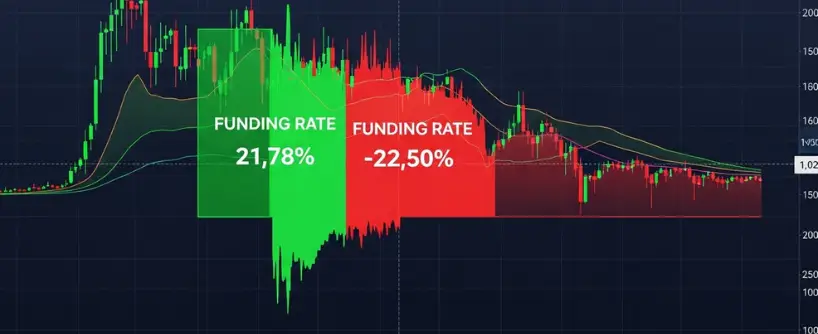
In derivatives markets, funding rates and open interest provide insight into trader positioning and market sentiment. These indicators help show whether leveraged traders are predominantly positioned for upward or downward price movements.
Funding Rates
Funding rates represent periodic payments exchanged between long and short positions in perpetual futures markets.
Generally:
Open Interest
Open interest measures the total value of outstanding derivatives contracts.
Changes in open interest can indicate:
However, extremely high open interest may also indicate crowded positions.
How to Interpret Funding Rates and Open Interest
Indicator | Market Signal | Possible Interpretation |
|---|
High positive funding rates | More traders are holding long positions | May indicate excessive long positioning and increased liquidation risk if prices reverse |
High negative funding rates | More traders are holding short positions | May indicate heavy short positioning and potential short squeeze conditions |
Rapid increase in open interest | More capital enters derivatives markets | May indicate strong market activity, increased leverage, or higher speculative exposure |
Funding rates and open interest should be evaluated together with other sentiment indicators, as extreme positioning does not always determine future price direction.
Why Derivatives Data Matters for Sentiment Analysis
Derivatives indicators reveal how traders are positioned, not just how they feel.
For example:
A market may appear bullish based on social media discussions, but extremely high funding rates and open interest could show that too many traders are already positioned in the same direction.
Combining derivatives data with sentiment indicators helps identify whether market confidence is supported by healthy participation or excessive speculation.
5. Google Trends and Search Data

Search trends reflect changes in public interest and retail attention toward cryptocurrencies.
Traders often monitor search activity for terms such as:
Sudden increases in search volume may indicate growing public curiosity, while declining searches may suggest reduced market attention.
However, search data should be interpreted carefully.
High search interest does not always indicate sustainable demand, and low search interest does not necessarily mean weak fundamentals.
Using Search Data as a Sentiment Indicator
Search trends are most valuable when combined with other market signals.
For example:
Search data provides insight into public interest but should be evaluated alongside technical and fundamental analysis.
6. News Flow and Media Analysis

News events can quickly influence crypto market sentiment.
Major developments such as:
can significantly change market expectations.
Traders analyze not only the news itself but also:
frequency of coverage
media tone
community reaction
market response
Positive News Flow
Examples:
Negative News Flow
Examples:
security breaches
regulatory uncertainty
legal disputes
market confidence issues
Avoiding News-Driven Emotional Trading
News can create rapid sentiment shifts, but immediate market reactions are not always reliable.
Experienced traders often evaluate:
whether the news changes long-term fundamentals
whether the market already priced in expectations
whether the reaction is driven mainly by emotion
This helps reduce decisions based purely on short-term excitement or fear.
Combining Sentiment Tools for Stronger Signals
No single sentiment indicator can provide a complete view of the crypto market. Each tool measures different aspects of market behavior:
Social media reflects public attention and narratives.
Fear and Greed Indexes measure emotional extremes.
On-chain analytics shows actual blockchain activity.
Funding rates and open interest reveal derivatives positioning.
Search trends indicate changes in retail interest.
News analysis tracks external events affecting market expectations.
The most effective approach is to combine multiple sentiment signals instead of relying on one metric.
For example:
If social media hype, extreme greed readings, and high funding rates appear together, the market may be experiencing excessive optimism and crowded positioning.
If fear indexes, negative discussions, and falling search interest appear alongside whale accumulation and stable network activity, sentiment may be more negative than underlying market conditions suggest.
A Practical Crypto Sentiment Analysis Framework
Traders can evaluate market sentiment through a simple multi-step process:
Step | What to Analyze | Key Questions |
|---|
1. Measure Market Emotion | Fear and Greed Index, social sentiment | Is the market dominated by fear, optimism, or uncertainty? |
2. Verify Market Activity | On-chain data, trading volume | Are actual users and capital flows supporting the current narrative? |
3. Check Trader Positioning | Funding rates, open interest | Are leveraged positions becoming overcrowded? |
4. Review External Factors | News flow, regulation, macro events | Are external developments changing market expectations? |
5. Compare With Technical Data | Price trends, support/resistance, momentum indicators | Does sentiment align with broader market structure? |
This framework helps traders use sentiment as supporting information rather than as a standalone prediction tool.
The Role of Market Sentiment in Trading Psychology
Market sentiment does not only influence prices; it also affects individual decision-making. In highly volatile markets, traders may react emotionally to rapid price movements, leading to behaviors such as:
FOMO (fear of missing out)
panic selling
overconfidence during rallies
ignoring risk management rules
Understanding trader psychology helps explain why groups of market participants often behave similarly during periods of extreme optimism or fear. Strong traders do not attempt to eliminate emotions completely. Instead, they recognize emotional patterns and create structured processes to reduce impulsive decisions.
Common Psychological Mistakes During Sentiment Extremes
Market Condition | Common Mistake | Better Approach |
|---|
Extreme greed | Entering trades because of hype or FOMO | Evaluate whether market expectations are already excessive |
Extreme fear | Selling assets purely because of panic | Review broader market conditions and available data |
Sudden news events | Reacting before understanding the impact | Analyze whether the news changes long-term conditions |
Strong social trends | Following popular opinions without research | Compare sentiment with technical and fundamental analysis |
Sentiment analysis is most useful when it improves awareness, not when it replaces disciplined decision-making.
Case Studies of Sentiment Shaping Crypto Markets
Dogecoin 2021
Dogecoin's 2021 rally demonstrated how social media narratives can influence crypto market sentiment.
A combination of:
created significant market enthusiasm.
However, sentiment indicators also showed increasing levels of speculation and extreme optimism before the market eventually cooled. This example highlights why social attention should be evaluated together with other market factors rather than viewed independently.
Bitcoin ETF News 2024
The approval of Bitcoin spot ETFs became a major market sentiment catalyst. Positive expectations around institutional participation increased market confidence and influenced Bitcoin price momentum.
However, market reactions to major events can vary depending on:
This demonstrates why news sentiment should be combined with market data.
Meme Coins in 2025
Meme coin activity showed how quickly online narratives can affect market attention.
Rapid increases in:
social media mentions
search interest
community engagement
created strong short-term sentiment shifts.
However, these movements also highlighted the risks of relying only on hype-driven signals, as sentiment can change quickly when attention decreases.
Managing Volatility with Sentiment Awareness
Sentiment analysis does not replace technical analysis or fundamental analysis, but it can provide additional context when evaluating market conditions.
By understanding where market participants are positioned emotionally, traders can better assess periods of:
excessive optimism
widespread fear
uncertainty
Using Sentiment During Different Market Conditions
Market Environment | Possible Sentiment Condition | Considerations |
|---|
Strong bullish momentum | High optimism and increasing attention | Monitor whether enthusiasm is supported by market fundamentals |
Market panic | Negative sentiment and reduced confidence | Evaluate whether fear reflects temporary uncertainty or broader issues |
Neutral conditions | Mixed sentiment signals | Focus on broader market analysis rather than emotional reactions |
Sentiment provides context, but it should be combined with risk management practices and a clear trading approach.
How Bitunix Academy Supports Sentiment Analysis Learning
Traders who want to better understand market psychology can use structured educational resources such as Bitunix Academy.
Learning materials covering:
can help traders understand how different indicators work together.
By learning how to interpret social media trends, funding rates, and on-chain activity, traders can develop a more balanced approach to analyzing market conditions.
Rather than relying on individual signals, effective market analysis often requires understanding the relationship between data, psychology, and risk management. Educational resources can help traders build stronger analytical frameworks and avoid making decisions based solely on short-term market emotions.
Conclusion
Crypto market sentiment in 2026 remains an important factor for understanding price movements and investor behavior. By monitoring six key categories — social media analysis, Fear and Greed Indexes, on-chain analytics, funding rates, search trends, and news flow — traders can gain a broader view of market conditions.
However, sentiment should not be viewed as a standalone prediction tool. The most reliable approach combines sentiment analysis with technical analysis, fundamental analysis, and risk management principles.
Understanding market emotions allows traders to recognize periods of extreme optimism, fear, and uncertainty while avoiding decisions driven purely by crowd behavior.
Platforms such as Bitunix provide trading tools, while Bitunix Academy offers educational resources that help users better understand market analysis concepts and trading strategies. In a market where emotions can change quickly, sentiment analysis provides another perspective for interpreting market behavior and making more informed decisions.
About Bitunix
Bitunix is a global cryptocurrency derivatives exchange trusted by over 5 million users across more than 150 countries/districts. The platform is committed to providing a transparent, compliant, and secure trading environment for every user. Bitunix offers a fast registration process and a user-friendly verification system supported by mandatory KYC to ensure safety and compliance. With global standards of protection through Proof of Reserves (POR) and the Bitunix Care Fund, Bitunix prioritizes user trust and fund security. The K-Line Ultra chart system delivers a seamless trading experience for both beginners and advanced traders, while leverage of up to 200x and deep liquidity make Bitunix one of the most dynamic platforms in the market.
Bitunix Global Accounts
X | Telegram Announcements | Telegram Global | CoinMarketCap | Instagram | Facebook | LinkedIn | Reddit | Medium