Have you ever wondered why two traders can look at the same crypto chart and make completely opposite decisions? One sells in panic, while the other calmly follows their strategy or waits for clearer signals.
The difference often comes down to crypto trading psychology.
In cryptocurrency markets, where prices can experience significant movements within short periods and trading operates 24/7, emotional control plays an important role in decision-making. Technical indicators, market analysis, and trading strategies provide information, but a trader’s ability to follow their plan often determines how effectively they respond to uncertainty.
This guide explores the psychology of crypto trading by examining how fear, greed, cognitive biases, and emotional reactions influence trading behavior. Whether you are a short-term trader or a long-term market participant, understanding these psychological factors can help you develop stronger discipline and improve your risk management approach.
Why Psychology Plays a Crucial Role in Crypto Trading

Cryptocurrency trading is unlike many traditional financial markets. Digital assets can experience sharp price movements within hours, creating an environment where emotional reactions can quickly influence decisions.
Extreme volatility may trigger behaviors such as fear of missing out (FOMO), panic selling, revenge trading after losses, or entering positions without sufficient analysis. While market sentiment, liquidity conditions, and broader economic factors influence price movements, trader psychology often determines how individuals respond to these changes.
Unlike traditional markets with fixed trading hours, the crypto market operates continuously. This constant availability can increase emotional pressure because traders may feel the need to monitor prices at all times.
Without a structured approach, traders may become influenced by:
Social media discussions and trending narratives
Sudden market movements
Short-term price predictions
Other traders’ profits or losses
Fear-driven market sentiment
How Crypto Market Volatility Amplifies Emotional Decisions
A highly volatile market creates more frequent decision points. For example:
A trader sees Bitcoin rising rapidly and enters a position late because they fear missing further gains.
A sudden market correction occurs, causing the same trader to exit immediately without reviewing their original plan.
After a loss, the trader increases position size to recover quickly, creating additional risk exposure.
These reactions are not necessarily caused by a lack of market knowledge. They often result from psychological biases that affect decision-making under uncertainty. Understanding these patterns is one of the first steps toward developing a disciplined trader mindset.
Why Your Brain Wasn't Built for Crypto Trading

Human psychology evolved over millions of years to respond to immediate physical threats, not rapidly changing digital markets.
When traders see their portfolio decline sharply, the brain may interpret the situation as a threat and activate emotional responses similar to a fight-or-flight reaction. Although financial losses are different from physical danger, the emotional response can still be powerful.
This evolutionary mismatch helps explain why even experienced traders may struggle with uncertainty and volatility.
One important concept in behavioral economics is loss aversion, which suggests that people often experience the pain of losses more strongly than the satisfaction of equivalent gains.
In crypto trading, loss aversion can contribute to behaviors such as:
Holding losing positions for too long because accepting a loss feels difficult
Closing profitable positions too early because traders fear losing unrealized gains
Avoiding necessary decisions due to emotional discomfort
Cognitive Biases That Affect Crypto Traders
Besides fear and greed, several cognitive biases can influence trading decisions:
Confirmation Bias
Traders may search only for information that supports their existing beliefs about an asset while ignoring opposing viewpoints.
Example:
A trader believes a token will recover after a price decline. Instead of reviewing market conditions objectively, they only follow positive discussions and dismiss potential risks.
Recency Bias
Recent events can appear more important than they actually are.
Example:
After seeing several days of strong price increases, traders may assume the trend will continue indefinitely and ignore historical volatility.
Overconfidence Bias
Previous successful trades can create excessive confidence, causing traders to increase position sizes or ignore risk controls.
Recognizing these biases does not eliminate emotions completely, but it can help traders create systems that reduce their influence.
Fear, Greed, and Emotional Trading

At the center of crypto trading psychology are two powerful emotional forces: fear and greed.
These emotions are natural responses, but when they override a trading strategy, they can lead to decisions that conflict with a trader’s original plan.
Fear: The Dream Killer
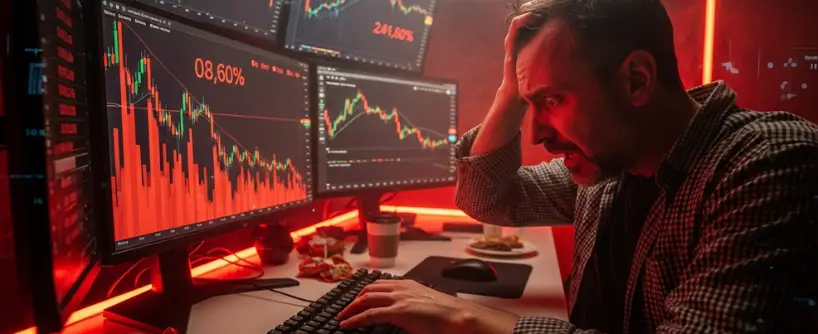
Fear can affect traders in two major ways:
Fear of Missing Out (FOMO Crypto)
FOMO occurs when traders feel pressure to enter a market because they see others benefiting from price movements.
A typical FOMO cycle looks like this:
An asset experiences rapid price growth.
Social media discussions increase.
Traders worry they missed the opportunity.
They enter without a clear strategy.
The market reverses, creating unexpected losses.
FOMO crypto trading often causes traders to prioritize short-term excitement over risk evaluation.
Instead of asking:
“Does this trade fit my strategy?”
they may ask:
“What if I miss the next big move?”
This emotional shift can lead to impulsive decisions.
Fear of Losing It All (Panic Selling)
When markets decline quickly, fear may shift from missing opportunities to protecting capital.
Panic selling happens when traders exit positions because of emotional pressure rather than because their original analysis has changed.
Common triggers include:
While reducing exposure can sometimes be part of risk management, making decisions purely from fear may prevent traders from following their planned strategy.
How to Manage Fear During Market Volatility
A practical approach is to create decision rules before emotions become intense:
Define acceptable risk levels before opening a position.
Decide conditions that would invalidate a trade idea.
Avoid making major decisions immediately after extreme price movements.
Review market information from multiple sources instead of relying on social sentiment alone.
For traders who monitor volatile markets frequently, tools that provide timely notifications can reduce the need to constantly watch price charts. For example, automated alert features such as Bitunix Super Alert can help traders track predefined market conditions while maintaining a more structured monitoring process.
Greed: The Illusionist

If fear causes traders to avoid opportunities, greed can cause them to underestimate risks.
Greed often appears when traders focus heavily on potential gains while ignoring downside scenarios.
Common examples include:
Holding for Too Long
A trader enters a position early and sees significant unrealized gains.
Instead of following their original exit plan, they think:
“The price can probably go even higher.”
When market conditions change, those unrealized gains may disappear.
Overtrading
Greed can create the feeling that every market movement is an opportunity.
This may lead to:
Excessive trading frequency
Increasing leverage without sufficient analysis
Ignoring transaction costs
Taking lower-quality setups
Emotional Attachment
Some traders become attached to specific assets or projects.
They may:
Ignore negative information
Defend their position emotionally
Seek only opinions that confirm their expectations
This behavior is closely related to confirmation bias and can prevent objective evaluation.
Common Pitfalls in Trading Behavior

The cryptocurrency market creates unique psychological challenges because price movements happen quickly and information spreads instantly. Understanding common behavioral mistakes can help traders recognize emotional patterns before they influence their decisions.
Here are some of the most common psychological pitfalls in crypto trading:
FOMO Crypto
Jumping into a trade simply because prices are rising or because other traders appear to be making profits can lead to emotional decision-making.
A trader experiencing FOMO may:
Enter a position without proper research
Ignore risk management rules
Buy after a significant price increase
Follow market hype instead of a trading strategy
Confirmation Bias
Confirmation bias occurs when traders focus only on information that supports their existing beliefs.
For example, a trader holding a declining asset may only search for positive predictions while ignoring factors that could challenge their original decision.
A more objective approach involves reviewing both supporting and opposing information before making decisions.
Impulsive Trading
Impulsive trading happens when decisions are based on emotions rather than a predefined plan.
Common triggers include:
Fear after a sudden price drop
Excitement during a market rally
Frustration after a losing trade
Pressure from social media discussions
Herd Mentality
Crypto markets are heavily influenced by online communities, influencers, and trending narratives.
Following market sentiment without independent analysis may cause traders to enter positions late or take risks they would otherwise avoid.
Overconfidence
Previous successful trades can create excessive confidence.
A trader may:
Increase position sizes too quickly
Ignore potential downside risks
Reduce attention to risk management
Past performance does not guarantee future outcomes, and every trade carries uncertainty.
A Simple Self-Check Before Making a Trade
Before entering or exiting a position, traders can ask:
Is this decision based on my strategy or my emotions?
Would I make the same decision if social media opinions were removed?
What is the downside risk if the trade moves against me?
Have I already defined my exit conditions?
Am I reacting to the market, or following a planned process?
This type of checklist helps separate market analysis from emotional reactions.
Building Trading Discipline: Key Traits for Success
Developing trading discipline does not mean eliminating emotions completely. Instead, disciplined traders learn how to recognize emotions and prevent them from controlling their actions.
Key traits include:
Patience
Patience allows traders to wait for suitable market conditions instead of forcing trades. A disciplined trader understands that not every price movement represents an opportunity.
Resilience
Crypto markets can experience extended periods of volatility and uncertainty. Resilience helps traders evaluate situations objectively instead of reacting emotionally to every market fluctuation.
Adaptability
Market conditions change constantly. A strong trader mindset requires the ability to review assumptions, adjust strategies, and respond to new information.
Emotional Control
Emotional control means recognizing feelings such as fear, greed, or frustration before they influence execution.
Objectivity
Objective decision-making focuses on:
Data
Market conditions
Risk parameters
Trading plans
rather than emotional attachment or external pressure.
The Difference Between Emotional Trading and Disciplined Trading
Emotional Trading | Disciplined Trading |
|---|
Enters trades because of market excitement | Waits for predefined conditions |
Changes plans during volatility | Follows established rules |
Focuses mainly on potential gains | Evaluates both risks and opportunities |
Reacts to social media sentiment | Uses independent analysis |
Trades frequently without clear reasons | Prioritizes quality over frequency |
Developing discipline is a continuous process. Many experienced traders focus less on predicting every market movement and more on improving their decision-making process.
Practical Steps to Strengthen Your Trader Mindset
Developing a stronger trader mindset requires both awareness and consistent practice.
1. Create a Trading Strategy Before Entering Positions
A trading plan should define:
Creating rules before market pressure increases can reduce emotional decisions later.
2. Stick to Exit Points
One common psychological mistake is changing decisions after entering a trade.
For example:
Moving a stop-loss further away because a position is losing
Holding a position longer because of emotional attachment
Closing a trade too early because of fear
Predefined exit rules help create consistency.
3. Manage Risk
Risk management is closely connected with trading psychology.
Practical risk controls may include:
Avoiding excessive leverage
Maintaining appropriate position sizes
Using stop-loss strategies
Diversifying exposure where appropriate
For traders managing multiple positions, structured tools can help organize execution and reduce emotional reactions. Features such as Bitunix Multi-Trade are designed to help users manage multiple trading activities more efficiently rather than making disconnected decisions under pressure.
4. Stay Informed
Market information should come from reliable sources rather than emotional reactions from social media.
Consider monitoring:
Market trends
Economic developments
Project updates
Liquidity conditions
Broader market sentiment
5. Accept Market Uncertainty
No strategy can remove all uncertainty from cryptocurrency trading.
Understanding that losses and unexpected market movements are possible helps traders maintain realistic expectations.
6. Keep a Trading Journal
A trading journal can help identify repeated behavioral patterns.
Useful records include:
Reviewing past decisions can help traders improve self-awareness over time.
Market Sentiment and the Influence of External Factors
Trading psychology and risk management are closely connected. Many trading mistakes happen not because traders lack market knowledge, but because emotions influence execution.
Examples include:
Increasing leverage after losses
Refusing to close losing positions
Taking oversized positions during market excitement
Ignoring predefined risk limits
A disciplined trader focuses on managing potential downside rather than only pursuing potential gains. Risk management tools and structured processes can support better decision-making, but they cannot remove market uncertainty.
How Market Sentiment Affects Trading Psychology
Market sentiment often moves through emotional cycles:
Optimism → Excitement → Euphoria → Anxiety → Fear → Capitulation → Recovery
Recognizing these cycles can help traders understand why market participants often make similar emotional mistakes at different stages of a trend.
However, sentiment indicators should be treated as one source of information rather than a standalone trading signal.
Psychology and Risk Management Go Hand in Hand
Trading psychology and risk management are closely connected. Many trading mistakes happen not because traders lack market knowledge, but because emotions influence execution.
Examples include:
Increasing leverage after losses
Refusing to close losing positions
Taking oversized positions during market excitement
Ignoring predefined risk limits
A disciplined trader focuses on managing potential downside rather than only pursuing potential gains. Risk management tools and structured processes can support better decision-making, but they cannot remove market uncertainty.
Turning Psychology Into Your Trading Edge
Crypto trading psychology is ultimately about improving the decision-making process.
Market analysis, technical indicators, and trading platforms can provide useful information, but traders must still decide how to respond to uncertainty.
By understanding:
traders can develop a more structured approach to navigating volatile markets.
The goal is not to eliminate emotions completely. Emotions are a natural part of human decision-making. Instead, the objective is to create systems that prevent emotions from overriding a carefully considered trading plan.
Conclusion
The psychology of crypto trading is not just an abstract concept. It directly influences every decision traders make in uncertain market conditions.
Fear may cause panic selling. Greed may encourage excessive risk-taking. Herd mentality may create pressure to follow market trends without sufficient analysis.
The most important skill traders can develop is not predicting every market movement, but improving their ability to make structured decisions.
By building discipline, understanding emotional biases, and applying effective risk management practices, traders can approach cryptocurrency markets with greater awareness and control.
Markets will continue to change. Prices will continue to move. External factors will continue to influence sentiment.
The factor traders can improve is their own decision-making process.
About Bitunix
Bitunix is a global cryptocurrency derivatives exchange trusted by over 5 million users across more than 150 countries/districts. The platform is committed to providing a transparent, compliant, and secure trading environment for every user. Bitunix offers a fast registration process and a user-friendly verification system supported by mandatory KYC to ensure safety and compliance. With global standards of protection through Proof of Reserves (POR) and the Bitunix Care Fund, Bitunix prioritizes user trust and fund security. The K-Line Ultra chart system delivers a seamless trading experience for both beginners and advanced traders, while leverage of up to 200x and deep liquidity make Bitunix one of the most dynamic platforms in the market.
Bitunix Global Accounts
X | Telegram Announcements | Telegram Global | CoinMarketCap | Instagram | Facebook | LinkedIn | Reddit | Medium