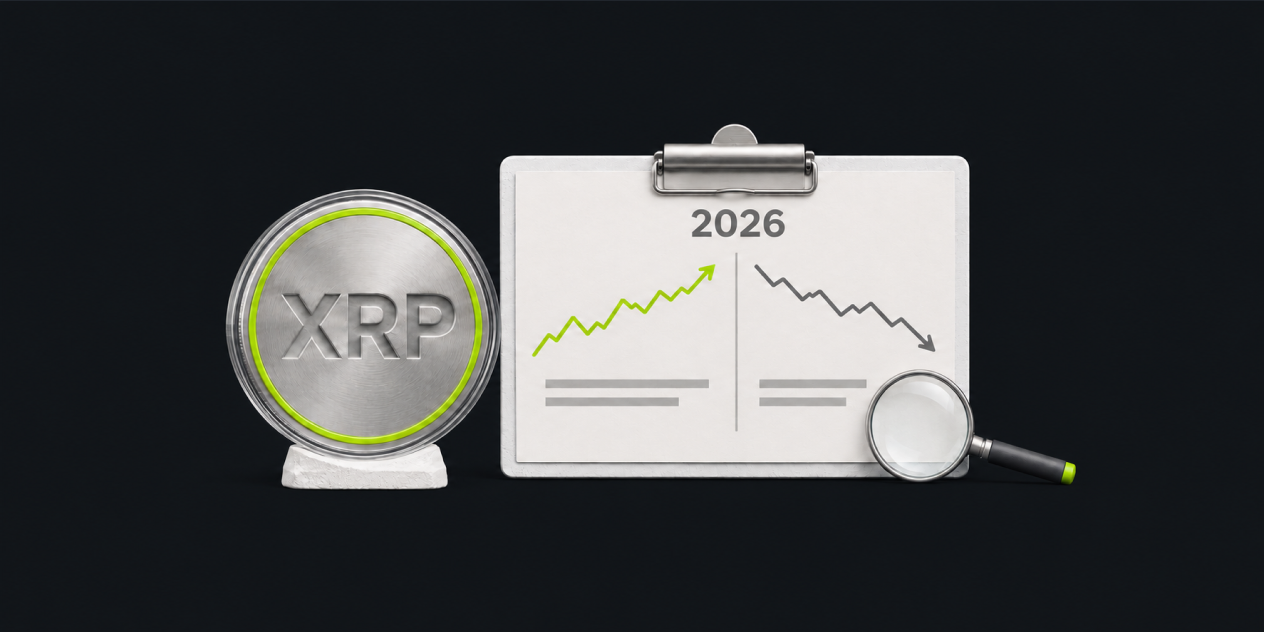
Is XRP a good investment right now? That is one of the most searched questions in crypto heading into the end of 2026. The token sits near $1, well below its all-time high, even though Ripple won regulatory clarity, six spot ETFs hit the market and the company rolled out a dollar-backed stablecoin. Some investors see a bargain. Others see a token that has underperformed Bitcoin and the broader market for most of this year.
This article walks through both sides. You will find the XRP price today, the bull case built on ETFs and real-world payments, the bear case built on supply dynamics and competition, analyst price predictions for 2030 and 2040, and a short guide on how to buy XRP safely through a crypto exchange such as Bitunix. None of this is financial advice. Use it as a starting point for your own research.
Is XRP a Good Investment? Quick Answer by Investor Type
There is no single answer. Whether XRP fits your portfolio depends on how much risk you can handle and how long you plan to hold.
Short-term traders
XRP is volatile. It fell from $1.27 to $1.05 in one week of November 2026 after a hawkish Fed inflation report. If you are a day trader or swing trader, that volatility creates opportunity, but it also means sharp losses are always one headline away. Tools such as stop and limit orders help manage that risk.
Long-term holders (one to five years)
The bull case rests on Ripple's expanding payments network, the RLUSD stablecoin and the new spot XRP ETFs pulling institutional money into the token. If cross-border payment adoption grows and XRP captures even a sliver of SWIFT's $150 trillion annual volume, the upside could be meaningful. The risk is that Ripple's network grows while XRP demand stays flat, because many banks use Ripple Payments without touching the XRP token.
Conservative investors
XRP is still down more than 70% from its 2018 high after eight years. If you cannot stomach a 40–60% drawdown in a single quarter, this is not the right asset for you. A small allocation, say 1–5% of a crypto portfolio, is one way to get exposure without betting the house.
New traders
If you are just learning how to buy Bitcoin safely or exploring the best crypto exchanges, start with education. Understand what a liquidation price is and how futures work before putting real money at risk. A demo trading account lets you practice without capital at stake.
XRP Price Today: Where XRP Stands in November 2026
As of mid-November 2026, XRP trades near $1.07 on major exchanges. Here is a snapshot of where things stand.
Metric | Value |
Price | ~$1.07 |
Market cap | ~$61 billion |
Market-cap rank | #6 |
24-hour volume | ~$3.9 billion |
Circulating supply | ~63.5 billion XRP |
Max supply | 100 billion XRP |
All-time high | $3.84 (Jan 2018) |
Distance from ATH | ~72% below |
Year-to-date change | ~−44% |
XRP opened 2026 near $1.87 and briefly rallied above $2 in January. CNBC called it "the hottest crypto trade of 2026" at the time, driven by spot XRP ETF launches and strong retail demand. That momentum faded. By August, the token had fallen to $0.98, and it has bounced in a range between $1.00 and $1.30 since then. The November slide to $1.05 came after hotter-than-expected U.S. inflation data pushed the Fed into a more hawkish stance.
For context, Bitcoin is down about 15–20% year to date over the same stretch, and Ethereum has lost about 30%. XRP's 44% drop makes it one of the weaker large-cap performers in 2026, despite its strong start.
The Bull Case: Why XRP Could Be a Good Investment
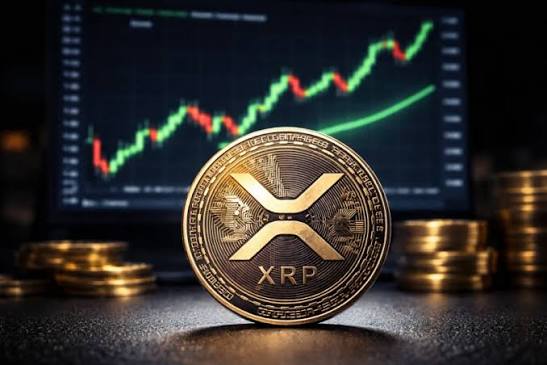
Firguring out why XRP could be a good investment. Source: TradingView
Regulatory Clarity and Spot XRP ETFs
The single biggest change for XRP in 2025–2026 is regulatory clarity.
Ripple and the SEC fought a lawsuit that started in December 2020. In July 2023, Judge Analisa Torres ruled that programmatic sales of XRP on exchanges did not constitute securities offerings, though direct institutional sales did. In May 2025, the two sides settled for $50 million, well below the $2 billion the SEC originally sought. Ripple got $75 million back from escrow, and both sides dropped their appeals.
That settlement cleared the path for spot XRP ETFs. The SEC approved the first batch in late 2025. As of November 2026, six spot XRP ETFs trade on U.S. exchanges:
Fund | Ticker | Expense ratio |
Franklin XRP ETF | XRPZ | 0.19% |
21Shares XRP ETF | TOXR | 0.30% |
Bitwise XRP ETF | XRP | 0.34% |
Grayscale XRP Trust ETF | GXRP | 0.35% |
Canary XRP ETF | XRPC | 0.50% |
REX-Osprey XRP ETF | XRPR | 0.75% |
Five additional strategy ETFs (leveraged and options-based) also trade, though their fees run higher, from 0.75% to 3.13%.
Why does this matter? ETFs let pension funds, wealth managers and retirement accounts hold XRP without setting up a crypto wallet. Bitcoin's price rose about 155% in the year after its spot ETF launched. XRP's ETF-driven rally was shorter lived: the token spiked above $2 in January 2026, then gave most of the gains back. Still, cumulative ETF inflows continue to grow, and every new dollar that enters through an ETF buys actual XRP on the open market.
CoinShares and WisdomTree have filed for additional spot XRP ETFs that have not yet launched. If those go live, they could bring a fresh wave of inflows.
Real-World Use: Ripple, RLUSD and Cross-Border Payments
XRP was designed as a bridge currency for cross-border payments. Send dollars from the U.S. to pesos in Mexico, and XRP settles the transaction in three to five seconds for a fraction of a cent. Compare that with SWIFT, where the same transfer takes one to three business days and costs $25–$50 in fees.
Ripple Payments (formerly RippleNet) is the company's enterprise product. It connects banks and payment providers across 55+ countries. In August 2026, South Korea's Jeonbuk Bank joined Ripple Payments for real-time cross-border remittances. Brazil's Travelex Bank expanded its Ripple partnership around the same time.
Ripple also launched RLUSD, a USD-pegged stablecoin, in December 2024. RLUSD received approval from the New York State Department of Financial Services (NYDFS). By mid-2026, its circulating supply had grown to about 1.4 billion tokens, putting its implied market cap near $1.4 billion. Ripple integrated RLUSD into Ripple Payments in April 2025, meaning enterprise clients can settle cross-border transactions in a regulated stablecoin on the XRP Ledger.
The bull thesis: RLUSD drives institutional traffic to the XRP Ledger, which increases on-chain activity and, in theory, demand for XRP as a bridge asset. Ripple's CEO has said the company aims to capture 14% of SWIFT's annual cross-border volume within five years. SWIFT handles roughly $150 trillion a year, so 14% would be about $21 trillion flowing through Ripple's rails.
That is an ambitious target. Ripple has processed over $1.5 trillion in total since 2012. Reaching $21 trillion per year would be a massive leap. But even a fraction of that number would represent meaningful transaction volume on XRP's network.
The Bear Case: Risks That Could Hurt XRP
Volatility and Underperformance vs the Market
The numbers tell the story. XRP is down about 44% year to date in 2026 and about 74% below its January 2018 all-time high of $3.84. An investor who bought at the peak and held through every cycle is still deeply underwater after nearly nine years.
Compare that trajectory with Bitcoin. BTC set a new all-time high above $100,000 in late 2024 and, despite a pullback, still trades far above its 2018 level. Ethereum has also outpaced XRP over a multi-year window. XRP has had sharp rallies, including a roughly 300% surge from late 2024 into early 2025, but it tends to give back those gains quickly.
The pattern is familiar to long-time XRP holders: a narrative-driven spike (lawsuit settlement, ETF approval, partnership announcement) followed by a slow bleed. If you are asking "is XRP a good investment," you need to weigh those rallies against the long stretches of underperformance.
Adoption vs Token Demand, Supply and Competition
This is the core bear argument, and it is important to understand.
Ripple's network can grow without XRP's price going up
Many banks and payment providers use Ripple Payments for its speed and messaging layer, not for XRP as a bridge currency. RippleNet processed transactions long before on-demand liquidity (now Ripple Payments) used XRP as a settlement asset. If Ripple signs more bank partners but those partners settle in fiat or RLUSD rather than XRP, the token's price may not benefit.
Supply dilution
Ripple holds about 37 billion XRP in escrow (out of the 100 billion total supply). Every month, 1 billion XRP unlocks from escrow. Ripple typically sells a portion and re-locks the rest. The net effect is a steady drip of new supply entering the market. Unlike Bitcoin, which has a hard cap and a halvening schedule that reduces new issuance over time, XRP's circulating supply grows every month. Over the next few years, billions of additional XRP will enter circulation, which can put downward pressure on price unless demand grows faster.
Competition
XRP is not the only player in cross-border payments. SWIFT itself is upgrading to ISO 20022, a modern messaging standard that speeds up settlement without using a blockchain at all. Stellar (XLM) competes directly with XRP in the remittance space. Stablecoins such as USDC and USDT already settle billions in cross-border value every day. Even Ripple's own RLUSD could cannibalize XRP demand if enterprises prefer to settle in a dollar-pegged token rather than a volatile cryptocurrency.
XRP Price Prediction: How High Can XRP Go by 2030 and 2040?
Price predictions for crypto are speculative. Nobody predicted Bitcoin would go from $1,000 to $69,000 and then drop to $16,000. Treat the numbers below as scenarios, not promises.
XRP Price Prediction 2030
Five analyst forecasts compiled by 247 Wall Street (Mar 2026) show how wide the range is:
Analyst / Firm | 2030 Target |
Geoffrey Kendrick, Standard Chartered | $28 |
Dom Kwok, ex-Goldman Sachs (EasyA) | $1,000 |
Ryan Lee, Bitget Research | $4.20–$10+ |
Adam Spatacco, Nasdaq contributor | $0.50–$1.00 |
Dominic Basulto, Nasdaq contributor | $4–$20 |
The Nasdaq article separately predicts XRP will reach $10 by 2030, calling that roughly a 25% annualised return from its 2025 price of $3.30. Bitwise forecasts $12.68 and Standard Chartered forecasts $12.25 by 2030.
The spread tells you something: even professionals disagree by orders of magnitude. One analyst sees XRP under $1 in four years. Another sees it at $1,000. The truth is nobody knows.
Can XRP Reach $10 or $100? The Market Cap Math
Market cap equals price multiplied by circulating supply. With roughly 63.5 billion XRP in circulation today (and more unlocking each month), here is math:
XRP Price | Implied market cap | Comparison |
$1 (current) | ~$63 billion | Similar to a mid-cap tech stock |
$3.84 (ATH) | ~$244 billion | About 70% of Ethereum's current cap |
$10 | ~$635 billion | About half of Bitcoin's current cap |
$100 | ~$6.35 trillion | Larger than Nvidia and larger than the entire crypto market |
$10 is ambitious but not impossible: It would put XRP's market cap around $635 billion, which is large but within the range of what Bitcoin has already achieved. It would require a major catalyst such as Ripple capturing a significant share of cross-border volume and institutional ETF inflows accelerating.
$100 is extremely unlikely by any conventional measure: A $6.35 trillion market cap would make XRP more valuable than every publicly traded company on earth except Apple and Microsoft. It would exceed the combined market cap of every other cryptocurrency. For context, the entire global cross-border payments market is worth about $150 trillion in annual volume, but the companies and tokens that facilitate those payments are valued at a tiny fraction of that flow. Motley Fool (Mar 2026) calls $100 "the $6 trillion problem nobody mentions."
Does that mean $100 is impossible? In a world where gold is worth over $30 trillion, nothing is truly impossible on a long enough timeline. But betting on $100 XRP is betting on an outcome that has no historical precedent in any asset class.
What Will XRP Be Worth in 2040?
Long-range forecasts become even more speculative. Fourteen years is a long time in crypto, an industry that barely existed fourteen years ago.
Optimistic scenarios put XRP in the $20–$50 range by 2040, assuming Ripple becomes a dominant settlement layer for global payments and XRP captures a portion of every cross-border transaction. In this scenario, the future of XRP is tied to the utility of the XRP Ledger, not just speculation.
Conservative scenarios keep XRP under $5, reflecting the view that XRP's supply growth will outpace demand and that stablecoins and SWIFT upgrades will limit the token's role.
Worst-case scenarios, though rarely discussed, include XRP losing relevance entirely if Ripple shifts to RLUSD as its primary settlement asset or if regulation in key markets restricts the token.
No forecast for 2040 should carry heavy weight in your investment decision today. If you invest in XRP, plan for what could go wrong in the next two to four years, not what might go right in fourteen.
How to Invest in XRP Safely: Buying, Position Size and Risk Management
How to Buy XRP
Buying XRP is straightforward on a crypto trading platform that lists the XRP/USDT spot pair. Here is a general process:
Create an account on a crypto exchange. Bitunix supports spot and futures trading on XRP. Complete KYC verification to unlock full withdrawal limits.
Deposit funds. You can deposit USDT via crypto transfer or buy USDT through P2P trading or a bank transfer such as SEPA.
Buy XRP. Go to the spot market, search for XRP/USDT, place a limit order at your target price or a market order to buy at the current price.
Store safely. If you plan to hold long term, consider moving XRP to a self-custody wallet. If you trade actively, leaving it on the exchange is more practical. Bitunix uses Cobo and Fireblocks custody and publishes Proof of Reserves.
For XRP futures trading with up to 200x leverage, Bitunix offers the XRPUSDT perpetual contract. Leverage amplifies both gains and losses, so read about liquidation prices and use stop-loss orders before opening a leveraged position.
Position Sizing and Risk Management
XRP is a high-volatility asset. A disciplined approach can protect your capital.
Size your position relative to your total portfolio: Many financial planners suggest keeping speculative crypto holdings to 1–10% of your investable assets. Within that crypto allocation, XRP might be 10–30% if you believe in the thesis, meaning XRP represents roughly 1–3% of your total portfolio.
Use stop-loss orders: If XRP drops below a level where your thesis no longer holds, say 20% below your entry, a stop-loss order exits the position automatically.
Dollar-cost average (DCA): Instead of buying a lump sum at today's price, spread your purchases over weeks or months. DCA reduces the impact of short-term volatility.
Never invest money you cannot afford to lose: XRP fell 93% from its 2018 peak to its 2020 low. A similar drawdown from $1 would take the price below $0.10. That scenario is unlikely at this stage, but crypto markets have surprised investors before.
Conclusion: Is XRP a Good Investment for You?
XRP has real things going for it: a settled lawsuit, six live spot ETFs, a growing payments network and a regulated stablecoin in RLUSD. Those are not just narratives. They are tangible developments that did not exist two years ago.
But XRP also carries real risks. It has underperformed Bitcoin and Ethereum over most time frames. Its circulating supply grows every month as Ripple unlocks tokens from escrow. Many of Ripple's bank partners use the network without using XRP as a settlement asset. And the competition from stablecoins, Stellar and a modernised SWIFT is real.
Is XRP a good investment? It depends on your risk tolerance, your time horizon and how much of your portfolio you are willing to allocate to a single altcoin. If you believe Ripple will capture meaningful cross-border payment volume and that demand for XRP as a bridge currency will grow, a small position could make sense. If you need stability or cannot ride out a 40–60% drawdown, there are safer places for your money.
Do your own research. Talk to a financial adviser if you are unsure. And remember: past performance, in either direction, does not predict future results.