Crypto markets can move quickly, and watching other traders celebrate their gains can make sitting on the sidelines feel like a mistake. The temptation to buy before prices rise further is a familiar experience for many market participants. But a trade driven by the fear of missing out is not necessarily a good trade.
Understanding crypto FOMO can help you recognize when excitement is influencing your judgment, distinguish market momentum from social hype, and make decisions based on a defined strategy rather than the pressure to join a rally.
What Is FOMO in Crypto Trading?
FOMO stands for fear of missing out. In cryptocurrency trading, it describes the anxiety that arises when traders believe they are missing a potentially profitable opportunity that others have already taken.
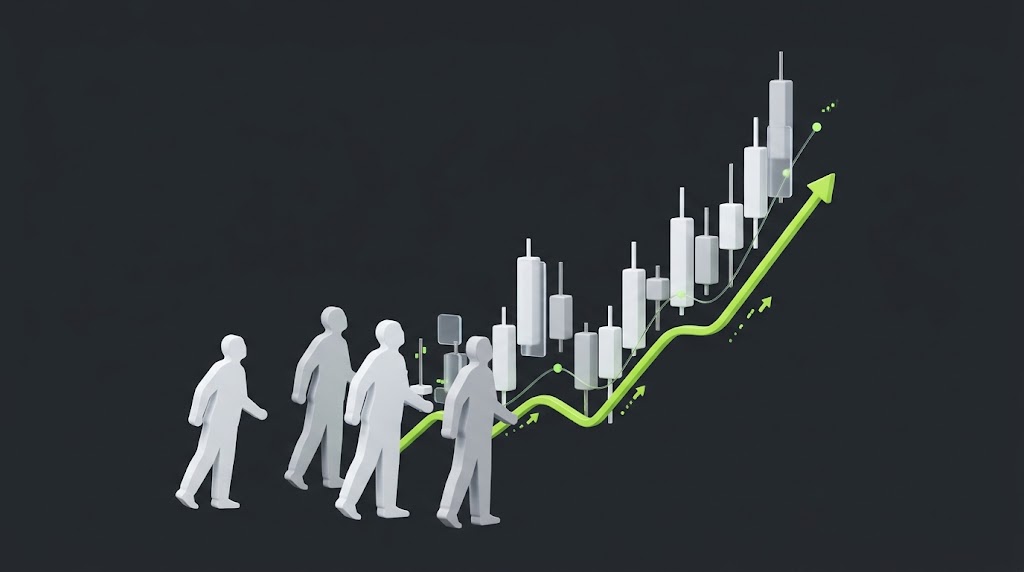
For example, Bitcoin may rally sharply, or a token may trend across social media after a series of impressive price gains. Traders who were previously uninterested may begin buying because they fear the price will continue rising without them.
The problem is not simply feeling interested in a rising asset. It is allowing that feeling to replace research, risk assessment, and a reasoned trading decision.
FOMO can influence both entry and exit decisions. Traders may buy after a large rally because they expect further gains, then sell impulsively when the market reverses. Others may abandon a well-considered strategy to follow a popular token or increase leverage to compensate for a move they missed.
FOMO vs. FUD: What Is the Difference?
FOMO and FUD describe different emotional pressures in the crypto market.
FOMO (fear of missing out): Fear of being left behind encourages traders to chase a rising asset or join a popular trend.
FUD (fear, uncertainty, and doubt): Negative information or rumors can create anxiety, potentially prompting traders to sell without properly evaluating the facts.
Both can lead to impulsive decisions. A trader might buy a token after seeing repeated bullish posts, then sell it in a panic when an alarming rumor begins circulating.
The practical response is similar in both cases: verify the information, review the original trading rationale, and avoid making decisions solely to relieve an uncomfortable emotion.
Why Does Crypto FOMO Happen?

Social media hype and herd behavior can intensify the fear of missing out.
FOMO is not unique to cryptocurrency. It can affect investors in stocks, commodities, and other financial markets. Several characteristics of crypto trading can make it particularly difficult to manage.
Social Media, Profit Screenshots, and Herd Mentality
Crypto discussions often move quickly across X, Reddit, Telegram, and other online communities. Traders may see screenshots of large profits, enthusiastic price predictions, or repeated claims that a particular token is about to surge.
These posts can create a distorted picture of market activity. People are more likely to share impressive wins than unsuccessful trades, so the visible examples may not represent the experience of the broader market.
When many people express the same opinion, it can also feel safer to follow the crowd. But popularity does not establish an asset's value, and a widely repeated prediction is not independent evidence that a price will rise.
Regret Aversion and the Search for the Next Big Winner
Missing a rally can feel like losing an opportunity, even when a trader never held the asset or risked any money.
This is a form of regret aversion: the desire to avoid the uncomfortable feeling of looking back and wishing you had acted differently. Traders may respond by entering a position simply because they do not want to miss another potential winner.
The pressure can become stronger after several missed opportunities. A trader who watches multiple tokens rally may eventually take a poorly researched position to avoid feeling left behind again.
The key distinction is that missing a potential gain is not the same as suffering a financial loss. You cannot capture every market move, and attempting to do so can create unnecessary risk.
24/7 Trading and Rapid Price Movements
Unlike traditional stock exchanges with defined trading hours, crypto markets operate around the clock. Prices can change significantly while traders are asleep, at work, or away from their screens.
This creates a persistent sense that an opportunity could disappear at any moment. Notifications, price alerts, and frequent chart checks may reinforce the feeling that immediate action is necessary.
Volatility adds another layer of pressure. A rapid move can make an asset appear to offer an unusually attractive opportunity, even when its price has already moved far beyond a trader's original entry criteria.
A continuously open market does not require continuous trading. Waiting for a setup that fits your strategy is a legitimate decision.
Common Signs of FOMO Trading
Recognizing FOMO early is easier when you look at behavior rather than trying to judge whether you feel sufficiently calm.
Buying Because an Asset Is Already Surging
A common warning sign is entering a trade primarily because the price has risen quickly. Instead of evaluating the asset's prospects, the trader assumes that recent momentum will continue.
A sharp rise may reflect genuine demand, but it can also involve speculative positioning, thin liquidity, short-term news, or activity that is difficult to sustain. The price movement alone does not establish whether a new entry offers an attractive risk-to-reward profile.
Entering Without Research or an Exit Plan
FOMO can shorten the time spent checking a project's use case, token supply, liquidity, market capitalization, and major risks.
Traders may also enter without deciding in advance what would invalidate their thesis or where they would take profits. Without these criteria, they are more likely to improvise under pressure when the price changes.
Increasing Position Size or Leverage to Catch Up
A trader who feels they have missed a major gain may take a larger position than usual or use leverage to pursue a faster return.
This can magnify the consequences of a wrong decision. In leveraged futures trading, adverse price movements can trigger liquidation before the market has a chance to recover. Trading fees and funding costs may also affect the outcome.
Increasing risk to compensate for a missed opportunity does not restore the opportunity. It creates a new trade with its own potential losses.
Abandoning a Strategy After Seeing Other Traders' Gains
Another warning sign is repeatedly switching between tokens, strategies, or time frames because a different asset appears more profitable.
For example, a trader following a longer-term plan may abandon it after seeing short-term traders report large gains. The new position may not fit the trader's experience, risk tolerance, or original objectives.
A useful question is: Would I still consider this trade if I had not seen other people talking about it? If the answer is no, pause and reassess.
How FOMO Can Lead to Costly Crypto Trading Mistakes
FOMO affects more than the timing of an entry. It can change how traders evaluate information, allocate capital, and respond when a position moves against them.
Buying Near a Local Price Peak
When an asset has already rallied substantially, traders may assume that the strongest gains are still ahead. This can lead to buying after much of the initial price move has occurred.
A reversal does not necessarily follow every rally, and no indicator can identify every market top. The risk is that an emotionally driven entry may leave little room for further upside relative to the potential downside.
Ignoring Liquidity and Project Risks
Popular tokens can attract attention even when their liquidity, token distribution, or underlying use case deserves closer scrutiny.
A low market capitalization does not automatically mean a token is a bad investment, just as a large market capitalization does not guarantee safety. However, smaller or thinly traded assets may be more vulnerable to sharp price swings, slippage, concentrated ownership, and difficulty exiting a position at the expected price.
Research should extend beyond a token's recent performance and online popularity.
Using Excessive Leverage or Chasing Losses
Some traders respond to a missed rally by increasing leverage. Others attempt to recover losses from a previous FOMO-driven trade by immediately entering another position.
Both behaviors can turn one mistake into a series of increasingly risky decisions. In leveraged trading, liquidation may occur when available margin is no longer sufficient to support the position. The precise threshold depends on the product's rules, margin mode, and account conditions.
A missed move or a losing trade should not determine the risk level of the next one.
Emotional Exhaustion and Inconsistent Decisions
Constantly monitoring markets and chasing trending assets can make trading stressful. When every price movement feels like an opportunity or a threat, it becomes harder to follow a consistent process.
Over time, this may lead to poor record-keeping, frequent strategy changes, and difficulty distinguishing a well-planned loss from a preventable mistake.
A disciplined process cannot eliminate losses, but it can make decisions easier to review and improve.
Major Crypto Events That Illustrate FOMO
Historical market events help show how rapid price increases, social attention, and breaking news can influence trading behavior. These cases illustrate conditions in which FOMO may develop; they do not prove that FOMO alone caused the price movements.
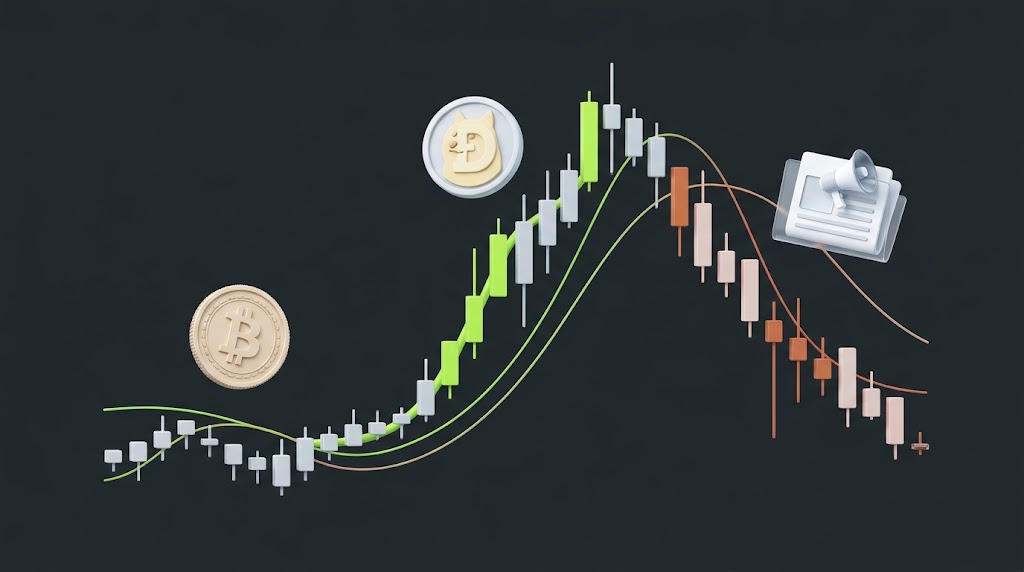
Historical crypto market events show how hype and breaking news can amplify emotional trading.
1. Bitcoin's 2017 Bull Run and the ICO Boom
Bitcoin's 2017 rally became one of the best-known examples of a rapid expansion in public interest in cryptocurrency. Bitcoin rose from below $1,000 near the beginning of the year to an intraday high close to $20,000 in December, according to historical market data.
The rally coincided with growing public awareness of digital assets and a wave of initial coin offerings (ICOs), through which projects raised funds by issuing tokens. Some investors were attracted by the prospect of discovering the next major crypto success before its price rose further.
As prices climbed, the possibility of missing out on large gains became a powerful narrative. Investors who entered late faced a different risk profile from those who had bought much earlier: they were paying significantly higher prices after a substantial rally.
Bitcoin subsequently entered a prolonged bear market, although its decline had multiple contributing factors and should not be attributed to FOMO alone.
The lesson: A strong historical rally does not guarantee continued upside. Before entering after a large move, assess the current valuation, market conditions, and downside you can reasonably afford.
2. Dogecoin's 2021 Surge and Meme Coin Frenzy
Dogecoin's 2021 rally showed how online attention can contribute to an asset's market momentum. On May 5, 2021, Reuters reported that DOGE had climbed to a then-record price of about $0.68, after gaining more than 14,000% since the end of 2020.
The rally was associated with social media activity, celebrity attention, speculative trading, and a broader wave of interest in meme-based cryptocurrencies. Dogecoin's popularity also made it a prominent example of how an online community can influence attention toward an asset.
The subsequent decline illustrates the risks of entering after an extraordinary price increase. Reuters later reported that Dogecoin had fallen almost 80% from its May high by mid-December 2021.
This does not mean every buyer during the rally lost money. Outcomes depended on entry price, exit timing, and individual trading decisions. It does show why an asset's popularity and recent returns should not replace an assessment of its risks.
The lesson: Social attention can help explain why an asset is moving, but it cannot establish how much further it will rise. Evaluate liquidity, token economics, and your exit conditions rather than relying on online enthusiasm.
3. The January 2024 Fake Bitcoin ETF Approval Announcement
On January 9, 2024, an unauthorized party gained access to the U.S. Securities and Exchange Commission's X account and published a false announcement claiming that spot Bitcoin exchange-traded products had been approved.
The market had been closely watching the SEC's decision, making the claim especially consequential. Reuters reported that Bitcoin briefly rose to around $48,000 after the post, then fell below $45,000 minutes later as the information was disavowed.
The SEC subsequently confirmed that its account had been compromised and clarified that the unauthorized post was not an official approval. The agency also stated that its formal actions are published on its website, rather than announced through social media alone.
This episode demonstrates how quickly a highly anticipated announcement can influence market expectations. It also shows why traders should not treat a widely shared post, even one appearing on a seemingly authoritative account, as sufficient verification.
The lesson: Verify market-moving announcements through the issuing institution's official website and reliable reporting before acting. When a decision depends on unconfirmed news, waiting for confirmation may be more prudent than chasing the initial price reaction.
Across all three cases, the common thread is not that every rally ends in a crash. It is that urgency, crowd behavior, and unverified expectations can cause traders to act before they have assessed the risks.
How to Avoid FOMO in Crypto Trading
Managing FOMO does not require predicting every market move or eliminating emotions altogether. The goal is to create a process that makes impulsive decisions less likely.
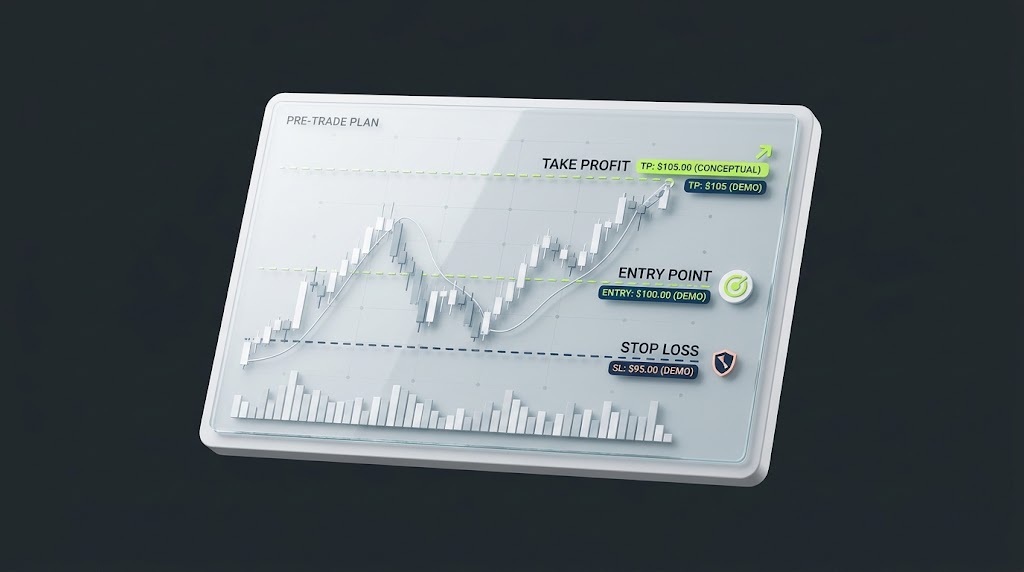
A predefined trading plan helps traders manage risk and avoid impulsive entries.
1. Set Entry Criteria Before the Market Moves
Define what would make an asset worth trading before its price begins to surge.
Depending on your strategy, relevant criteria might include a technical setup, a change in project fundamentals, a liquidity threshold, or a specific event that can be independently verified.
Write down why the trade might work, what evidence would invalidate the thesis, and what conditions must be met before entering. If the asset no longer fits those criteria, do not change the rules simply because the price is moving quickly.
2. Research the Asset Beyond Social Media
Before entering a trade, review the information that could materially affect the asset's value and risk.
Consider:
Project fundamentals: What problem does the project address, and is there evidence of meaningful use?
Tokenomics: What is the circulating supply, how are tokens distributed, and are significant unlocks approaching?
Market capitalization and liquidity: Is the asset sufficiently liquid for the intended position size, and how much slippage might an order incur?
Market context: Is the price move supported by broader market conditions, a verifiable development, or mainly by online speculation?
Source quality: Can important claims be confirmed through official announcements, documentation, or independent reporting?
No single metric determines whether a trade is worthwhile. The purpose of research is to understand the opportunity and its limitations rather than to find a justification for buying.
3. Define Position Size and Acceptable Risk
Decide how much capital to allocate before entering. The position should reflect your overall risk limits, the asset's volatility, and the distance between the entry price and the point at which the trade thesis would no longer hold.
A small position in a highly volatile asset can still carry substantial risk. Similarly, using leverage can make a seemingly modest price move consequential for the account.
Avoid increasing position size just because other traders appear to be making more money. Your risk limits should remain consistent regardless of the size of the rally you believe you have missed.
4. Set Stop-Loss and Take-Profit Levels Where Appropriate
A stop-loss can help define when to exit a trade that moves against you, while a take-profit order can help implement a predefined exit plan. Neither guarantees a specific execution price in all market conditions, particularly during sharp moves or periods of low liquidity.
Choose levels based on your trading strategy and risk limits, not solely on the amount of profit you hope to make.
For a practical explanation of how these tools fit into a trading plan, see Bitunix's guide to setting stop-loss and take-profit orders. The relevant product-specific guide should be linked here once its exact published URL is confirmed.
5. Use a Cooling-Off Period
When you feel an urgent need to enter a trade, step away briefly before placing the order.
During that pause, ask yourself:
Am I entering because the trade fits my plan, or because I fear missing out?
What new evidence supports the trade beyond the recent price increase?
What could make the price fall instead?
If I had not seen this asset trending online, would I still research it?
Am I comfortable with the potential loss if the trade fails?
If you cannot answer these questions clearly, there is no need to force an immediate decision. A short delay can help separate a reasoned opportunity from an emotional reaction.
6. Limit Unnecessary Market Checks
Frequent chart checks and notifications can keep attention fixed on every price movement. For some traders, that constant exposure increases the temptation to react to short-term fluctuations.
Consider setting specific times to review the market, muting nonessential notifications, and reducing exposure to promotional posts that encourage urgency.
The objective is not to ignore important developments. It is to create enough distance from market noise to evaluate information deliberately.
7. Keep a Trading Journal
Record the reason for each trade, the entry and exit conditions, the planned risk, and the emotions you experienced before entering.
After closing the position, compare the actual decision with the original plan. Did you follow your rules? Did social media influence your timing? Did you increase risk after missing another opportunity?
Over time, these records can reveal patterns that are difficult to notice in the moment. They also help distinguish a trade that followed a sound process but lost money from one that violated your rules.
A Simple Pre-Trade FOMO Checklist

Pausing to evaluate a trade can help separate market excitement from a clear trading rationale.
Before entering a fast-moving crypto market, confirm that you can answer the following questions:
I understand why the asset is moving and have checked reliable sources.
The trade fits my strategy rather than relying on fear of missing out.
I have assessed liquidity, volatility, and the possibility of losing money.
My position size and leverage, if any, fit my risk limits.
I have defined the conditions for exiting the trade.
I would still consider this trade if nobody online were discussing it.
If several answers are unclear, pause and do more research. Skipping a trade is a valid outcome of a disciplined process.
Can FOMO Be a Useful Crypto Market Signal?
FOMO is not a reliable standalone buy or sell signal. However, a sudden increase in public excitement can be a reason to investigate market sentiment more carefully.
For example, a trader might examine whether a rally is accompanied by rising trading volume, unusually positive derivatives funding rates, concentrated positioning, or a significant change in project fundamentals. These indicators can provide context, but none reliably identifies a market top or guarantees a reversal.
It is also important to distinguish a sentiment signal from a trading decision. A market can remain euphoric longer than expected, and an asset that appears overextended can continue rising. Shorting an asset simply because social media is bullish can therefore be just as risky as buying it because everyone else is doing so.
For a deeper look at the tools used to evaluate sentiment, read Bitunix's guide to six tools for analyzing crypto market sentiment. Traders interested in automated approaches can also explore AI trading algorithms and crypto sentiment analysis.
Automated indicators and sentiment tools can help organize information, but they cannot remove uncertainty or replace independent judgment.
The most useful way to interpret FOMO is as a prompt to slow down and investigate what is driving the market. It should not dictate whether you buy, sell, or take a leveraged position.